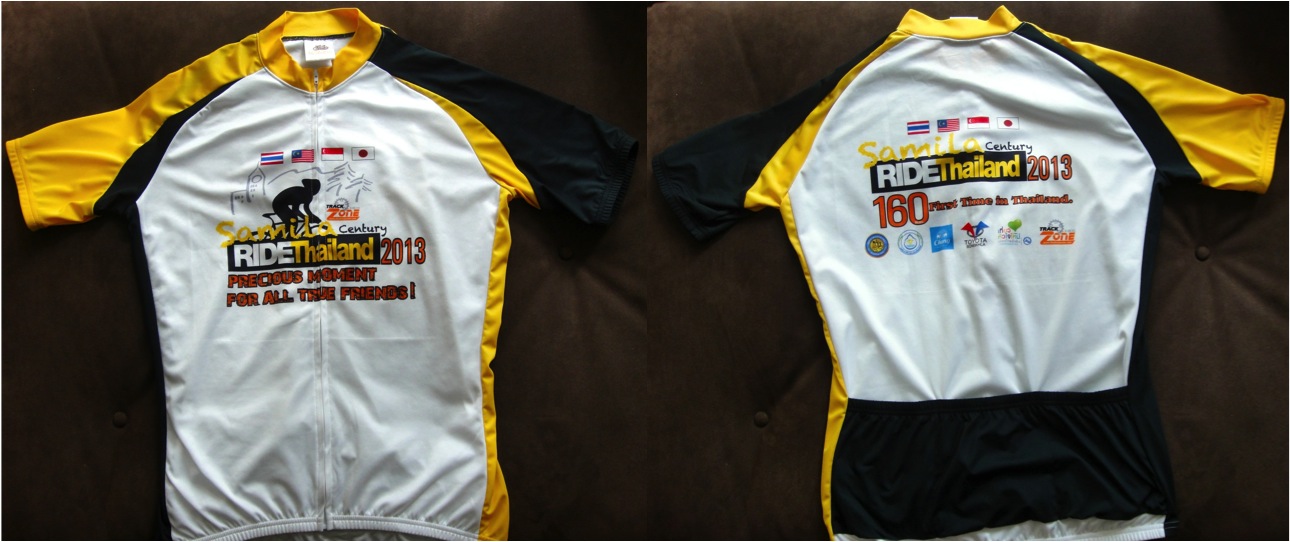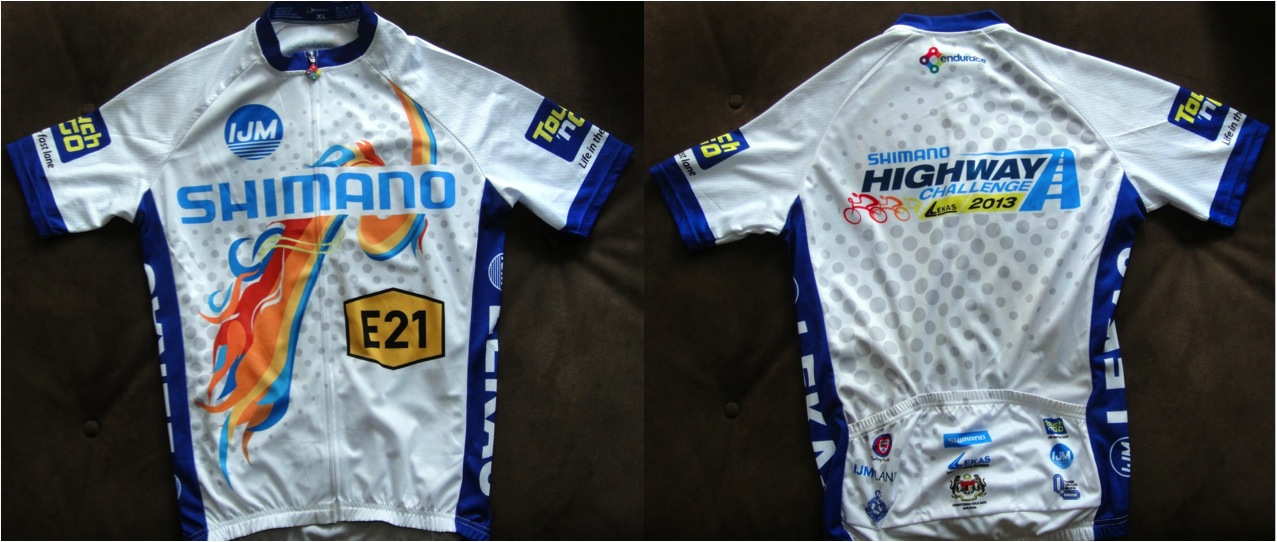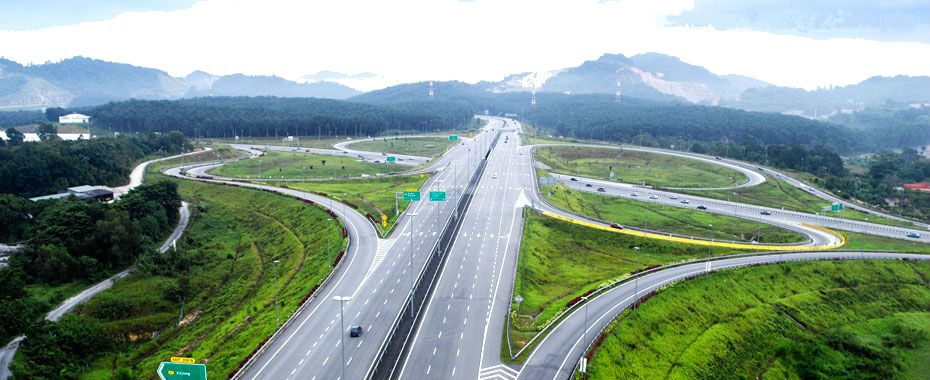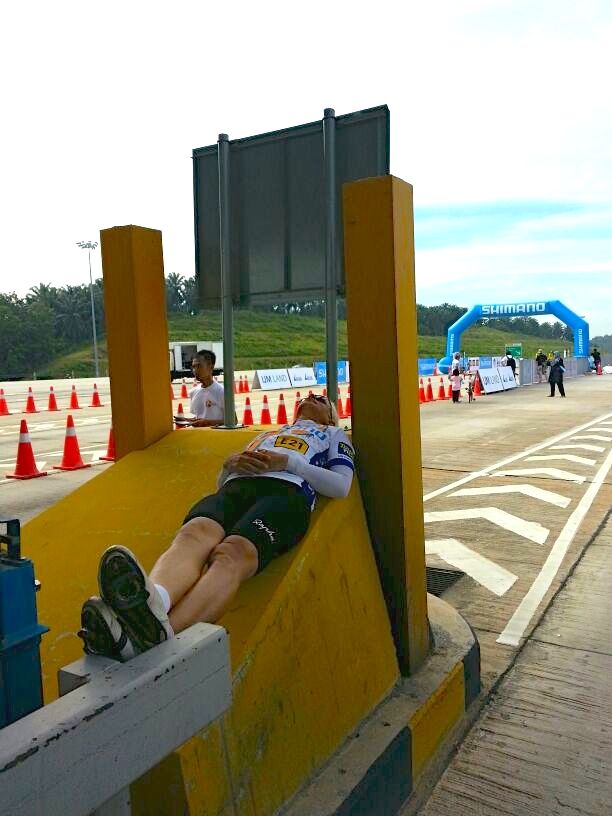
Samila Century Ride 2013

Samila Century 2013 Graphic

We started talking about this ride in August.  The number of riders in Team KESAS Kruisers fluctuated as Sunday 17th November approached.  Six of us loaded our bikes into Keat’s pickup truck early Friday morning for the 565 km / 350 mi drive to Songkhla.

Samila Century 2013 Truck

Keat, Marco and I rode in the truck, and Marvin, Chris and Mark were in Marvin’s hot hatchback.

Some planning went into fitting six bicycles into the bed of the pickup truck.  Meticulous planning went into deciding where to eat along the way.  Breakfast was at the Sungai Buloh R&R.  I should be embarrassed to admit that this was only 26 km / 16 mi into our journey.  This stop was chosen for convenience over the quality of the food available.

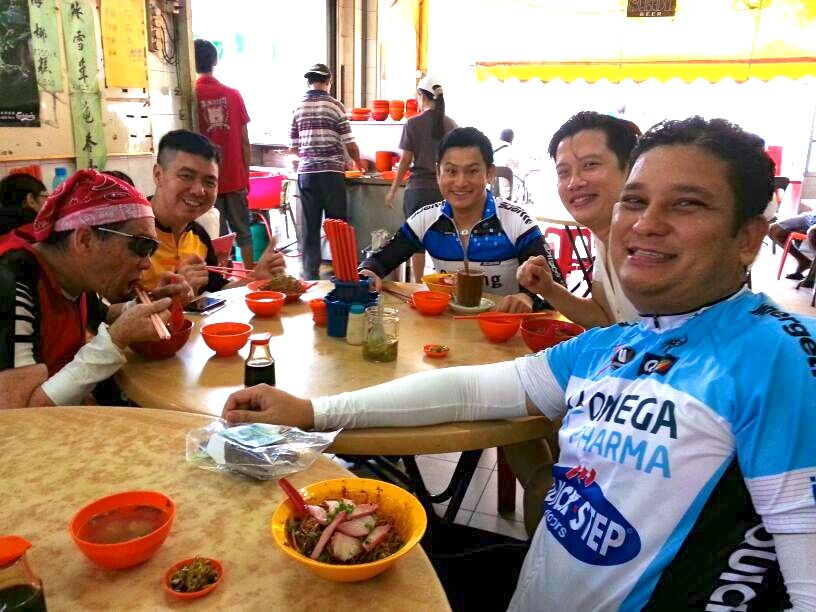
The first “foodie” stop was at the Pun Chun Noodle House in Bidor.  Pun Chun is noted for its duck noodles.

They go through a lot of duck!

Samila Century 2013 Pun Chun Duck

Lunch was at Ong Cheng Huat Seafood in Bagan Lalang.  The restaurant is tucked away in a small village.  Marvin knew how to get there.  The food was outstanding.

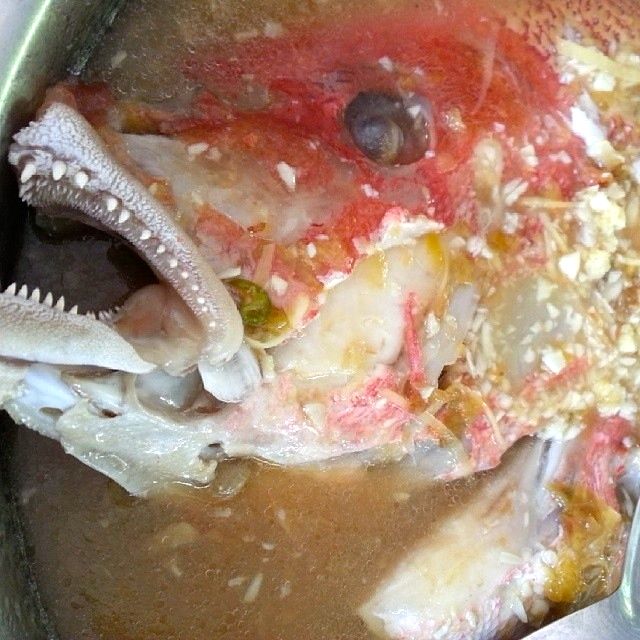
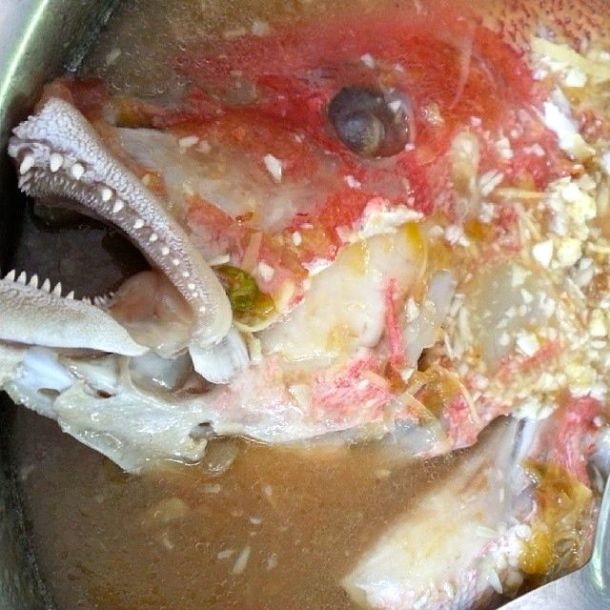
The Steamed Red Snapper was particularly good.  This was Keat’s favorite bit of the fish.
Photograph courtesy of Mark Lim

Photograph courtesy of Mark Lim

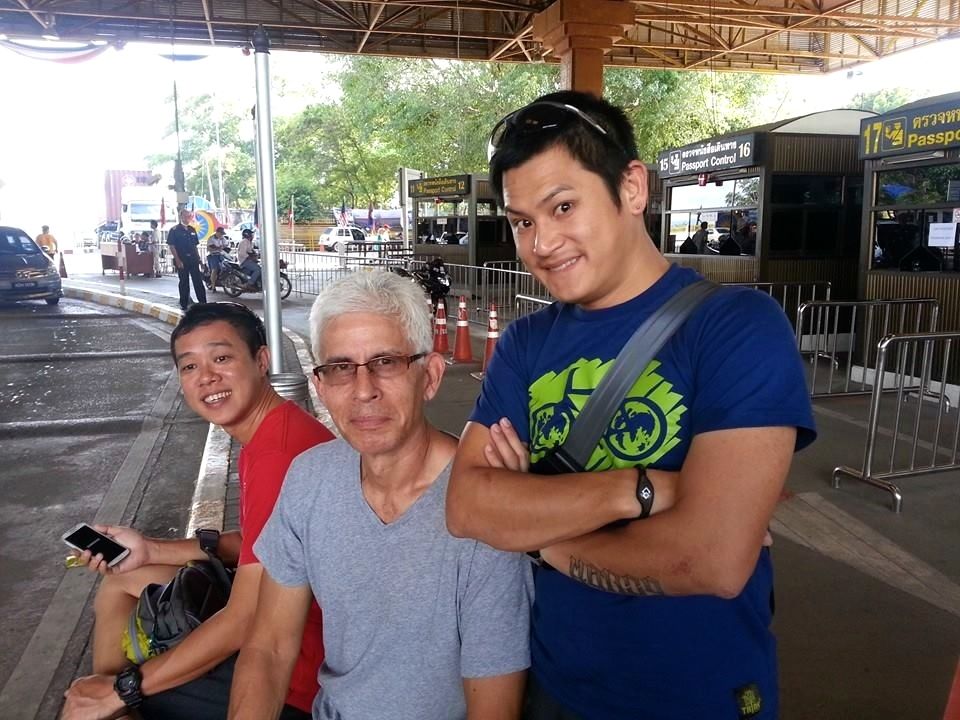
We got to the Thai border at about 4.30 pm Malaysian time.  Chris, Marco and I watched the world go by while Keat and Marvin sorted out the paperwork required to drive their vehicles into Thailand.
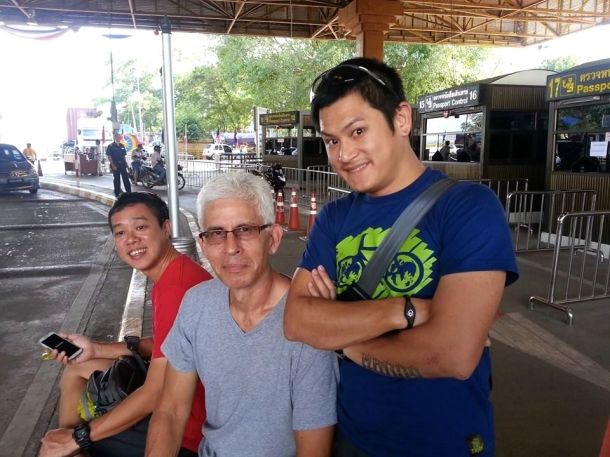
Photograph courtesy of Mark Lim

Photograph courtesy of Mark Lim

We may have planned our food stops well, but we weren’t so clever when it came to picking the time of day to drive from the border post at Sadao to Hat Yai and on to Songkhla.  Thailand is one hour behind Malaysia.  It was about 4 pm Thai time by the time we left Sadao.  Which meant that we drove into the height of the evening rush outside Hat Yai, and then crawled all the way to Songkhla.  The last 95 km / 60 mi of the drive took more than two hours.

So it was nice to be in a hotel in the center of Songkhla, within walking distance of places to eat.  I wouldn’t go so far as to describe the Pavilion Hotel as “elegant” (see the hotel website).  It may well have been elegant in its heyday, but is a bit worse for wear today.  It met our needs well enough though.  And at RM215 / USD68 per person for three nights, including breakfast, we shouldn’t complain.

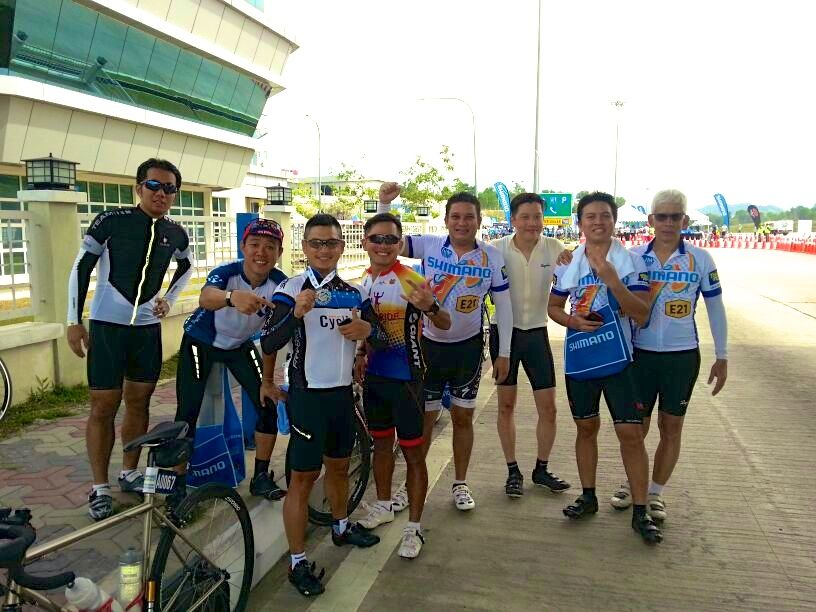
We wandered into Mr. Steak for dinner.  Ribs, steaks and pasta are not what immediately come to mind when you think of what to eat in Thailand.  Mr. Steak hit the spot though.  This is the team – and a photo bomber!
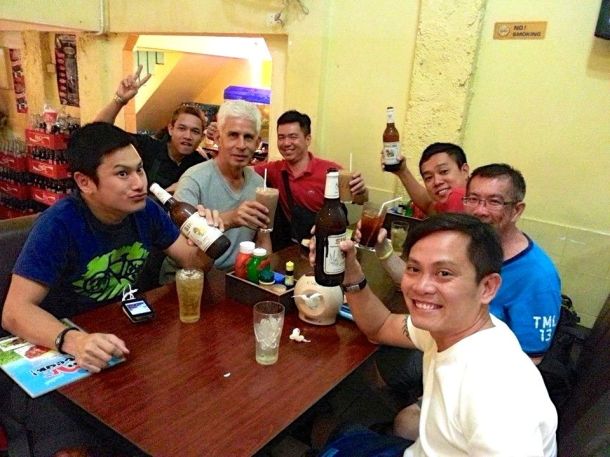
Photograph courtesy of Christopher Chin

Photograph courtesy of Christopher Chin

We chose our hotel because it was very close to the official hotel and the start and finish for the ride.    The organizers ran into a last-minute snag with that hotel and had to move everything to the Haad Kaew Resort.  Which is about 30 km / 19 mi away via the two parts of the Tinsulanonda Bridge that join the mainland to Ko Yo Island in Songkhla Lake.  Or 10 km / 6 mi away if you take the ferry across the narrow strait that connects the lake to the Gulf of Thailand.

We weren’t able to cancel our reservations at the Pavilion Hotel.  So the plan was to cycle from the hotel to where the ride would start.  Hence the first order of business after breakfast on Saturday was to recce the shorter route to the Haad Kaew Resort.

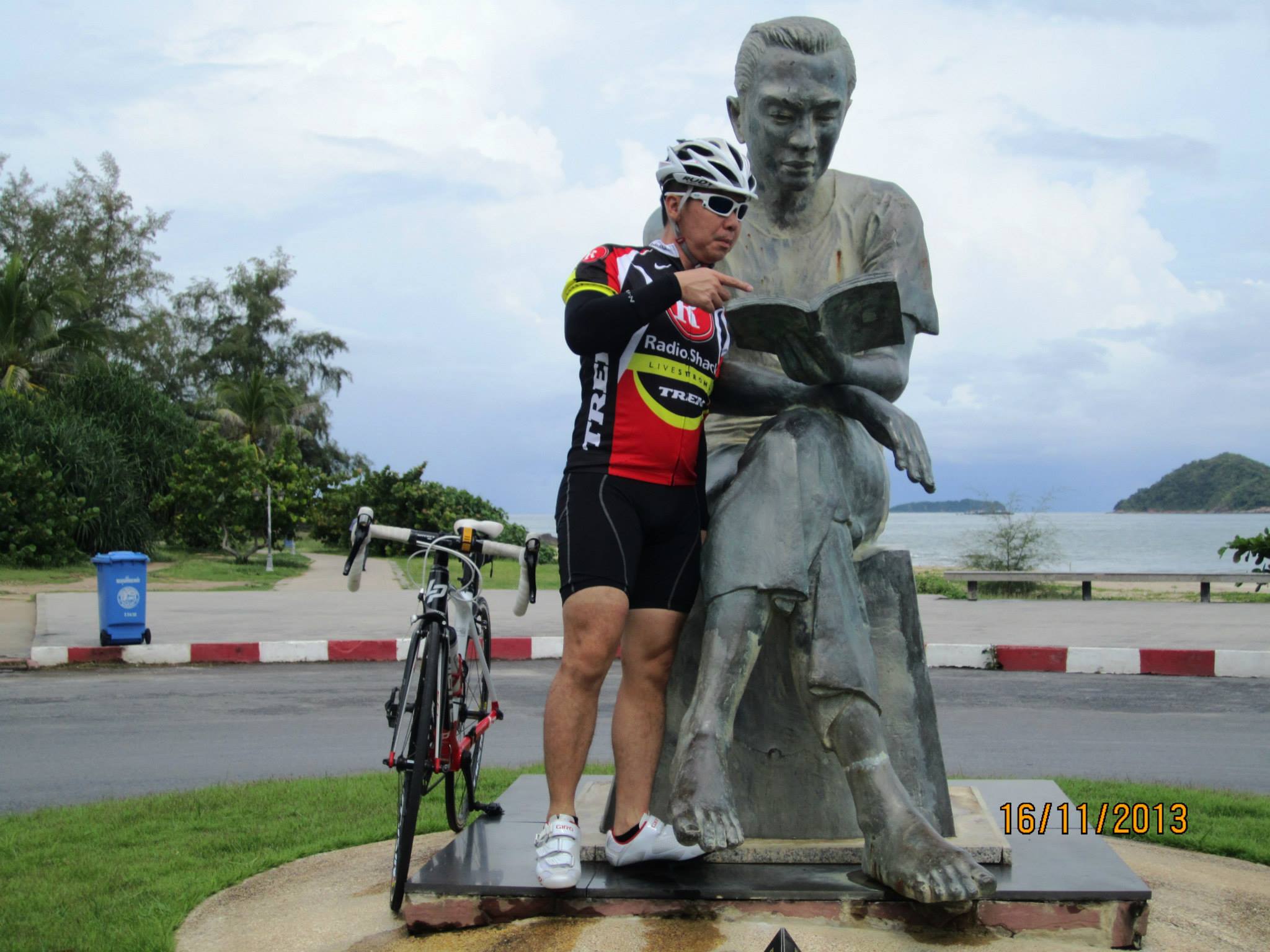
On the way to the ferry we explored a little.  There is a well-known statue, the Golden Mermaid, on Samila Beach.  This statue, dedicated to knowledge, looked more interesting to Marvin.
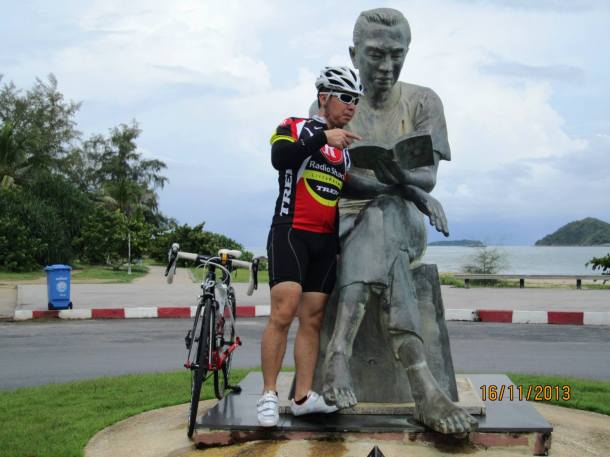
Photograph courtesy of Marco Lai

Photograph courtesy of Marco Lai

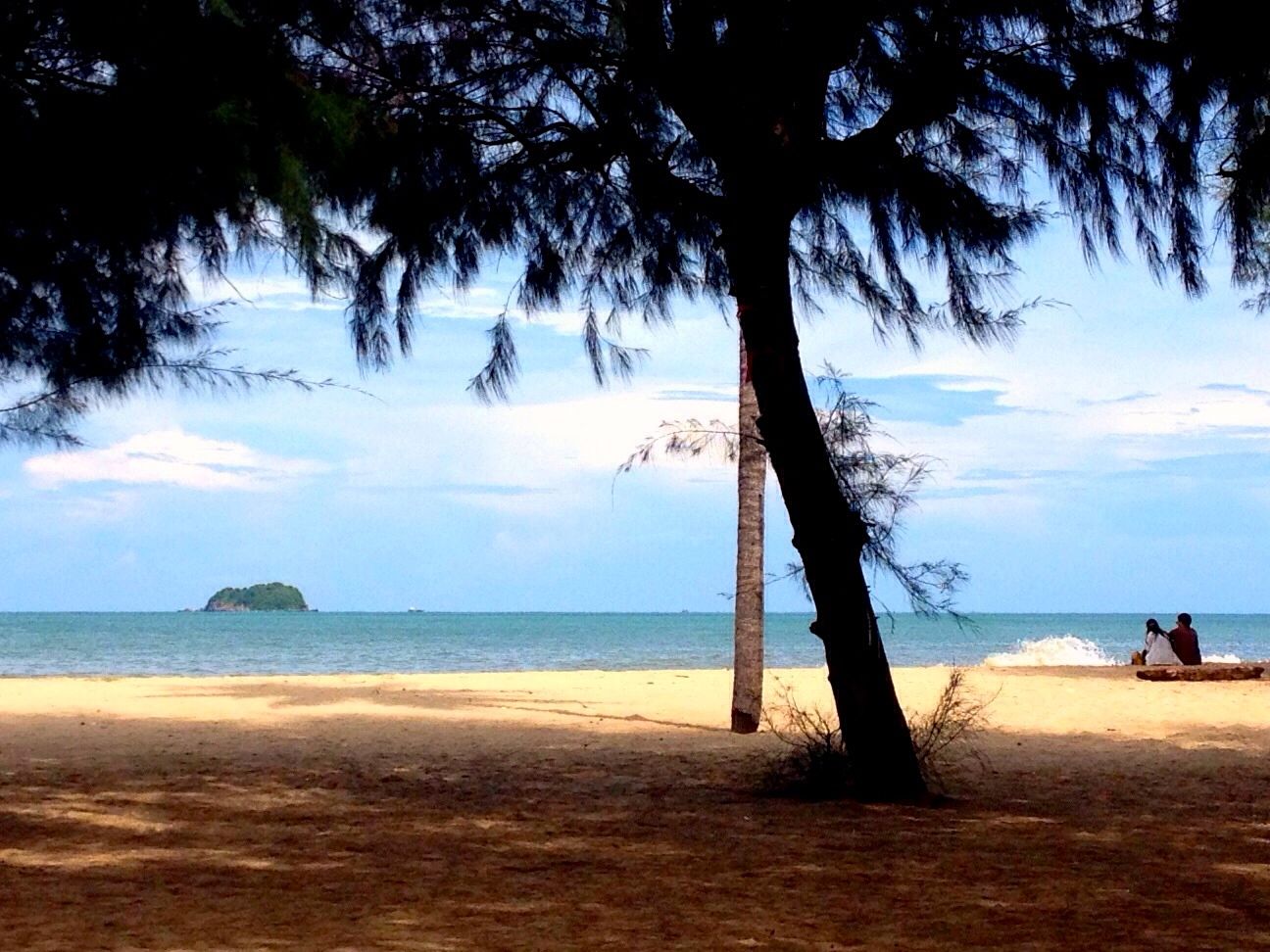
The scenic route to the ferry runs along the beach.  Marco, Marvin and I, and the others, took turns being photographed with the sea behind us.

Samila Century 2013 Samila Beach

Photograph courtesy of Mark Lim

We had to do a bit of deciphering of signs along the way, but we found the ferry.
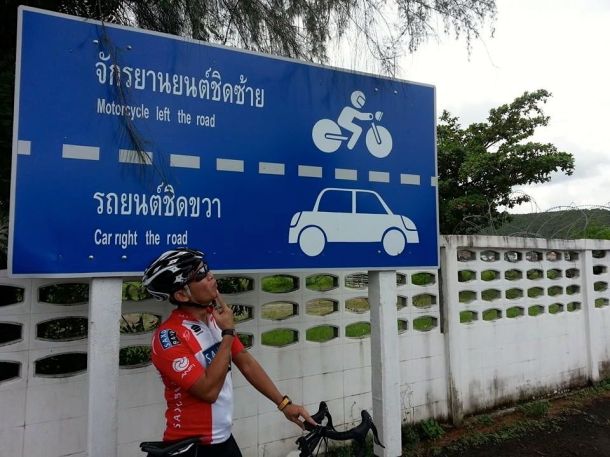
Photograph courtesy of Mark Lim

Photograph courtesy of Mark Lim

The ferry operates from 5am, which meant that we would have no problem getting to the start before 7am.  An added bonus is that the ferry is free for cyclists.

We shared the ferry with a few cars and pickup trucks, and a lot of small motorcycles and scooters.  One family was going to have chicken feet, prawns, and squash for lunch or dinner.
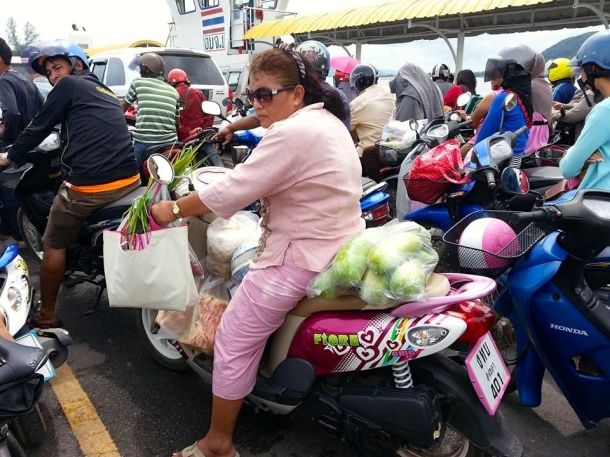
Photograph courtesy of Mark Lim

Photograph courtesy of Mark Lim

Once off the ferry we were cycling along the tail end of the ride route, so there were arrows guiding us to the Haad Kaew Resort.  Where we discovered that the Samila Century Ride was the shorter option.  The Songkhla Ipoh Friendship Ride had started the day before.  It is about 360 km / 224 mi from Songkhla to Ipoh in Malaysia.
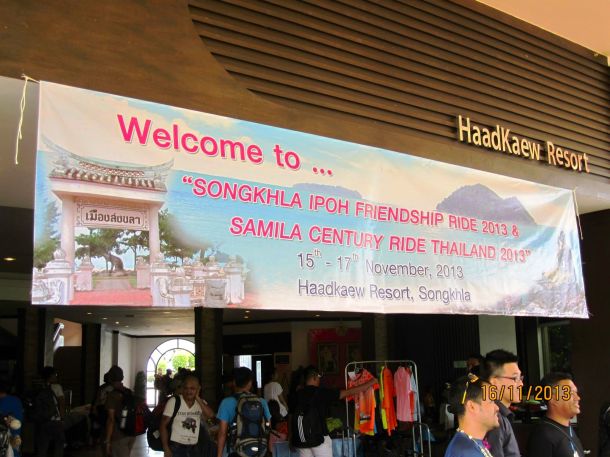
Photograph courtesy of Marco Lai

Photograph courtesy of Marco Lai

Our jerseys and ride numbers were waiting for us when we got there.  We introduced ourselves to the event organizer, Ms. Metharin Pongratchatakaran.

As for our footwear.  We thought it was going to rain and didn’t want to risk getting our cycling shoes wet.
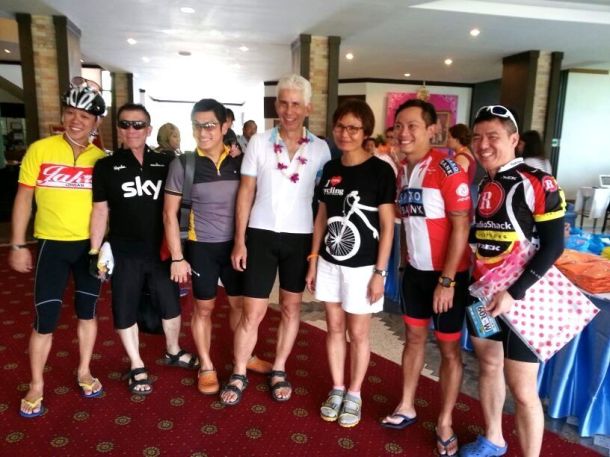
Photograph courtesy of Mark Lim

Photograph courtesy of Mark Lim

The sandals worked out well.
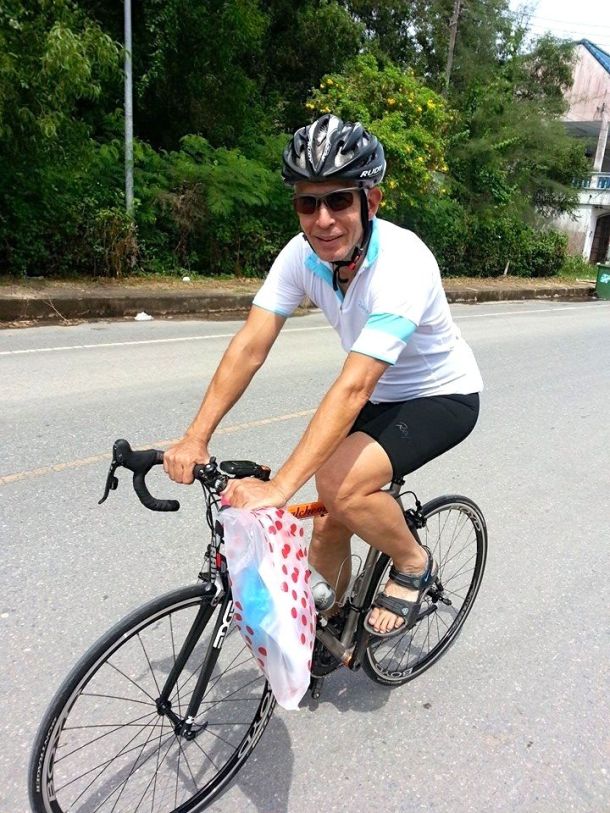
Photograph courtesy of Mark Lim

Photograph courtesy of Mark Lim

We were all a bit peckish by the time we got off the ferry back across the strait.  There are a host of seafood restaurants to choose from on Samila Beach.

It was time for some Thai food.  Food doesn’t come more Thai than tom yam soup.
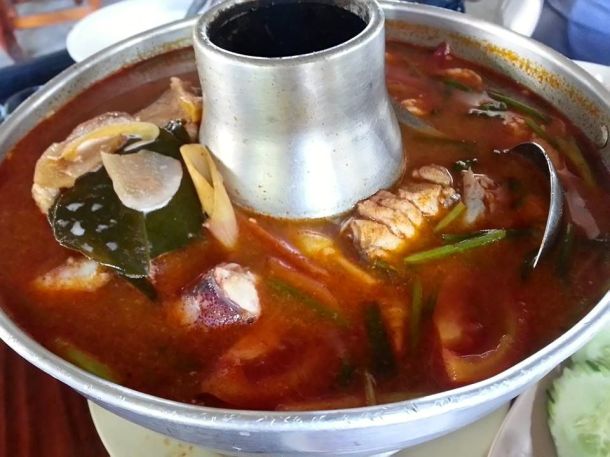
Photograph courtesy of Mark Lim

Photograph courtesy of Mark Lim

I’m surprised we could ride our bikes the rest of the way back to the hotel after all the seafood we ate for lunch.  I’m not surprised that everyone took a long nap that afternoon.

That evening we wandered through the night market that is just down the road from the hotel.  To be more accurate we wandered through the food section of the night market.  We didn’t bother with the part where you can buy clothes, alarm clocks, toys etc.

The first thing we saw was a pickup truck that had been converted into a Japanese restaurant.  Two cooks were in the kitchen on the roof.  The diners sat at tables on the bed, or at tables that folded out from either side of the truck.  Food came down from the kitchen on a small electrically-operated lift.  All quite ingenious.

Samila Century 2013 Sakura Truck

These sweets are called Look Choop.  They could substitute for energy chews.  They certainly look prettier than your average Clif Shot Blok.  Sweetened mung bean paste is moulded to look like fruits and vegetables.  A candy glaze adds color.
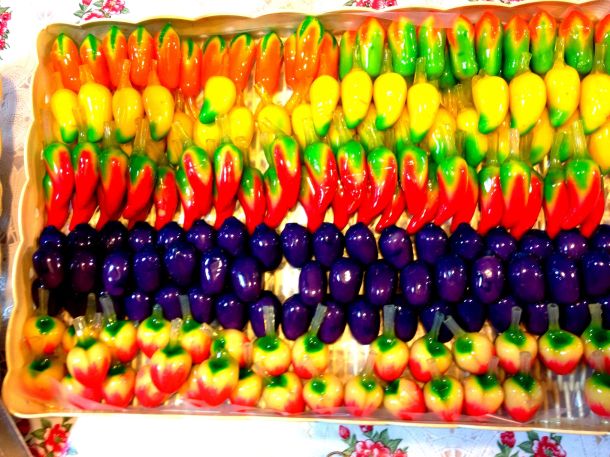
Samila Century 2013 Sweets

I’m not so sure these treats will catch on as a substitute for energy chews though.
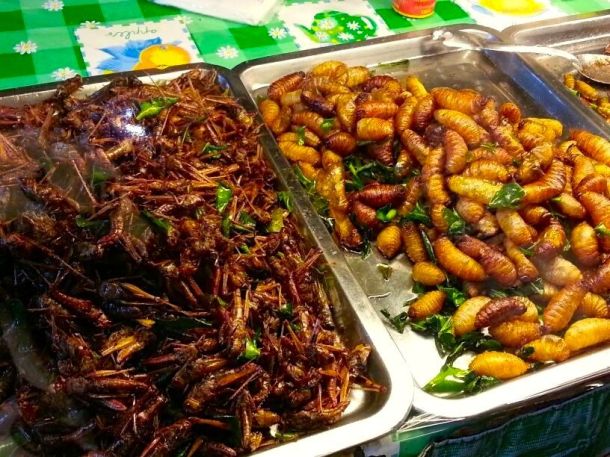
Samila Century 2013 Protein Pods (Mark)

Still on the subject of food (no munchies no ride)!  The Pavilion Hotel may no longer be elegant, but they do start serving breakfast at 5am.  So we had no problem fueling up before our 6.15 am departure from the hotel.  We rode out into a drizzle, which eased by the time we reached the ferry.

We got to the start outside the Haad Kaew Resort just as it started drizzling again.  The rain got steadily heavier and heavier.  By the time we were 30 km / 20 mi into the ride it was pouring.  So much for wearing sandals the day before to keep our shoes dry.

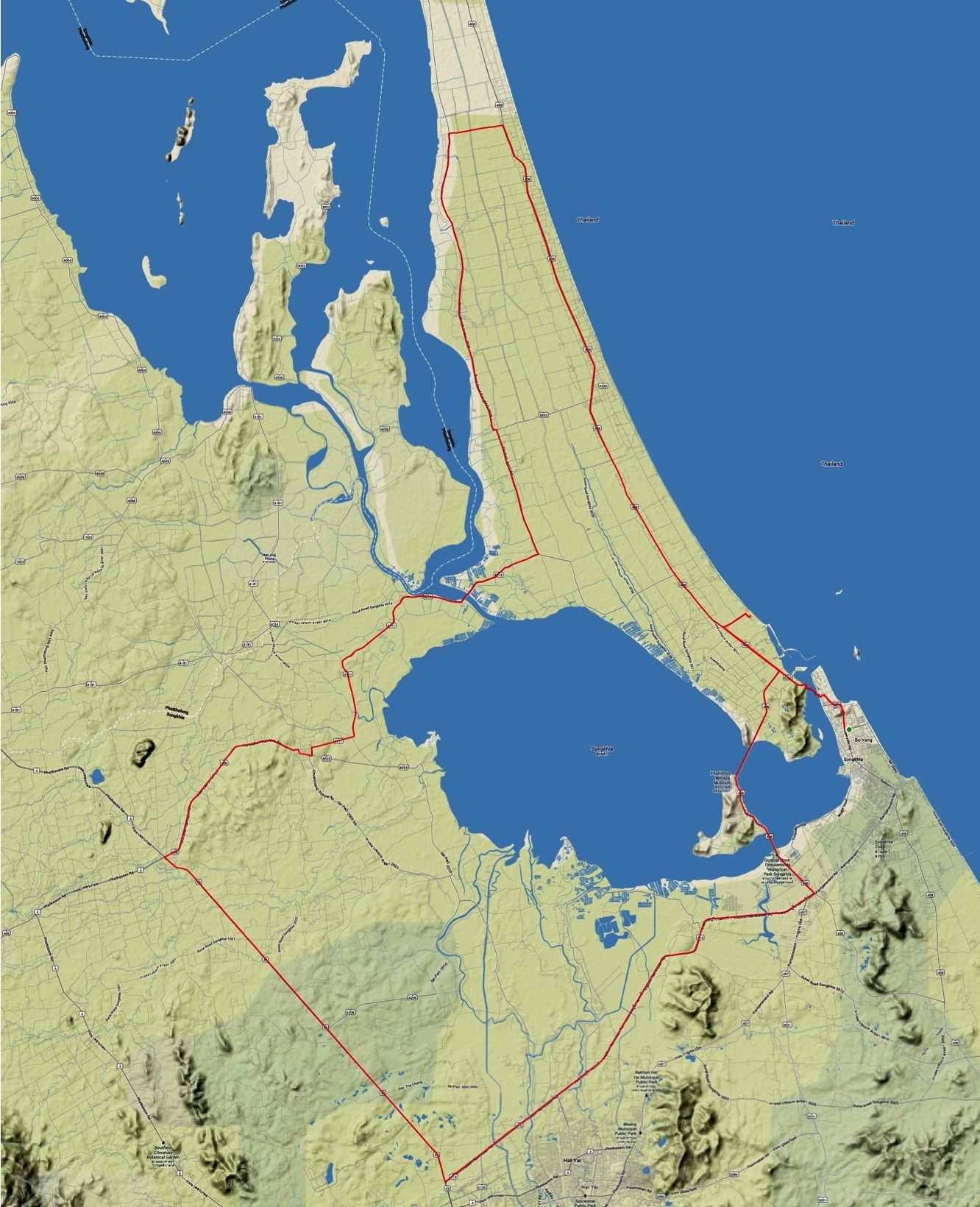
We rode in the rain for the first third of the ride, which took us north along the coast before turning inland and then back south.   Highway 408  is excellent for cycling.  The road surface is amazingly smooth.  Not a bump or a pothole to be found.  Despite the heavy rain there was rarely any standing water on that road.

The rural road inland is another story.  There are lots of bumps and potholes.  The rain made riding quite tricky because standing water often hid holes in the road surface.  Keat hit a pothole and has seven stitches in his elbow to show for it.  He won the hard man award for cycling some 90 km / 56 mi with a gashed elbow, a scraped knee and a bruised hip.

Samila Century 2013 Route

Keat’s mishap aside, we were all glad that it rained.  The rain kept us cool.  By the time we made our first stop at the halfway point the rain had ceased however, and the sun was peeking through the clouds.

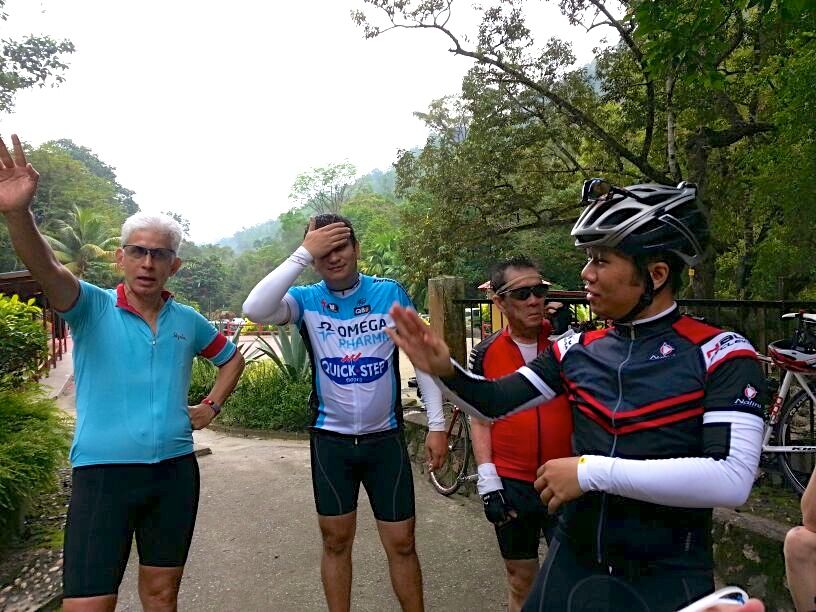
Mark and Chris are all smiles here.  The heat and the headwind in the final kilometers wiped those smiles off their faces.

Samila Century 2013 Rest Stop

We made a stop at a 7-11 in Khuang Niang.  Keat caught up with us there, which is when we learned of his accident.  Marvin had stopped early on for what we thought was a loose quick release skewer.  He actually had a flat.  It took him a long time in the pouring rain to replace the tube.  We didn’t see him again until the finish.

I bought chocolate milk and chocolate chip cookies.  The others bought food and drink also.  While we were standing outside the 7-11 consuming our purchases a procession came by.  My guess is that it was a wedding procession because of these money trees in their gold pots.

Samila Century 2013 Money Trees

Not long after the stop at Khuang Niang we turned left onto Highway 43.  The road surface improved markedly.  More importantly there was a wide shoulder to ride on so we could stay as far as possible from the speeding cars, lorries and buses.  It helped that the highway was arrow-straight for a good 20 km / 12 mi.

We made a final stop at a petrol station just after the right turn off Highway 43 and onto Lopbun Ramesuan Road.  We needed a rest room.  While we were there we took advantage of a water hose to rinse the sweat off our faces, to soak our hair and jerseys in an effort to cool down, and to wash the sand and mud off our bikes.

The highlight of the ride for Mark and I came a few kilometers after we made the left turn back onto Highway 408.  There was quite a strong headwind as we rode over the first part of the Tinsulanonda Bridge.  We had our heads down, pushing against the wind as we rode past Wat Pranon Laem Pho.  So we didn’t fully appreciate the large reclining Buddha that the temple is famous for.

About halfway across Ko Yo Island something like this rolled past us.
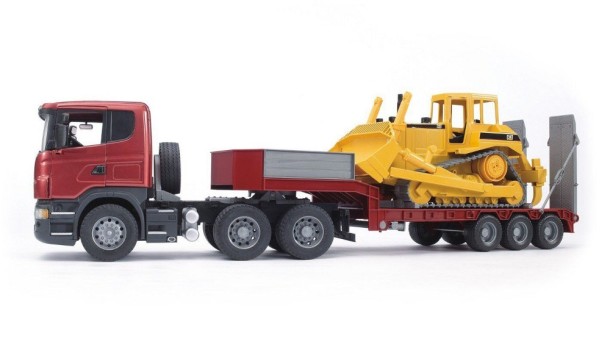
Samila Century 2013 Low Loader

Mark and I had drafted a lorry once before.  What a blast that had been!  This was too good an opportunity to pass up.  Especially given the headwind we were battling.

We swung to the right and accelerated into the still air about 1 meter / 3 feet behind the lorry.  For the next 5.5 km / 3.4 mi we averaged 54 kph / 33.5 mph.  As we came off the second part of the Tinsulanonda Bridge and onto the mainland we were exceeding 64 kph / 40 mph.  What a treat to run out of gears on the high end of the cassette for once.

Sadly this low-loader wasn’t going all the way to the Haad Kaew Resort.  We waved our thanks to the driver as he honked and turned to the right.  Then our normal cycling speeds were resumed for the last 7 km / 4 mi to the finish at the beachside resort.
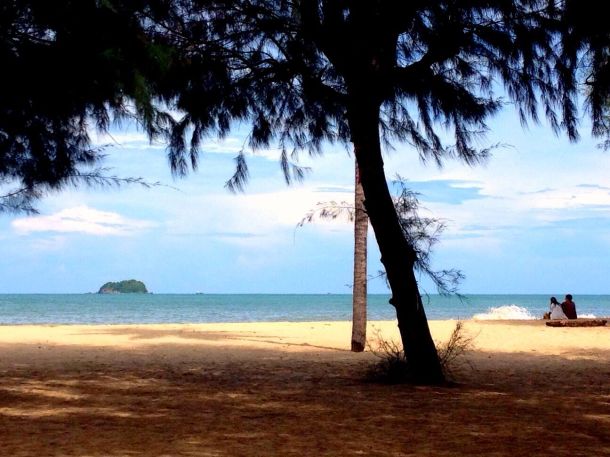
Samila Century 2013 Haad Kaew

I had expected to wait for the rest of the KESAS Kruisers and then ride back to our hotel.  Instead Mark and I were ushered into an air-conditioned hall for a sit-down lunch.  Thai green curry, stir-fried vegetables, spicy tofu, chicken in soya sauce.  All good, and all much appreciated.

Before long our group was together again.  As we ate we were were entertained by a singer, and a group of Thai traditional dancers.  That was followed by a lucky draw.  We all had our numbers in our hands and hope in our hearts, but none of us left with a prize.

We did have a certificate and a finisher’s medal to show for our efforts.

Samila Century 2013 Certificate and Medal

And memories of a wonderful trip with a first-class group of friends, and a very well-organized ride.  I think we will be back in 2014.
Photograph courtesy of Marco Lai

Photograph courtesy of Marco Lai

Feeling the Pinch

It was the Islamic New Year on 5th November.  Like its Gregorian calendar equivalent, the advent of the Islamic new year is marked by a holiday.  A holiday to be celebrated with a long bicycle ride.

The original plan was to ride from Bukit Tinggi to Bentong, eat beef ball noodles for breakfast, and ride back.  Bukit Tinggi is about 300 meters / 980 feet above sea level.  Bentong is 95 meters / 312 feet above sea level.  The hard work would come on the way back.  Nine of us, including birthday boy Raj,  pointed our bikes downhill and rolled through the light rain.

The wet weather soon moved on toward Kuala Lumpur, leaving us on damp roads but under overcast skies.  There would be no need for arm coolers and suntan lotion.

Photo courtesy of Mark Lim

Photo courtesy of Mark Lim

We swung into Bentong after about an hour.  Only to find that the famed beef ball noodles shop was closed.  So we embarked on a spin around the town looking for an alternative.

We ended up at the wonton noodles shop where we had stopped during the Durian Fiesta ride.  Which suited the birthday boy.

IMG_2291

Photo courtesy of Mark Lim

Everyone was so refreshed after breakfast that we decided to continue on to the Chamang waterfall.

Chamang Waterfall Route

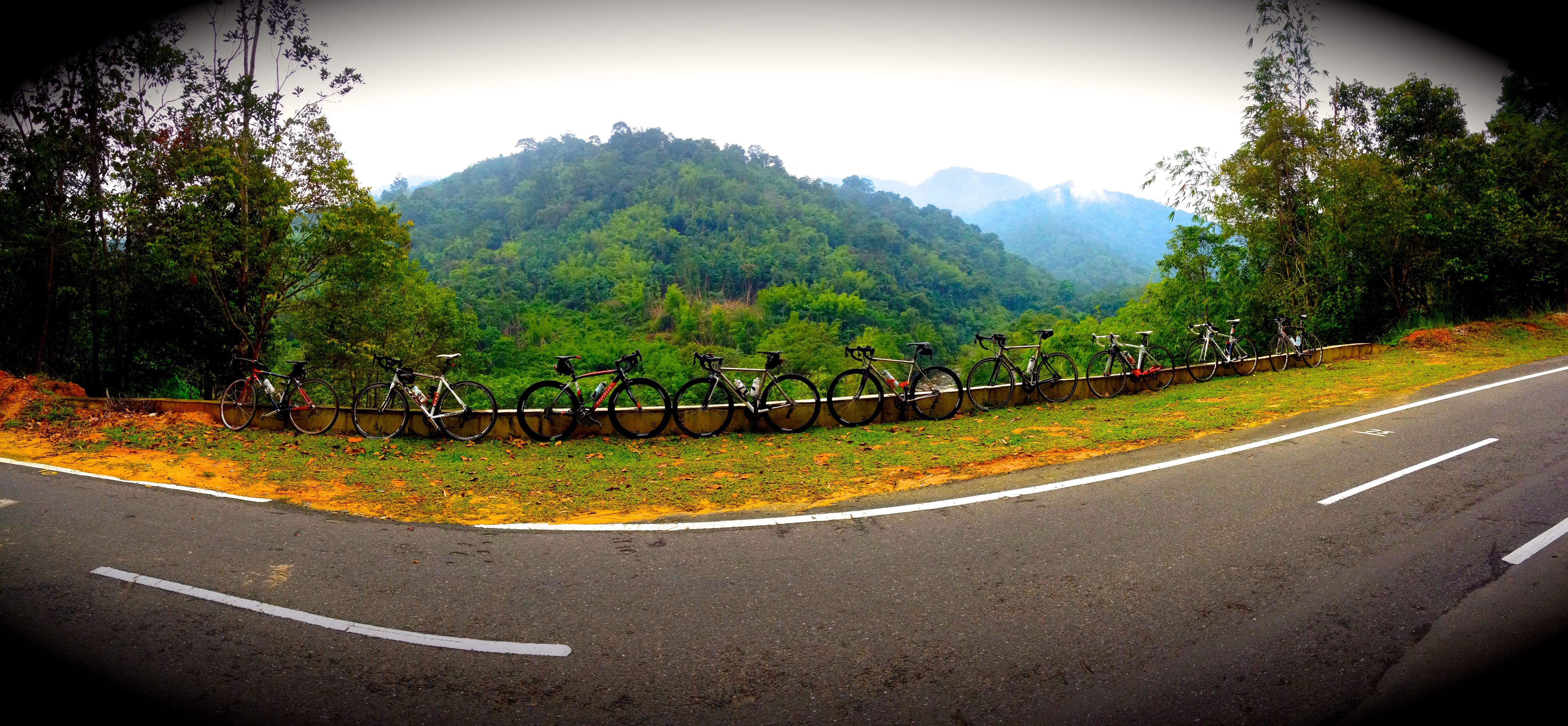
The waterfall is very easy to get to.  Follow the sign just outside Bentong, and start climbing.  Six kilometers into the climb we got our first glimpse of the Perling River.  Accompanied by the thwack thwack thwack of cloth against rock.  Someone was doing their laundry.

IMG_2283

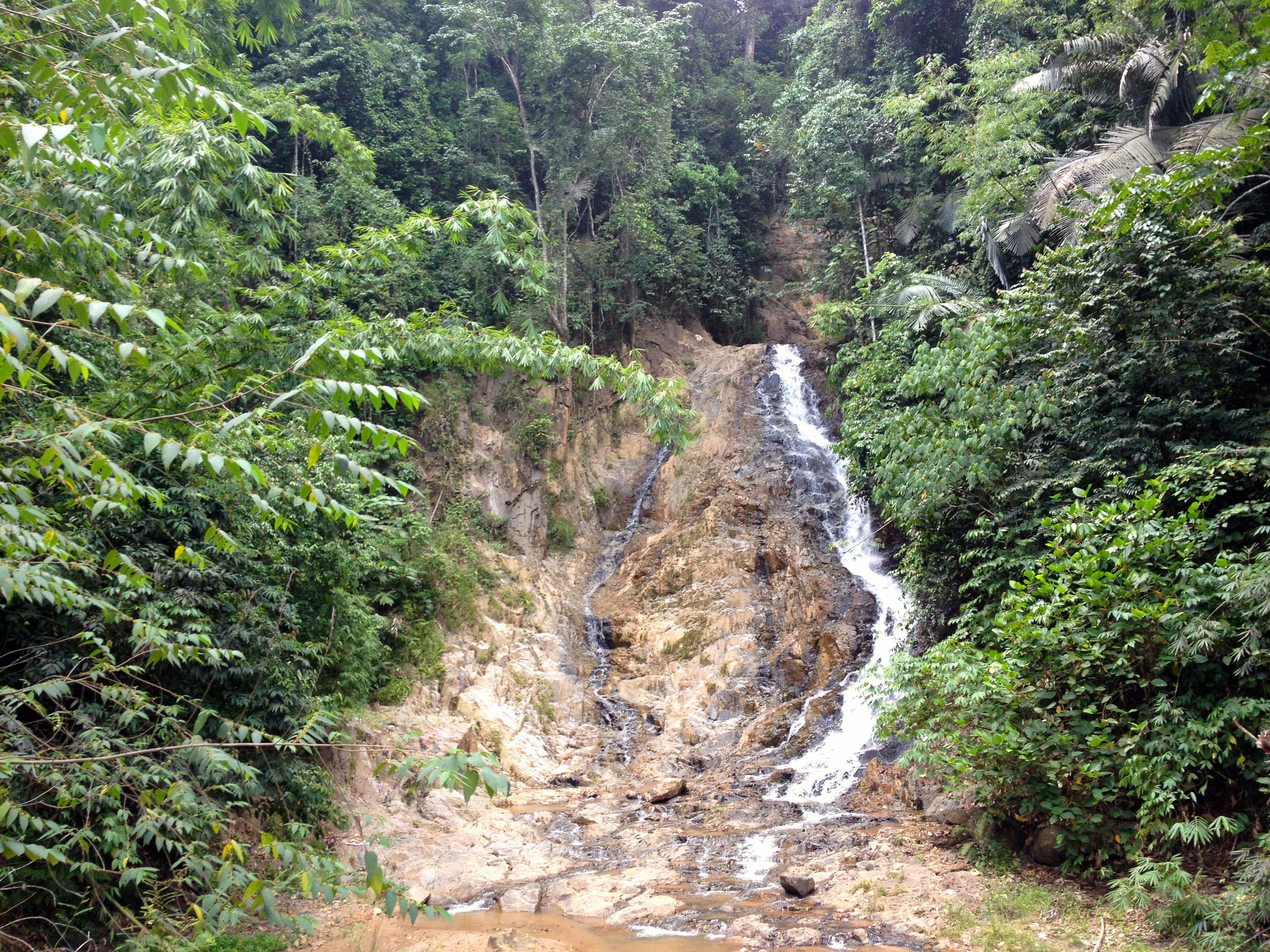
The waterfall was worth the 110 meter / 360 feet climb.  We all enjoyed spending twenty minutes watching the water cascading down the rock face.

IMG_2346

Raj is a relatively new roadie.  So all credit to him for coming along with us on these longer rides.  And being thrilled at the prospect of the climb to come that Griffin and I are pointing out!

Photo courtesy of Mark Lim

Photo courtesy of Mark Lim

On the way back we made a pitstop in Bentong for drinks and photos.

Photo courtesy of Mark Lim

Photo courtesy of Mark Lim

“Is this where I catch the bus to Kuala Lumpur?”

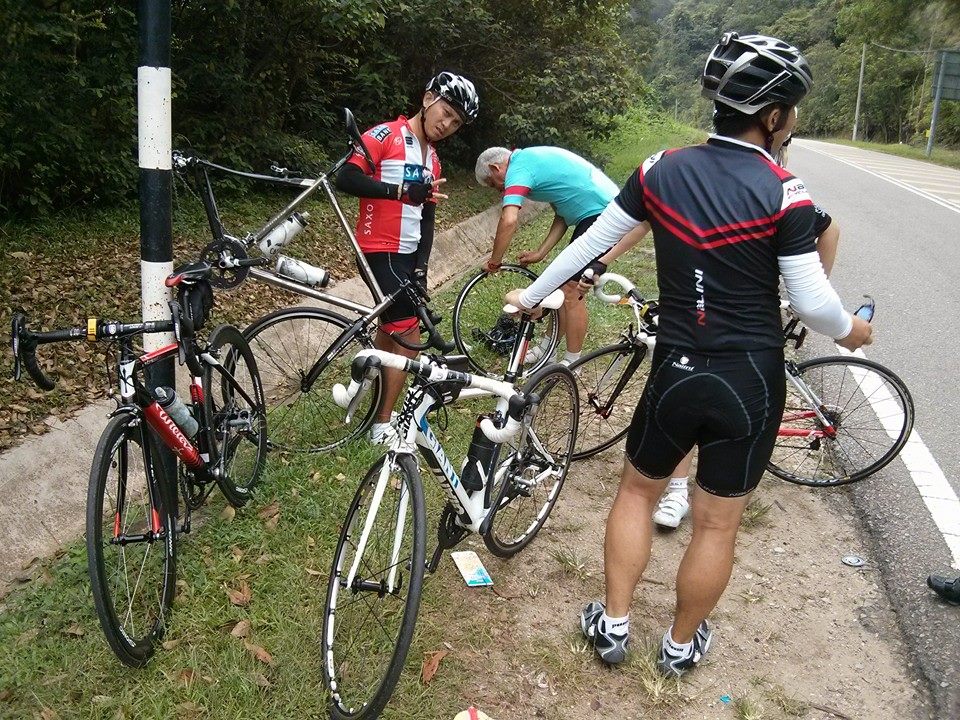
The ride back to Bukit Tinggi was interrupted by two pinch flats.  I was a bit surprised to be stopped by a pinch flat on this smooth section of road.  Here I am demonstrating my tube-changing skills to a very interested audience.

Photo courtesy of Shahfiq Abdul Manap

Photo courtesy of Shahfiq Abdul Manap

Photo courtesy of Shahfiq Abdul Manap

Photo courtesy of Shahfiq Abdul Manap

“Stop thief!!”

Twenty kilometers later I had another pinch flat.  That one was no surprise.  I was on a bridge with a lorry right beside me.  I had no choice but to ride over a gaping expansion joint.  My prayers to the guardian angel of inner tubes were not answered.

That didn’t detract from a great morning out with my riding buddies.  Great company, good food, cool weather, impressive views, lots of laughter, and when I was in a pinch, Marco had an inner tube to spare.

IMG_2281

Saddle Up

A rider touches a bicycle at three points.  At the pedals, the saddle, and the handlebar.  When I got my first road bike the components at these three contact points were chosen for me by James Flatman, the bike builder.  Thank goodness, because the choices of pedals, saddles and handlebars are seemingly endless.

My steel Alchemy came with Speedplay Zero pedals, a Selle Italia SL Flow saddle, and a Ritchey Comp Road Logic handlebar.  I was happy with all those contact points, so a year later when I got my next road bike I was happy to stick with what I was used to.

Welcome to the concept of product updates in the cycling components world.

My titanium Alchemy came with Speedplay Zero pedals, a Selle Italia SLR Flow saddle (the SL Flow having been discontinued), and a Ritchey WCS Carbon Evolution handlebar (the Road Logic having been discontinued).  The saddle and handlebars were not very different from the models which they had replaced, but they were different enough for the change to be noticeable.

So it was that I contracted that affliction that affects so many cyclists.  The desire to fiddle.  In my case with saddles.

Fortunately the itch to fiddle has not extended to my pedals and handlebars.  The scope for mucking around with my pedals is limited anyway.  I like the dual-sided entry of the Speedplays.  Other makes of road pedals are single-sided.  So my only option is getting lighter Speedplays; chrome-moly or titanium.  I haven’t yet been cursed with the ultimate cyclist’s affliction, the desire for the lightest components on earth.  So my stainless steel Speedplays remain my pedals of choice.

I must admit that I like the Carbon Evolution handlebar more than I like the Comp Road Logic handlebar.  The Carbon Evolution has an oval top with a 4 degree sweep, which makes it more comfortable  than the Comp Road Logic.  So about a year ago I put a Carbon Evolution handlebar on the steel Alchemy.

Back to fiddling with saddles.  Of the three contact points I notice the saddle the most while I am riding.  Not that the SL Flow or the SLR Flow are uncomfortable saddles.  They both have a central cutout, which I like.  This is the SL Flow.

Selle Italia SL Flow

This is the SLR Flow.

Selle Italia SLR Flow

The SLR Flow has a slightly larger cutout than the SL Flow, but they are essentially the same saddle.  Equally comfortable.  But as I learned more about saddle shapes and the different materials used to make them, I kept wondering if there may be a more comfortable saddle out there for me.

Then in the latter half of 2011 I read about the Fi’zi:k Kurve range of saddles.

Fizik Kurve

There was enough new technology in the Kurve saddles to appeal to the geek in me.  Spine Concept designs, Re:flex construction, a Tuner interchangeable tension system, a Moebius one-piece saddle rail.  Add positive reviews about outstanding comfort to the mix, and I wanted one.

The Fi’zi:k Kurves appeared in a few London bike shops some time before they turned up in Dutch bike shops.  At the very first opportunity I popped into Condor Cycles in London.  I had every intention of leaving with either a Kurve Snake or a Kurve Chameleon saddle, depending upon what a Spine Concept test showed I was best suited to.

The sales person asked me if I had any problems or discomfort with the Selle Italia saddles.  I said “no.”

I left empty-handed.  She refused to sell me a saddle.  She told me not to try to fix something that wasn’t broken.

That cured my saddle fiddling itch.

That is until I started seeing Michelle again.  Michelle is a Rolf Method Structural Integration Practitioner.   She does myofascial release therapy.  In plain language, she manipulates deep tissue to correct postural imbalances and restrictions.   I saw her regularly in the years before I moved to Houston.  As soon as I got back to Kuala Lumpur I signed up for a course of therapy.  I had lots of things that needed fixing.  Some brought on by cycling.

After Michele had worked on my hip muscles: adductors, glutes, illiopsoas, piriformis, sartorius, etc., my saddles felt less comfortable.  They felt too narrow.

I had learned that bicycle saddles come in different widths.  Perhaps Michelle had loosened up my pelvis such that my sit bones had moved further apart. So I went to a Specialized Concept store to have my sit bones measured.  The resulting number showed that my 130mm wide Selle Italia saddles were indeed to narrow for my sit bones.

Specialized makes saddles in three widths: 130mm, 143mm, and 155mm.  My sit bone measurement showed that I needed a saddle wider than 143mm.  So I left the shop with a 155mm wide Romin Comp Gel saddle under my arm.

Specialized Romin Comp Gel

I replaced the SL Flow saddle on my steel bike with the Romin saddle.   The Romin felt very comfortable at first.  As time went by it felt less and less comfortable.  At the same time the SLR Flow saddle on my titanium bike became increasingly comfortable.  My sit bones must have slowly migrated closer together again.  The Romin saddle started feeling too wide for me.

So when I had to choose a saddle for my Ritchey Breakaway I picked the latest iteration of the Selle Italia SLR saddle.  The SLR Superflow.  A 130mm wide one.

Selle Italia SLR Superflow

The SLR Superflow has a monster cutout.  Which must work as designed because this a very comfortable saddle.

Since April this year I have rotated between the 130mm wide SLR Flow, the 130mm wide SLR Superflow, and the 155mm wide Romin Comp Gel saddles.  The Romin was a mistake.  Certainly in the 155mm width.

Last week I replaced the Romin Comp Gel with another 130mm SLR Superflow.

I think I am done fiddling with my saddles.

But about that handlebar tape . . .

King of Perez Stage 1

Graphic courtesy of Dave Ern

Graphic courtesy of Dave Ern

The 7th in the series of King of 9 Mountains challenges that Dave Ern has put together was held today.  The 100km / 62 mi route took us from Semenyih in the state of Selangor to Kuala Klawang in the state of Negeri Sembilan.  There was a 60km / 37mi option for those who didn’t relish 1,900m / 6,200ft of climbing.

King of Peres Stage 1 Route

About twenty of us gathered in Semenyih for the 7.30am start.  But first a briefing about the route from Dave Ern.

Photo courtesy of Khairuddin Abdul Aziz

Photo courtesy of Khairuddin Abdul Aziz

The turn-around point for those doing the 60km route was 1km up Bukit Tangga.  After the Bukit Mandom 1 and Bukit Mandom 2 climbs.  Bukit Mandom 1 gets the heart pumping.  It is only 1,000m / 3,300ft long, but it has a 400m / 1,300ft section with a gradient of more than 10%, maxing out at 18%.  Bukit Mandon 2 is a bit over 2km / 1.3mi long but it has gentler gradients that do not exceed 9%.

So everyone was ready for a break by the time we got to the local convenience store on the lower slope of Bukit Tangga.

King of Peres Stage 1 Convenience Store

The home-made soft drinks looked good, but this looked better.  I’m sure it tasted better too.

King of Peres Stage 1 Rehydration

The Bukit Tangga climb is about 5km / 3mi long.  If that was not enough to put people off the full 100km route, the thought of doing the climbs from the opposite direction on the way back to Semenyih did.  Only Adrian and I rode on to Kuala Klawang after this group photograph.

Photo courtesy of Khairuddin Abdul Aziz

Photo courtesy of Khairuddin Abdul Aziz

I got to Kuala Klawang in good shape.  Helped by a 65kph / 41mph run down Bukit Tangga.  Adrian and I camped for a while in the Petronas petrol station at Kuala Klawang, guzzling cold drinks in air-conditioned comfort.

By the time we started riding back the way we came it was 11am.

Temperature

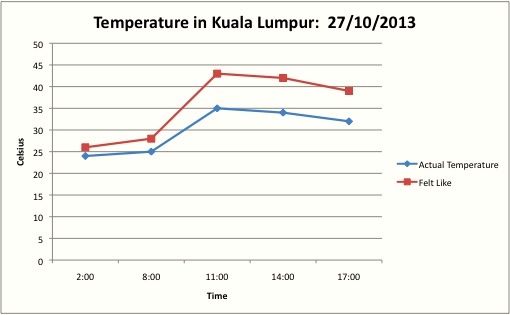
The hottest time of the day.  I didn’t need WeatherTemperature.com to tell me that while the thermometer read 35° C / 94° F,  it felt like 43° C / 109° F.  Adrian set a tempo north of 35kph / 22mph.  By the time we started back up Bukit Tangga I was overheating.  My heart rate had come down fairly quickly after the climbs on the outward leg, when it was cooler.  Not so on the return leg.

King of Peres Stage 1 Charts

I should have put some ice in my bottles at that Petronas station.

I tried to keep my heart rate below 150bpm on the climbs by turning as light a gear as possible and going slowly.  Even so my heart rate hit 170bpm on Bukit Mandom 2.  That is higher than I have ever seen it.

The last 20km was all about heart rate management, taking a drink every five minutes, and keeping cramps at bay.

And looking forward to my post-ride beverage of choice.

Durian Fiesta Chocolate Milk

There is a King of Perez Stage 2 planned.  It will be the same route as we rode today, but with an additional 68km / 42mi and another big out-and-back climb beyond Kuala Klawang to cover.

A step too far methinks.

City Ride with a Difference

It has been a long time since I pulled on a pair of  baggy shorts and a t-shirt, put platform pedals on a bike and and rode the city streets.

I headed out into the evening rush hour.  The four-wheeled traffic was hardly moving along Jalan Tun Razak and Jalan Ampang Hilir.  It was bumper-to-bumper, sometimes three or four lanes wide, until I got to the end of Jalan Kerja Air Lama, where it turns into Jalan 1.

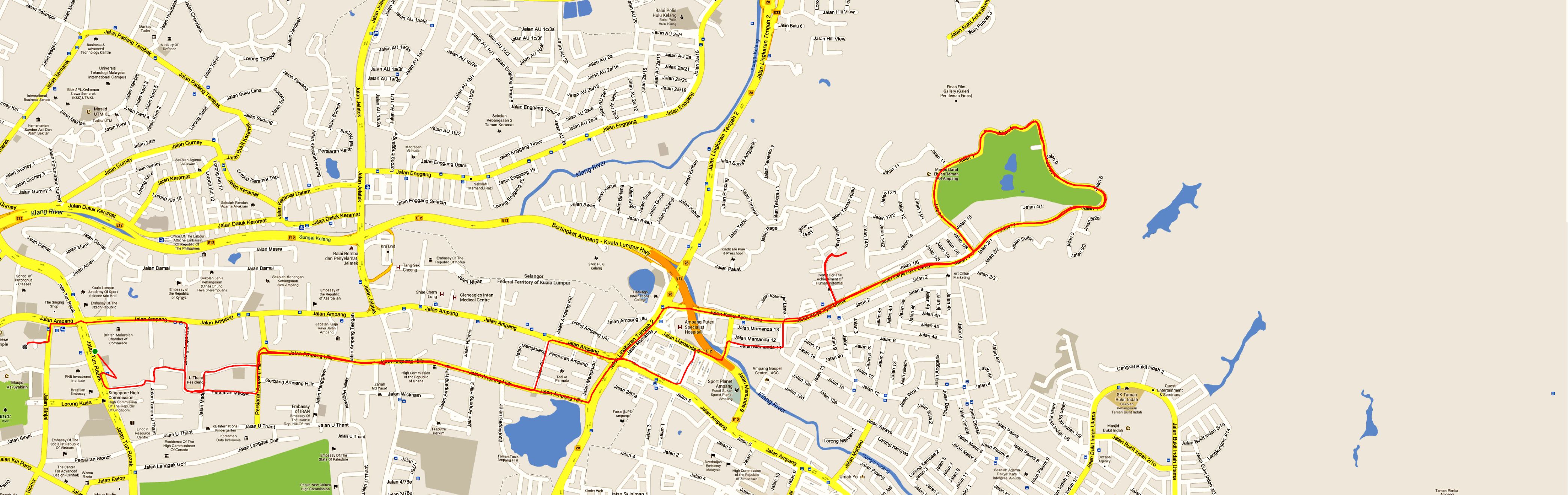
Kelab Darul Ehsan Ride Map

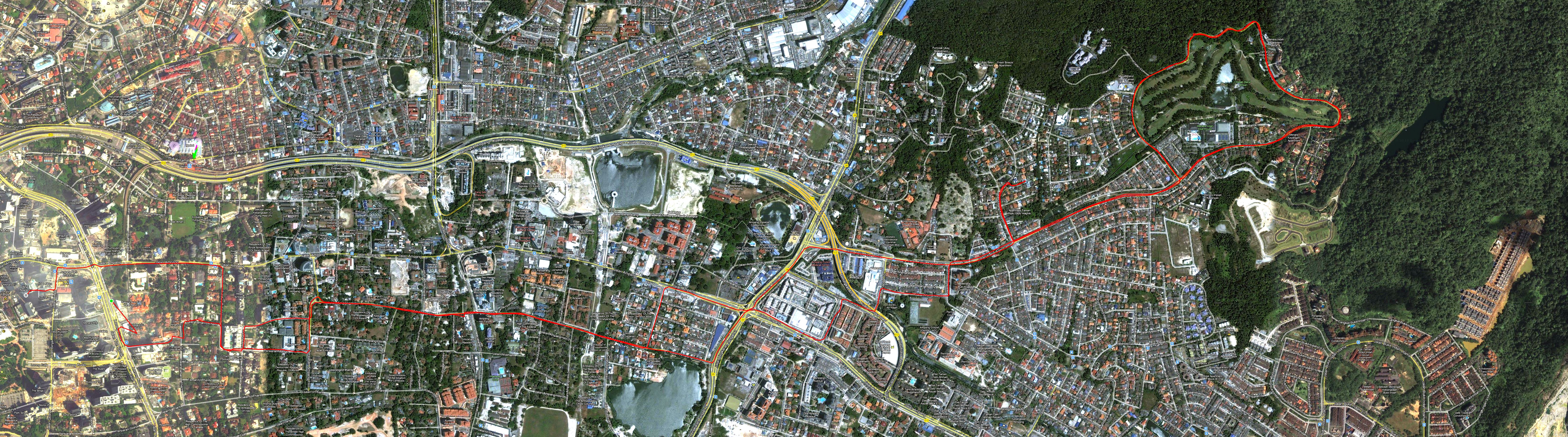
Jalan 1 loops around the Kelab Darul Ehsan golf course.  The golf course bumps up against southern end of the Titiwangsa Range.  As I rode around Jalan 1 I was at the very eastern edge of the city.  I had fairways and putting greens to my left, and jungle to my right.  Click on the street and satellite maps to open zoomable versions in new windows.

Kelab Darul Ehsan Ride Satellite

As I rode around the golf course I was not surprised to see monkeys along the side of the road.  I was surprised to see lots of wild boar on the jungle side of the road.

IMG_2073

The wild boar were such a novelty that I did the loop a second time so I could see them again.

Then it was back into the traffic to get home.  A wild ride in more ways than one.

Kilo Months

I started keeping track of my rides in January 2010.  I had a new road bike, and an even newer Garmin Edge 705 cycle computer.  Uploading the details to the Garmin Connect web site after every ride became standard practice.   That year I rode 3,173 kilometers.

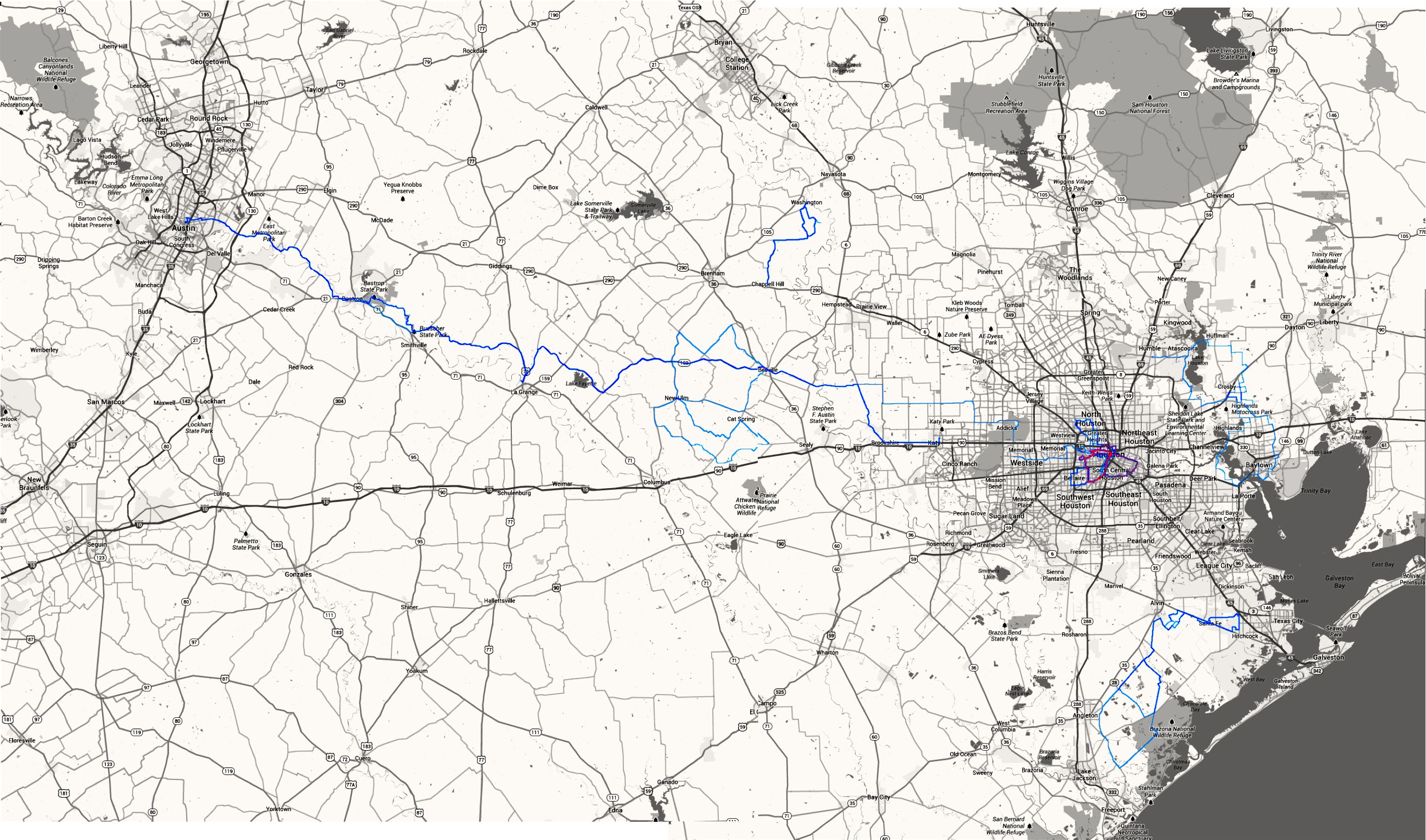
The heat map below shows where I rode for the first six months of 2010.  The most-ridden routes are depicted in red.  Click on the heat map to open the image in a new window.  You will see that most of my kilometers were accrued on the West End Tuesday and Thursday evening rides, and the Sunday Taco rides through Houston.

2010 Heat Map

Heat Map courtesy of Strava

I had some big rides outside metro Houston:  The Humble Lions Club Ride, The Space Race, and the BP MS150.  But I didn’t have a kilo month, which is my term for riding more than 1,000 kilometers in a month.

In mid-2010 I moved with my biker chick to The Netherlands.  The excellent cycling infrastructure there gave me more opportunity to ride, albeit on my own as I didn’t connect with a cycling group until the following year.

I started riding with the Not Possibles in March 2011.  The Saturday and occasional weekday rides with them boosted the distance I rode in 2011 to 6,985 kilometers.  In 2012 that number increased to 11,054 kilometers.  Almost of those kilometers were around Den Haag, with the 2011 and 2012 Ronde van Vlaanderen sportives, and the 2012 UCI World Championships sportive in Belgium thrown in for good measure.

Heat map courtesy of Strave

Heat Map courtesy of Strave

I racked up my first kilo month in August 2011.  The fine summer weather allowed me to ride eighteen times that month for a total of 1,085 kilometers.

Somewhat surprisingly I didn’t have another kilo month until January 2012, when I rode 1,091 kilometers.  I then had four more kilo months that year.  March, and three in a row from June to August.  My Not Possibles friends and I had a good summer that year.  My biggest ever kilo month was in July, when I rode 1,718 kilometers.  I had the luxury of being able to go on twenty five rides that month.

In October 2012 my biker chick and I moved home to Kuala Lumpur.   My ride frequency and average distance dropped dramatically for some months before slowly increasing again.  So it took more than a year before I had another kilo month, in September 2013.  Helped by five rides of at least 100 kilometers each.

My 2013 heat map looks a lot like my 2010 Houston heat map in that most of my rides are limited to a couple of routes.  Int his case KESAS and the Guthrie Corridor Expressway, with Putrajya and Genting Sempah thrown in for variety.  Scattered around the map are the one-off events that I rode in Johor Bahru, Kuala Terengganu, Kuantan and Penang,  My Racun buddies and I also rode to Fraser’s Hill, and I joined Dave Ern on a ride to Cameron Highlands.  You can also read about the Bike X and Broga 116 rides.

Heat Map courtesy of Strava

Heat Map courtesy of Strava

It looks like I will ride about 7,300 kilometers in 2013.  And perhaps have another kilo month this quarter.  Garmin Connect will reveal all.

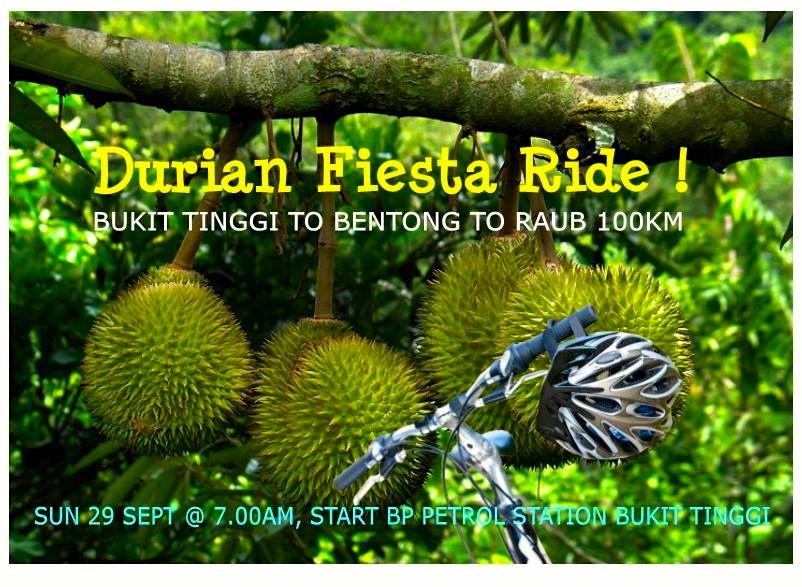
Durian Fiesta Ride

September 2013 has turned into a month for metric century rides.  Yesterday Chris, Keat, Mark, Raj, Seow and I joined Dave Ern and about twenty-five other riders on a hunt for durians.

Durian Fiesta Banner

Photograph courtesy of Dave Ern

The durian is known as the King of Fruits in Malaysia.  Durian is a seasonal fruit, generally available  in Malaysia from June to August and from end November to January.  Its popularity has led to extensive cloning and farming, not just in Malaysia but throughout South-East Asia.  One result is that durians can now be bought all year round, although supply is limited and aficionados will tell you that the quality of the fruit in the off-season is variable.

Keat,  Raj, Seow, Mark, photographer Chris and I started from the BHP petrol station in Kampung Bukit Tinggi.

Photograph courtesy of Chris Chin

Photograph courtesy of Chris Chin

The route that Dave Ern had planned took us downhill along the old Bentong Road.  I travelled this road many many times as a child.  Then it was the only way to get from Kuala Lumpur to points east of the Titiwangsa Range, which bisects the peninsula from north to south.

Durian Fiesta Route

After about twelve kilometers the road levelled out, and it was relatively flat from the Bentong Hot Spring near Kampung Temiang to the town of Bentong.

Durian Fiesta Bentong

We made a refuelling stop at Bentong.  Kedai Kopi Phoon is famous for its wanton noodles.  Definitely finger-licking good.

Durian Fiesta Kedai Kopi Phoon

Photograph courtesy of Mark Lim

The plan had been to continue on to the town of Raub while a support car drove on ahead scouting for durian stalls.  Seven kilometers north of Bentong we got word that there were no durians to be found up the road toward Raub.  So we turned off the Bentong to Raub road and rode toward Kampung Baru Sang Lee instead.

We made an unscheduled stop just after that turn.  Raj and I watched as Keat replaced his punctured rear inner tube.  In case you think that I was not helpful, I did lend Keat my pump. 🙂

Photograph courtesy of Mark Lim

Photograph courtesy of Mark Lim

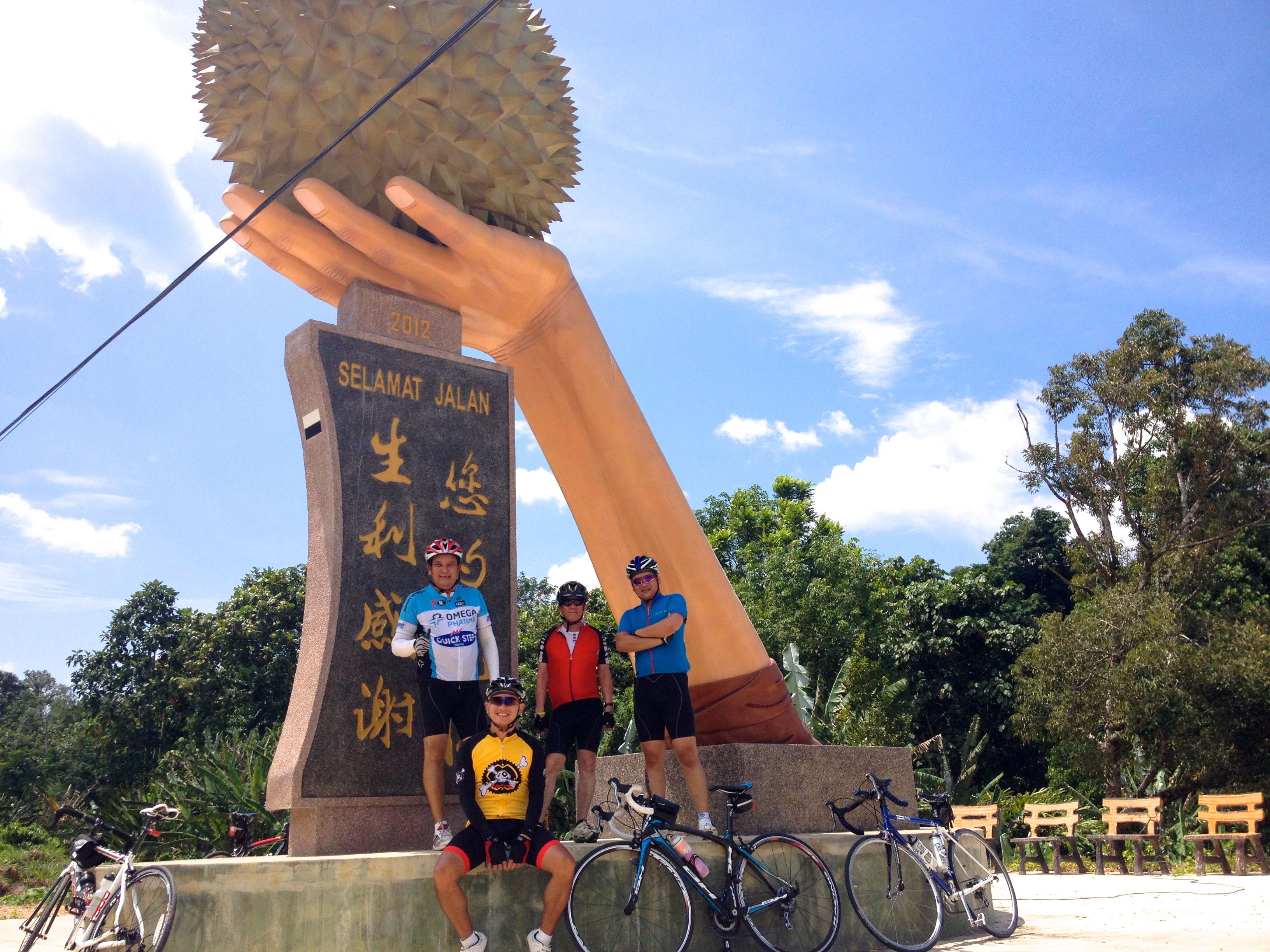
Kampung Baru Sang Lee is surrounded by extensive durian orchards.  The village does not hide its claim to fame.

Durian Fiesta Kampung Baru Sang Lee

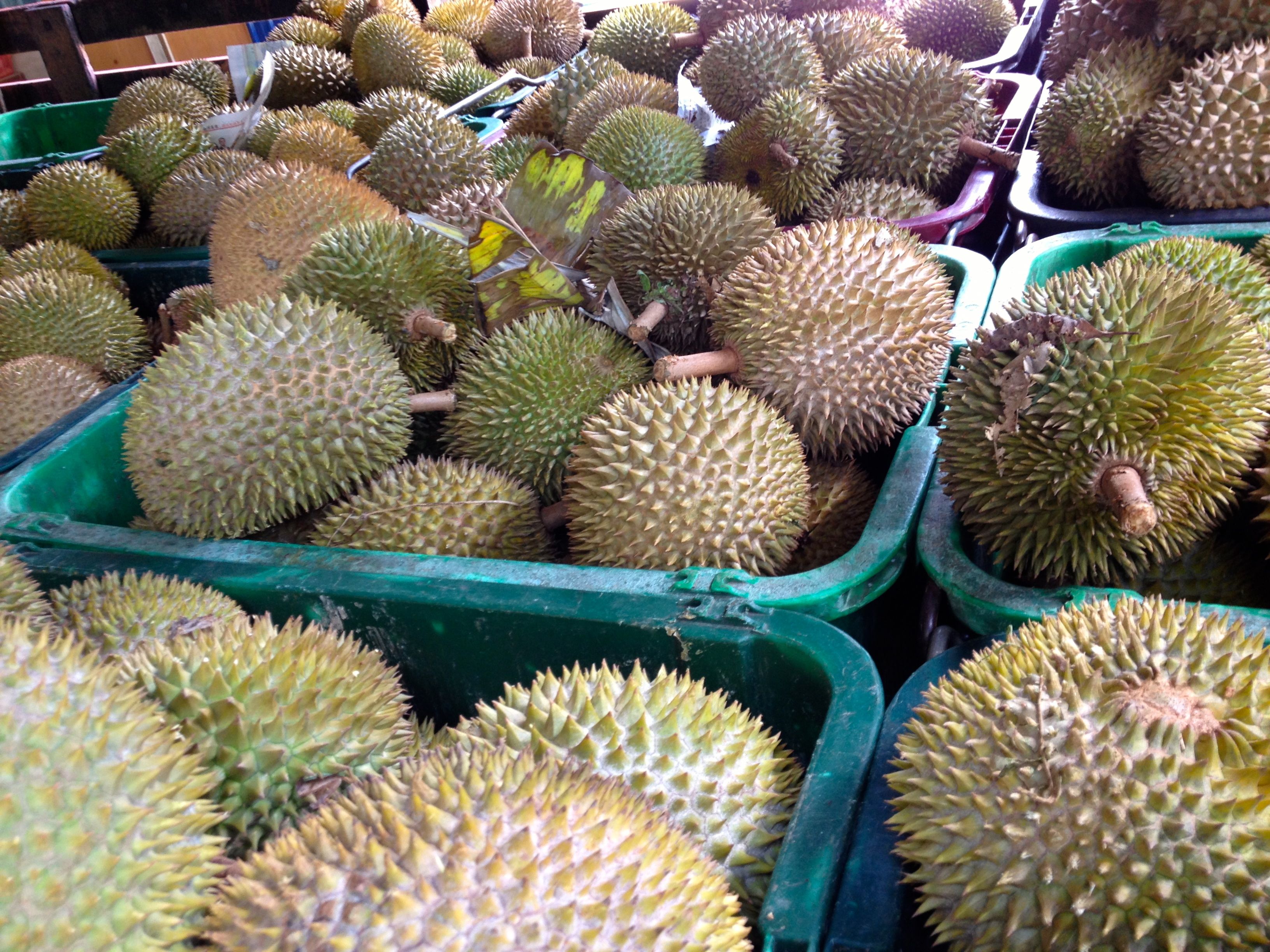
We found lots of durians at a large roadside stall in the village.

Durian Fiesta Fruit

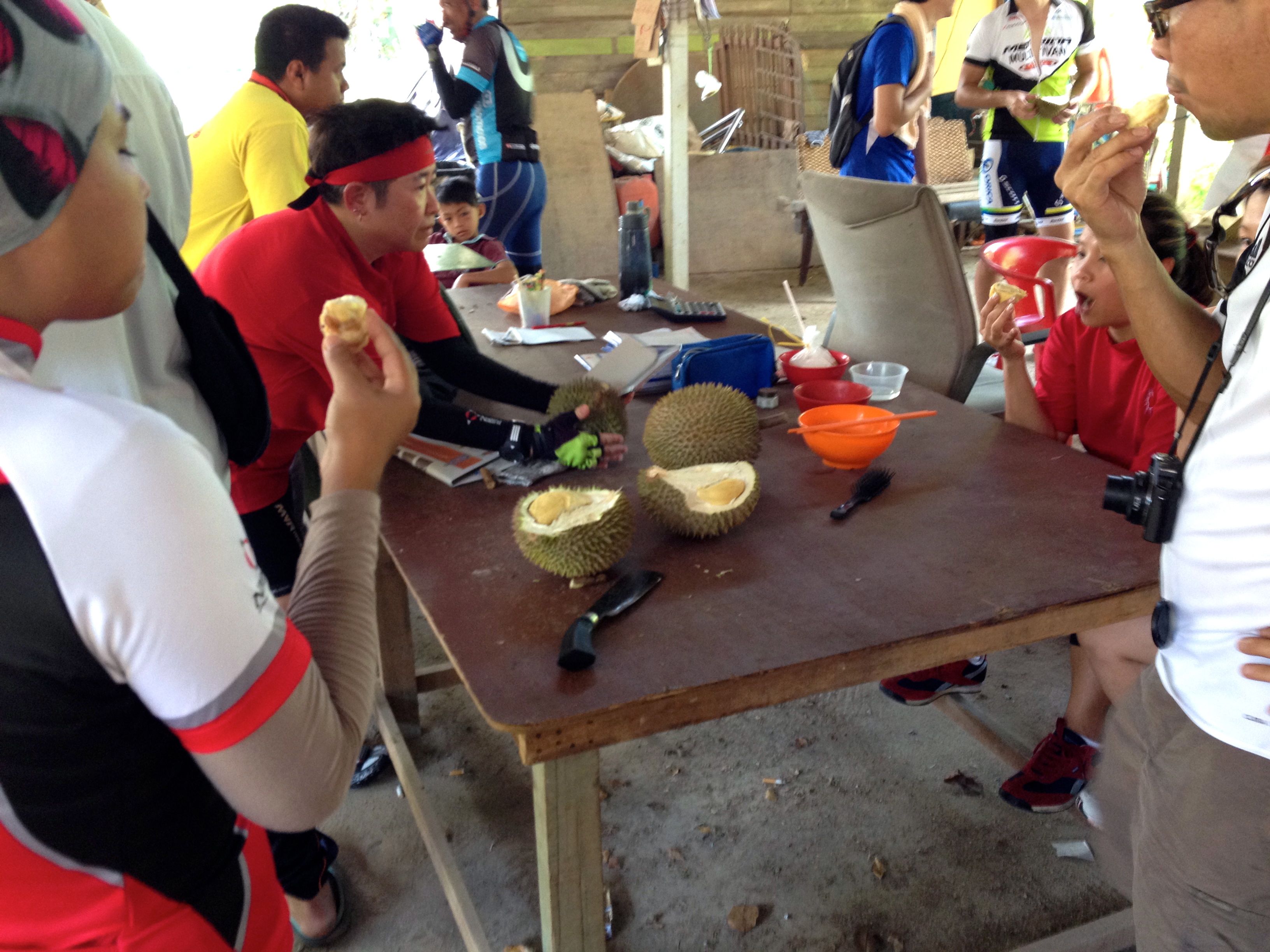
Unfortunately these were already loaded onto a lorry, ready to be hauled away to a wholesaler somewhere.  There was precious little left to be eaten at the stall.  The durian lovers amongst us had to make do with sharing just a couple of fruit.

Durian Fiesta Eating

So the Durian Fiesta Ride was a disappointment for anyone who had hoped to feast on the fruit.  But the ride was a lot of fun nonetheless.

This was the first metric century for Chris.

Durian Fiesta Chris Return

For Raj and Seow too.  It was a very hot day, but we had shaded and quiet roads for the most part.

Durian Fiesta Turnaround

Quiet for the most part.  Every now and then we had one of these for company.

Durian Fiesta Lorry

I overtook this lorry before slowing down to take this photograph.  As the lorry swept past I saw Mark behind it, being sucked along in the slipstream.  I have never been motor-paced by an eighteen-wheeler before.  Mark and I had a blast effortlessly hitting 50kph plus behind this lorry.  Later we latched onto the back of an oil tanker for another tow.  The experience of being pulled along at speed was worth all the dust we ate.

We stopped at a Shell station in Bentong to wash the dust out of our throats.  This is now my mid-ride drink of choice.

Durian Fiesta Chocolate Milk

As I downed a half-liter of cold chocolate milk I noticed this display next to the cash register.  What first caught my eye was the collection of mini-LEGO cars and trucks.  Then I saw what the toys were sitting on.  PowerBars and PowerGels.

Durian Fiesta Shell Station

This petrol station must attract a lot of cyclists.

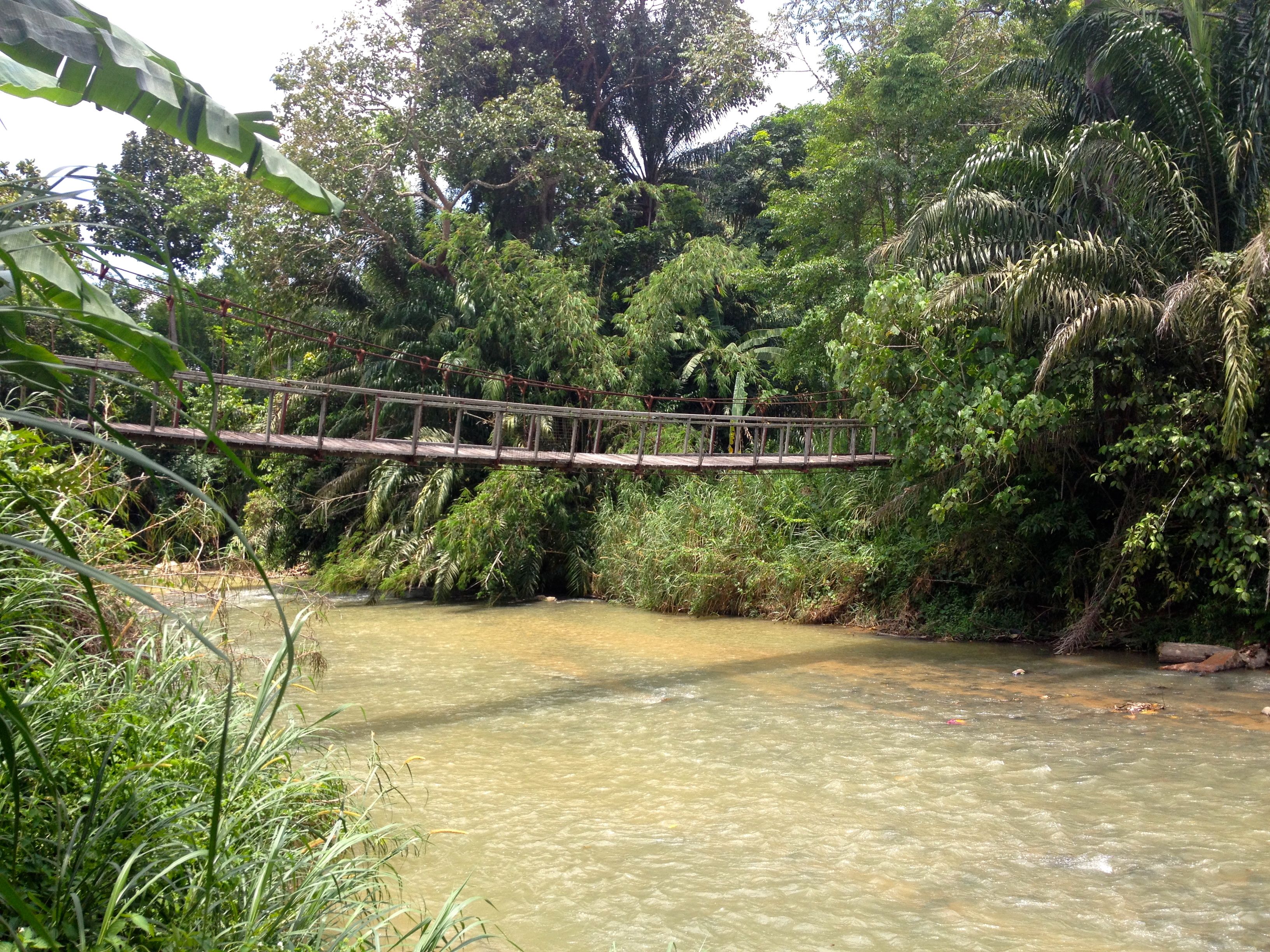
The day got hotter and windier.  Just as the road started tilting upward south of Bentong.  We regrouped at the Bentong Hot Spring.  Sadly the suspension bridge across the Benus River makes a more interesting photograph that the Hot Spring does.

Durian Fiesta Sungai Benus Bridge

The last photo op was the small waterfall four kilometers from the end of the ride.

Durian Fiesta Waterfall

The section of the ride between Kampung Bukit Tinggi and Kampung Rasia is the nicest.  All the traffic across the Titiwangsa Range is now carried by the Karak Highway.  What is left is a peaceful road that follows the arcs and curves of the Benus and Tanglir rivers, hemmed in by primary and secondary jungle.

Durian Fiesta Sungai Kenung

Everybody made it back to the BHP petrol station at Kampung Bukit Tinggi.  Tired and hot, but glad to have made the trip.  It was a very pleasant century ride, despite the shortage of durians.

Heads Down at the Terengganu Century Ride 2013

Courtesy of Terengganu Century Ride

Courtesy of Terengganu Century Ride at terengganucenturyride.blogspot.com

Keat and I joined 1,000 other cyclists from all over Malaysia, Singapore and Thailand for the 2nd Terengganu Century Ride.  The ride started and ended in Kuala Terengganu (KT), the capital city of the east coast state of Terengganu.

KT is a six hour drive from Kuala Lumpur (KL).  We left KL at 6am and so had time for lunch at the Permai Hotel, the official event hotel, before we collected our numbers.

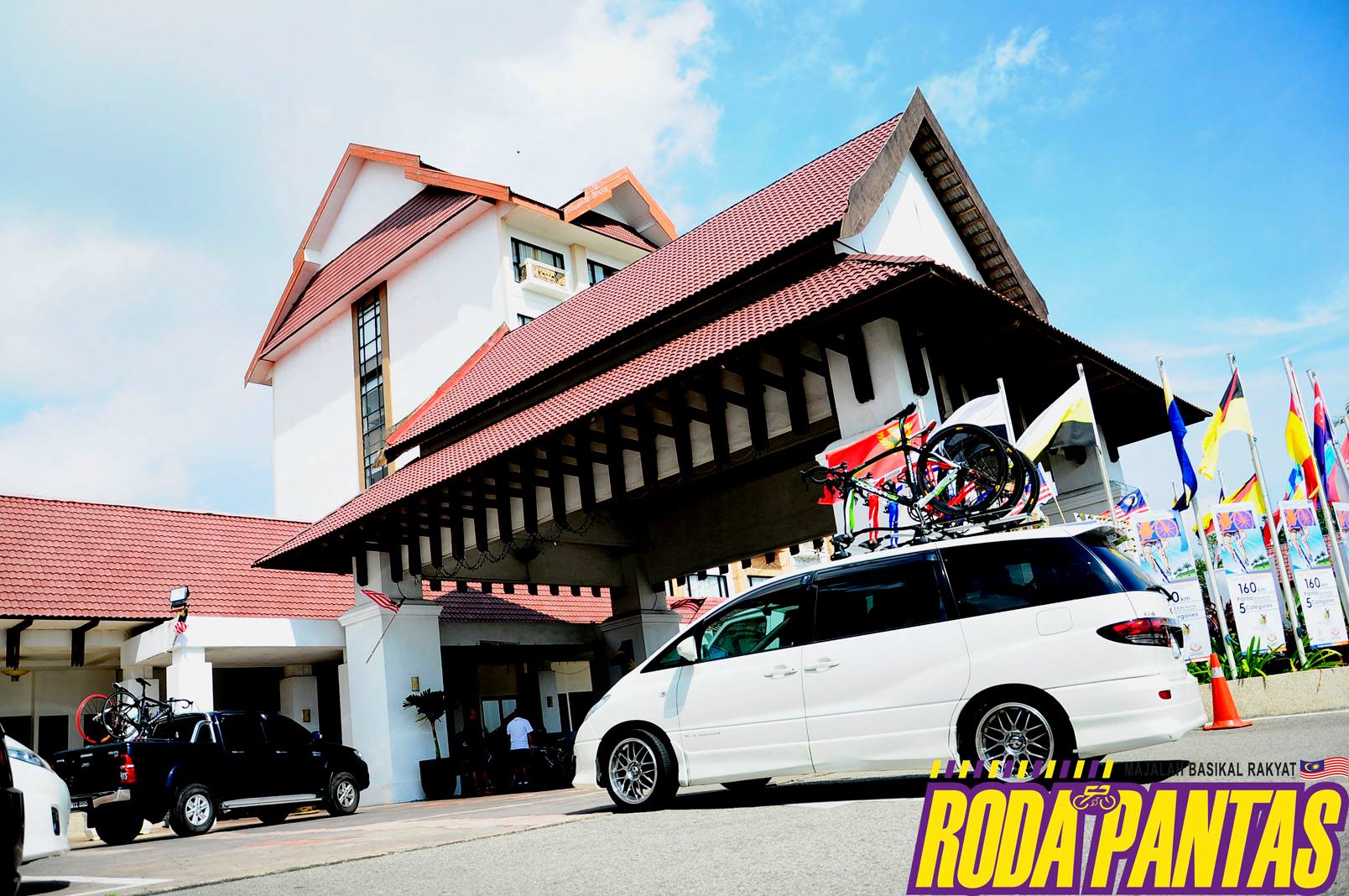
Photo courtesy of Roda Pantas magazine

Photo courtesy of Roda Pantas magazine

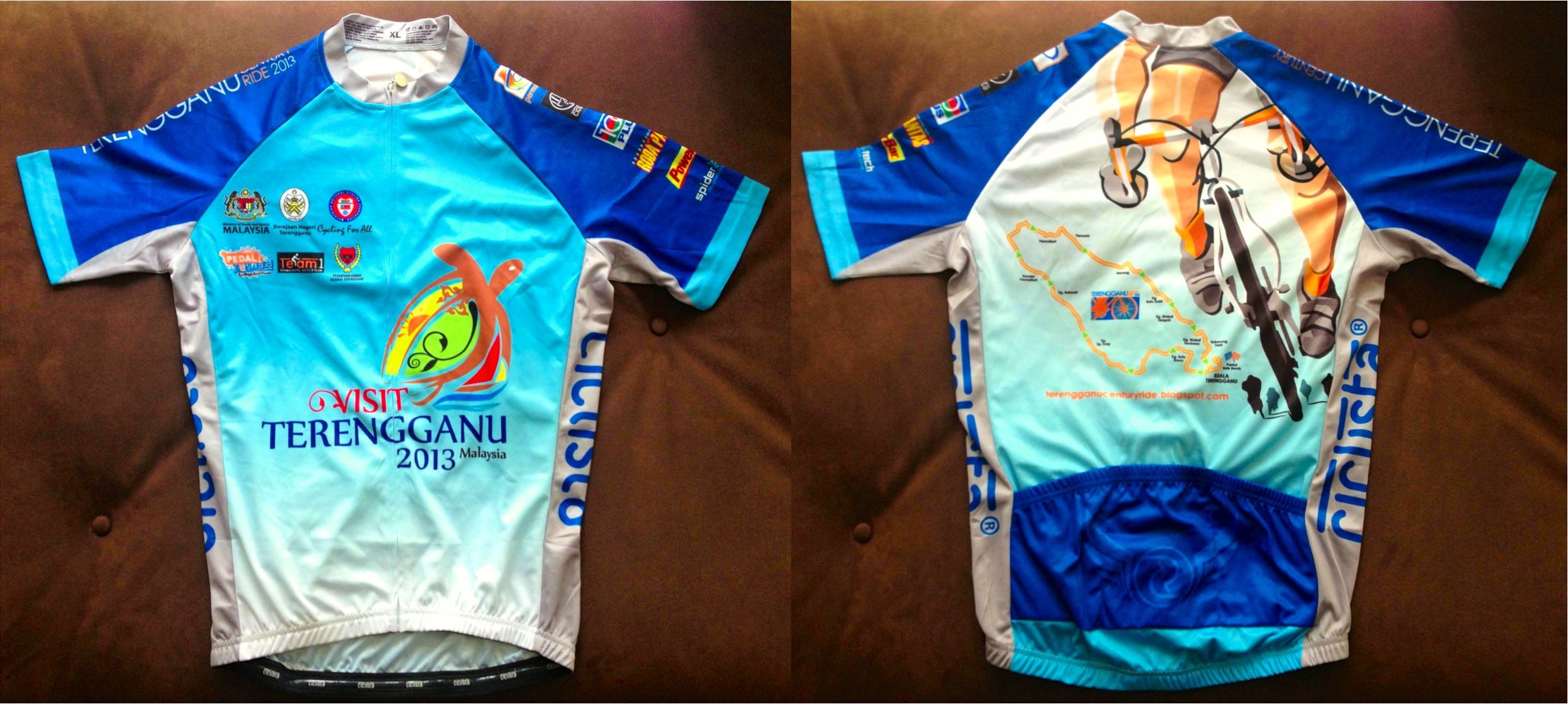
The expectation in Malaysia is that any organized ride that has a registration or entry fee provides each cyclist with a jersey and a finisher’s medal.  The TCR was no exception.  I though the jersey was a particularly nice design.

TCR Jersey

It was clear from the moment we stepped into the hotel that this was going to be a very well-run event.  There was a nice display of bicycles in the lobby.  There were separate goodie bag collection areas for each of the five participant categories.  We had our timing chips checked to ensure that the right name was associated with each rider number.  Teams with a support vehicle (must be nice!) were given large identifying windscreen stickers, and explicit instructions  for where to park before the start of the event.  There was a little bike expo where you could buy gels, bars, bottles, sun glasses, helmets and so on.

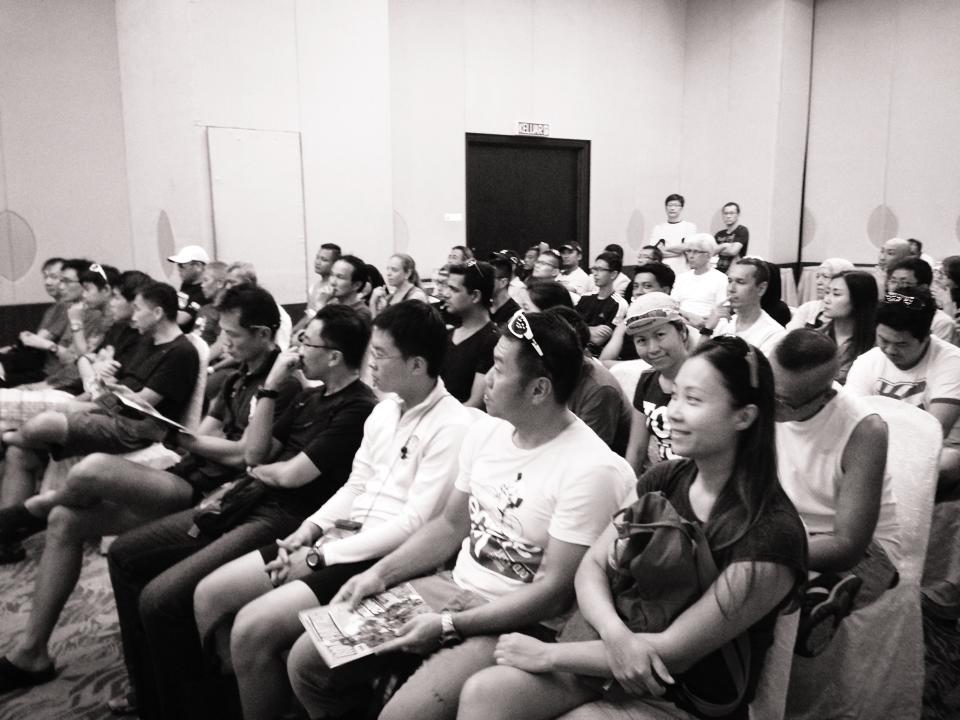
There were also three rider technical briefings spread across the afternoon.  Keat and I were good boys and went to one of them.  We did sit at the back of the room though.  Just like we used to do in school.  But we paid attention.  Just like we sometimes used to do in school!

TCR Briefing

Photo courtesy of Terengganu Century Ride

We had hoped to ride along the beach that evening, but we weren’t able to.

TCR Rain

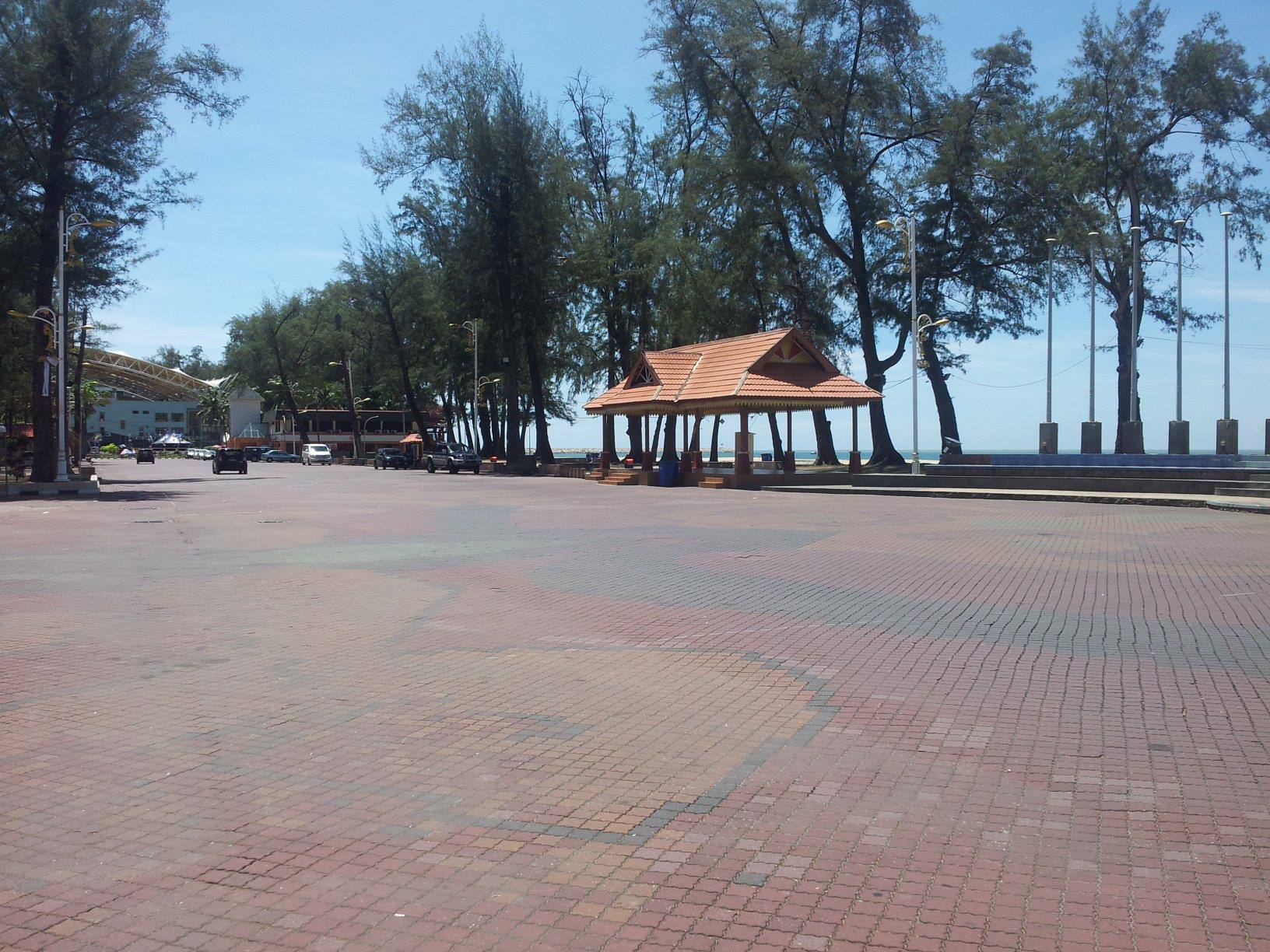
Instead we went for a wet walk to check out the start area for the ride.  This photograph was taken earlier in the day.  It was still pretty quiet when we got there at about 6.30pm.

Photo courtesy of Pulse MediaCommunications

Photo courtesy of Pulse MediaCommunications

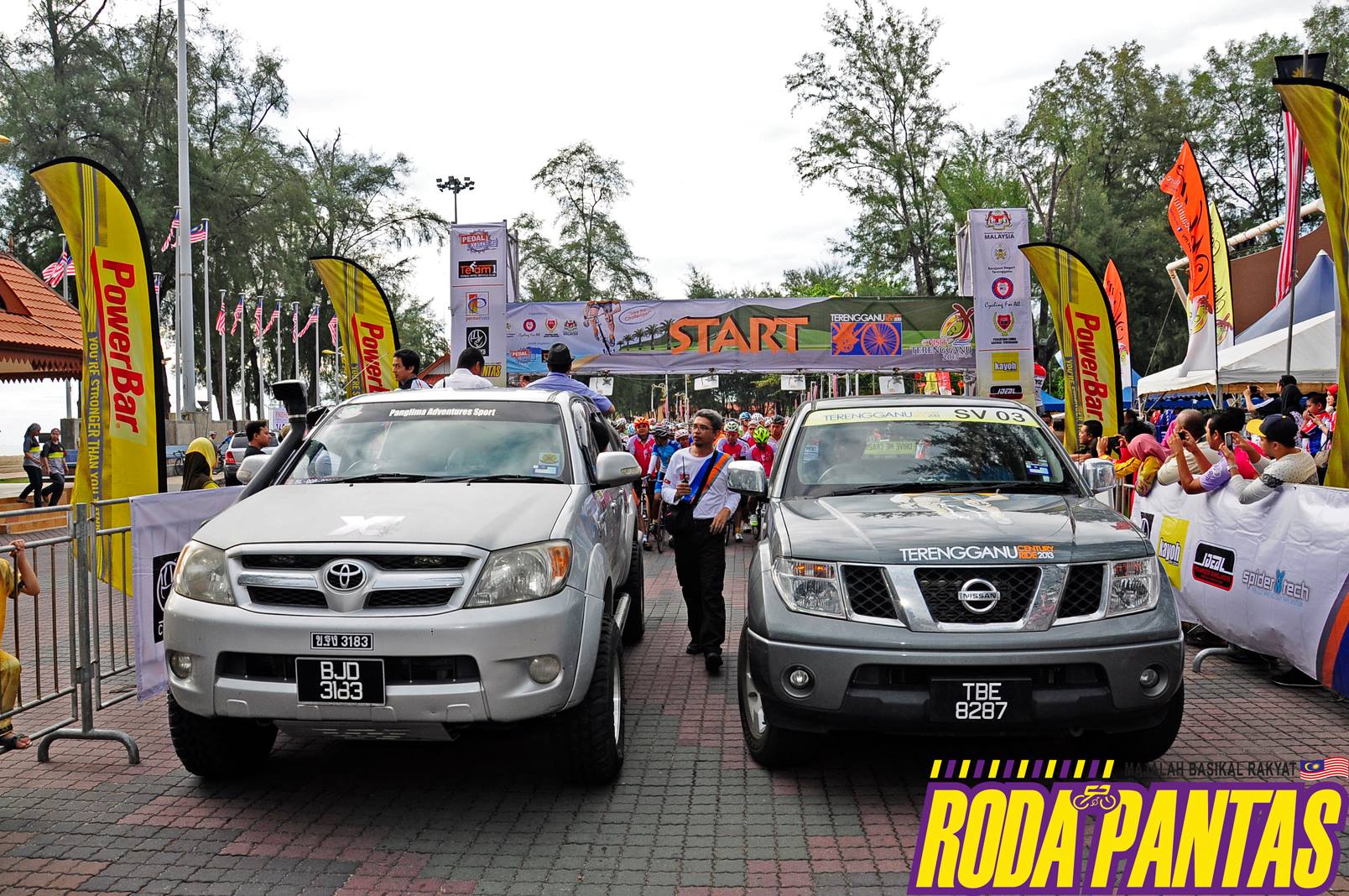
The elves must have been hard at work overnight.  By morning there was a Start/Finish gantry, complete with overhead timing transponders, along with barriers, banners and escort vehicles in place.

Photo courtesy of Roda Pantas

Photo courtesy of Roda Pantas

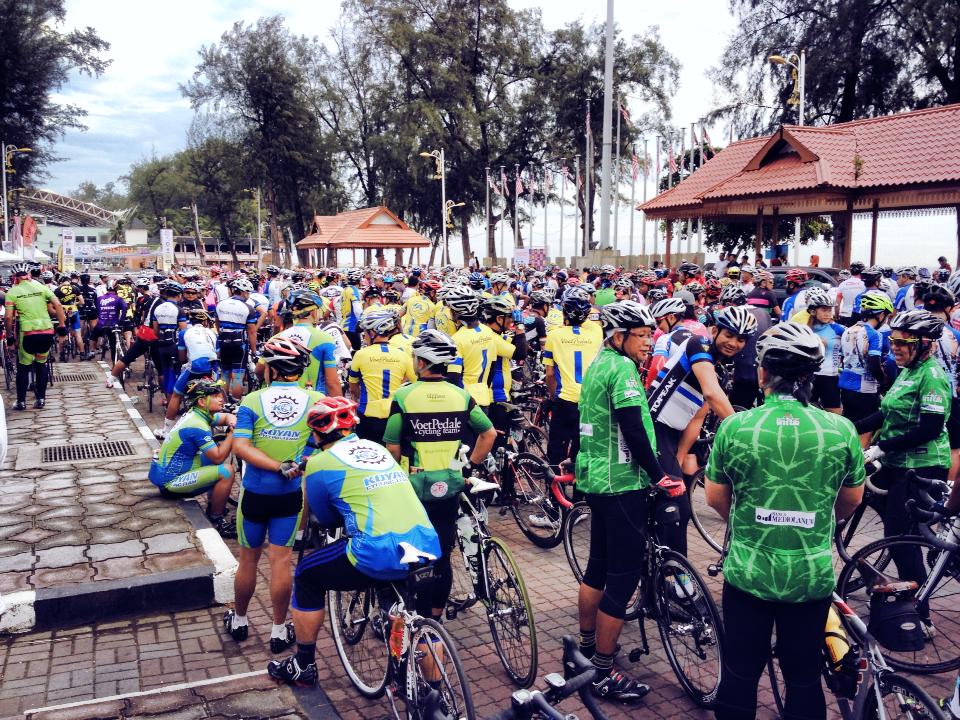
It rained again in the night, but it was dry and overcast by the 8.15am start time.  Keat and I hung out at the back of the pack behind the start line.  We didn’t want to get run over by the three hundred or so riders who would finish this 160km event in under five hours.

Photo courtesy of Pulse MediaCommunications

Photo courtesy of Pulse MediaCommunications

The ride started with a loop through the city.  Including a stretch through Chinatown along Jalan Kampung Cina, which is one of the oldest streets in KT.

Bike-eye view courtesy of Peter Lim

Bike-eye view courtesy of Peter Lim

The route then took us inland and north for 85km before a right turn at Guntong pointed us toward the coast.

TCR 2013 Route

One of the highlights of this ride (I’ll get to the lowlight) was the cheers we got from the throngs of primary school children waving at us from behind their school fences as we rode by.  We did ride past quite a few schools.  All of which seemed to be on a break as we came by.

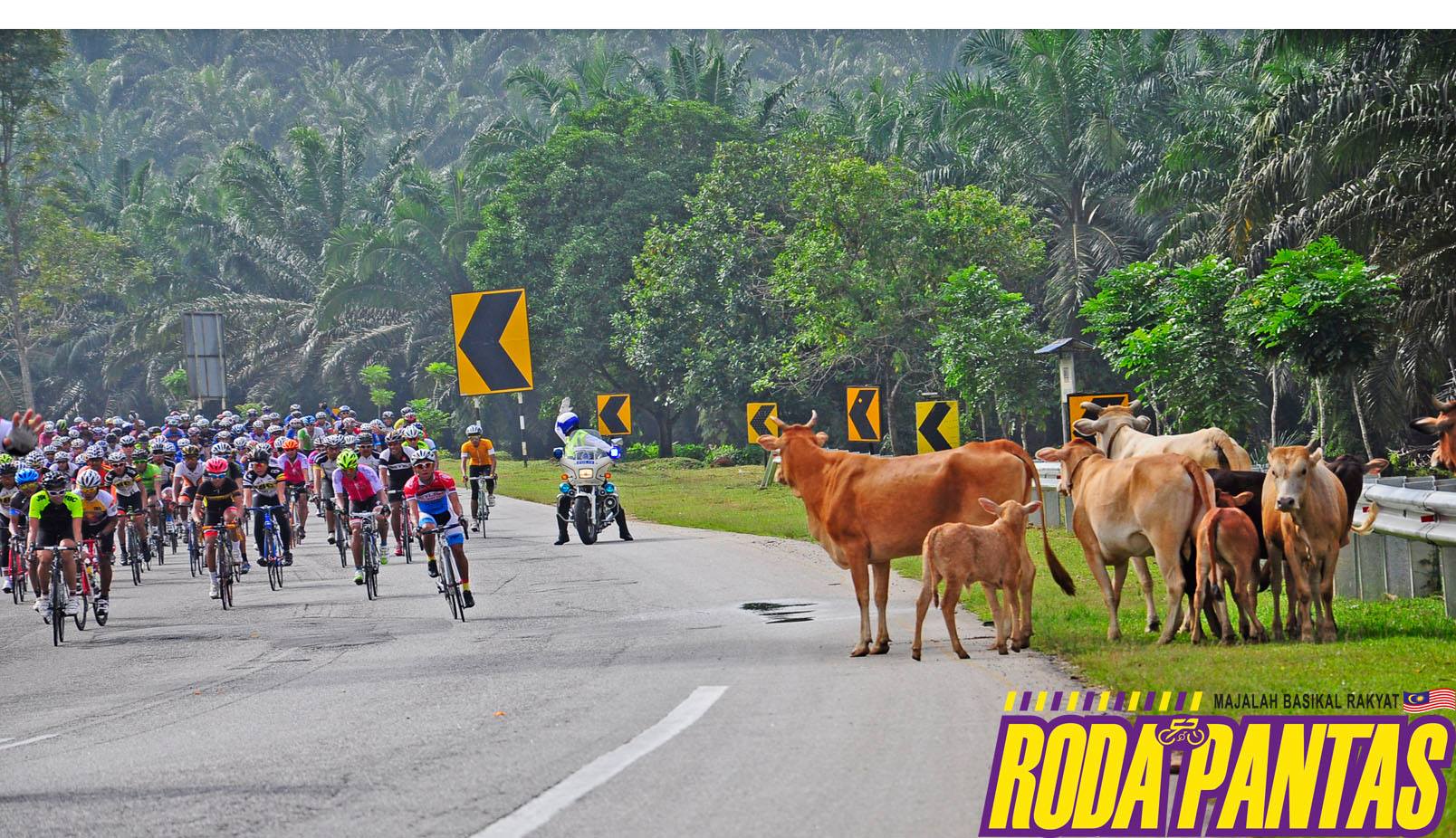
We had a few other spectators along the way.

Photo courtesy of Roda Pantas magazine

Photo courtesy of Roda Pantas magazine

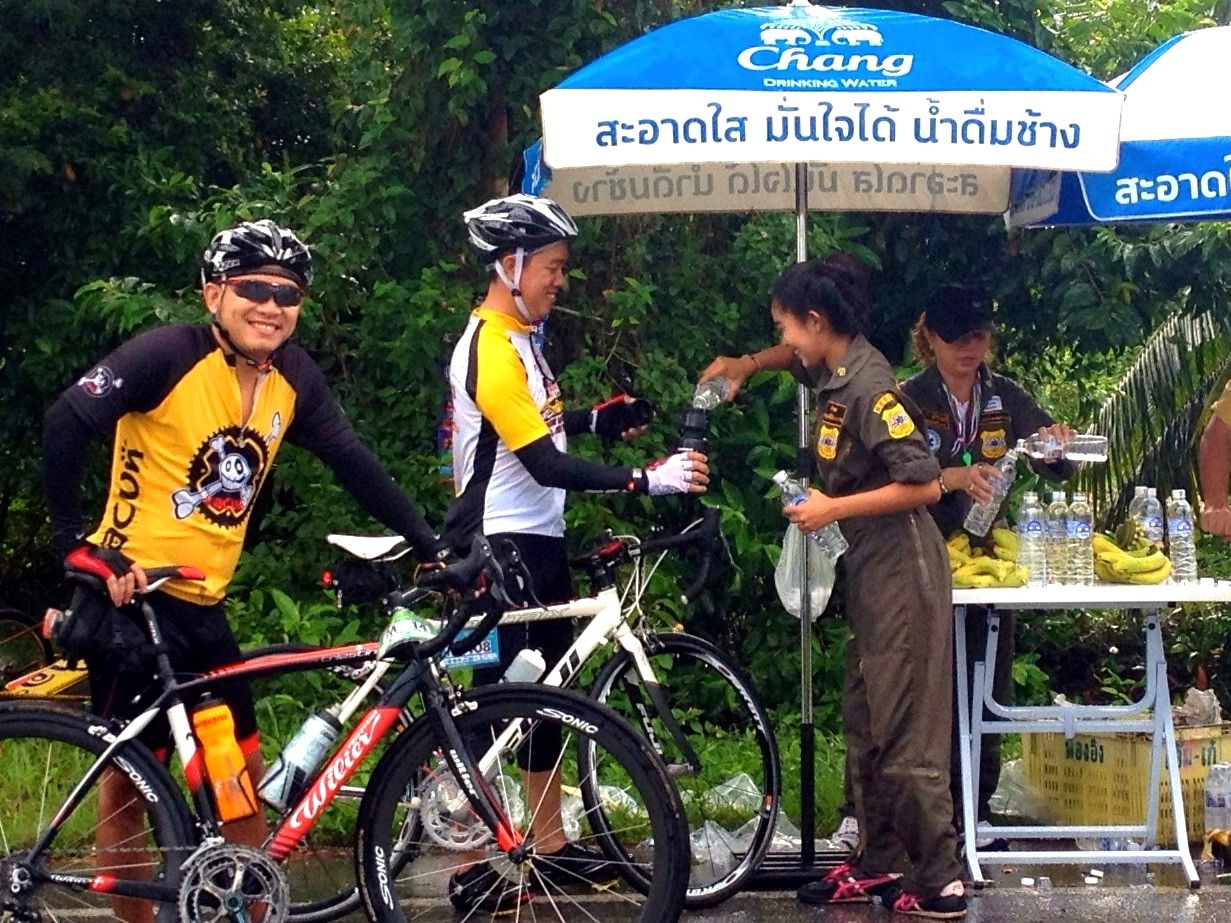
It was relatively cool at the start, but it did warm up steadily as the kilometers ticked by.  So the water stops were very welcome.  Another highlight of this ride was the volunteers at the stops.  They did did a great job handing out bananas, water and ice.  Both to riders who were happy for a bit of a rest, and to riders who were pushing for fast times.  At least one such rider needs to practice his drink grab though.

Photo courtesy of Roda Pantas magazine

Photo courtesy of Roda Pantas magazine

The course was relatively flat.  Much like the Netherlands is.  And much like the Netherlands, it was windy.  Nice at the start of the ride, despite being a headwind, when it was still cool.  Not so nice as a headwind after the temperature had risen.

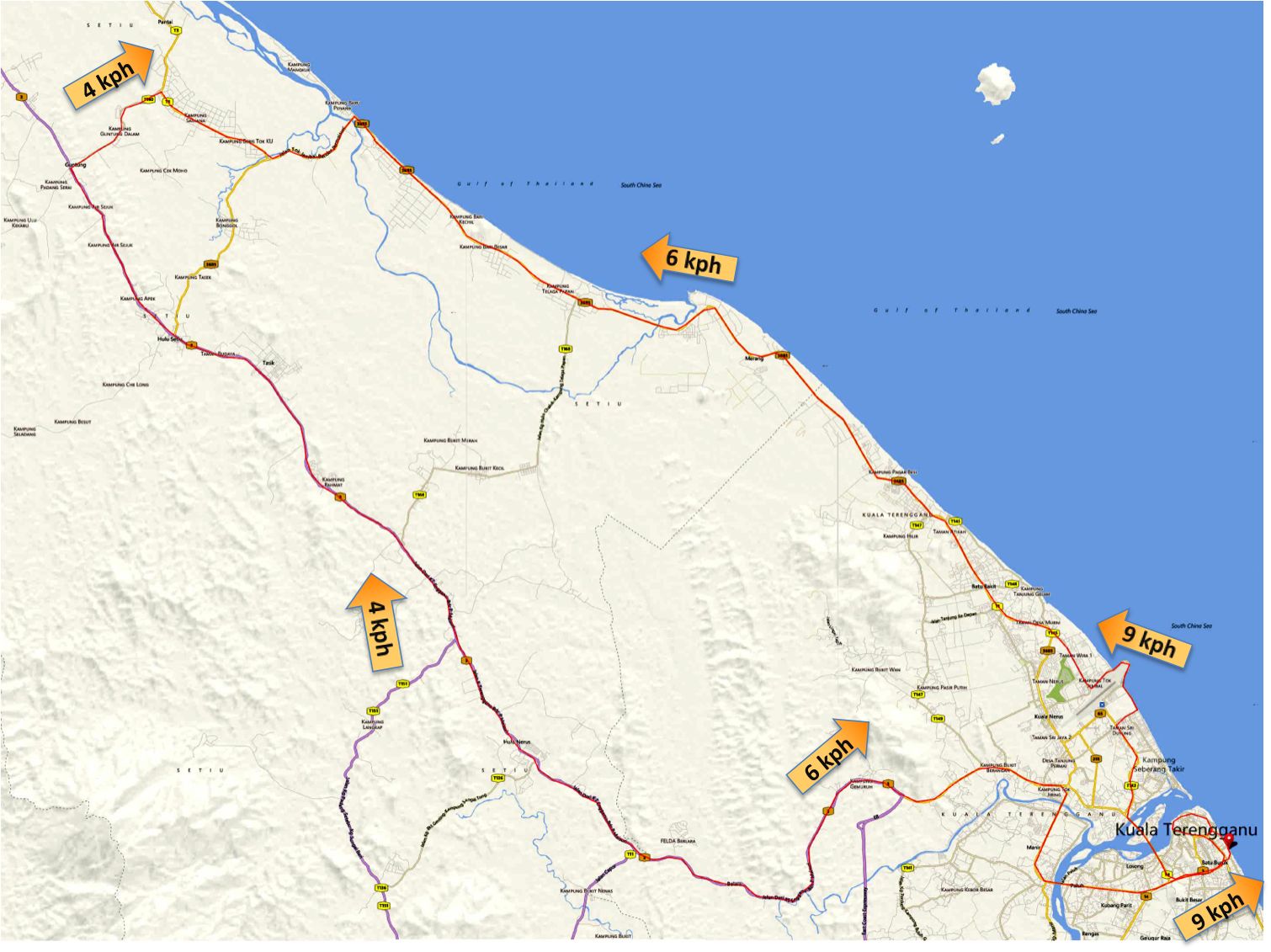
The wind direction and wind speed changed throughout the day.  I had a headwind for 35km, then a crosswind that became a tailwind that reverted to a crosswind until the turn at Guntong.  The tailwind from that point was short-lived.  By the time I made a sharp right turn at the 90km mark the wind was changing direction yet again.  It became more and more of a crosswind for the 10km to the coast.  Along the coast it was a steadily stiffening headwind for the remaining 60km.

The annotations on the route map below show wind direction and wind speed at the start, and what they were at the point I had reached after riding for one hour, two hours, three hours and so on.

I have never spent so much time in the drops.

TCR 2013 Route with Wind

The views along the beach were nice, but they were hard to appreciate with my head down as I tried to find respite from the wind.

Photo courtesy of Terengganu Century Ride

Photo courtesy of Terengganu Century Ride

The gusting headwind made the last 30km or so feel interminable.  Thankfully I didn’t feel as bad as I did during the last 30km of the Kuantan Century Ride.  I did a better job of managing my core temperature during the TCR.  But I started to cramp a little, and bonk as well.  I didn’t drink enough, and I should have eaten more during the ride too.

The wind was the lowlight of this ride.   The only negative though, and not enough of one to detract from a very enjoyable event.

The TCR 2013 Event Director, Mr. Zulkarnain Shah, the members of his organizing committee, the army of volunteers, the Royal Malaysian Police and the Malaysian Red Crescent all helped make this event enjoyable and as safe as possible for all the participants.

The route was well-marked with large arrows at eye-level.  Busy intersections were manned by police personnel who made sure that riders did not have to stop for traffic.  There were dozens of mobile marshals on the course to provide assistance where needed.  Including acting as outriders for cyclists making their way along vehicle-crowded roads as the route came back through the city on its way toward the finish on Jalan Pantai Batu Buruk.

As we came to a stop after 161km we got our finisher’s medals.

TCR Medal

And after hours of heads down in the wind it was heads up for the post-ride entertainment.

Photo courtesy of Terengganu Century Ride

Photo courtesy of Terengganu Century Ride

Campaign For A Lane 2013

There were two organised rides scheduled in Penang on 8th September.

One was the first ever ride across the Penang Second Bridge, from Batu Kawan on the mainland to Penang island and back again.  This bridge is in the final stages of construction and is not yet open to traffic.  It will be the longest bridge in Southeast Asia.  The other was the 5th Campaign For A Lane (CFAL) ride around the island of Penang.

My Racun Cycling Gang buddies did the CFAL ride last year.  So we signed up for the bridge ride.  A bus was chartered and accommodation booked.  Only for the bridge ride to be postponed at the very last minute.

Hello CFAL!

CFAL Banner

Registration for the CFAL ride had long closed.  Not a problem.  We would be ghost riders.  The term for unofficial participants in an event.

The bus rolled to Penang on Saturday as planned.

Photo courtesy of Marco Lai

Photo courtesy of Marco Lai
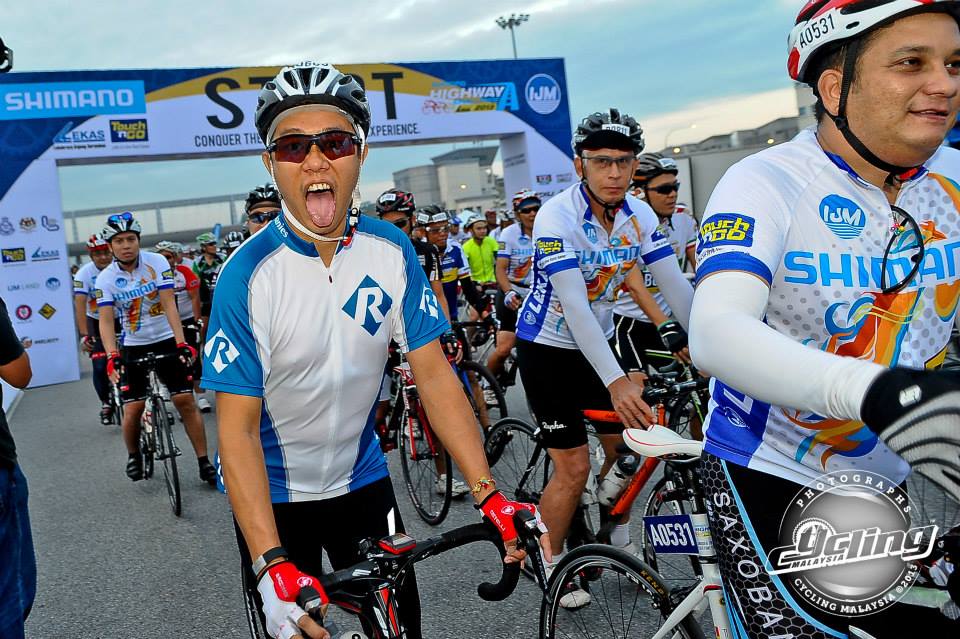
Penang is touted by some as having the best street food in Malaysia.  So Saturday was spent cycling from one food venue to another.

Photo courtesy of Debrizio Wong

Photo courtesy of Debrizio Wong

The Campaign For A Lane has been a success in Penang.  These symbols,

Penang Bike Lane

and dedicated bike lanes, have popped up all around the city.

Photo courtesy of Christopher Chin

Photo courtesy of Christopher Chin

The first CFAL ride in 2009 drew 750 cyclists.  Registration for the 2013 edition was cut off at 3,000 cyclists.  A total no doubt exceeded thanks to us ghosts in the peloton.

The ride started promptly at 7.00am from the Esplanade Park.  The start line was at the Penang Town Hall.

CFAL Penang Town Hall

The clock-wise route circumnavigated the island.

CFAL Route

10 km into the ride we caught sight of the first Penang Bridge, opened in 1985.

CFAL Penang Bridge

Those clouds were a warning.  A further 10 km down the Lim Chong Eu Highway the clouds became ominous.

CFAL Tun Dr Lin Chong Eu Highway

We got rained on.  A lot and for most of the remainder of the ride.  The big plus for me was that the rain kept the day fairly cool.  I had no issues with hyperthermia on this ride.

Penang looks flat but there were two substantial lumps to get over.  The first was at the south end of the island where the route turned north through Kampung Tengah.  We went from sea level to about 140 meters / 460 feet.

The bigger lump was the approach to the Teluk Bahang Dam in the north-west corner of the island.  That climb topped out at about 225 meters / 740 feet.  The payoff was views like this.

Photo courtesy of Mark Lim

Photo courtesy of Mark Lim

The wet road meant that this descent had to be negotiated with care.  The turns were especially tight in places.

There were a few more short and sharp climbs to get over as the road made its way along the coast through Batu Feringgi and Tanjong Bungah at the northern tip of the island.  Then it was past the beachfront hotels and malls along Persiaran Gurney to the finish at the Esplanade Park.

CFAL Penang City Hall

We were starving ghosts by the end of 82 km ride.  Albeit for only as long as it took to get to a restaurant!

I wonder how many of us weighed more when we arrived back in Kuala Lumpur on Sunday evening than we did when we left KL on Saturday morning.

Chain Checkers Do No Good Just Sitting in Your Toolbox

I have not been regularly checking my bicycle chains for wear.  I have no excuse for not doing so.  I have the necessary tool for the job.  Two of them in fact.

Chain Checker

The purist will argue that a steel ruler or steel tape measure is the most accurate tool for measuring chain wear.  Using a ruler can however be error-prone because it is necessary to hold the ruler precisely and measure one end while making sure the other does not slip.  So tools like these ones have been created.  They are not as accurate as a properly-used ruler, but they are an easier and faster way to measure chain wear.

Chain wear is often referred to as chain stretch, but this is a misnomer.  The side plates of a chain do not deform under pedalling forces.  Rather it is wear to the pins, bushes and rollers that causes the distance between the pins to increase, thus giving the illusion of stretch.

This diagram shows A. pin/bushing wear, and C. bushing/roller wear.  B shows an unworn chain.  Note that roller wear does not affect pin spacing.

Illustration courtesy of par do.net at http://pardo.net/bike/pic/fail-004/000.html

Illustration courtesy of pardo.net at http://pardo.net/bike/pic/fail-004/000.html

In short, chain wear is indicated by an increase is the spacing between pins.  When I finally put my BBB chain checker to use it showed that the chain on  my titanium Alchemy bike had reached the point where it needed to be replaced.  What I didn’t know was when the chain had reached that point.  Had I been riding for too long on a worn chain, and perhaps damaged the drive train in the process?

Some of my Racun Cycling Gang had recommended Meng Thai Bicycle Centre for bike parts and service.  So I took the bike there to have a new chain installed.  Labor costs are still relatively low here as compared to the Netherlands, so I had less incentive to do it myself.  When I say low I mean a labor charge of  RM 30 / USD 9 to have a new chain installed and to get the bike serviced and tuned up.

My first ride with the new chain was up to Genting Sempah.  It quickly became obvious that I had waited too long to replace the chain.  The chain was skipping on one cog.  It didn’t matter which chain ring I was in.  The chain skipped on that one cog.

At first I couldn’t tell from looking at the cassette that there was anything wrong with it.

IMG_1663

A closer look revealed where the problem lay.

Cassette Wear

That shark-tooth profile on the fourth cog is not normal.,  The new chain rides too high up the ramp of the tooth and slips off.  The only solution was a new cassette.  I went with a SRAM PG 1070 cassette at RM 250 / USD 76 rather than replacing this SRAM OG 1090 cassette at RM 650 / USD 198.

The moral of this tale is to regularly check your chain for wear.  I now know, thanks to the late and great Sheldon Brown, that a chain that has just 1% of wear should be replaced.  Anything more than 1% chain wear and the sprockets are probably already damaged.

What is 1% of chain wear?  Ten links of a new chain are 25.4 cm long, measured from pin to pin.  If the last pin in link ten is just past 25.5 cm the chain needs to be replaced.  If the last pin is approaching 25.7 cm away then the most-used sprockets are already damaged.

I got 10,000 km / 6,214 mi out of the cassette.  I wonder how many more kilometers it would have lasted if I had replaced the chain as soon as it showed 1% wear.
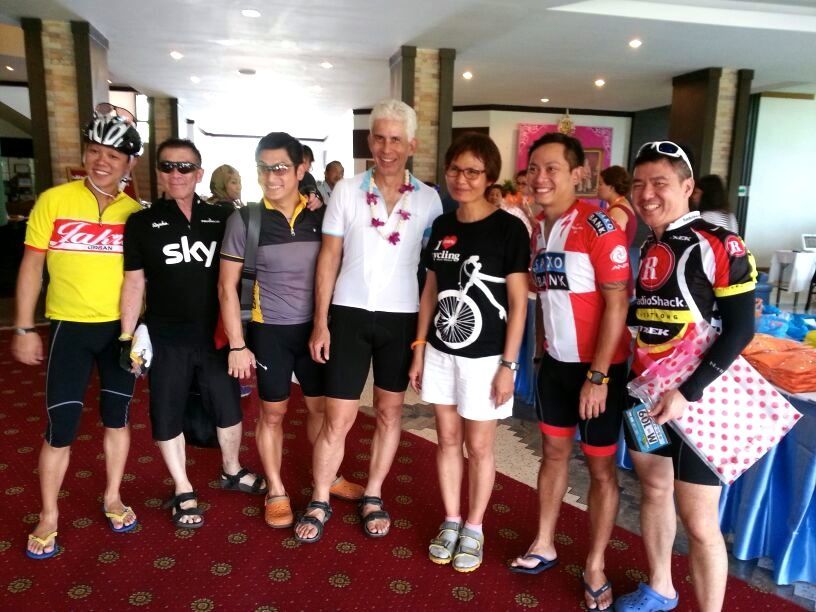
I replaced the chain on the steel Alchemy a few days ago.  The cassette on that bike has 13,300 km / 8,265 mi on it so far.  Including 115 km / 71.5 mi with the new chain.
I caught that one in time.  No skips.