Tag Archives: Cycling

How Many Road Bikes Do You Own?

I subscribe to a weekly e-newsletter from Road Bike Rider. Each issue closes with a Question of the Week. These were the options for a recent poll:

  • Just my one road bike
  • 2 road bikes
  • 3 road bikes
  • 4 road bikes
  • 5 or more road bikes because you can never have too many

This is the result of that poll:

I am among the 26.81% of 1,854 respondents who own three road bikes. Over 85% own more than one road bike. Perhaps not surprising given that the respondents are readers of a cycling publication.

How did I come to own three bicycles?

I bought my first road bike in 2010. My steel Alchemy

By 2011 I was living in The Netherlands, riding a lot, and wanting a frame that was stiffer than my steel frame. Alchemy built a titanium + carbon bike for me. These two bikes came home with me to Kuala Lumpur in 2012.

In 2013, I made plans to ride the BP MS150 and the TD 5 Boro Bike Tour in Texas and New York, respectively. I needed a bike that was easy to travel with. I bought a Ti Ritchey Break-Away.

I made another trip to the US in 2015 for a cycling vacation. Alchemy Bicycle Company had by then relocated from Austin, Texas, to Golden, Colorado. My cycling vacation was based 40 km away from Golden, in Boulder. Convenient, as I could order another bike from Alchemy, pick it up when I arrived and ride it on my Cognoscenti adventure. That would be much more fun than travelling with my Break-Away.

To make room for my new Alchemy Eros, I sold my two other Alchemy bikes. The steel bike went to a friend in KL, and the Ti bike went to a colleague who took it with him when he returned to Canada.

I bought the steel bike back in 2019. The friend I sold it to only rode it a few times in five years. After a conversation with my Biker Chick, we agreed that I should buy it back for sentimental reasons if nothing else. 

I ride all three bikes. To get a view of use over the bicycles’ lifetimes, I dug into my Strava data, and this is the result: 

The graph shows the three road bikes I own now and the Ti bike I sold in 2015.

The Eros is by far the bike I ride the most. It is the one that is most comfortable for any ride longer than 50 kilometres. 

That historical 1:1 ratio of the number of rides on the Eros versus the total number of rides on the steel and Break-Away bikes holds today. So far in 2024, I have ridden the Eros sixteen times and the steel bike and the Break-Away a combined total of seventeen times. I do enjoy alternating between them all.

There is an old joke among cyclists. Ask the question, “How many bikes do you need?” and the answer is, “Well, if N is the number of bikes you have, N+1 is the number of bikes you need.”

I don’t need three bicycles, let alone four or more. I can do without the Break-Away. The last time I packed that bike into its case for travel was in 2018. Despite its sentimental value, I could part with the steel bike. 

I do like the three bikes that I own, though. I will keep them for as long as I can.

Home Sweet Home

I have lived in several cities. All of which are memorable for one reason or another. As far as road cycling is concerned, I got into the sport in Houston. I saw how a city can be cyclist-friendly in The Hague.

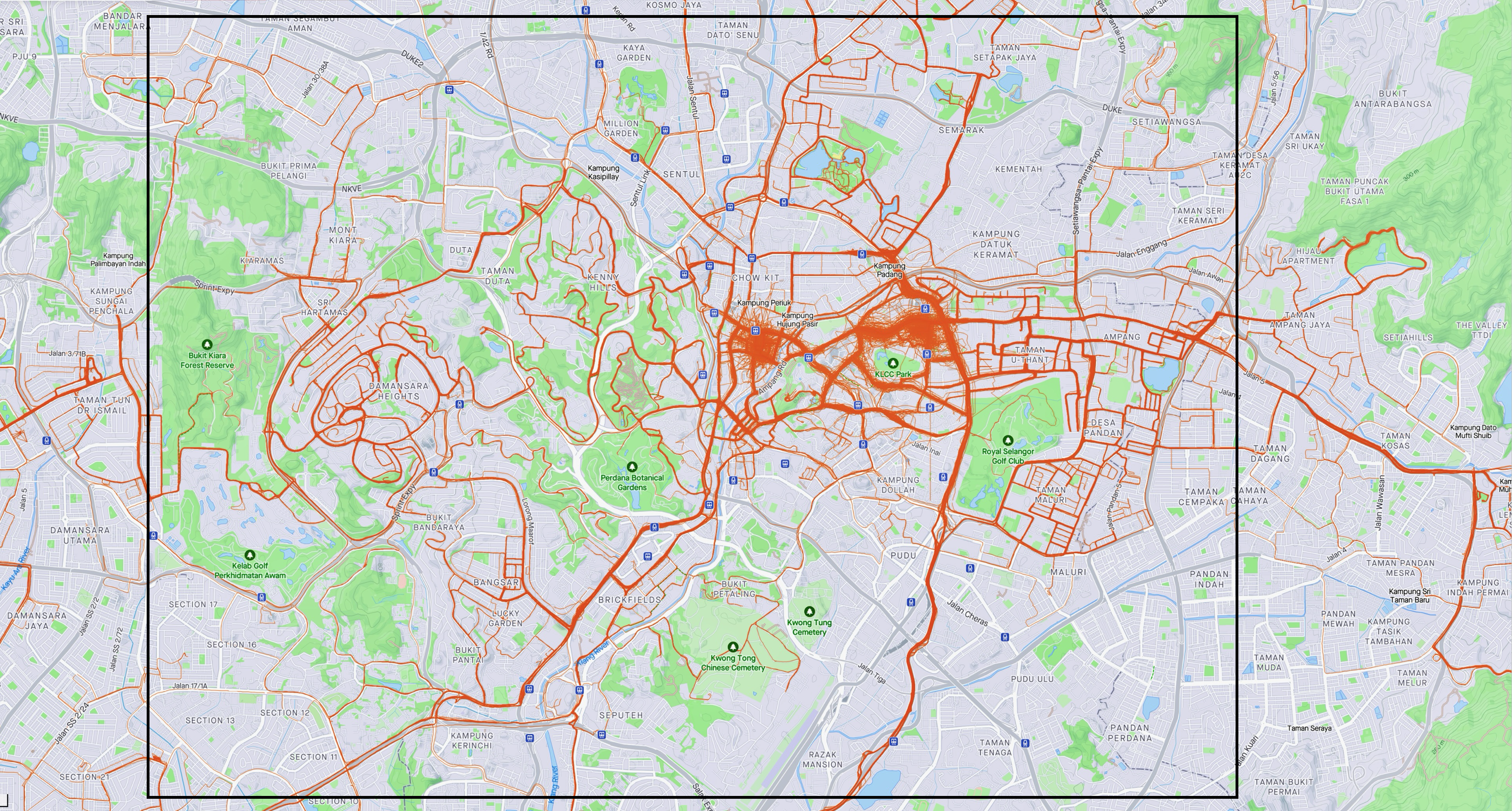
Home, though, is Kuala Lumpur, or ‘KL’. I have lived on and off in KL for almost fifty years, in twelve different homes within a 10-kilometre by 13-kilometre rectangle.

Half of those homes, including the two most recent ones, sit within a 1-kilometre by 3-kilometre rectangle. I am definitely an inner-city dweller.

My Strava history in KL started in October 2012. Since then, I have ridden many kilometres within that 10-kilometre by 13-kilometre rectangle containing all the KL homes I have lived in.

Until recently, I remembered only eleven of those homes. Of those, one has been razed and is now a car park, and three have been replaced by multi-storey buildings. I often ride past five surviving buildings where I lived and past where the four used to be. The only previous home I have not cycled past is the apartment in Taman Bukit Pantai.

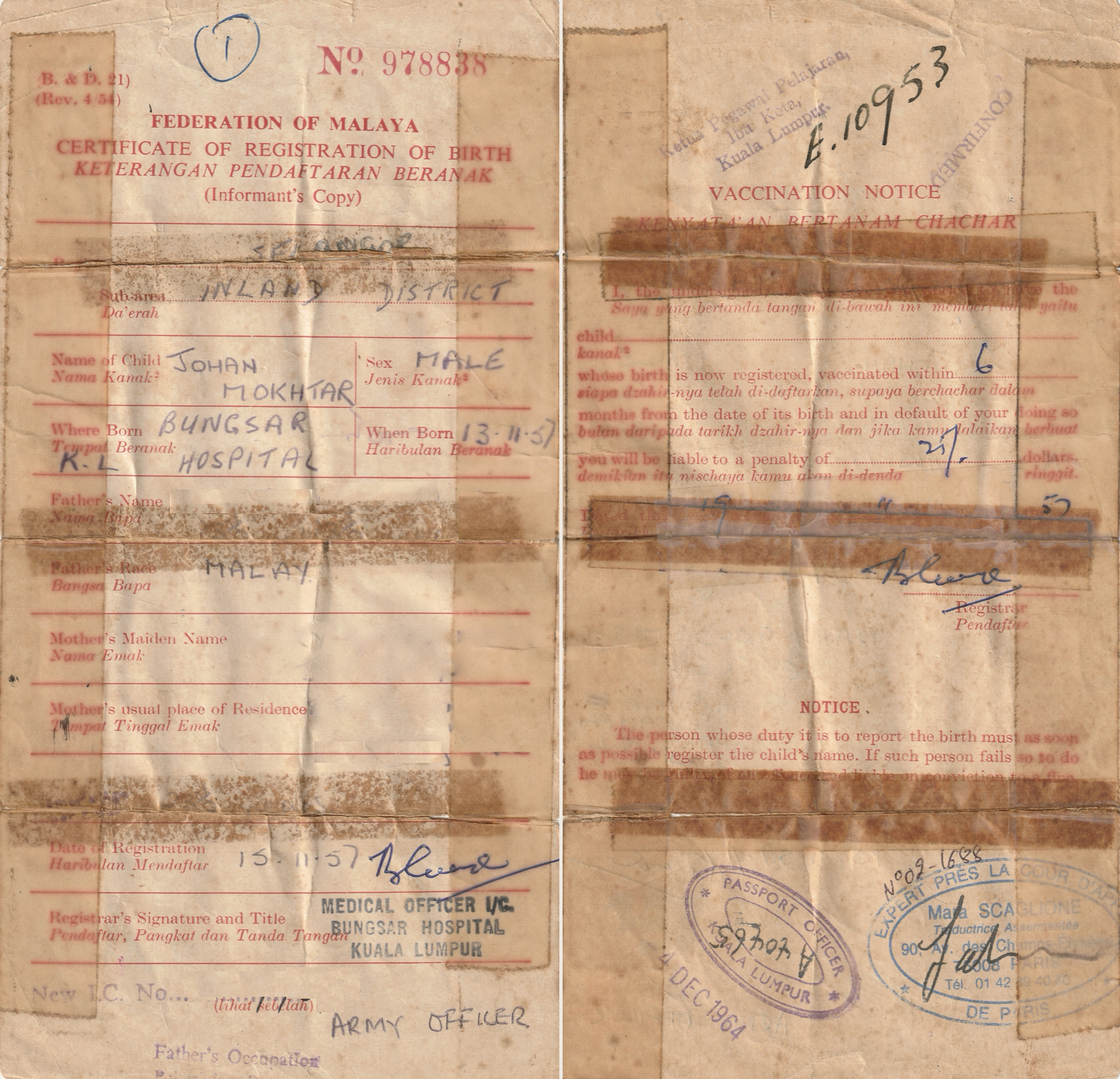
What of the forgotten home? I was digging through old documents and came across my original birth certificate. Hand-written in blue pencil on paper so creased it is held together with cellotape.

I have masked some of the details, including “Mother’s usual place of Residence.” A quick check on Google Maps revealed that I regularly cycle within 400 metres of that address.

A few days ago I took that 400 metre detour. The building is still there, sixty-six years after I was brought home to it from Bangsar Hospital.

Getting to this building involves twice merging across multiple lanes on a busy road. So, I am unlikely to ride past it much. It is nice to know it is still standing, though. Which is more than I can say for Bangsar Hospital.

A 14-Year Cycling Summary

Strava and other activity tracking apps send out personalised annual activity summaries. My 2023 Strava cycling summary shows a bit of an uptick since a steady decline starting in 2018.

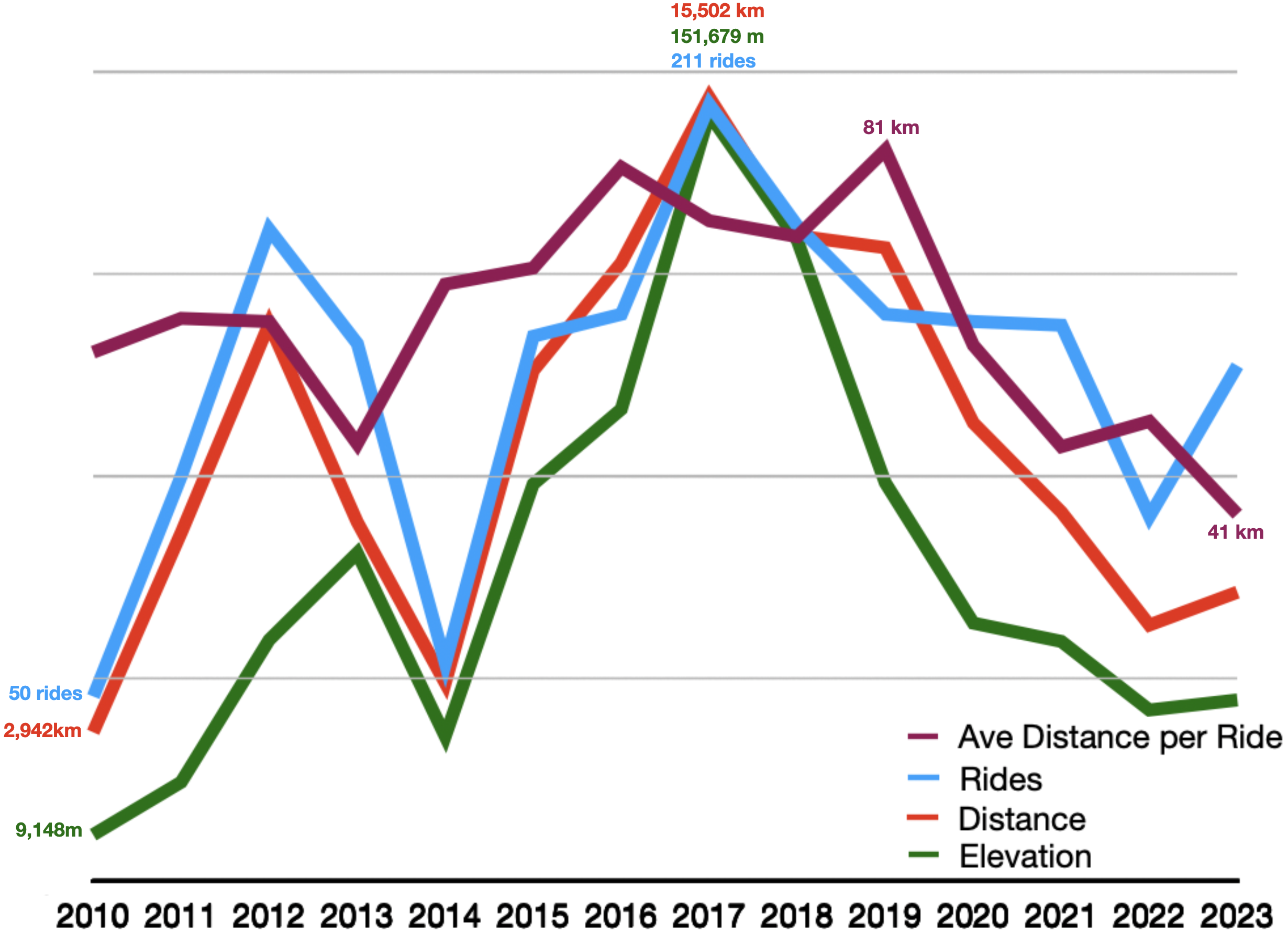
I took a look back at my cycling history as recorded on Strava. The chart below shows the year-on-year increase or decrease for total distance, total elevation, number of rides and average distance per ride for each year from 2010 to 2023.

The numbers show overall high and low totals in the relevant year.

Data courtesy of Strava, RWGPS and VeloViewer

I started cycling in September 2009. Just after starting a new job in Houston. This post explains why I started cycling:  

The first ride I recorded on Strava was in Houston on 31st January 2010. By then I had graduated from my first bike, a Trek 7.5 FX hybrid, to a custom-built steel road bike from Alchemy Bicycle Company.

This post is about the process of getting that road bike: 

My last ride in Houston was in April 2010. My next ride was in June 2010, on a rental bike while I was waiting for my Alchemy to arrive in my new home in The Netherlands.

This post describes that first Dutch ride: 

The Netherlands now has 33,000km of dedicated cycling paths. I covered 9,787km exploring those paths in 2012. It helped that I had a lot of time to cycle because I wasn’t working while I was in the Netherlands.

This post describes some of the aids to navigating that vast network of bike paths: 

I miss those bike paths to this day.

My last Dutch ride was in September 2012. I had my first ride in Malaysia two weeks later, thanks to having air-freighted my bicycles home to Kuala Lumpur.

That ride was courtesy of a former colleague who introduced me to her cyclist brother. He linked me up with the Racun Cycling Gang:  

I started working full-time again in 2013, so I couldn’t ride whenever I wanted. What my new Malaysian riding buddies and I were doing was cycling on Tuesday and Thursday nights. Nevertheless, I rode less in 2013 than I had in 2012. What did increase that year was the metres climbed. There are more hills around Kuala Lumpur than around Houston and Den Haag!

2014 saw my mileage fall to 3,198km. I did 59 rides, a third of what I did in 2012. I don’t remember why, but we did fewer Tuesday and Thursday night rides. I think marriages and births had something to do with it.

The major reason for the decline in 2014 was my crash in May:  

That kept me off my bike for more than three months.

Regular service resumed in 2015. I rode 10,096km, including five imperial century (160km or more) rides and twenty-one other rides of more than 100km. That started a five-year streak of cycling 10,000km or more per year.

2015 was also the year when I did my first cycling vacation:  

There are seven posts about my Cognoscenti adventure. You can read the following posts by clicking on the link or the arrow above and to the right of the post title.

The upward trend continued in 2016 and 2017. 2016 was when I had my longest ride. 445km in 27 hours:

2017 was the year I rode the furthest, the most often, and climbed the most. The year began with a 301km ride on New Year’s Day. By the end of the year, I had completed sixty metric century (100km or more) rides.

I rode more than 10,000km in 2018 and 2019. Including completing the Rapha Festive 500. A streak of Festive 500s that started in 2016.

2020 marks the start of the COVID-19 Restricted Movement Orders in Malaysia. Despite only doing 24 rides in five months, I rode enough in the other months to rack up 152 rides for the year. That included an Audax 300 ride in August.

Map courtesy of RWGPS

But 2020 was the start of a decline in annual mileage.

As you can see from the graph at the top of this post, my mileage fell in 2021 and 2022. I did 151 rides in 2021, which is a surprise as I had seven weeks off the bike after knee surgery. Despite doing just one less ride than I did the previous year, the average distance per ride fell. I covered 1,763km less than in 2020.

There were 99 rides in 2022. I was in Colombia for six months, where I cycled once.

I did manage to complete another Rapha Festive 500, though.

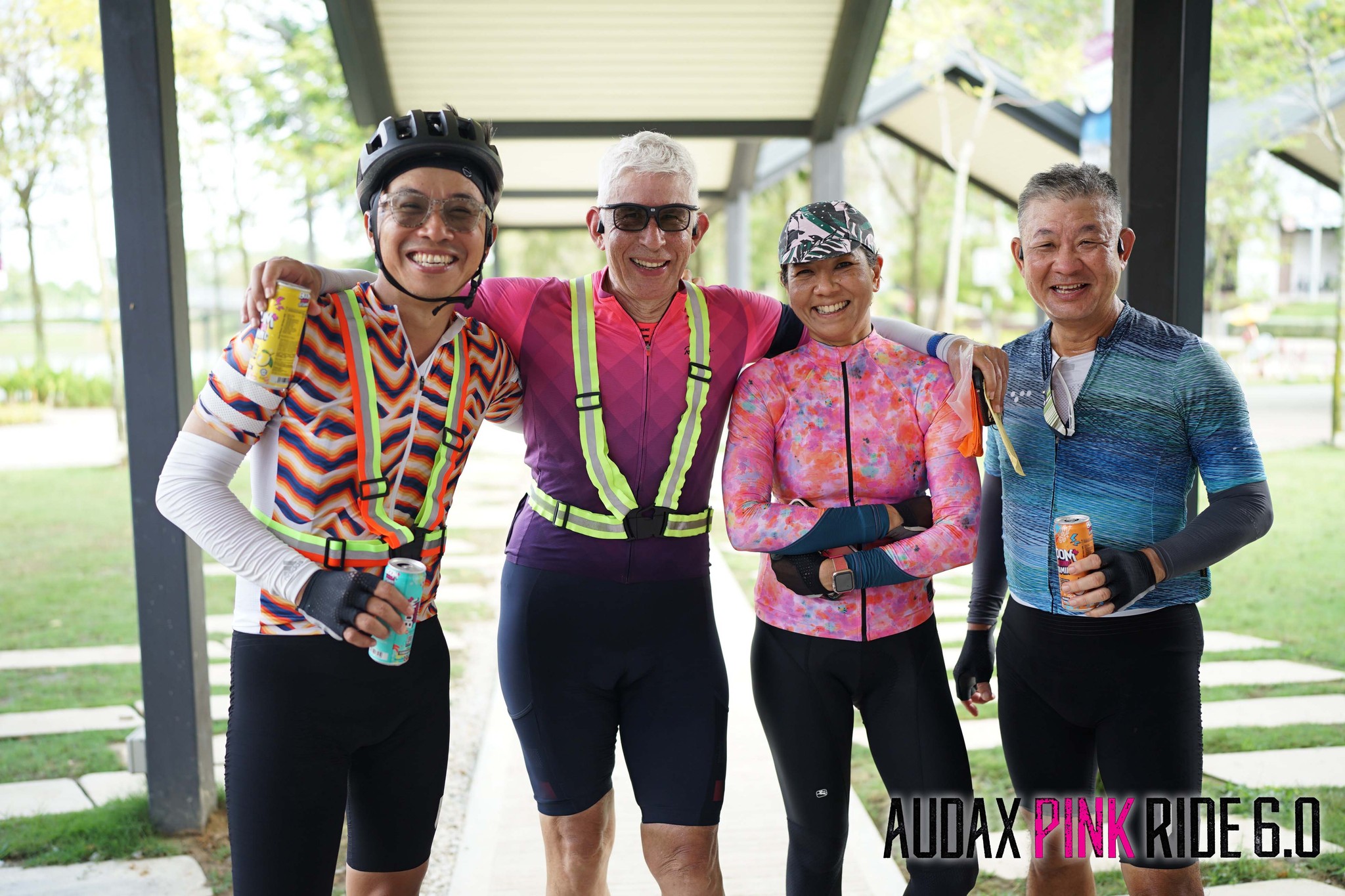
2023 started with the 115km Audax Pink Ride 6.0.

Photograph courtesy of Audax Randonneurs Malaysia

I had 41 more rides in 2023 than I had in 2022. But again, the average distance per ride was lower. This time by 10km. Despite riding more often, my total distance was just 650km more than my 2022 distance.

Hopefully, 2024 will bring another uptick in the total distance covered. The 120km Audax Pink Ride 7.0 is on the cards!

Image courtesy of Audax Randonneurs Malaysia

That will be my first metric century ride since the Pink Ride 6.0.

Ouch

Posted on
Image courtesy of trainingcor.com

I ran a lot until I tore the ACL in my right knee. That got me into cycling in 2008. I can count on one hand the number of times I have run since then. A company sports day in about 2014 was the last time I ran fast. That was hard work, and it was only 200 metres.

COVID-19 restrictions in Malaysia prompted my latest attempts at running. Jogging, to be more accurate. The first Movement Control Order in March 2020 banned all outdoor activities. So I walked and jogged up and down the multi-storey car park where I live.

Restrictions were eased in May 2020, and I was back on my bicycle. The only limits were how far away from home I could ride and with how many people in a group. So no jogging since then.

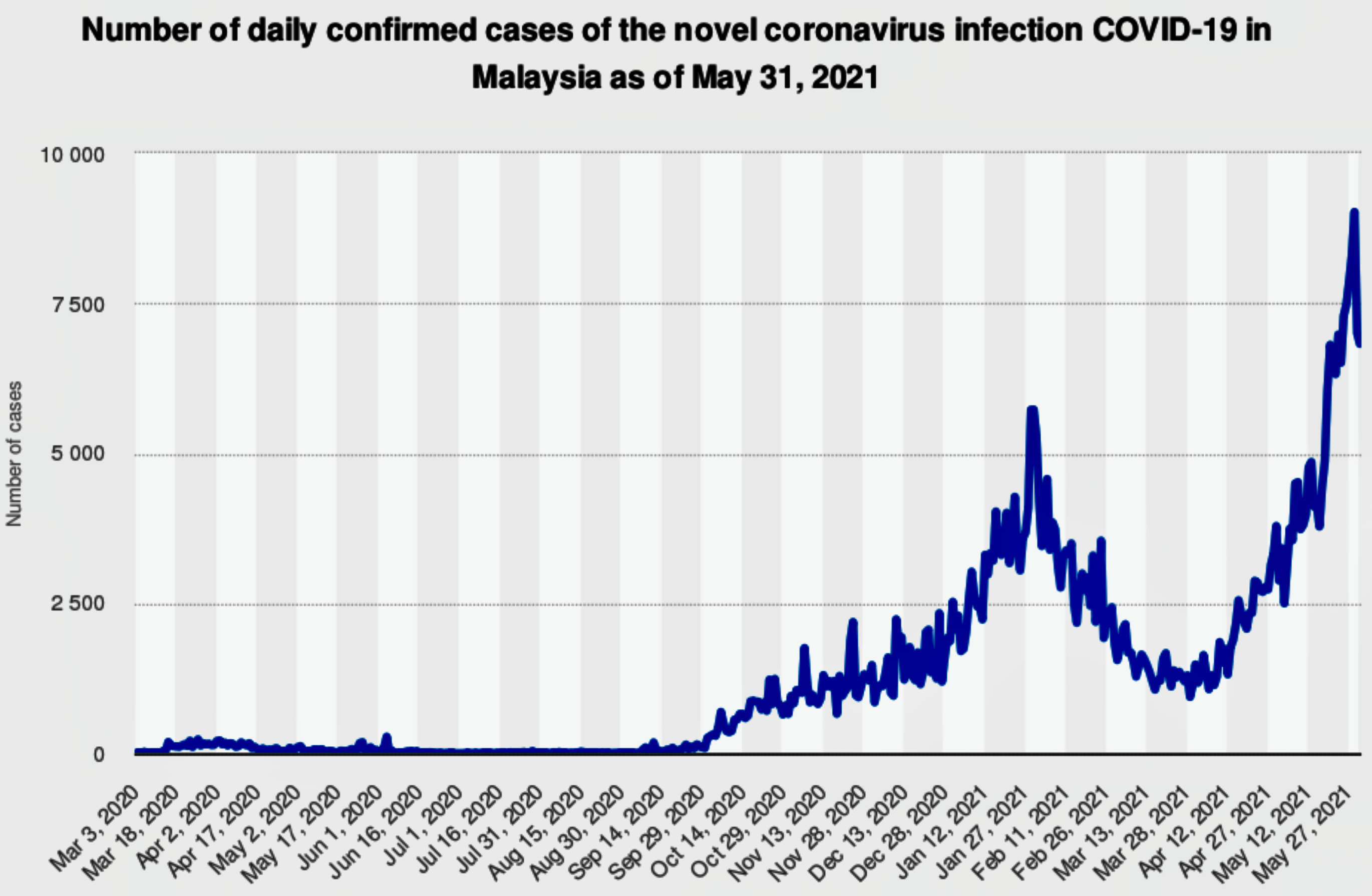
New COVID-19 case counts have risen dramatically since Q4 2020.

Graph courtesy of Ministry of Health Malaysia

In response, the government declared a total lockdown from 1st June 2021. To the chagrin of many cyclists, jogging outdoors is allowed during this full lockdown, but cycling is not. It is not surprising that the government is not allowing cycling. Many riders congregated and rode in large groups, contravening the restrictions in place before the full lockdown.

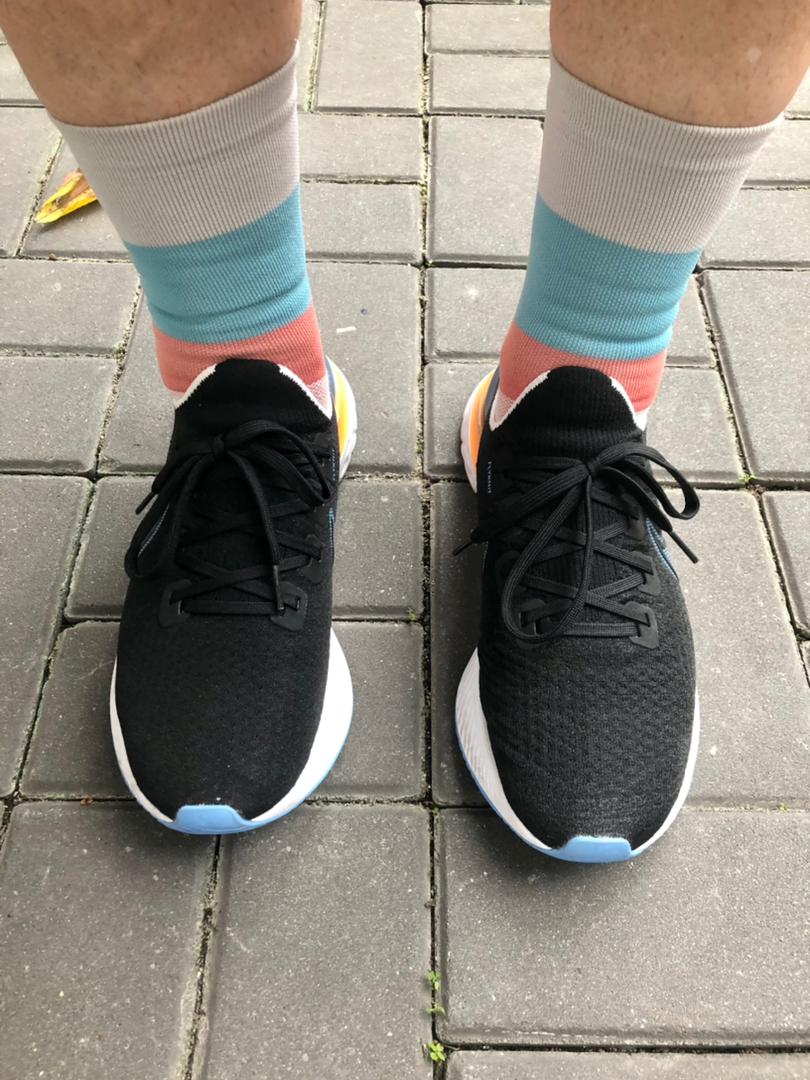
So out with the cycling shoes.

And on with the running shoes.

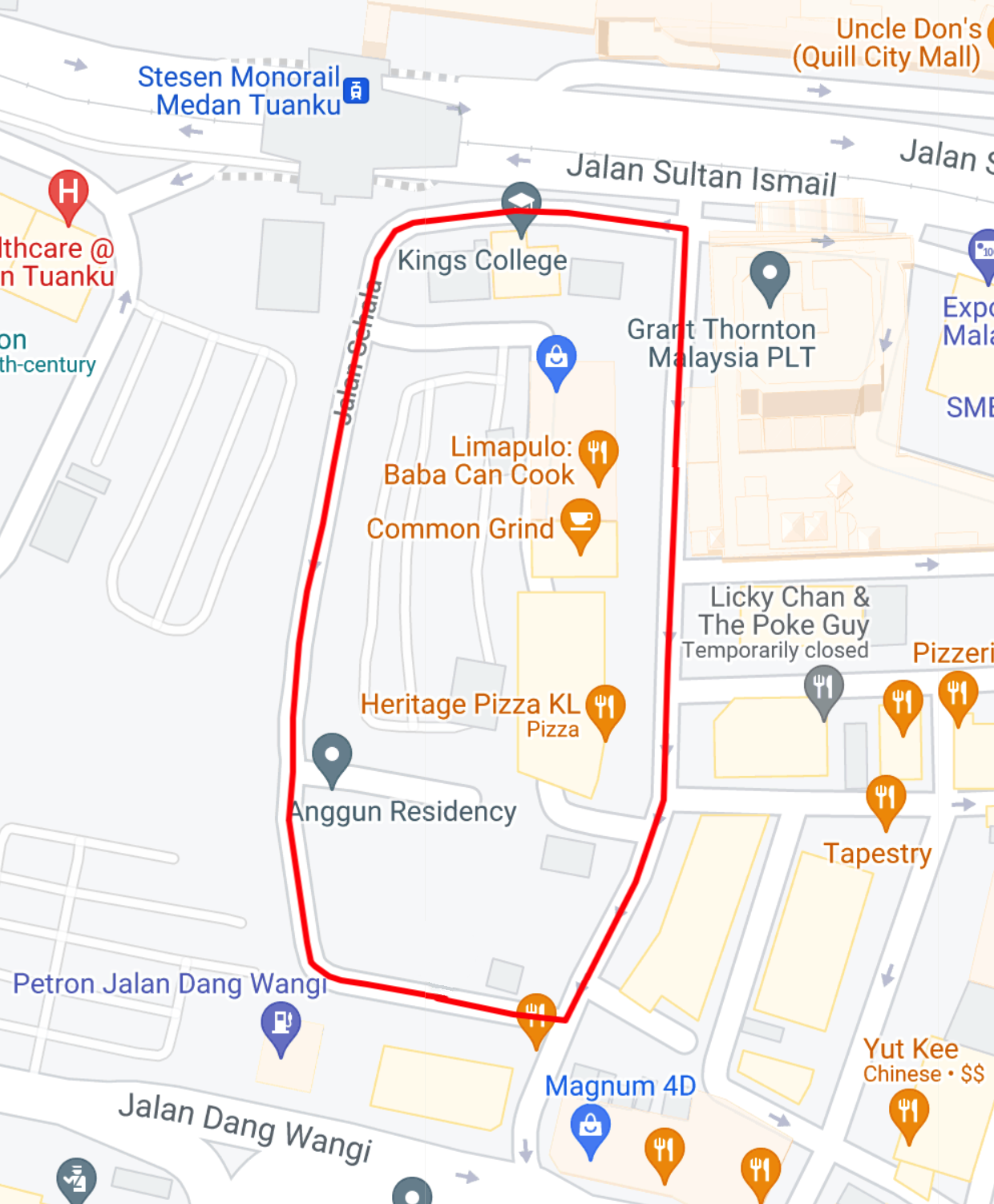
There is a convenient 600 metre loop around where I live.

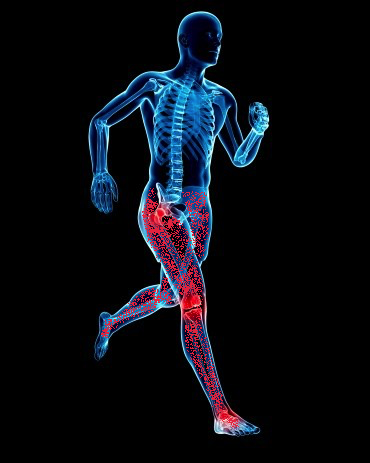
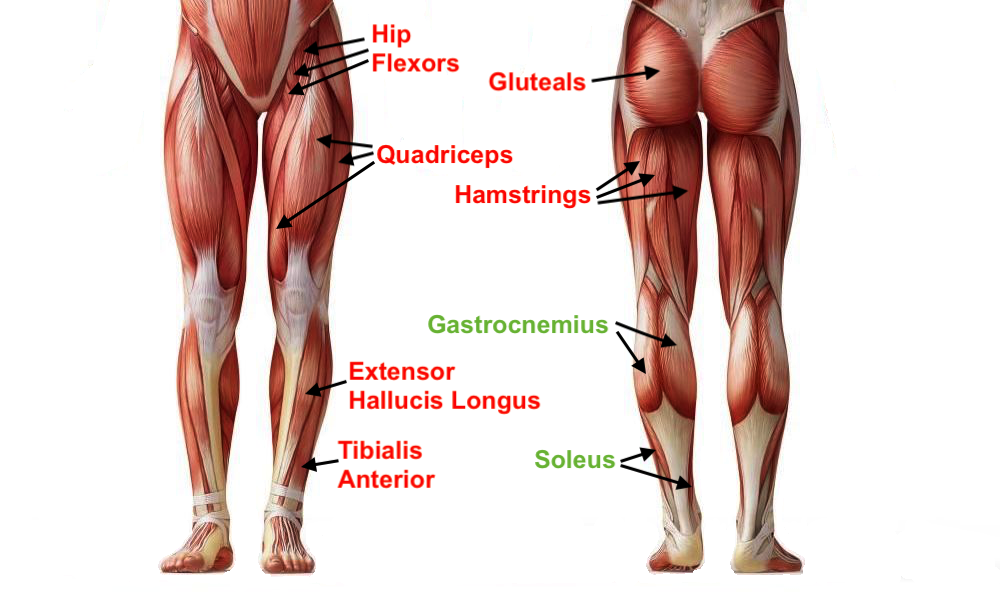
Having covered 12km over the past two days, mostly walking, all I can say is “ouch.” The only muscles that do not hurt as I write are the ones labelled in green.

Graphic courtesy of i.pinimg.com

Which made me wonder why. The same muscles used to pedal are used to walk and jog.

Some internet research enlightened me. Both running and cycling use the gluteals, quadriceps, hamstrings and calves to generate power. There is some difference in the degree of muscle recruitment and activation between cycling and running. Though not enough to account for the soreness I feel.

Cycling is regularly touted as an ideal form of exercise because it is a no-impact activity. Running is a high-impact sport. It turns out that is the main reason why I am now sore.

While cycling, my body weight is supported by the bicycle saddle. When running, my joints and muscles work much harder to support my body weight. The striding motion of running puts more stress on the gluteals, quadriceps and hamstrings than does the circular motion of pedalling. The small muscles like the hip flexors, extensor hallucis longus, and tibialis anterior have to work harder to stabilise the body and maintain balance, especially on uneven ground.

The only leg muscles that don’t hurt are my gastrocnemius and soleus. I suspect they, too, would start to ache if I sprinted rather than jogged. My knees would probably start to complain also.

This full lockdown runs until 14th June. It may be extended beyond that date. So it is walking and jogging for the foreseeable future. I hope my legs get used to the new stresses and strains. I don’t want to be “ouching” for much longer.

Medal Designs

I fill my travel-restricted days by reading online newsletters and watching online documentaries and other programs. One of those shows is called Saved and Remade. People bring treasured but unused belongings to the Saved and Remade team, who reimagine and transform them into functional items.

In one segment a pile of swimming medals was transformed into fish-shaped wall display.

Wall Art courtesy of Elizabeth Knowles at bbc.com

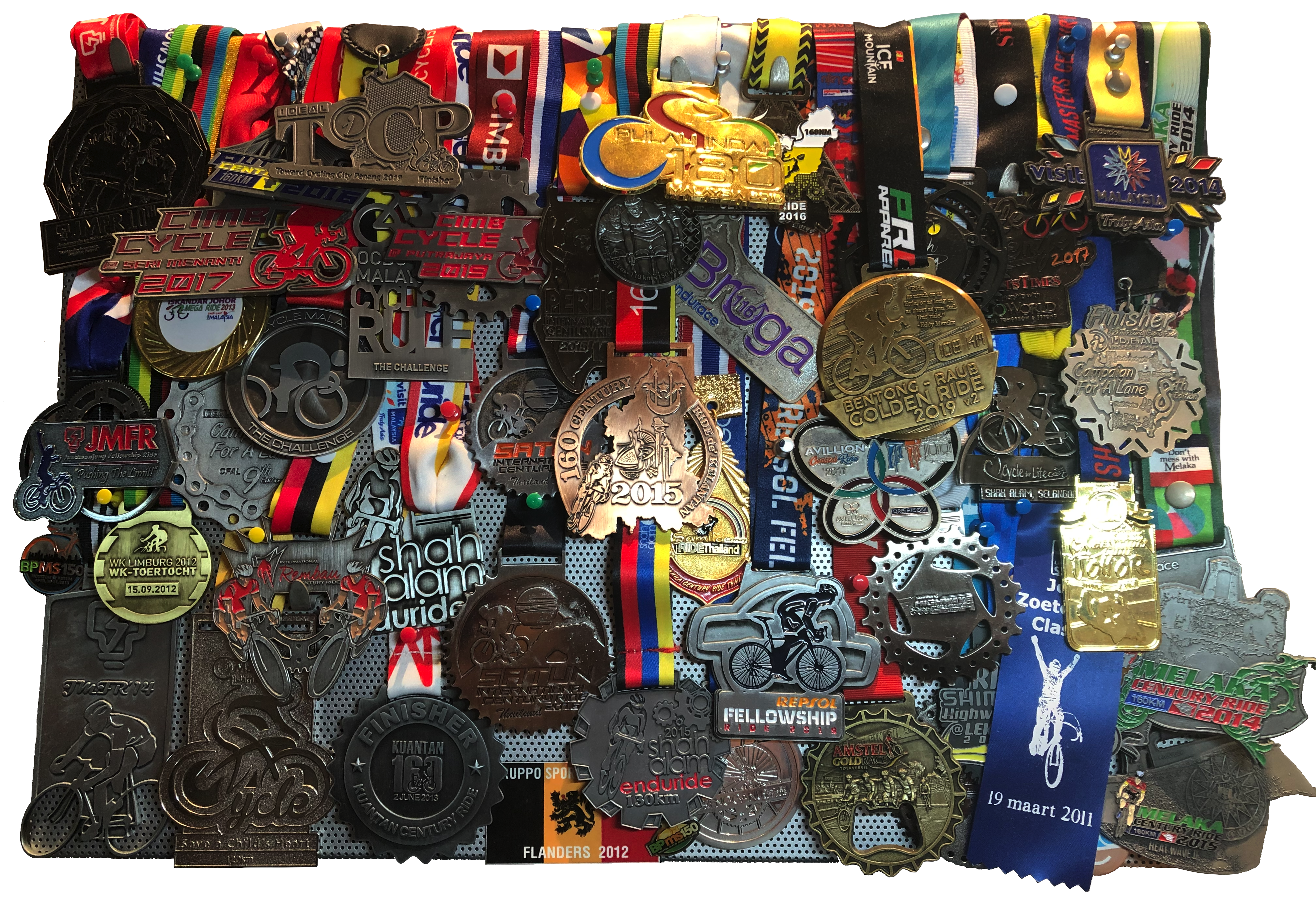
Some of these swimming medals are plain, while others look interesting. Seeing those medals made me look at the designs of the cycling medals in my collection.

Most are simple designs. The medals display the name of the event and incorporate a cyclist or a bicycle component in the design.

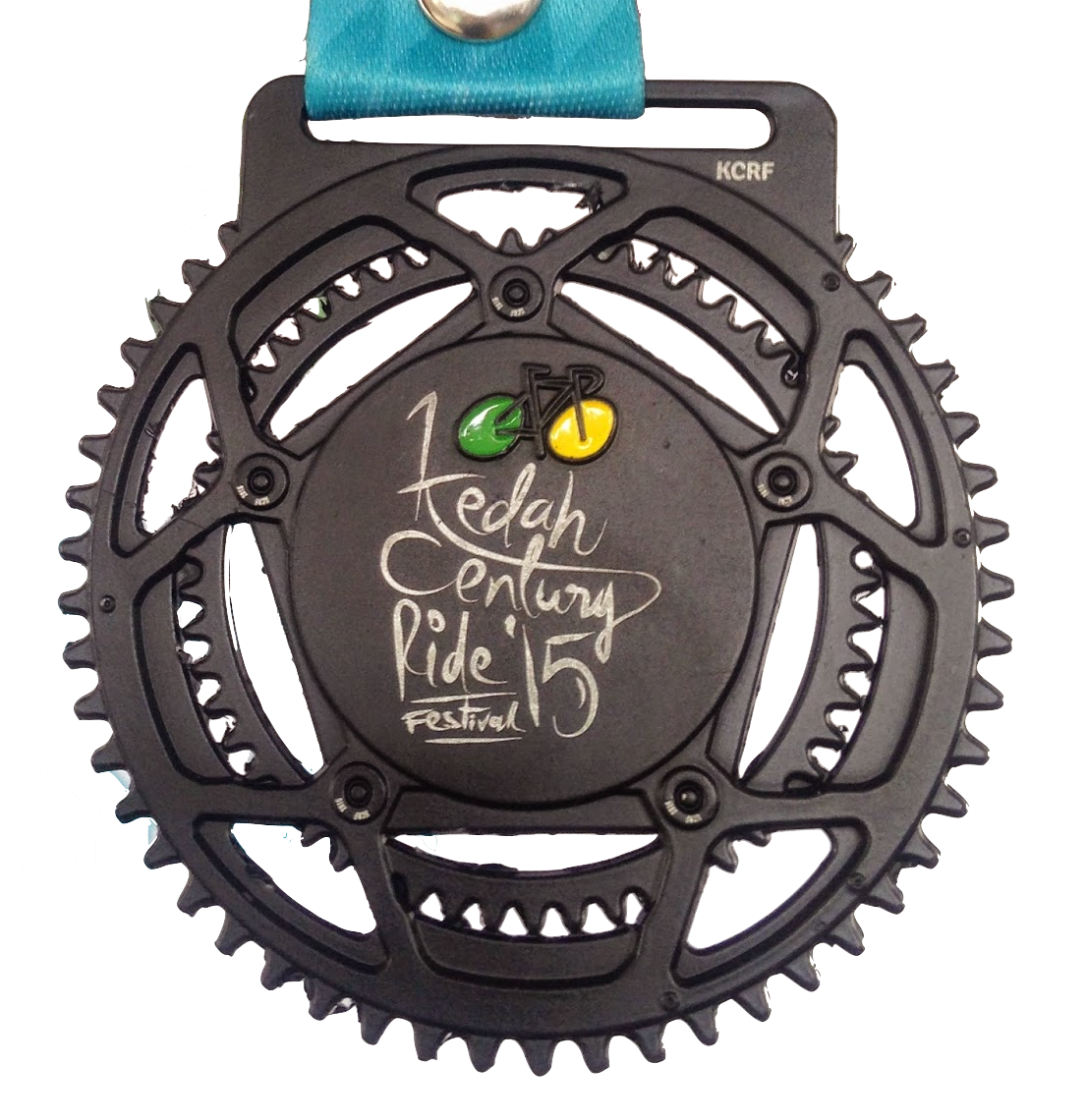
The 2015 Kedah Century medal mimics a bicycle chain ring.

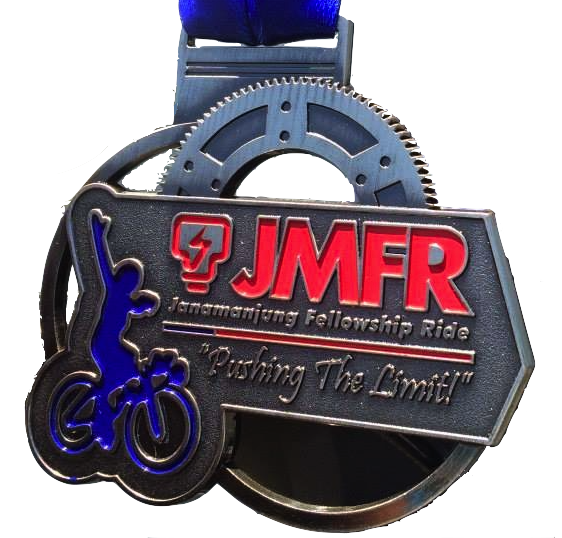
The medal from the 2015 Janamanjung Fellowship Ride includes a cyclist and a bicycle chain ring.

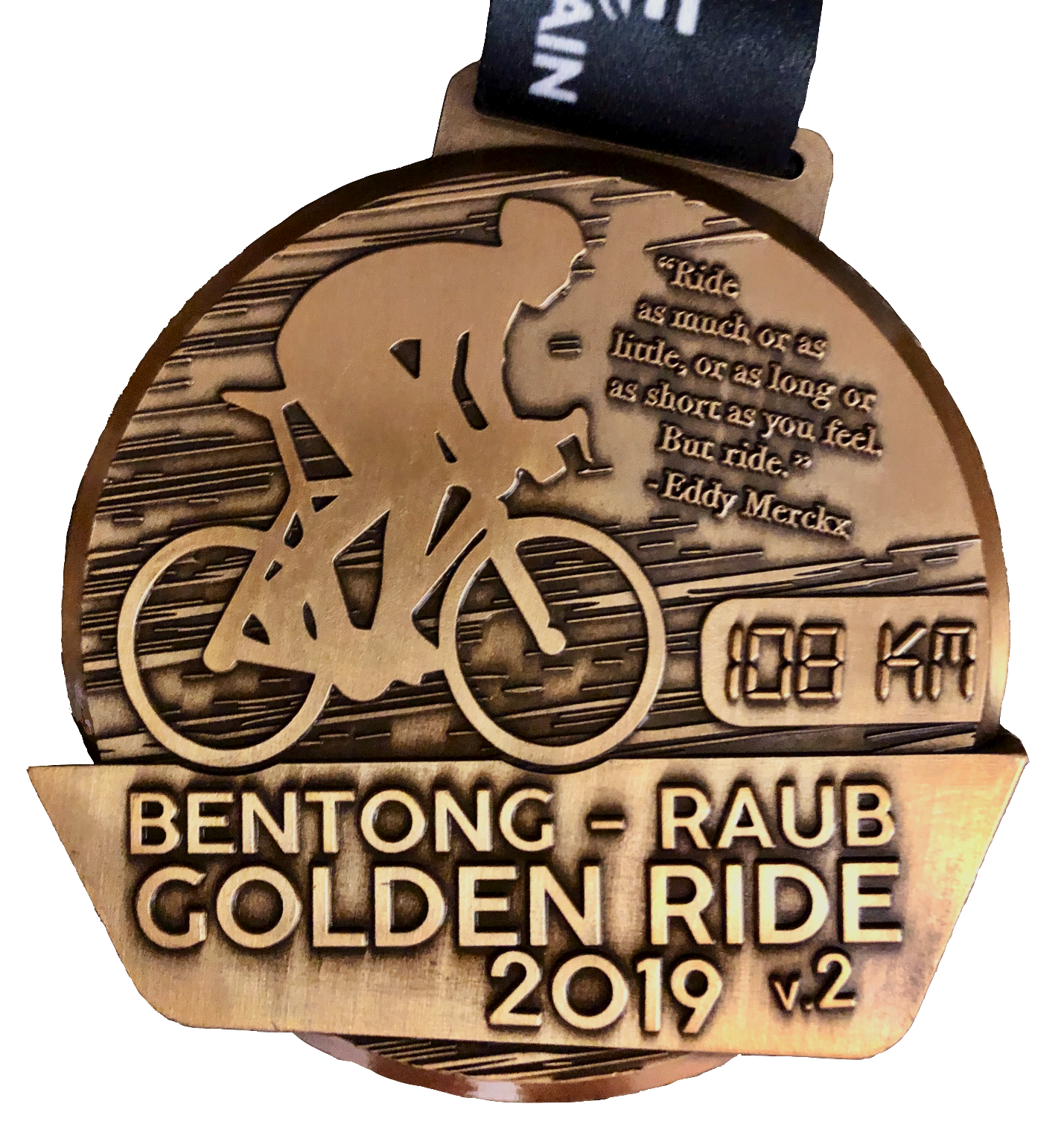
A bit more thought went into the design of the medal from the 2019 Bentong-Raub Golden Ride. Like many others, this one features a cyclist. But it also stands out because of the Eddy Merckx quote.

A few designers incorporated in their medals an element unique to the event. A simple motif is the logo of the event host. Here the Avillion logo provides shape and colour to the 2017 Avillion Coastal Ride medal.

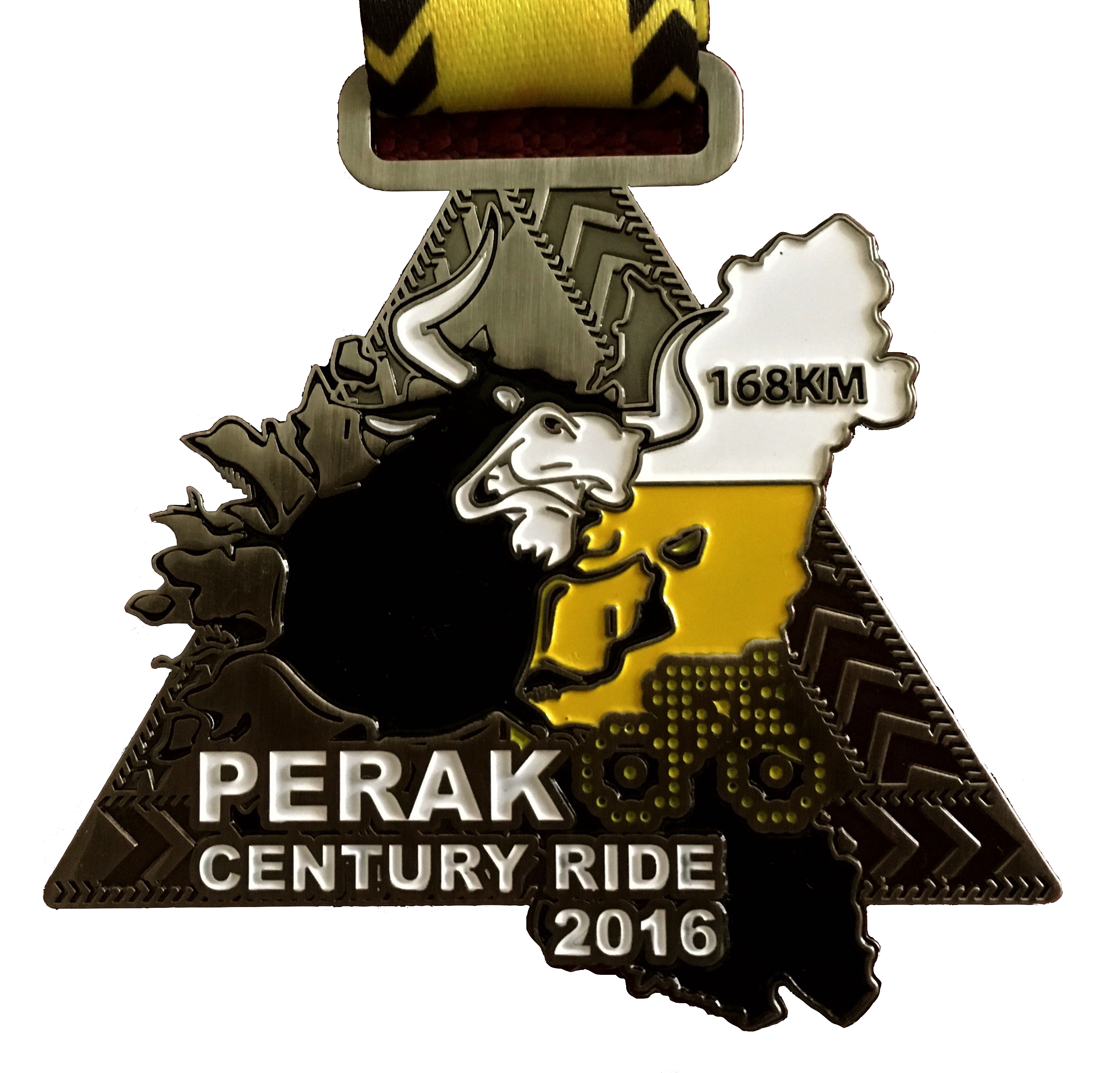
The designer of the medal for the 2016 Perak Century Ride must have been a soccer fan. That medal includes a Gaur or Seladang. The mascot of the Perak F.C. semi-professional soccer team. The design also has an outline of the state of Perak.
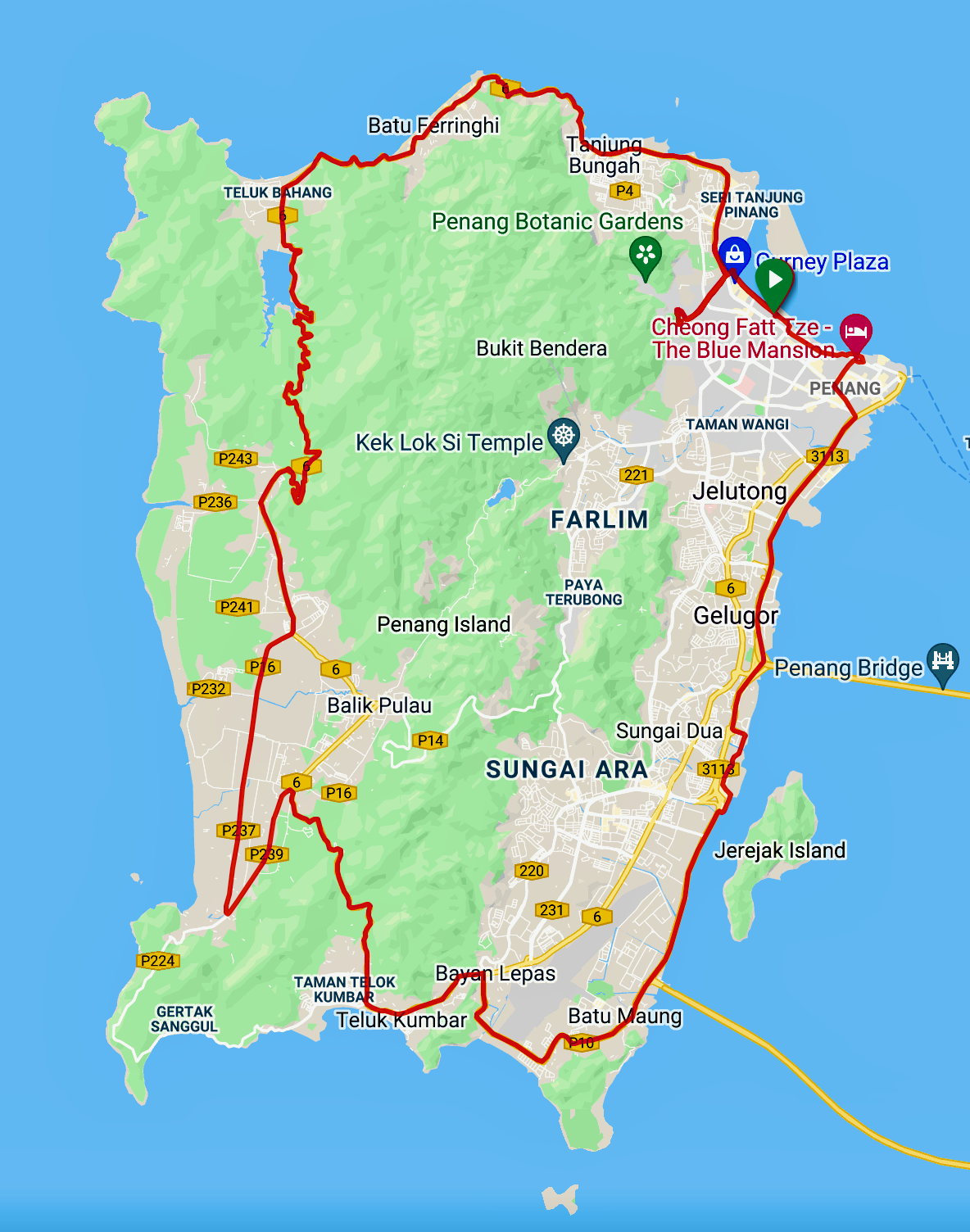
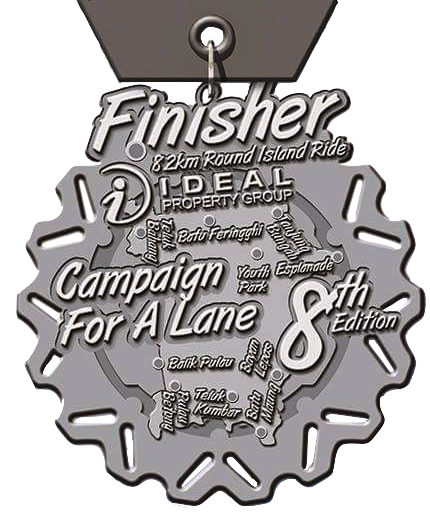
Another medal showing a geographical outline was handed out after the 2018 Campaign for a Lane ride. This medal has a map of Penang island that includes locations along the ride route.

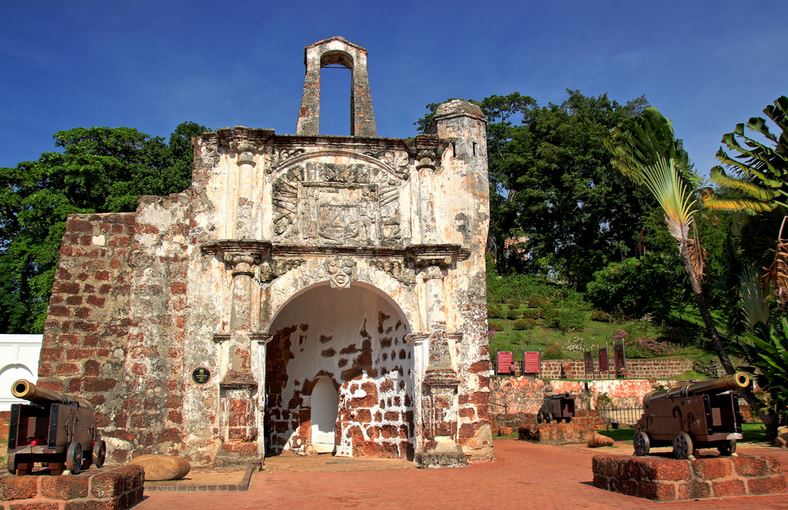
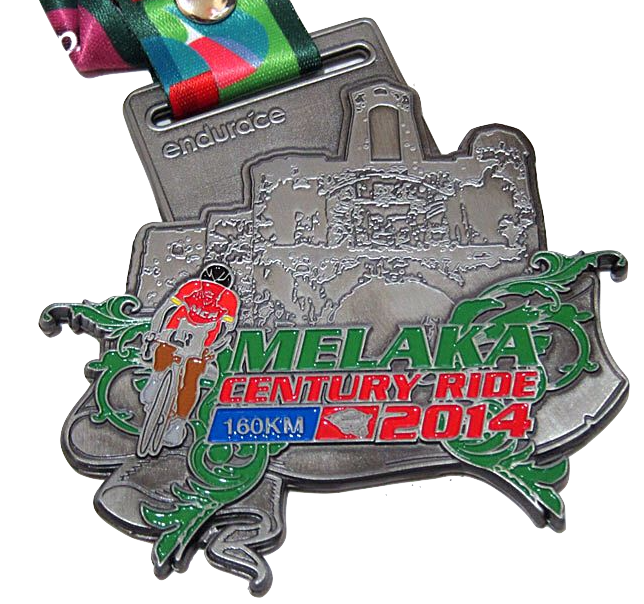
Two medal designs that incorporate cultural motifs come from the Melaka Century rides. The 2014 medal contains a depiction of the A’Famosa Fort. The Portuguese fort is a historical landmark in Melaka. It dates to 1512.

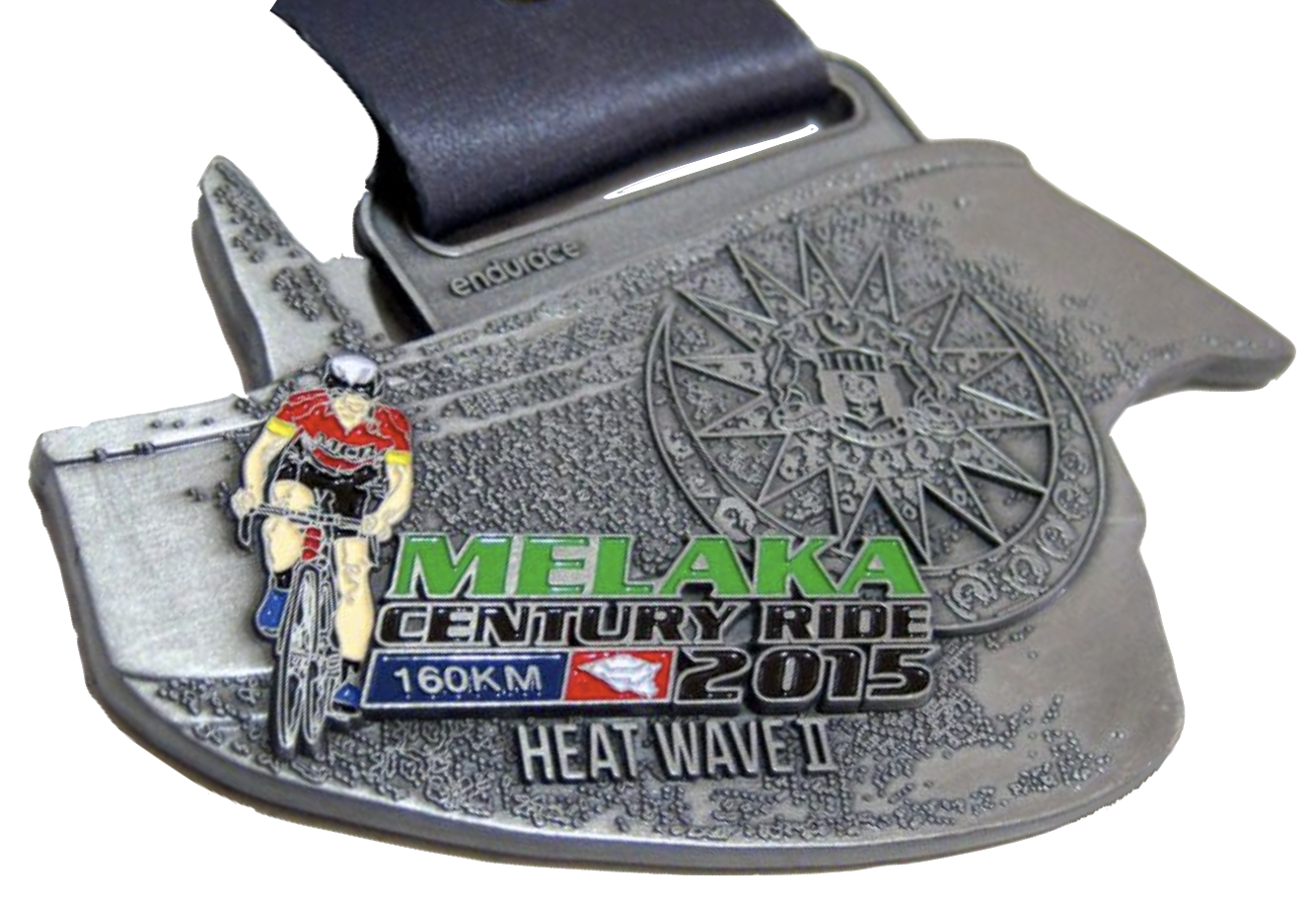
The 2015 Melaka Century Ride medal is in the shape of a Tengkolok. A tengkolok is the traditional Malay headgear that forms part of the formal regalia of the Agung (King) of Malaysia. The tengkolok is also part of the formal attire of Sultans and the Yang DiPertuan Besar, the monarchical state rulers.

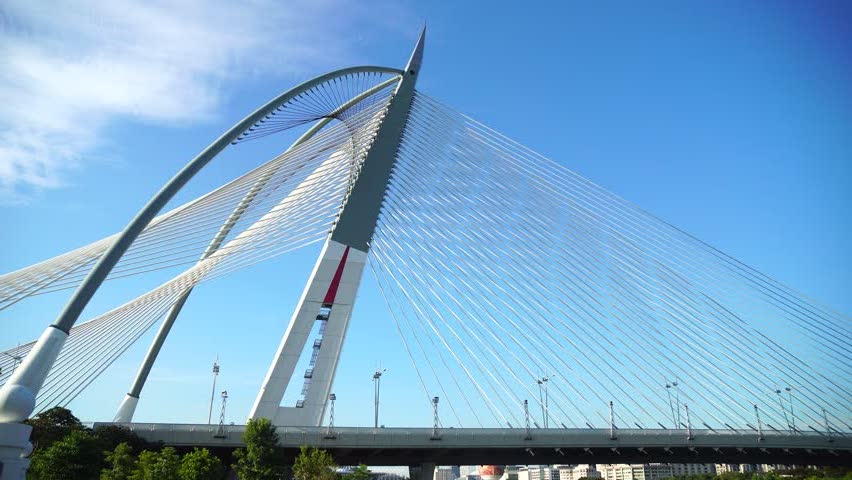
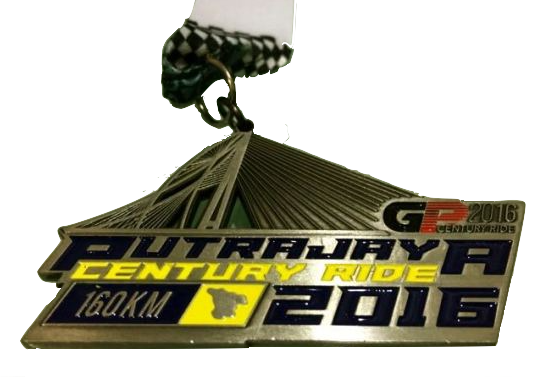
A more recent landmark to appear on a cycling medal is the Sri Wawasan Bridge. Putrajaya is the Federal administrative centre of Malaysia. It is a planned city built around a man-made lake. Eight bridges of different architecture cross Putrajaya Lake. The Sri Wawasan Bridge is a longitudinally asymmetric cable‐stayed box-girder bridge with an inverted-Y shape concrete/steel pylon 96 metres / 315 feet high. The main span is 165 metres / 541 feet long.

Sponsor logos rarely feature on the cycling medals I have collected. The same is true of this medal, despite it being from the 2012 Amstel Gold Race sportive. Dutch beer brewer Amstel has served as the race’s title sponsor since its creation in 1966. This medal naturally carries the Amstel name. It also includes a group of cyclists crossing a finish line together. In a clever nod to the sponsor, this medal doubles as a bottle opener.

These rather plain medals display the logo of the Audax Club Parisien and part of a bicycle wheel. The Audax Club Parisien is the governing body for randonneuring worldwide. 

The key differentiators are the colour of the medals and stripes. As well as the numerals. These medals were awarded to cyclists who had successfully completed an Audax ride of the stated distance. I earned 200km, 400km, 300km and one more 200km medals between 2016 and 2019.

Photograph courtesy of audax.ph

I included these medals because they reflect conscious design choices that are updated every four years. The design above was for 2015 to 2019. The 2020 to 2023 medals are below.

Photograph courtesy of wizbiker.com

Some design elements – the Audax Club Parisien logo, the colours of the medal and stripes and the text denoting the distance, and a bicycle wheel – have been kept. New elements are the round shape, a loop to hang the medal on a chain and the partial map of the world. I assume the inclusion of the map is recognition that randonneuring has become a global sport.

I have a 200km and a 300km medal from the latest series. I don’t see another 400km or a 600km or 1,000km medal in my future.

Cycling events in Malaysia became much less prevalent after one organiser absconded with the registration fees he had collected for a century ride in 2016. I picked up a few more participation medals in the following three years. And nothing since the COVID-19 restrictions on mass-participation events. It will be some time before I can look at new cycling medal designs.

How to Talk Like a Cyclist in Malaysia

cycling-lingo

Paceline.  Groupset.  Magic spanner.  Aero.  Sticky bottle.  Bike throw.  Road rash.  Endo.

A small sample of the English words and phrases likely to come out of the mouth of a cyclist.   Throw in the French, Flemish, Dutch and Italian terminology common to the sport, and it is no wonder that most non-cyclists are baffled by cyclospeak.

Not to be outdone, Malaysian cyclists have a few cycling terms of their own.  Such as:
Bojio
A Hokkien phrase which means not inviting someone along to an event or activity.
Often used in Facebook comments in response to postings of Strava ride summaries.

Ceria rider
The Malay word for “cheerful.”  Refers to someone who rides purely for fun.
“No lah.  I don’t want to do a century ride.  I am a ceria rider only.”

FFK
The abbreviation of Fong Fei Kei.  A Cantonese phrase which means a betrayal or breaking of a promise / deal made with another party.
In this case a person who did not turn up for a group ride as promised.
“Next time you FFK, you have to buy everyone breakfast.”

Hantu / Ghost rider
The Malay or English word referring to an unregistered, non-paying rider in an organised event.
“The registration damned expensive.  So just be a ghost rider lor.”

Just buy a new bike
The standard advice given to any cyclist who has even the slightest thing go wrong with their bicycle, or who muses about buying a new component or upgrading an existing one.
“Eh.  Your shifting quite noisy.  Just buy a new bike lah.”

Kaki besi
A Malay phrase meaning “iron legs.”  Refers to a strong rider.
“That guy kaki besi one.  I can’t follow him.”

Kaki jelly
The opposite of kaki besi.  Literally means “jelly legs.”
“So much climbing today.  I got kaki jelly now.”

Kena conned
Refers to being tricked into riding further / faster/ higher than anticipated.
“She said we are riding about 50km today.  Ended up riding for five hours.  I really kena conned.”

Kena racun / Got poisoned
This Malay or equivalent English phrase is used to refer to a person who was persuaded to upgrade an existing, or buy a new, bicycle component.
“He kena racun and bought a set of Zipp 404s.”

Nubis Kubis
A term for a newbie.  If anyone knows why the Malay word for cabbage, “kubis,” is part of this phrase, let me know.
“I am a nubis kubis.  Dare not use clipless pedals.”

Pancit
A Malay word that is most likely a corruption of the English word “punctured.”  The equivalent of “blowing up.”
“I have to stop for a while.  Pancit already.”

Santai ride / Chillax ride
The Malay word for “relaxed,” and the English portmanteau word combining “chill” and relaxed.”
“Don’t worry.  It will be a santai ride.  Average speed less than 25kph”  (See Kena conned above)

Smoke me
What a kaki besi does to a nubis kubis.  Leaves them in the dust.
“That girl smoked me.  After a few kilometers I couldn’t see her anymore.”

Tarik me
The Malay word for “pull.”  With the same meaning in a cycling context.
“You got kaki besi mah.  So you tarik me lah.”


I’m going for a santai ride in the morning.  I’ll be alone, so no one to tarik me.  Hopefully none of my friends complain that I bojio them.

Build an Ark – Or Read Some More

IMG_1301

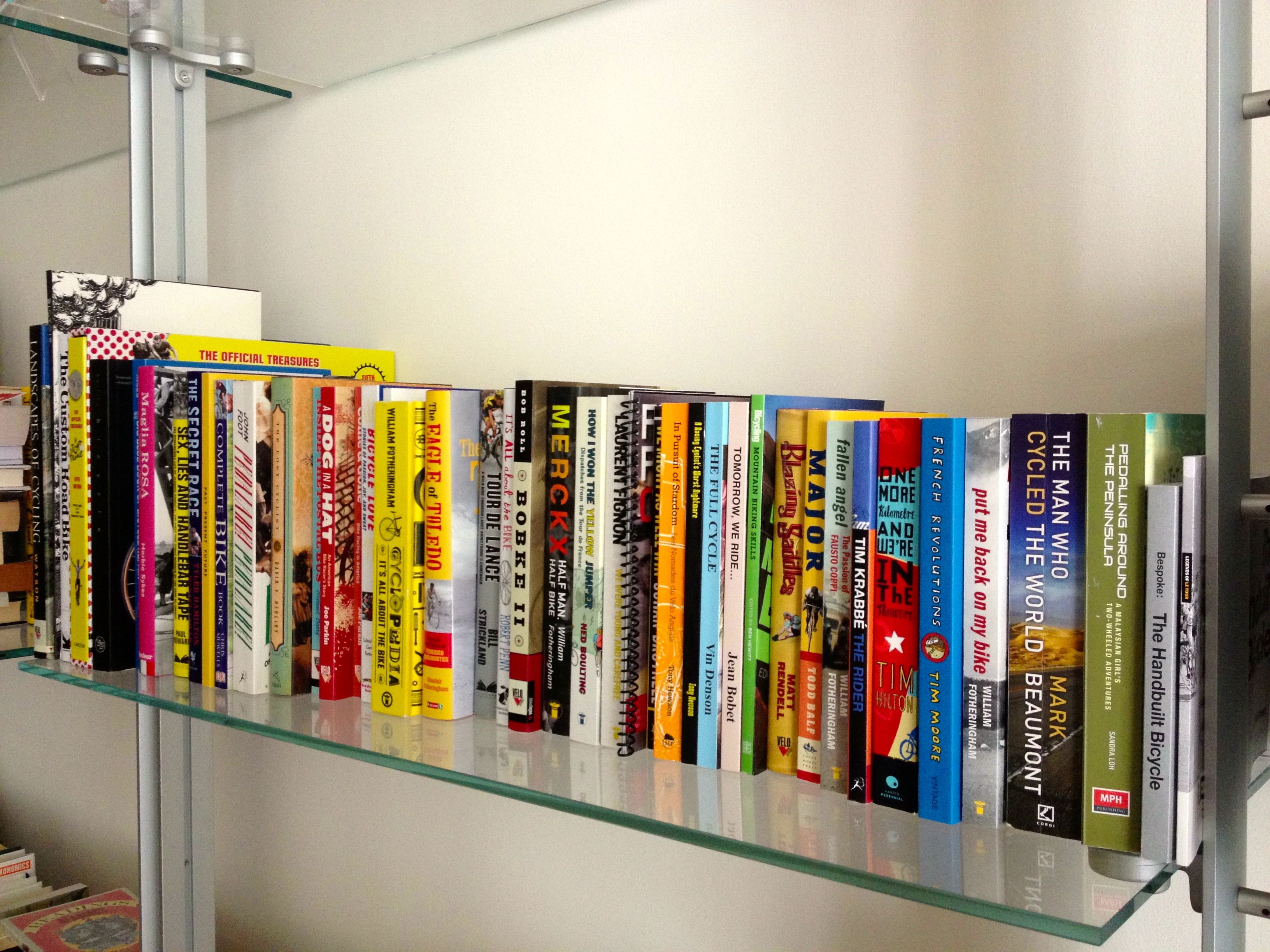
Some of of my cycling books are about epic rides.  Tim Moore’s book about riding the 2000 Tour de France route for example (see Still Too Wet to Ride?)

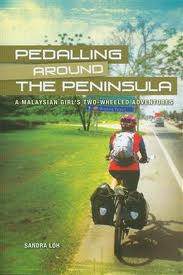
Closer to home, Sandra Loh circumnavigated Peninsular Malaysia, together with Mak Shiau Meng, in 2009.  I have a signed copy of Loh’s “Pedalling Around the Peninsula:  A Malaysian Girl’s  Two-Wheeled Adventures.”  Perhaps the most amazing statistic is that she cycled 2,664 km / 1,655mi without a single flat tire.

Pedalling Around

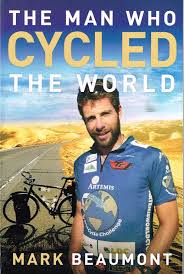
Mark Beaumont took a somewhat longer ride.  And he did it alone.  He cycled 29,446km / 18,297mi to circumnavigate the globe in 194 days in 2008.  That was a  world record at the time.  Achieving it required cycling an average of 160km / 100mi per day, no matter the weather, the terrain or his physical condition.  He did have a few flats along the way, as recounted in “The Man Who Cycled the World.”

The Man Who Cycled

The most tragic ride story is told by David Herlihy in “The Lost Cyclist:  The Epic Tale Of An American Adventurer And His Mysterious Disappearance“.  This is also a story of a man attempting to circumnavigate the globe by bicycle, but in a very different age to Beaumont’s.  Frank Lenz started his ride in 1892, on the then innovative safety bicycle, complete with new-fangled pneumatic tires.  Lenz makes it most of the way around the world before disappearing in eastern Turkey.

The Lost Cyclist

Now onto the books that don’t fall neatly in one classification or another.  Like “Bicycle Love: Stories of Passion, Joy, and Sweat” edited by Garth Battista.  A compilation of 60 or so essays on the many varieties of bicycle love.

Bicycle Love

Another compilation of improbable, silly, crazy and absurd, but all true stories is in “Cycling’s 50 Craziest Stories.”  It is written by Les Woodland, a doyen of British cycling authors with eighteen books on the subject to his name.

Cycling's 50 Craziest

The tell-all book that shook the sport in 2012 was “The Secret Race: Inside the Hidden World of the Tour de France: Doping, Cover-ups and Winning at All Costs” by Tyler Hamilton and his co-author Daniel Coyle.  This book came out as the Lance Armstrong story was coming to a head.  It talks about all the significant doping scandals of the past 15 years with a level of detail not seen before.  The sport of professional cycling will never be the same.

The Secret Race

A book that doesn’t talk about doping but is otherwise an all-one handbook of cycling is “The Complete Bike Book” by Chris Sidwells.  He writes about the history of the bicycle, the essentials of riding, choosing the right equipment and clothing, riding technique, and bike maintenance.  There is something here for beginner and experienced cyclist alike.

The Complete Bike Book

At the other end of the spectrum is a book that does just one thing, and does it very well.  The “Big Blue Book of Bicycle Repair” by Park Tool.  Park Tool makes bike tools, so the company knows a thing or two about bicycle maintenance and repair.  This was the recommended text at the bicycle maintenance course I took.  Enough said.

Park Big Blue

This next item is on the left side of the shelf and sticks up above all the other books.  It is not a book in the traditional sense.  I had to look up what a leporello book is.  “Bicycle,” created for the London 2012 Olympics, is Ugo Gattoni‘s vision of a madcap bicycle race through the streets of London.

Bicycle

The last book in my collection is also a picture book.  Graham Watson is a renowned cycling photographer.  Organized by season, this book takes readers around the globe, from the Australian championships to the Tour de France, always showing the peloton against a backdrop of exquisite, compelling scenery.

Landscapes

Just the thing for a rainy day.

Still Too Wet to Ride?

IMG_1301

Yesterday I listed the biographies and autobiographies in my collection of cycling books (see Too Wet to Ride?).

Today I will start with a memoir and a more general review of the cycling stars from the golden age of the 1940s, 50s and 60s.  Tim Hilton wrote “One More Kilometre and We’re in the Showers.”  Hilton’s breadth of knowledge and interest is evident in this scrapbook of cycling lore.

One More Kilometre

Tony Hewson of “In Pursuit of Stardom” fame wrote another book about the era of UK cycling in the aftermath of World War II.  “A Racing Cyclist’s Worst Nightmare:  And Other Stories of the Golden Age” is a collection of short stories written in a variety of genres:  autobiography, biography, discourse and fiction.

A Racing Cyclists

Now onto books about major races.  They don’t come any bigger than the Tour de France.  There are countless books about the Tour.  I have “Blazing Saddles:  The Cruel and Unusual History of the Tour de France.”  Matt Rendell complements his vivid storytelling, sometimes of the unsporting and unsavoury underbelly of the Tour, with more than 100 classic black-and-white photographs.

Blazing Saddles

Ned Boulting spent eight years covering the Tour for ITV.  “How I Won the Yellow Jumper” chronicles his journey from being dropped into the roving reporter role, despite having no knowledge of cycle racing, through to becoming the Tour commentating equal of the likes of Phil Ligget and Paul Sherwen.

How I Won

Bill Strickland co-wrote “We Might As Well Win” with Johan Bruyneel in 2008.  Bruyneel built an enviable reputation as a Director Sportif, winning thirteen Grand Tour championships in eleven years.  This book is about how Bruyneel, his teams, and his star riders Lance Armstrong and Alberto Contador, dominated the Tour from 1999 to 2010.  My biker chick was a fan of Bruyneel’s, at least until he fell from grace after the USADA formally charged him with administering a long-running doping program.  To this day she says that he broke her heart.

We Might As Well Win

My favorite history of La Grande Boucle is “The Official Treasures of Le Tour de France” by Serge Laget and Luke Edwards-Evans.  This is a compendium of historical tidbits, 275 archive photographs and 40 removable facsimiles of posters, postcards and other Tour memorabilia.  You will love this book if you are the type who pushes all the buttons on science museum displays.

The Official Treasures

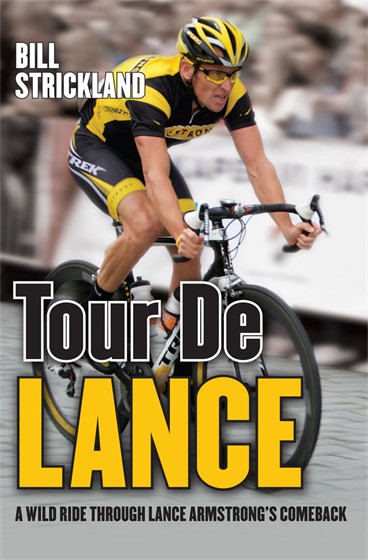
There are books about particular editions of the Tour.  Like “Tour De Lance.”  Bill Strickland had unprecedented access to Lance Armstrong as he attempted an audacious comeback to win the 2009 Tour.  With his main rival Alberto Contador for a team mate no less.  This is another book that I need to reread now that Armstrong is no longer a winner of seven Tours de France.

Tour de Lance

Tim Moore is a British travel writer who rode the entire route of the 2000 Tour.  “French Revolutions:  Cycling the Tour de France” is his irreverent diary of that trip, as well as an homage to bike racing.

French Revolutions

I have only one book about the Giro d’Italia.  Herbie Sykes‘ second cycling history book, “Maglia Rosa:  Triumph and Tragedy at the Giro d’Italia.”  This does not read like a history book though.  Sykes presents a collection of stories together with 150 images to create his tale of the Giro.

Maglia Rosa

The Giro is central to Italian cycling.  It gets a big mention in this book about the history and impact of cycling in Italy.  “Pedalare! Pedalare!  A History of Italian Cycling” by John Foot.  Foot is a Professor of Modern Italian History at University College London.  He has written extensively about Italian history, including three books on Italian soccer.  He brings with him a historian’s eye rather than a sportswriter’s take on cycling in Italy.

Pedalare

I need to add a book about the third of the Grand Tours, the Vuelta a España, to my collection.  Actually there are many books that I want to add to my collection.  Where is that Kindle?

I have books about riders. I have books about races  Naturally I have books about bicycles.  Or more properly in this case, a book about a show about bicycles.

Bespoke:  The Handbuilt Bicycle” is the catalog produced by Lars Müller Publishers for the NYC Museum of Art and Design exhibition of the same name.  An exhibition of the work of six internationally renowned bicycle builders.

Bespoke

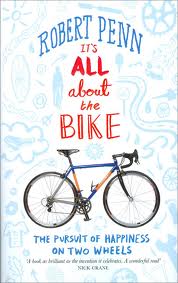
Robert Penn takes a slightly different approach to building a bicycle.  “It’s All About the Bike:  The Pursuit of Happiness on Two Wheels”  is about his quest to put together the perfect bike.  He takes his readers on a journey around the world visiting the factories and workshops where the parts for his custom bike are made.

It's all about the bike

That man William Fotheringham pops up again.  This time as the author of “Cyclopedia:  It’s All About the Bike.”  An encylopedia-like collection of everything Fotheringham has learned whilst reporting on professional cycling for the past 30 years.  Something you can read from A to Z, or just dip into at random.

Cyclopedia

A true history of the bicycle is what David Herlihy produced.  “Bicycle:  The History” may sound like an overly-confident title, but this book lives up to it.  It is the definitive history of the bicycle.

Bicycle

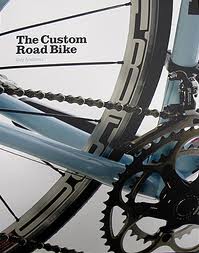
The last book on my shelf about bicycles themselves is by Guy Andrews.  Andrews is the founder and co-owner of Rouleur, a bi-monthly British cycling magazine.  Rouleur is noted for its design and its photography.  So no surprise then that Guy Andrews’ book “The Custom Road Bike” is also beautifully designed and is full of lovely photographs.  Photographs of the very best bicycle components.  You will drool over this book so much that you might as well have gone out in the rain.

The Custom Road Bike

More books in my next post.

Too Wet to Ride?

Posted on

IMG_1301

I bought my first book about cycling not long after I got my first road bike.  As with bikes I didn’t stop at one book.  I don’t have room in the apartment for another bike.  There is not much I can do about that.  I don’t have room on the shelf for another book about cycling.  Hello Kindle!

That first book was “The Rider” by Tim Krabbé.  Krabbé puts the reader inside the head of a competitor in a French cycling race, the Tour du Mont Aigoual.  Krabbé captures in tremendous detail the nuances of road-racing strategy, mixed in with snippets of cycling history.  I was hooked on cycling books.

The-Rider

I have since filled a 90cm / 35.5in shelf with cycling books.  Some are easy to classify.  Books about individual cyclists for example.  Toward the right side of the shelf sits “Put Me Back on my Bike: In Search of Tom Simpson” by William Fotheringham.  The ultimately tragic story of a man best remembered for dying on the slopes of Mont Ventoux during the 1967 Tour de France.

Put-me-back-on-my-bike

William Fotheringham also wrote the next rider biography on my bookshelf, “Fallen Angel: The Passion of Fausto Coppi.”  The life story of perhaps the greatest of Italian cyclists.

Fallen Angel

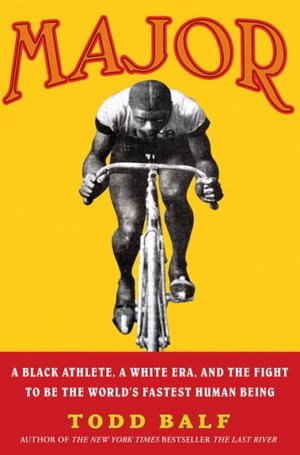
Then comes “Major” by Todd Balf.  About Marshall Walter Taylor, at one time the world’s fastest man on two wheels and America’s first African American sports celebrity.

Major

William Fotheringham appears again on my bookshelf, this time as the author of “Merckx: Half Man, Half Bike.”  Eddy Merckx is widely considered to be the greatest professional cyclist ever.  He won 525 races during his career, including five Tours de France, four Giros d’Italia and three world championships.

Merckx

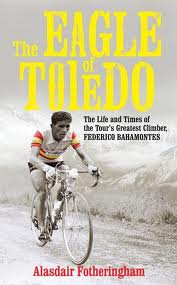
Frederico Bahamontes was known as “The Eagle of Toledo” for his exceptional climbing ability.  He won numerous King of the Mountains classifications in all three major tours.  He also won the Tour de France in 1959.  His story is told by Alasdair Fotheringham, brother of William.

The Eagle

The last biography I have is about Jacques Anquetil.  Anquetil is another giant of the sport.  The first man to win five Tours de France.  His personal life however overshadowed his achievements on a bicycle.  Paul Howard recounts all in “Sex, Lies and Handlebar Tape.”

Sex, Lies

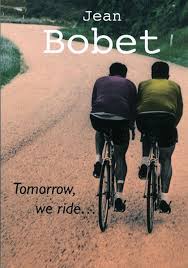
There are autobiographies as well.  The first of these in my collection, starting from the right side of the shelf again, is “Tomorrow We Ride” by Jean Bobet.  Jean is the younger brother of Louison Bobet, the first man to win 3 Tours de France in a row.

Tomorrow We Ride

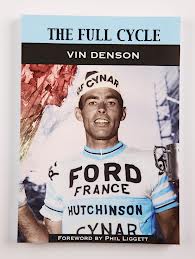
Vin Denson‘s memories of his professional cycling career during the 1960s, including being the first British cyclist to win a stage of the Giro d’Italia, are in “The Full Cycle.”

The_Full_Cycle

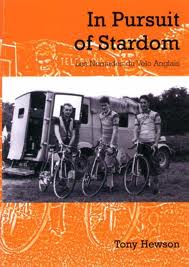
Tony Hewson, in “In Pursuit of Stardom: Les Nomades du Velo Anglais,” tells an extraordinary tale of three British cyclists who venture into France in the 1950s to try their hands in the European road racing scene.

In Pursuit

Laurent Fignon is perhaps best known as the man who lost the 1989 Tour de France to Greg LeMond by a mere 8 seconds.  He should be better remembered as a man who won the Tour twice and the Giro d’Italia once.  These and other victories are described in “We Were Young and Carefree.”

We Were Young

Bob Roll is next.  He is a former Tour de France racer and member of the U.S. Cycling Hall of Fame.  He offers his unique perspective on the professional racing circuit in “Bobke II: The Continuing Misadventures of Bob Roll”.  There is a “Bobke:  A Ride on the Wild Side of Cycling” that I haven’t yet read.

Bobke

Then comes another American racer who crossed the pond in the 1980s to try and break into the European professional peloton.  Joe Parkin wrote about his experiences as a pro racer in Belgium in “A Dog in a Hat.”

A Dog

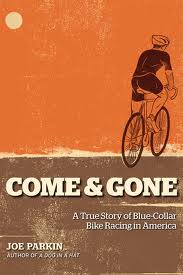
Parkin followed up with “Come and Gone,” his memoirs of a difficult return to road bike racing in the United States, and his subsequent rebirth as a mountain biker.

Come and Gone

I read Michael Barry‘s “Inside the Postal Bus,” his recollection of his time as a domestique on the US Postal cycling team, some years ago.  Since then it has come to light that he had a spot of amnesia when it came to the use of performance enhancing drugs by the team.  I’ll have to read this book again now that we know what really went on in that bus.

Inside the Postal Bus

I’ll cover the rest of my rainy days collection in my next post.

R R Go Away, Come Again Another Day

The weather had looked threatening all afternoon.  The heavens finally opened in spectacular fashion at 6.30pm.  Thunder, lightning, and lots of water.  This was the view from our hotel room at 7.00pm.  Droplets still running down the window, but the main show was over.

Emails about the weather were a common feature of ride days in Houston.  A number of online weather sites were consulted.  Screen shots of radar images went out.  Six Thirty riders looked out of their office windows and reported about the state of the roads along the ride route.  If the roads were going to be wet at 6.30pm the ride would be canceled.  The Six Thirty group never rode in the wet if it could be avoided.  I remember just one occasion where we got caught in a deluge about halfway through the ride.  Somewhere in the vicinity of the old Masonic Lodge on the corner of Brompton Road and North Braeswood Boulevard.  Whatever the weather there was one constant.  The words “rain” and “wind” were never used.  It was always just R and W.  One of those cyclists’ superstitions.  Which I will disregard for the rest of this post.

The weather featured large in Den Haag too.  Saturday morning Not Possibles rides and all other rides were preceded by a look at various weather forecasts.  The concern was less about the rain though.  It rains much less in Den Haag – 25 cm / 10 in annually than in Houston at 122 cm / 48 in per year.  Plus everyone in the Netherlands seems to be very comfortable with riding in the wet.  We often rode on wet bike paths and in the rain.  A waterproof jacket and SKS Raceblade Long fenders were essential items.

For The Not Possibles it was more about the direction of the wind.  The average windspeed in Den Haag is 28.6 kph / 17.8 mph compared to 13.3 kph / 8.3 mph in Houston.  The decision to be made prior to the start of every ride was which way to head out so that there would be a tail wind on the return leg.  The wind in Den Haag is a fickle beast though.  We had many rides where the wind seemed to be in our faces no matter which heading we were on.  On some particularly windy days we chose to sail along with the wind, spinning at an effortless 50 kph for an hour or more.  Then we would ride the train back home.

The amount of rain in Kuala Lumpur is double that in Houston.  We get 240 cm / 94.5 in a year here.  This evening’s downpour dumped a significant amount of water onto the streets.  Enough water for Albert K to call at 7.15pm to say that the Racun Cycling Gang evening ride had been called off.  The fall during last week’s ride is still fresh in the memory.  That no doubt contributed to the decision to cancel this evening.  I shall have to get used to the R getting in the way of riding here.