R@SKLs Do Morib

Posted on
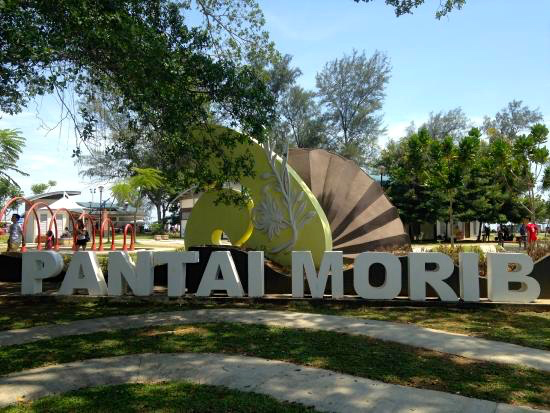
Morib Sign tripadvisor co uk

Photograph courtesy of tripadvisor.co.uk

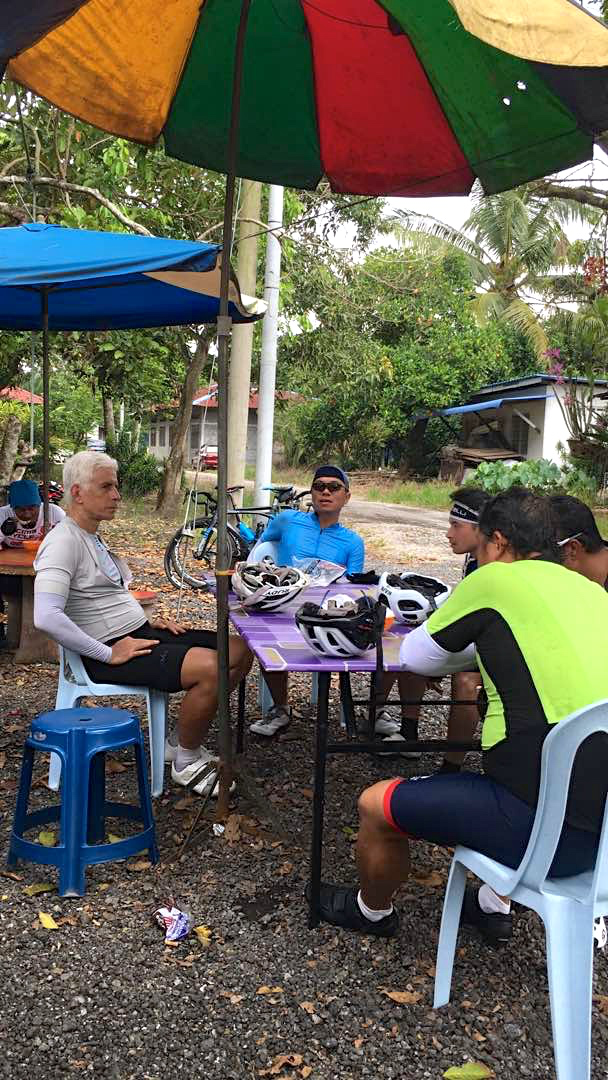
The R@SKLs still had the 1,200 plus meters / 3,900 plus feet of climbing to Fraser’s Hill, from the weekend before, in their legs.  So for this weekend’s ride they opted for the flat run from Kota Kemuning to the beach at Morib.

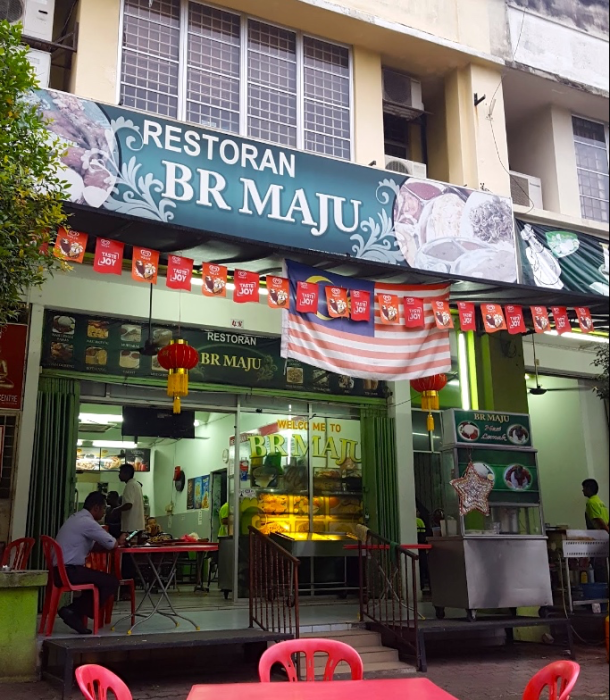
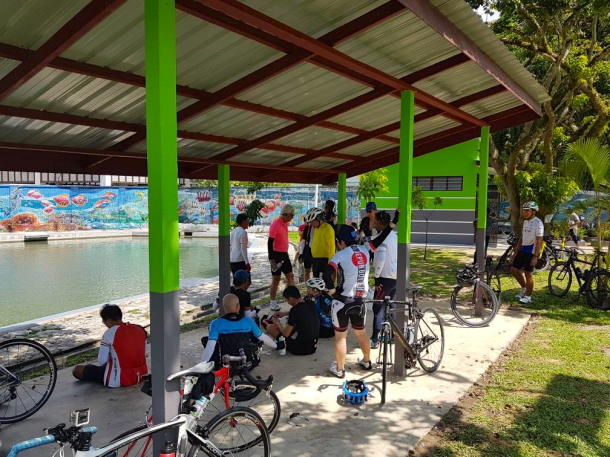
Sixteen of us gathered at BR Maju Restaurant in Kota Kemuning.  We weren’t the only ones in lycra at BR Maju.  It is a popular spot for cyclists to have breakfast, or just a drink, before heading out on their rides.

Morib Restoran BR Maju

Photograph courtesy of Peter Shea

My previous rides to Morib have been westward on the motorcycle path alongside the KESAS Highway, and then south on Jalan Klang Banting.  The ride along the motorcycle path is nice enough, especially on Sundays when there are few motorcycles on the path with you.

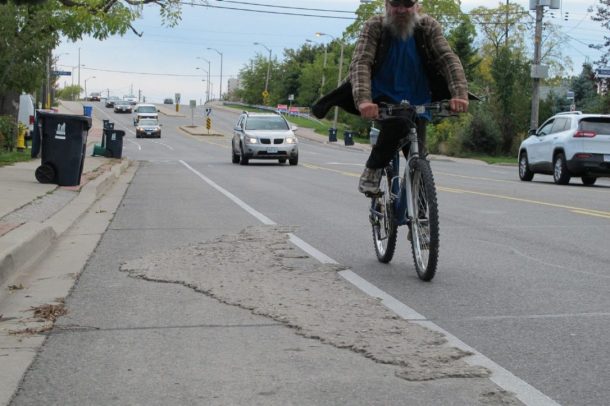
The riding on Jalan Klang Banting, however, is truly unpleasant.  That road has been damaged by the constant heavy vehicle traffic.  Cyclists face more than 10km / 6mi of potholes, ruts, lumps and bumps.

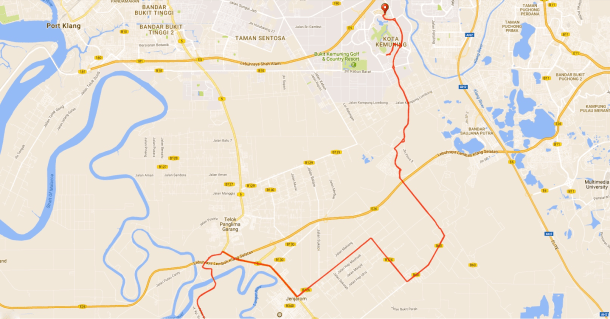
Morib Old Route

This time Meng and CK led us along a much more pleasant route southward from Kota Kemuning to Bandar Rimbayu and the bridge over the South Klang Valley Expressway (SKVE).

From the SKVE crossing to Jenjarom, the riding is along 14km / 9mi of well-surfaced, lightly trafficked kampung roads.  The occasional speed bump is much more preferable to the minefield that is Jalan Klang Banting.

Morib New Route

We did have to ride northwest along Jalan Klang Banting to get from Jenjarom to Jalan Bandar Lama.  Whilst the road surface along that 4.5km / 3mi section was not great, we had avoided the worst ruts and potholes to the north.

The right turn onto Jalan Klang Banting confused some of us.  A left turn onto Jalan Klang Banting, aka Federal Route 5, would take us south and then west through Banting town and onward to Morib.  Surely turning right would add distance to our ride?

Turning right instead of left did add 6km / 4mi to our ride.  The reward for riding extra kilometers was that once we were on Jalan Bandar Lama, we rode over well-surfaced and quiet roads to Morib.  Although the road surface south along Federal Route 5 from Jenjarom to Banting and then Morib does improve, there is always a lot of traffic to deal with.  Thumbs up for the coastal route.

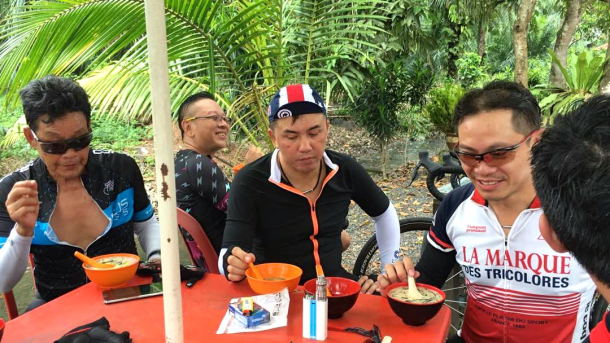
The group had been divided about where to eat and drink in Morib.  Delicious Bread Coffee Shop was on the minds of some.  As the name suggests, their kaya toast is delicious.  But the coffee shop had run out of nasi lemak by the time we got there, so we opted for the food stalls along the beach instead.

Morib Delicious Bread

I had not noticed, but our group had shrunk by one.  Leonard’s bicycle had started making worrying noises as we left Kota Kemuning, so he headed back to his car.  And drove to Morib.  I’m not sure which he wanted to see more, us or the nasi lemak!

Morib Waiting for Food Simon

Photograph courtesy of Simon Soohu

This is what everyone had been waiting for.

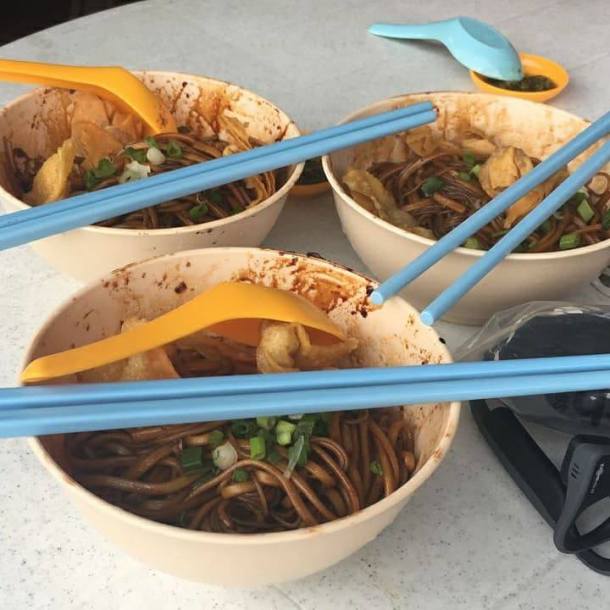
Morib Food Mark

Photograph courtesy of Mark Lim

We found a helpful tourist to take a group picture of us at the beach.

Morib Group 2 Ong Peng Hong

Photograph courtesy of Ong Peng Hong

I suspect that most tourists are disappointed when they see Morib beach.  It is not one of Malaysia’s better beaches.

Morib Beach 1 Simon Soohu

Photograph courtesy of Simon Soohu

We retraced our route back to Kota Kemuning.  We rode along the coast for 7km / 4mi, and then along the Sungai Langat for 3.5km / 2mi.  Just as the road veers away from the river, there is the option to turn left to Bukit Jugra, and a climb of 180 meters / 590 feet over 1.6km / 1mi.

We turned right.

Morib Route

As is often the case, it had warmed up considerably by 11am.  Luckily we were spared the full brunt of the sun.  There were rain clouds over the sea, and it was overcast on the coast.  It had rained the night before.  The rising temperature had made it more and more humid, so everyone was dripping with sweat.  We didn’t help ourselves by pushing a 30kph / 18.5mph pace.

Once we had crossed the climb of the day – the bridge over the Sungai Langat – we were ready for a drink and a rest.

Morib Sungai Langat Bridge Google Maps

Photograph courtesy of Google Maps

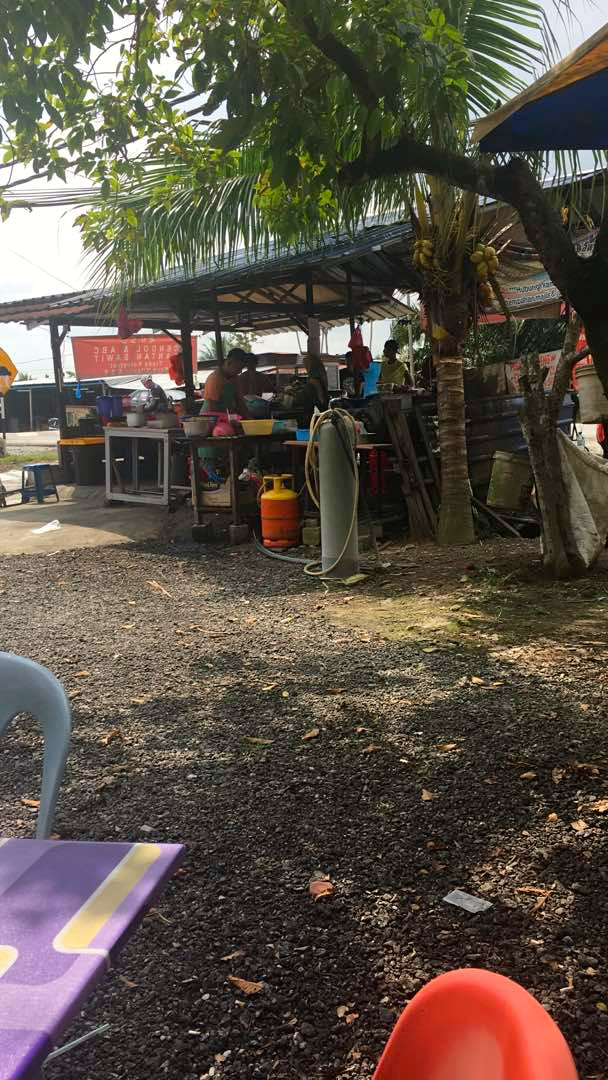
1.5km / 1mi from the river is Ross Cendol & ABC Santan Sawit.  The stall is not much to look at from the back.

Morib Cendol Johan

But it has tables and chairs shaded from the sun by umbrellas.

Morib Cendol 2 Simon Soohu

Photograph courtesy of Simon Soohu

Morib Cendol Simon Soohu

Photograph courtesy of Simon Soohu

And of course, ice-cold and sweet cendol.

Morib Cendol 3 Simon Soohu

Photograph courtesy of Simon Soohu

It was about 30km / 18.5mi from Ross Cendol back to BR Maju Restaurant.  By the time we left the cendol stall, those rain clouds over the sea had moved inland ahead of us.  The wind picked up, especially as we neared the bridge over the SKVE.  Fortunately, we didn’t get rained on.  We got a bit splashed and splattered anyway.  The roads between Bandar Rimbayu and BR Maju Restaurant were very wet.

Apart from Leonard’s mechanical, that was the only blemish on the ride.  Nice roads, good weather, and excellent company.  What more can a group of cyclists ask for?

Hmmmm. That Seems High.

Posted on

Heart Rate Line

I usually ride with a heart rate monitor.  I have a screen on my Garmin that shows, among other things, my heart rate.

I know the disadvantages of using a heart rate monitor.  Such as heart rate being affected by ambient temperature, your emotional state, whether you are tired, or whether you are over-trained.  The monitor itself can generate spurious data.

Nevertheless, my heart rate monitor gives me some data to quantify my level of effort, and more importantly, it tells me when I need to back off, or run the risk of blowing up.  Over time I have learnt that 160bpm is when I need to back off.

I could use a power meter instead.  Power output is a more precise way to gauge performance than heart rate is.  However a power meter is too expensive, despite where prices have fallen to, given the non-competitive riding that I do.

Heart Rate Maximum chiro-doctor com

Graphic courtesy of chiro-doctor.com

I got to 157bpm last weekend, for the first time in ages.  It was at the end of a 500 meter, 7.1% average gradient climb.  That climb came after 110km / 68mi of riding at about 32kph / 20mph.  Faster than I normally ride, so cardiac drift had already pushed my average heart rate to about 140bpm.

The highest I got to the the six weeks prior was 155bpm, during the 141km / 88mi CIMB Cycle @ Seri Menanti event.  That ride had 1,100 meters / 3,600 feet of climbing.

Soon after the CIMB ride I went on holiday for a fortnight or so.  I ate a lot, and did minimal exercise.  It was a holiday after all.  But I was still very surprised when my Garmin showed 160bpm on my first ride after that holiday.

Heart Rate High medlicker com

Graphic courtesy of medlicker.com

Six days later I did another ride, and I hit 164bpm.  My maximum heart rate during those two rides was about 20bpm higher than is usual for me.  What was going on?

For better or for worse, I went to Google for answers.  Google didn’t tell me anything I didn’t already know.  Fatigue, overreaching, overtraining, too much caffeine, or a hot day could all be reasons why my heart rate rose above what I normally see.

I didn’t have any of the symptoms which would set off alarm bells, such as lightheadedness, nausea, or pressure, pain or discomfort in my chest, arm, neck or jaw.  Still, I wondered.

Heart Rate Good to Go wglt org

Graphic courtesy of wglt.org

I needn’t have worried.  I went on a 70km / 43.5mi ride the next day, and my maximum heart rate was 125bpm.  Since then I have maxed out at an average of 147bpm, including last weekend’s outlier.

So what caused that two ride blip?  I’m not sure.  Probably a combination of jet lag and low blood sugar.

It is time for my annual physical exam.  Just to be on the safe side.


Janamanjung Fellowship Ride 2017

Posted on
JMFR 2017 Banner

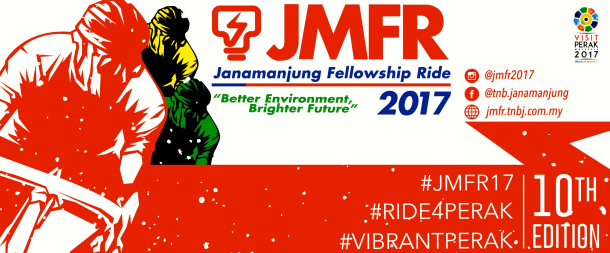
Banner courtesy of TNB Janamanjung Sdn Bhd

The Janamanjung Fellowship ride is one of my favorite cycling events in Malaysia.  I rode in this event in 2014 and 2015.  The staff of the Sultan Azlan Shah power plant in Manjung do a fabulous job of organizing this event, and of looking after all the participants during and after the ride.

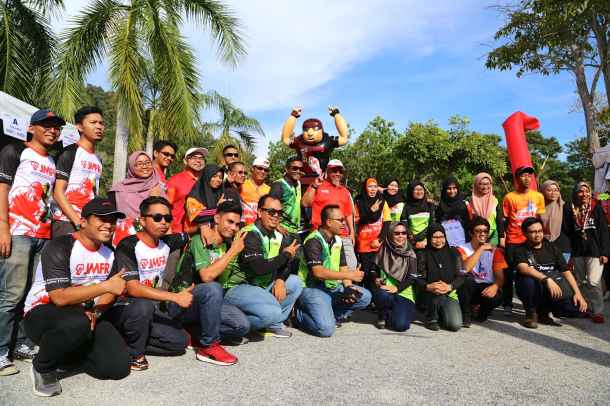
I’ve said it before, and will continue to say it.  Other event organizers can learn a lot about putting on a large ride from Dato’ Shamsul Ahmad (center below in the white cap) and his outstanding organizing committee and volunteers.

JMFR 2017 Dato' Shamsul ahmad and crew

This tenth iteration of the JMFR was the first to start and finish away from the power plant.  It did seem a bit anomalous that for previous JMFRs, the public were allowed access to a critical site that generates about 10% of Malaysia’s total energy requirement.  I suspect that Tenaga Nasional Berhad is no longer willing to take that risk.

Teluk Batik is certainly a picturesque alternative to the power plant.

There was plenty of room for the big tents that housed the post-ride buffet and the prize-giving stage, as well as the smaller pointed tents for vendors selling everything from inner tubes to beach wear.

JMFR 2017 start finish tents

All photographs courtesy of TNB Janamanjung Sdn Bhd, unless explicitly attributed otherwise

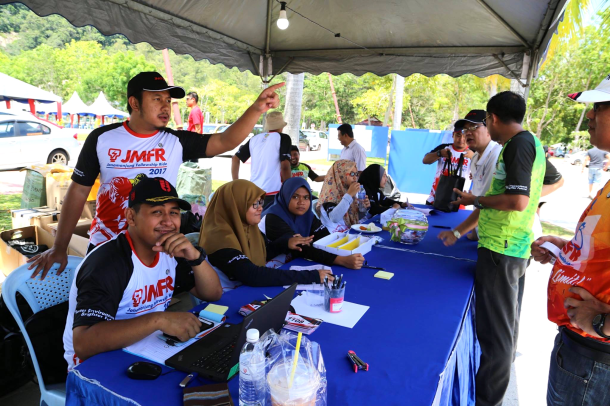
We riders’ first visit to Teluk Batik was to collect goodie bags.  The very high level of organization was already evident.  There were people directing traffic in the car park.  Once at the collection point, it was a quick and simple process to find your rider number, and to collect your goodie bag.

There were multiple collection points, signage was clear, and everything had been pre-packed.  And there were smiles all around.  A smooth and hassle-free collection process was much appreciated after a longer-than-usual drive from Kuala Lumpur.  It was a three-day weekend, and traffic was at a standstill at times.

JMFR 2017 Goody Bag Collection The contents of the goodie bags were useful too.  We all got a bottle of water, a pack of juice, a Snickers bar, a bun, and a t-shirt.  And potentially the most useful item of all – a laminated emergency contact card for the police, hospitals, the power plant medical officer, and ride officials.  (I have edited out the numbers of the individuals below).
I hoped I wouldn’t need it, but this card was comforting to have.

JMFR 2017 Emergency Card

Lightning was flashing over the sea as I rode from the Hotel Sfera to Teluk Batik.  It had rained during the night, the lightning suggested more rain was to come.  Let me tell you now that it didn’t rain.  There was little cloud cover all morning, and it got very hot.

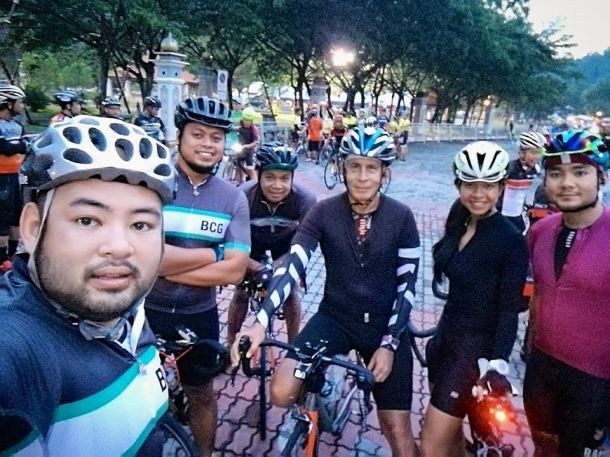
I met Danial, Ozairi and Shahnon, resplendent in their new BCG kit, outside their hotel, and we rode together to the start.  Diyana and Matt joined us for this groupie.

JMFR 2017 BCG at the start Danial

Photograph courtesy of Danial Marzuki

We grumbled a bit about having to wait until 7.30am for what we thought would be a 7.00am start.  There was little else that went wrong all morning, so we really didn’t have much else to complain about.

The pace for almost all of the ride was strictly controlled.  Riders who wanted to show off their turns of speed could do so with 10km / 6mi to go.  Until we got to that point on the route, everyone had to stay behind the lead vehicle, which lead us along at around at an average of about 32kph / 20mph.

JMFR 2017 Behind Car

Photograph courtesy of Cycling Malaysia Magazine

We found that if we stayed about 100 meters behind the car, we didn’t get caught up in the sudden changes in speed as the car slowed for traffic, and then accelerated.

JMFR 2017 Lead car

The route was superbly marshalled by a squad of volunteers on motorbikes.  They did an excellent job of providing support to riders who had mechanical problems, or were in physical distress.

JMFR 2017 Marshals

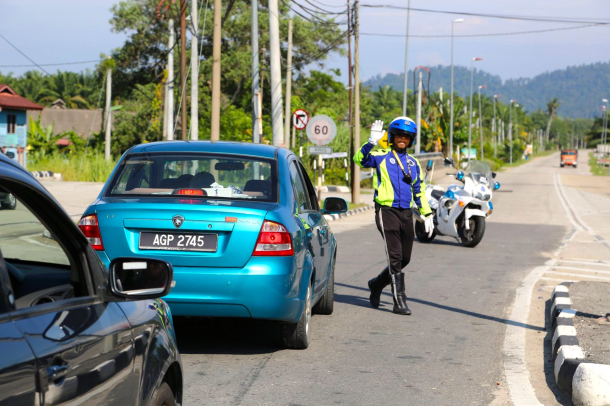
The police were out in force too, stopping traffic whenever the road narrowed, and at intersections.  We didn’t have to stop for a single traffic light or stop sign.  Wonderful!

JMFR 2017 Police traffic control

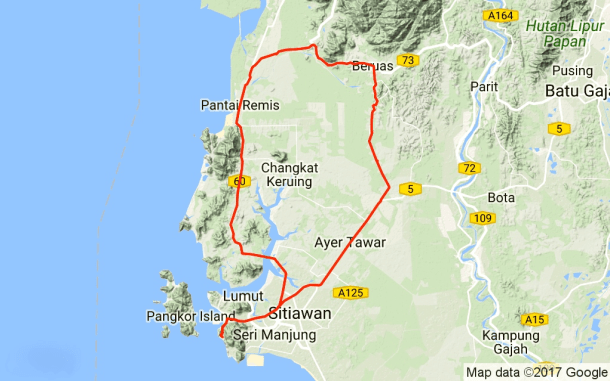
The route was a clockwise one from Teluk Batik on the coast, up to Pantai Remis and Beruas, before heading down to Ayer Tawar and back to Teluk Batik.  Just over 110km / 68mi.

Push me to come up with a complaint about the route, and I will say that the condition of the road surface is poor in some places.  Heavy traffic has caused the macadam to crack along certain stretches of the route.  Riders with stiff carbon frames were clattering over the rough surface.  I was thankful for my more compliant titanium frame.

JMFR 2017 Route

Map courtesy of Strava and Google

There were two mandatory stops of about thirty minutes each.  This allowed the slower riders to catch up to the riders ahead of them.  Which kept the 1,000 or so participants in a reasonably coherent and more easily marshaled group, rather than scattered over kilometers of road.

The organizers did well by putting the rest stops at large community halls, which provided much-appreciated shade.  Bottles of cold water and cans of 100 Plus isotonic drink were plentiful.  Bananas and watermelon was also freely available.  One of the major failings at other events is that rest stops run out of water, let alone fruit, before all the participants have come through.  Kudos to the JMFR organizers for ensuring that there was enough drink and food for everyone.  And for providing shade to boot.

JMFR 2017 BCG water stop Danial

Photograph courtesy of Danial Marzuki

The route was very flat, with only about 275 meters / 900 feet of climbing.  The short but steep hill about 1km / 0.6mi from the start / finish accounted for about one third of those climbing meters.  The 10% grade was easy at the start, but it was more challenging on the way back, with 110km / 68mi in the legs.

JMFR 2017 Final Hill

One way or the other, everyone got to the finish line.

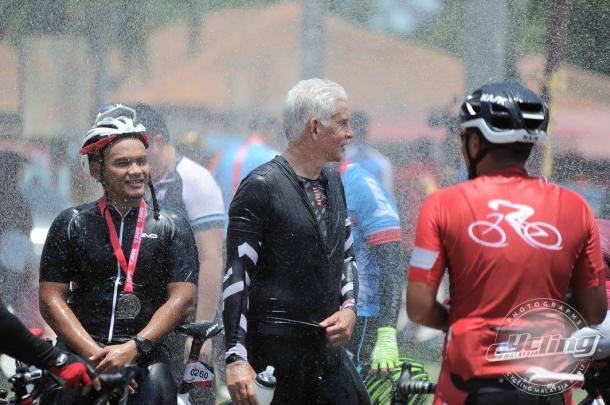
The first thing I did was to take off my shoes and socks, empty my jersey pockets, and take a shower.  Courtesy of the local fire brigade.  I should have kept my shoes on.  The road and pavements were very hot!

JMFR 2017 Shower

Photograph courtesy of Cycling Malaysia Magazine


Once I had cooled down it was time to join the rest of the BCGers under the big tent for the buffet lunch.  Where once again the JMFR organizers outdid other cycling events.  At other rides you are lucky to get a styrofoam container of cold rice and a bit of fried chicken or fish.  Here we got multiple buffet lines of hot food, including curried eggs and a delicious beef rendang.  You can’t help but leave the JMFR happy.

JMFR 2017 Buffet

JMFR 2017 JM and Shahnon

The Janamanjung Fellowship Ride is definitely one of the best, if not the best, organised rides in Malaysia.  The only thing the organisers can do better is to guarantee me a prize in the lucky draw!

JMFR 2017 Medals

See you in 2018 JMFR.

R@SKLs do Bentong

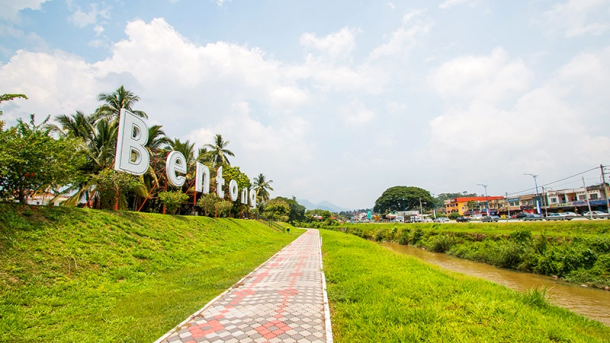
Bentong Sign gobentong com

Photograph courtesy of gobentong.com

Before 1977, all traffic across the Titiwangsa range used the winding, narrow Federal Route 68, which runs from Gombak in Kuala Lumpur to Bentong, Pahang.  Everyone going to Kuantan, Kuala Terengganu, Kota Bharu, and other points east of Kuala Lumpur drove through Bentong.

The Kuala Lumpur – Karak Highway, opened in 1977 and upgraded to a full expressway in 1997, bypasses Bentong.  Today, the majority of traffic uses the Kuala Lumpur – Karak Expressway, leaving Federal Route 68 to learner drivers and cyclists.

Regular readers will know that the climb up to Genting Sempah is popular with cyclists from the Klang Valley.  A more ambitious ride continues to Janda Baik.  Even more ambitious is a ride to Bentong.

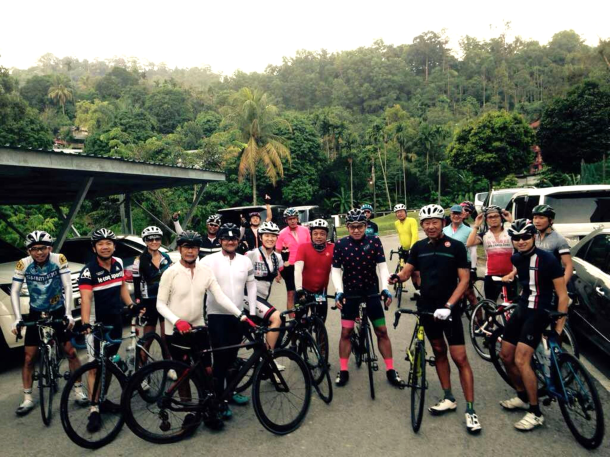
The R@SKLs are nothing if not ambitious.  About twenty of us turned up at the Hospital Orang Asli Gombak car park for a 7am start toward Bentong.

Bentong 2

Photograph courtesy of Daniel Lim

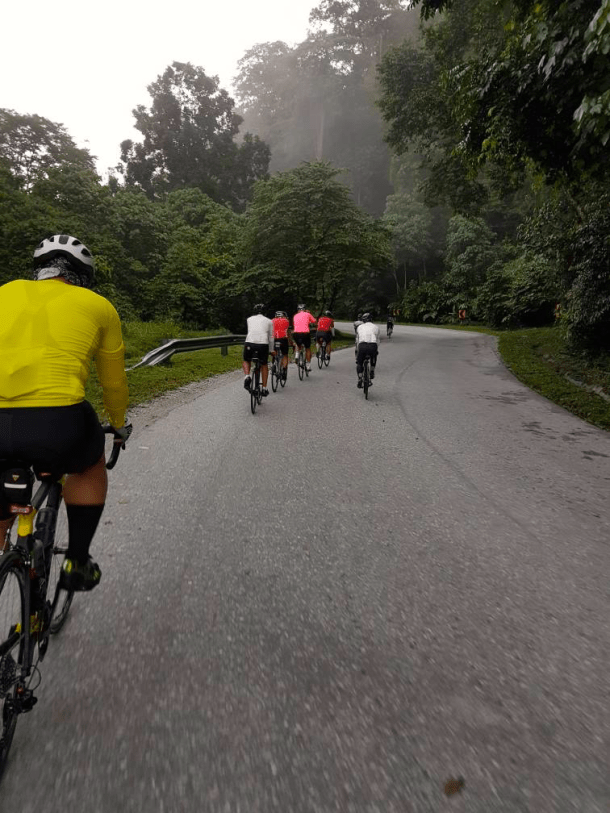
The first 16km / 10mi is uphill to Genting Sempah.

Bentong 7 Kiat Luanne

Photograph courtesy of Khoo Yit Kiat

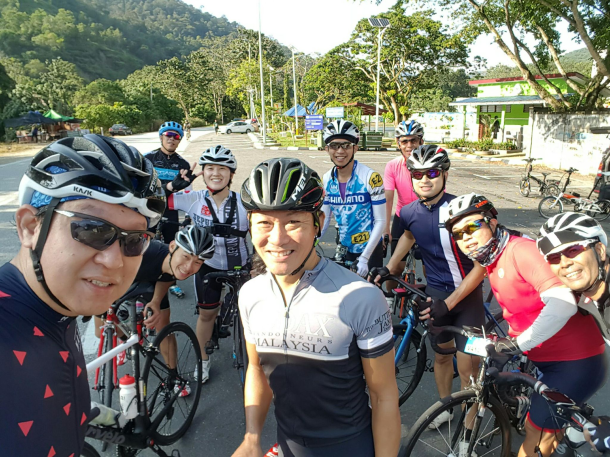
This was early on in the ride.  Clockwise from top left, Luanne, Tomoe and Daniel, Arthur, and Kelin.


We regrouped under the flyover at Genting Sempah.  Behind us is our support vehicle.  Leonard very kindly provided his pickup and driver.  Plus coolers of ice and drinks.  Top man Leonard!

Bentong 6 TH Lim

Photograph courtesy of TH Lim

From the flyover we let gravity take over for the 20km / 12.5mi run downhill to the Suria Hot Spring Resort.  We regrouped there before riding the flatter 17km /  10.5mi to Bentong town.

Bentong 12 Lee Heng Keng

Photograph courtesy of Lee Heng Keng

Some of us had the dubious pleasure of being dragged along from the hot spring at up to 44kph / 27mph by Daniel, as he waved his hand in the air, urging us forward.  I for one was glad to see the outskirts of Bentong.

Once in Bentong the only thought on everyone’s mind was food.  We rode into the streets where the Sunday morning market is held, and stopped at Po Lai Kam kopitiam.  We queued to fill our bowls . . .

Bentong 10 Kiat Luanne

Photograph courtesy of Khoo Yit Kiat

. . . and then filled our stomachs.

Bentong 11 Kiat Luanne

Photograph courtesy of Khoo Yit Kiat

There had been some talk of riding on to the Chamang waterfall.  The consensus on the day was that it was too hot for extra kilometers.

So we rolled back toward the hot spring.  At a much more sedate pace.  Well, some of us rode at a more sedate pace.  About half the group had shot off ahead.  We all stopped at the hot spring for a rest in the shade, and something cold to drink.

If it hadn’t been a hot spring I might have jumped in.

Bentong 8 Kiat Luanne

Photograph courtesy of Khoo Yit Kiat

We had all enjoyed the 20km / 12.5mi downhill roll to the hot spring on the way to Bentong.  Now it was time to pay the piper.

After 10km / 6mi and 270 meters / 885 feet of elevation we were ready for another rest.  This time outside the Bukit Tinggi secondary school.

Bentong 4 TH Lim

Photograph courtesy of TH Lim

We weren’t yet halfway through the grind back up to Genting Sempah.  There was another 8.5km / 5.3mi and 405 meters / 1,330 feet to climb before we got to the Genting Sempah R&R.

We all got to the Genting Sempah R&R – eventually.  But we couldn’t celebrate yet.  There was still the not insignificant obstacle of Hamburger Hill to surmount.  Exhilarating to descend, but a lung-burning, leg-breaking 81 meters / 266 feet, 6.4% average grade climb over 1.1km / 0.7mi, especially after the kilometers ridden and meters climbed to that point.

Lay, Mark and I delayed the inevitable by detouring to the McDonald’s at the R&R.  I for one needed a sugar boost – in a big way.  McDonald’s delivered.

I might not have been able to get up Hamburger Hill (you see the reason for the name now) without that pie and sundae flooding into my bloodstream.

The other R@SKLs didn’t need a McDonald’s boost.  They had made their way up Hamburger Hill and down to the Hospital Orang Asli car park, and had packed up and left by the time the three of us got there.

As Leonard said, it was fun.  Painful fun at times, but fun nonetheless.

You know what they say about ambition.  It grows.

The R@SKLs have decided that Fraser’s Hill is next.

Freeze in ‘Little England’

Photograph courtesy of malaysiasite.nl

New BB for the Alchemy Eros

Bottom Bracket (BB):  The bottom bracket connects the crankset (chainset) to the bicycle and allows the crankset to rotate freely.  It contains a spindle or axle that the crankset attaches to, and the bearings that allow the spindle and cranks to rotate.

From Wikipedia, the free encyclopedia

In my post about my broken saddle, I mentioned that I was told about the snapped rail after I sent the Alchemy Eros to Meng Thai Cycle for servicing.  The bike needed a service because the BB was clicking sporadically.

The bike came with a Chris King BB.  After the crankset had been removed, the mechanic discovered that the BB bearing on one side of the BB shell was almost frozen.  As the BB bearings came out of the BB shell, a gush of water followed.

The Eros frame does not have a drain hole in the BB shell, or in the chain stays.  So the water that found its way into the frame, most likely by wicking down the seat post, accumulated in the BB shell.

This is what a new Chris King Press Fit 30 BB looks like.

Chris King PF 30

Photograph courtesy of Chris King

This is what came out of my frame.

IMG_5798

Clearly, the water in the BB shell had not done the bearings any good.  The damage was so bad that the BB had to be replaced.

Chris King BBs are hard to find in Kuala Lumpur.  Meng Thai Cycle had a compatible Tripeak Twist Fit BB on hand.

Tripeak Logo

Logo courtesy of tripeakbearing.com

I had read about twist fit BBs in the past.  They were touted as an elegant solution for creaking press fit BBs.  In April 2015 BikeRadar published a piece about Legit Engineering’s twist fit BB.  Seventeen months later, road.cc published an article about the similar Token thread fit BB.

Both versions feature bearing cups wrapped in a plastic and fibreglass composite material.  This prevents metal-to-metal contact between the bearing cups and the frame, thus eliminating creaks.

The clever part of this solution is that the bearing cups thread together, tightly sandwiching the BB shell in between the cups to prevent movement.

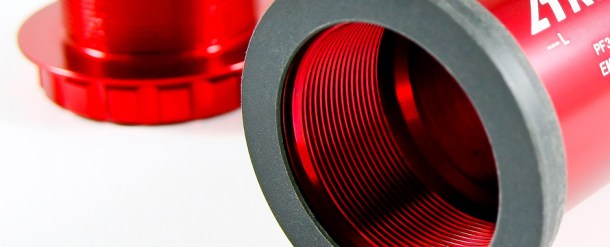
Tripeak PF30 Twist Fit BB 4

Photograph courtesy of tripeakbearing.com

The Tripeak name was new to me.  It turns out that Legit Engineering has been rebranded as Tripeak.  Click on the link on the URL shown on the Legit Engineering Facebook page and you get taken to the marketing site for Tripeak.   The Legit Engineering Twist Fit BB (upper photograph) and Tripeak Twist Fit are are identical, save for branding.

Legit Twist Fit BB 1

Photograph courtesy of bikeradar.com

Tripeak PF30 Twist Fit BB 3

Photograph courtesy of tripeakbearing.com

After more than 15,000km / 9,300mi on a Chris King PF30 BB, my cranks now turn in a Tripeak Twist Fit BB.  So far so good.

Chris King BBs come with a 5-year built-to-last warranty.  I sent photographs and a description of the problem to Alchemy Bicycle Co.  Alchemy was whom I had “bought” the Chris King BB from when I purchased my fully built-up bike.

Alchemy has submitted those details to Chris King, but have not yet heard back from them.  It is a limited warranty, so it is very likely that damage or failure due to water in the BB shell is not covered.

Which reminds me to take my Alchemy Eros outside, remove the seat post, and turn it upside down.  I have been on some wet rides lately.

N.B.  Taiwanese brands like Tripeak are often hard to find in the United States and Europe.  Wheels Manufacturing now offers a range of threaded BBs to replace press fit BBs.

Mere Millimeters In It

Selle Italia Superflow Saddle Sore 2

A pain in the butt.  Not since I started cycling had riding caused sore buttocks.  Or to be more specific, a sore left buttock,  I suspected a saddle sore, but there wasn’t any evidence of skin abrasion, let alone folliculitis.

There was no denying, however, that whenever I rode, I felt pressure and discomfort where my left sit bone (ischial tuberosity) rested on my saddle.  My first thought was that I needed to replace my well-used bibshorts.  Perhaps the chamois pads had become compressed, and were no longer providing the cushioning that they used to.

I tried some newer, better cushioned bibshorts, but the discomfort persisted. So I began to consider the possibility that I had somehow developed a pelvic tilt to the left.  I started to investigate chiropractic or myofascial treatment to address a structural misalignment in my pelvis.

Selle Italia Superflow Saddle Sore

By that time a few weeks had passed.  At which time I did develop some skin abrasion at the pressure point, which made me reconsider the possibility that I was developing a saddle sore.  Out came the Dettol antiseptic cream.  Perhaps it was the placebo effect, but it did feel as if the discomfort was lessening.  But it never went away completely, and the reason for the pain remained a mystery.

The answer came after I had been riding with a sore butt for about a month.  I had to send my bike for a service at Meng Thai Cycle in Kota Kemuning.  More about why my bike needed a service in a future post.

When I went to collect my bike post-service, Lee asked me if I knew that a rail on my Selle Italia SLR Superflow saddle had broken.  I did not.

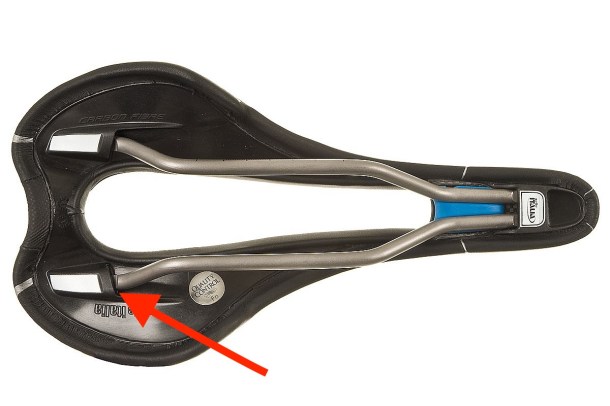
The vanox rail under the left side had snapped at the point where it entered the slot at the left rear of the saddle shell.  The rail is crimped at that point, which presumable creates a weak point.  It must have snapped just before I started feeling discomfort on my left side.

Selle Italia Superflow Saddle Arrow

The shell was like a spring, and the broken rail was no longer holding the shell down properly.  The result was that the left rear of the saddle was slightly higher than the right side.  It was only two or three millimeters higher.  Not enough difference for me to notice whenever I looked at my saddle.  But enough of a difference for my butt to notice.

I replaced the broken saddle with the same model off my Ritchey Break Away, and “Hey Presto!”  No more pain in the butt.

I wouldn’t have thought that a few millimeters would have such an impact.  I could put her to shame.

Selle Italia Superflow Saddle Princess Prezi com

Image courtesy of prezi.com

More Train Adventures

Marco, Mark and I attempted a ride to the KTM Komuter station at Tanjung Malim.  We started from Mark’s house in Taman Mayang Jaya.  We followed our usual route toward Rawang via the Guthrie Corridor Expressway.  Our plan had been to get onto the LATAR Expressway and ride into Rawang from the south east.

But as we circled around the cloverleaf intersection to get onto the LATAR Expressway, we noticed very dark clouds and rain over Rawang in the distance.  So we looped around the cloverleaf again and got onto LATAR going in the opposite direction, toward Kampung Baru Kundang.  The skies were clear in that direction.

Our new plan was to stop at our favourite noodle shop in Kundang, and weather permitting, get to Rawang from the south west.

KKB Noodles Mark

Photograph courtesy of Mark Lim

It was spotting with rain when we had finished our noodles.  We took a chance and rode toward Rawang anyway.  The drizzle soon stopped, but it had already rained quite hard, and the roads were very wet.  Why do I always have a white jersey on when we hit wet roads?

We rode through Rawang and onto Federal Route 1.  Federal Route 1 is the oldest federal road in Malaysia, as is one of the nation’s earliest public roadways ever constructed.  It runs the length of the Malay peninsula, from the causeway into Singapore up to the Thai border in the north.  As we left Rawang toward Serendah the road dried up.  We had pleasant, overcast riding conditions.  The skies were gloomy, but we thought we had dodged the rain.

KKB Rain Coming Mark

Photograph courtesy of Mark Lim

Not so.  The rain caught up with us while we were stopped at the Petron station in Rasa.  We waited at the petrol station for about fifteen minutes in the hope that the rain would stop.  It did not.

KKB Petron Rasa Marco

Photograph courtesy of Marco Lai

So we rode out into the rain.  By then the conditions were miserable.  Federal Route 1 is a busy road.  We were riding through rain and the spray thrown up by passing vehicles.  We decided to stop at the nearest KTM station, which was 8km / 5mi away in Kuala Kubu Bharu.  Tanjung Malim was a further 20km / 12.5mi away.  Too far given the very wet conditions.

We bought a ticket for our bikes, and tickets for ourselves, and sat at the station with a drink in our hands, waiting for the train.

KKB Bikes Ticket Mark

Photograph courtesy of Mark Lim

The towns along the KTM Komuter line to the north of Kuala Lumpur are smaller than the towns to the south of the city.  Which may explain why there are less people on the trains going south from Kuala Kubu Bharu than there are on the trains going north from Seremban.  We shared the carriage with only two or three others all the way to our stop at Sungai Buloh.

KKB Carriage All to Ourselves Mark

Photograph courtesy of Mark Lim

We hopped off the train at Sungai Buloh, which was the closest station to Taman Mayang Jaya.  By then the rain had stopped, and the sun was out.  We had to negotiate some busy roads for the first few kilometers, but once we were in Kota Damansara the traffic was less fraught.

It was lunchtime when we got to Aman Suria, which is the neighbourhood adjoining Taman Mayang Jaya.  Patty & Pie is in Aman Suria.  Their burger lunch special hit the spot.

KKB Patty & Pie Mark

Photograph courtesy of Mark Lim

Another overall enjoyable ride (bike) and ride (train), despite the rain.

CIMB Cycle @ Seri Menanti 2017

CIMB Logo

Seri Menanti is the royal capital of the state of Negri Sembilan.  It is a tiny town about 100km /  62mi southeast of Kuala Lumpur.  Among its landmarks is the old wooden palace know as Istana Lama, built without the use of a single nail.

CIMB Old Palace thestar com

Photograph courtesy of The Star Online

On Saturday March 26th, Seri Menanti was the venue for a 120km / 74.5mi ride, sponsored by CIMB, which is an international bank headquartered in Malaysia.

I signed up to ride with a group of friends who call themselves R@SKL.

CIMB R@SKL Logo

Given how far away Seri Menanti is from Kuala Lumpur, most of us opted to drive down on Friday, and spend the night at the Melang Inn Hotel in Kuala Pilah.  The hotel is about 12km / 7.5mi from Seri Menanti.

Some of the guys are avid golfers.  On Friday afternoon they played a partial round, truncated by rain, at the Staffield Country Resort, which is about halfway between Kuala Lumpur and Seri Menanti.  I met the golfers for dinner at the Regent Restaurant in Seremban.

Then we drove the rest of the way to the hotel.  Golfers and nongolfers alike met up for a drink at the Hailam Kopitiam restaurant next door to the hotel, before one by one, we headed to our beds.

Anyone planning to park at the starting point had to be there before about 6.30am.  So it was an early start for everyone except me.  I rode to the start.  My deadline was the flag off time of 7.30, so I had an extra hour of sleep.

Pink was the jersey colour of choice for the R@SKLs.  I don’t own a pink jersey.  The best I could do was a pink base layer.

We got off the stat line bang on time.  Well done organisers.

CIMB 2

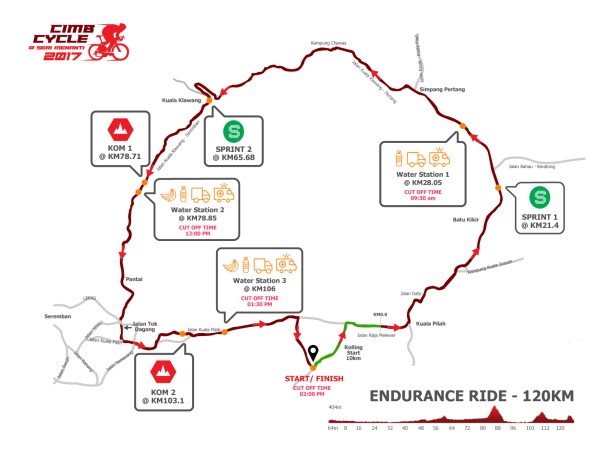
The route was a counter-clockwise loop.  From Seri Menanti we rode back past the Melang Inn Hotel in Kuala Pilah before heading roughly north to Kampung Serting Hulu and Kampung Chawas at the northernmost point in the loop.  To that point the terrain was almost pan flat, so the riding was comfortable.

CIMB Route 2

Map courtesy of CIMB Cycle

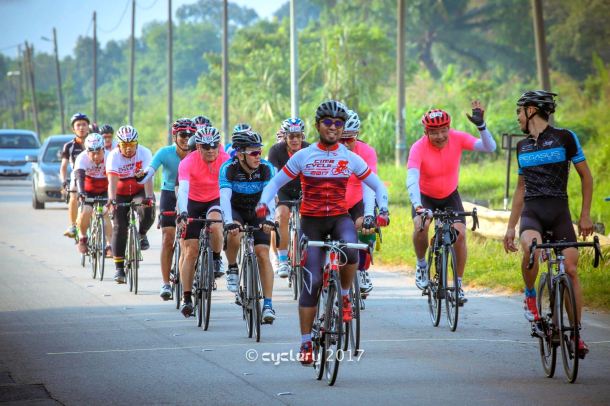
You will notice from these photographs that the R@SKLs were wearing white arm screens  Those were provided by LGB Group, a Malaysian multinational with subsidiaries in a number of industries.

CIMB 9

Photograph courtesy of Cyclery

LGB Group were one of the corporate partners for this event.  In addition to the arm screens, they provided a support vehicle for us.  Always a comforting thing to have on a long ride.

CIMB 8

Photograph courtesy of Cyclery

We hit a few small climbs as we meandered westward to Kuala Klawang.  The real climbing action started about 10km / 6mi southwest of Kuala Klawang.  The infamous Bukit Tangga.  4km / 2.5mi with 280m / 919ft of elevation.

Fortunately it was overcast as we dragged ourselves up Bukit Tangga.  By the time we got to the top it was raining.  Which kept us cool as heart rates became elevated.

Luckily the rain was very localised, and the road was completely dry after the initial third of the descent.  We caught our breath after the descent at a Petron station in Taman Panchor Jaya.  Then it was 4km / 2.5mi along a series of busy intersections to the foot of the next climb, up Jalan Kuala Pilah.  This ascent was 6.5km / 4mi and 315m / 1,033ft of elevation.  Not helped at all by a relatively strong headwind.

When we crested that second climb it was past midday.  And hot.  So everyone appreciated the 3km / 1.8mi blast down the other side of the hill.  The next 10km / 6.2mi was slightly downhill, but the headwind prevailed, making it harder work than it should have been.

The ride organisers put a sting in the tail of this ride, as you can see below.  The climbs, from the left, are Bukit Tangga, Jalan Kuala Pilah and Seri Menanti.

CIMB Profile

Graphic courtesy of veloviewer

That last 1km / 0.6mi kick, with a red section at 15%, came with just 5km / 3mi of the ride left.  More than a few riders had to push their bikes up that vicious 90m / 295ft climb.

As is always the case, there was lots of moaning during the climbs, but everyone was in good spirits after the ride.  We older, i.e. slower riders made it safely to the end.  Sadly one younger i.e. faster R@SKL got caught up in a crash, which fortunately damaged his bike more than it damaged him.  But the crash meant the end of his ride.

It had seemed like a good idea to ride to the start in the cool of the early morning.  It didn’t feel like such a good idea when the sun was at its peak at 2pm.  I got a lift back to the hotel.  Definitely preferable to getting broiled while riding.  We all had lunch at the Hailam Kopitiam, amidst much laughter as we shared stories about the ride.  The R@SKLs are a fun group to ride with.

If CIMB organises another ride next year, I’ll be up for collecting one more of these.

CIMB Medal

What To Do With Excess Cycling Gear?

Regular readers know that my collection of cycling jerseys grows with each organised century ride I participate in.  I have also accumulated bottles, lights and the like.

I have tried to give some of it away, but most of my cycling buddies have the same predicament.  An increasing pile of stuff that they do not use.

My Biker Chick came up with a super solution.  While researching places to stay and things to do and see during our recent trip to South Africa, she came across a cycling development program run by Jakaranda Children’s Home.

Jakaranda Logo

Logo courtesy of Jakaranda Children’s Home

The Jakaranda Children’s Home, and the companion Louis Botha Children’s Home, are two non-profit organisations that look after the welfare of 350 children in Pretoria, South Africa. These children have been removed from their parents and placed in the care of the Homes by the South African children’s court.  Reasons include abandonment, neglect, and emotional and physical abuse.

The primary purpose of the Homes is to provide the children with clothing, housing, schooling, food, security and stability.  In addition, the Homes provide the children with the necessary therapy, life skills and emotional support that they need in order to become responsible adults, and to curb the cycle of abuse.

The children live in one of 21 individual homes within the Jakaranda compound.  Each home houses thirteen to fifteen children, under the care of a House Parent.  The House Parent prepares meals for the children, helps them with their homework, and provides overall care for the children like they would in their own home.

Jakaranda House 2

Photograph courtesy of Jakaranda Children’s Home

Jakaranda House 1

Photograph courtesy of Jakaranda Children’s Home

The Homes run a number of different activities, all with a therapeutic purpose.  One of these activities is the Cycling Development & Therapy Project.  The cycling development project was started to help children who were battling with responsibility or perseverance problems.  The project now involves 100 children between the ages of 12 and 18 years.  The children compete regularly in competitions and cycling events.  The ultimate aim is for some of the children to take cycling as a professional career when they leave the home.

Jakaranda Cycling

Photograph courtesy of Jakaranda Children’s Home

What does all this have to do with my excess cycling gear?  The Jakaranda cycling development project is always looking for donations of cycling equipment and clothing.

So the largest suitcase we took on our trip was filled with jerseys, bib shorts, bottles, bottle cages, helmets, lights and the like.

Jakaranda Bag

Photograph courtesy of Biker Chick

It was an enjoyable and interesting visit to Jakaranda Children’s Home.  Coincidentally, our guide / driver for our trip to Pretoria, and the Cradle of Humankind in Maropeng, had adopted a child who was a resident of Jakaranda.  In addition, that boy was in the Cycling Development & Therapy Project, and as an adult is still an avid cyclist.

Hopefully the children at the Jakaranda Home will get a lot of use out of my pre-loved cycling gear.  And I now have room to collect some more!

The Art of Exercise

I enjoy studying graphic representations of data.  Like this map illustrating 59,036 routes between 3,209 airports on 531 airlines spanning the globe.

Sisu openflights org

Graphic courtesy of openflights.org

And this chart showing our galaxy’s relative size and position within the known universe.

Sisu Galaxy national geographic com

Graphic courtesy of nationalgeographic.com

The latest graphic to pique my interest is one created by Sisu.

Sisu Logo

Sisu takes your exercise data from Strava or Runkeeper, and turns that data into a print.  Sisu has been around since at least 2014.  Co-founder Peter Roome posted the first blog entry on the Sisu website in May that year.

I found out about Sisu last week, when cycling friends started posting their Sisu prints on Facebook.

There are a few designs to choose from on the Sisu website.  I like their original design that displays all the routes you covered between your chosen start and finish dates.  The plots of each route are sized so all of them fit on one page.  Thus the plots are not to scale.

Below are the routes I rode in 2010, the year I started cycling.  The first four rows show rides within and around Houston, Texas.  The rest of the routes are either loops or out-and-back rides starting from Den Haag, The Netherlands.  I moved from Houston to Den Haag in May 2010.

The rides range from 14.5km / 9mi (row two, far right, which was a short run from my Houston home to Hermann Park and back), to 124.5km / 77mi (row six, third from the left, which was from my Den Haag home to Kinderdijk and back).

Sisu 2010

Graphic courtesy of madewithsisu.com

Even with only fifty rides in 2010, patterns emerge from the plots.  Most of my Houston rides were with the West End 6:30 group.  We rode a consistent route through the city every Tuesday and Thursday.  Most of those are shown on row three.
Den Haag is just a couple of kilometers from the coast.  You can’t ride very far west before you run into the North Sea.  So a lot of my rides in The Netherlands followed the coastline, either south-west or north- east from Den Haag.

As you lengthen the timeline, the Sisu plots of each route get smaller.  To ensure that, in this case, 885 routes fit on one page.

This print shows my entire Strava ride history.

Sisu 2010 to 170318

Graphic courtesy of madewithsisu.com

I think this print is a fascinating way to review my cycling history.  It is obvious from the graphic that my Kuala Lumpur friends and I spent an awful lot of time on the KESAS Highway in 2013 and 2014, as shown by all the horizontal, slightly squiggly routes in the middle third of the print.

There was a time when the Bukit Damansara route was popular.  This route Bukit Damansaraappears a dozen times in the centre rows.

Highlights stand out too.

An evening’s ride around the Sepang International Circuit produced this plot Sisu Sepang.  It is not too difficult to find, about two-thirds of the way down the print.

More difficult to pick out is this route, my longest ever ride at 445km / 276.5mi Sisu BRM400.  It is in the fourth row from the bottom.

Of course, what my Facebook friends and I should be doing is paying Sisu for a print.

Sisu Order

Prints come on 300 grams per square meter Matt Photorag stock.  300gsm paper stock is at the higher end of paper thickness.

The print size is 12 inches by 16 inches for US orders, and A3 size (297mm by 420mm) for orders from the rest of the world.  The price for a physical print, or a digital download, are above.

I’m thinking of a present to myself when I hit 60,112km / 37,351mi.  That is 1.5 times around the circumference of the Earth.  Which should be in two months or so.