I subscribe to a weekly e-newsletter from Road Bike Rider. Each issue closes with a Question of the Week. These were the options for a recent poll:
Just my one road bike
2 road bikes
3 road bikes
4 road bikes
5 or more road bikes because you can never have too many
This is the result of that poll:
I am among the 26.81% of 1,854 respondents who own three road bikes. Over 85% own more than one road bike. Perhaps not surprising given that the respondents are readers of a cycling publication.
How did I come to own three bicycles?
I bought my first road bike in 2010. My steel Alchemy.
By 2011 I was living in The Netherlands, riding a lot, and wanting a frame that was stiffer than my steel frame. Alchemy built a titanium + carbon bike for me. These two bikes came home with me to Kuala Lumpur in 2012.
In 2013, I made plans to ride the BP MS150 and the TD 5 Boro Bike Tour in Texas and New York, respectively. I needed a bike that was easy to travel with. I bought a Ti Ritchey Break-Away.
I made another trip to the US in 2015 for a cycling vacation. Alchemy Bicycle Company had by then relocated from Austin, Texas, to Golden, Colorado. My cycling vacation was based 40 km away from Golden, in Boulder. Convenient, as I could order another bike from Alchemy, pick it up when I arrived and ride it on my Cognoscenti adventure. That would be much more fun than travelling with my Break-Away.
To make room for my new Alchemy Eros, I sold my two other Alchemy bikes. The steel bike went to a friend in KL, and the Ti bike went to a colleague who took it with him when he returned to Canada.
I bought the steel bike back in 2019. The friend I sold it to only rode it a few times in five years. After a conversation with my Biker Chick, we agreed that I should buy it back for sentimental reasons if nothing else.
I ride all three bikes. To get a view of use over the bicycles’ lifetimes, I dug into my Strava data, and this is the result:
The graph shows the three road bikes I own now and the Ti bike I sold in 2015.
The Eros is by far the bike I ride the most. It is the one that is most comfortable for any ride longer than 50 kilometres.
That historical 1:1 ratio of the number of rides on the Eros versus the total number of rides on the steel and Break-Away bikes holds today. So far in 2024, I have ridden the Eros sixteen times and the steel bike and the Break-Away a combined total of seventeen times. I do enjoy alternating between them all.
There is an old joke among cyclists. Ask the question, “How many bikes do you need?” and the answer is, “Well, if N is the number of bikes you have, N+1 is the number of bikes you need.”
I don’t need three bicycles, let alone four or more. I can do without the Break-Away. The last time I packed that bike into its case for travel was in 2018. Despite its sentimental value, I could part with the steel bike.
I do like the three bikes that I own, though. I will keep them for as long as I can.
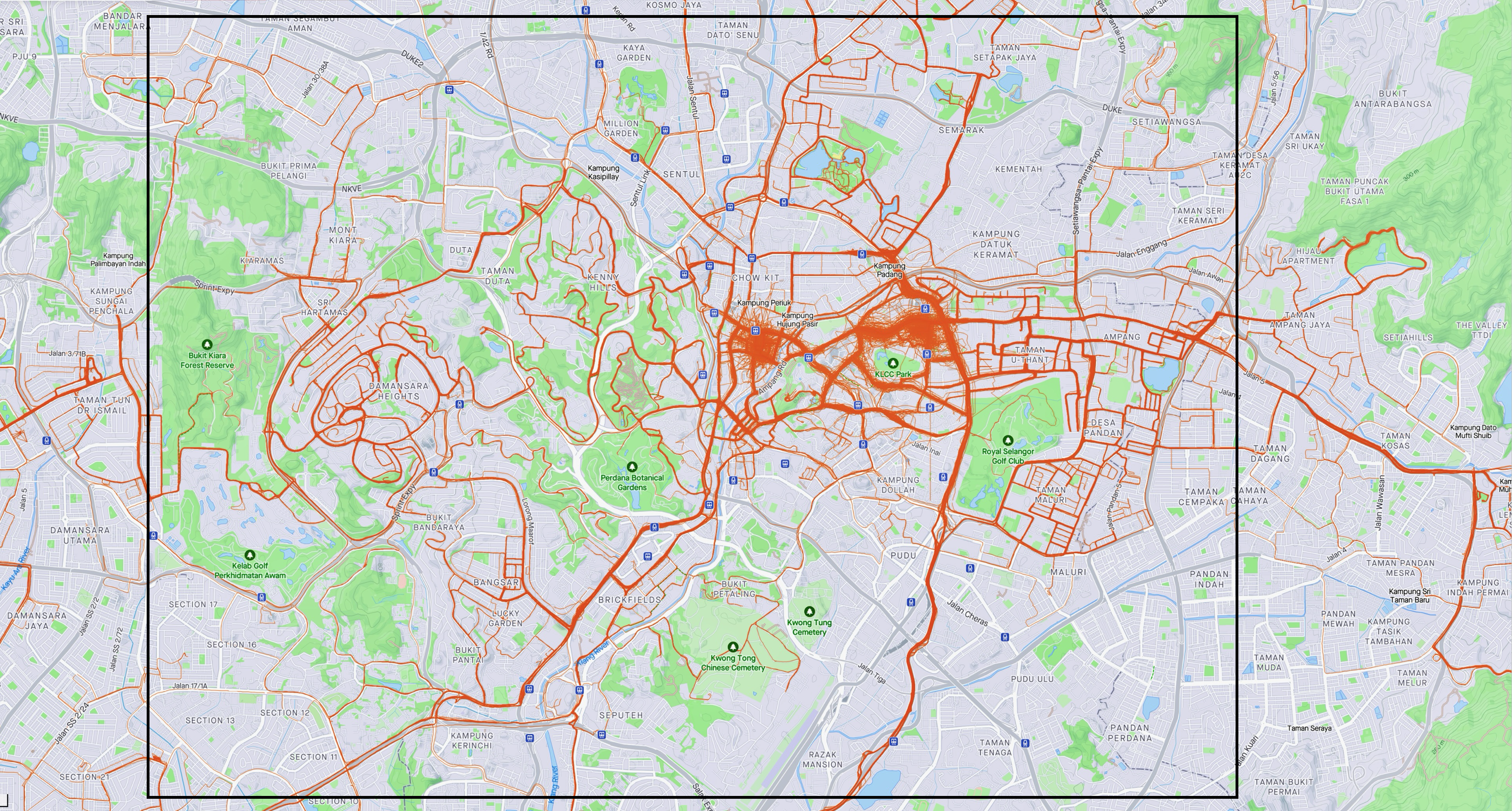
I came home to Kuala Lumpur (KL) in 2012. A city of 8.8 million people spread over 243km2. I have lived in the city centre since then. First, where the orange star to the right is, and now where the second star is. The pink compass rose marks the geographic centre of KL. The shaded grey area is the Central Business District and the city’s main shopping and nightlife district. I have ridden many kilometres in and around the city centre.
Personal Heatmap courtesy of Strava
Many of my friends are surprised that I ride so much in KL city centre traffic. “Isn’t it dangerous?” they ask.
The answer is “Yes, you need to be careful.” But not because it is in the city centre. You need to always have your wits about you because of the way some people people drive. Some drivers are impatient. Some drivers misjudge the speed at which cyclists are travelling. Some drivers are distracted by their mobile phones. These behaviours present dangers to cyclists no matter where they are riding.
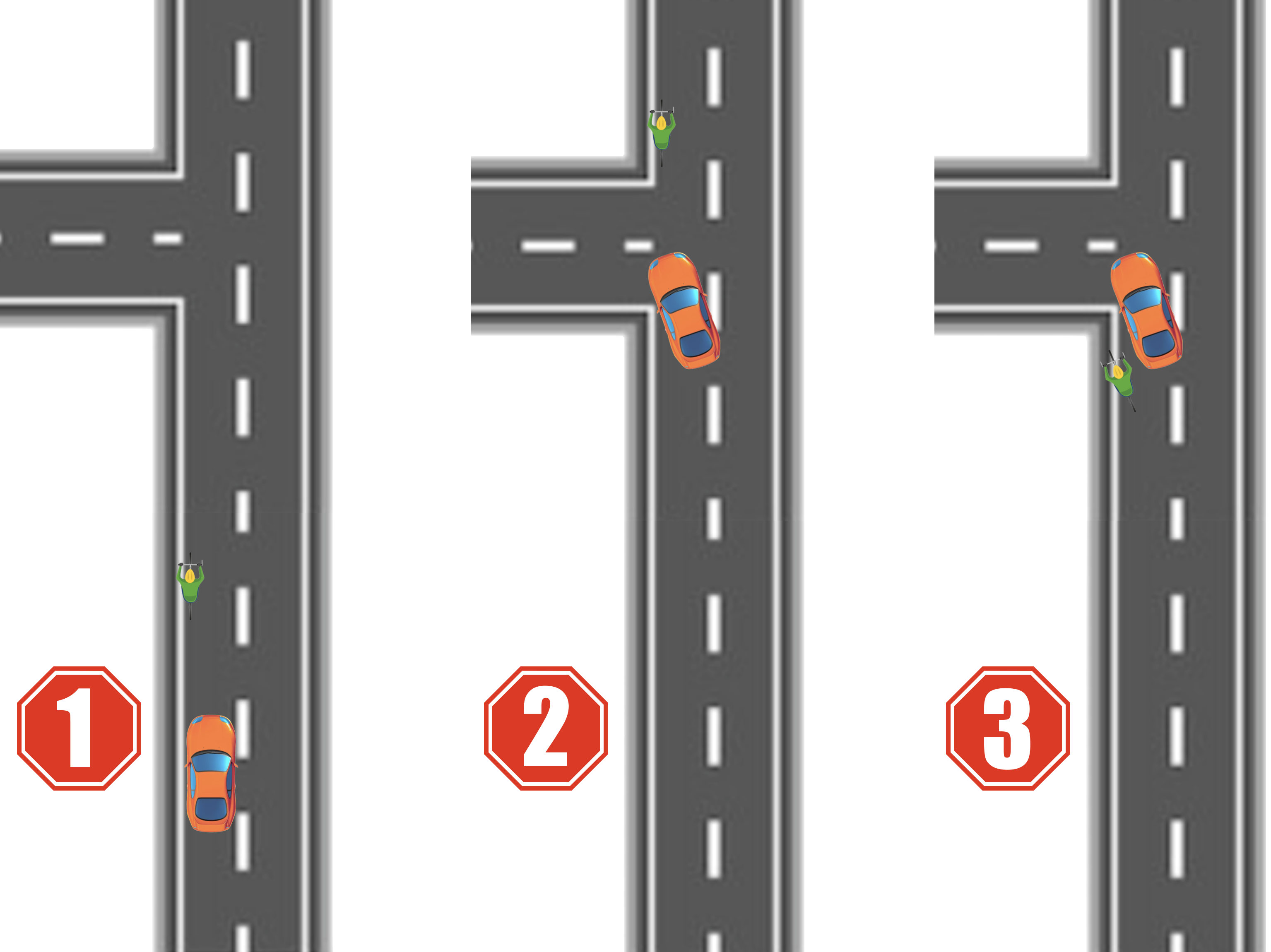
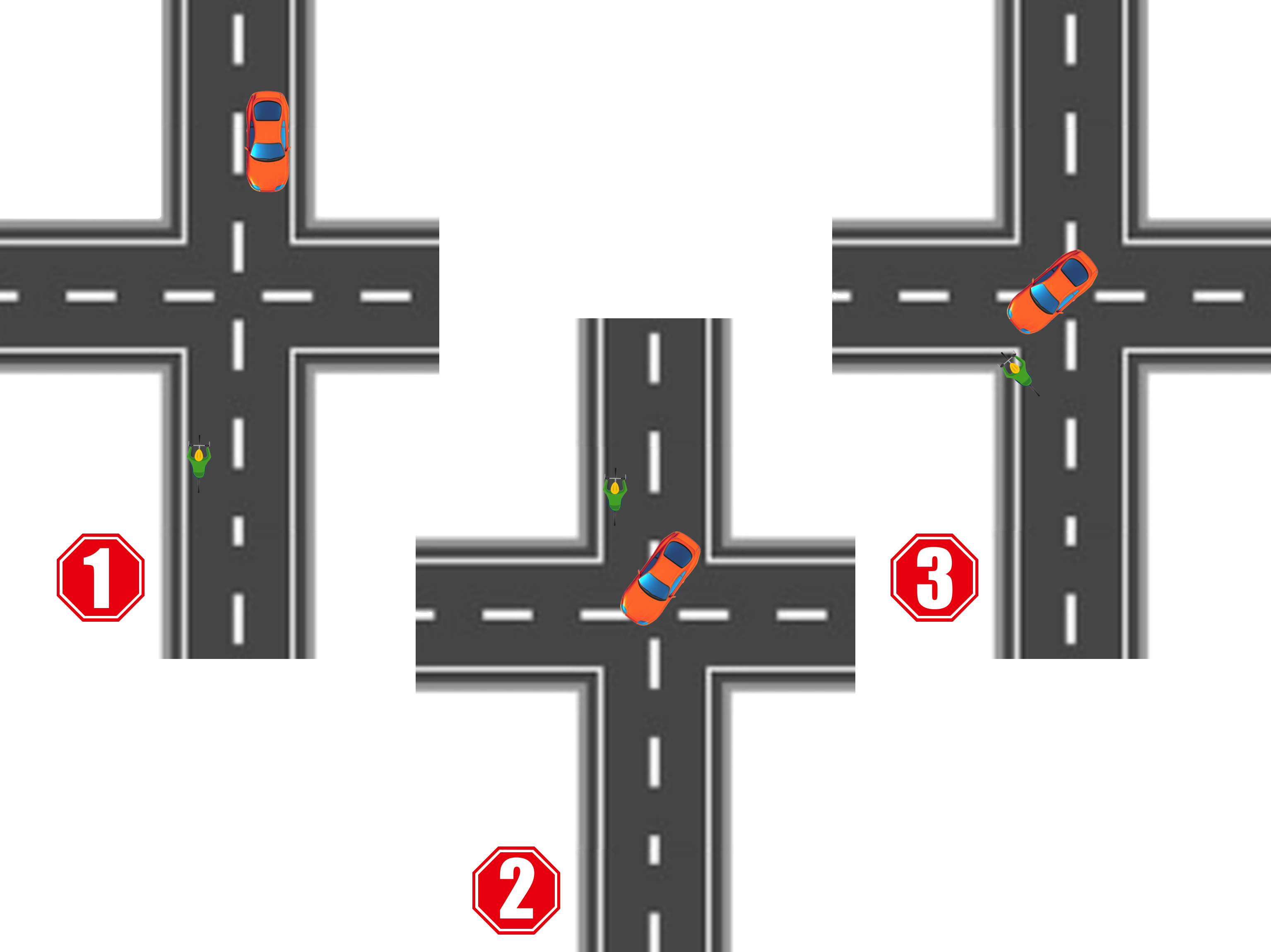
I will give you some examples. This is a common occurrence. I am within 50 metres of an intersection on my left. A vehicle behind me wants to turn left (1).
What should happen is the vehicle slows down, waits for me to ride past the intersection, and makes the left turn behind me (2).
What often happens is the vehicle overtakes and immediately turns left in front of me. There have been several instances where I have been forced to swerve left to avoid hitting the vehicle turning in front of me (3).
A similar thing often happens with buses approaching a bus stop. Instead of waiting behind me until I have ridden past the bus stop (1) and (2), the bus will overtake me and immediately pull into the bus stop (3).
I consider the above examples of driver impatience. The following examples may be because of misjudgement or distraction, as well as impatience.
In this case, a vehicle is waiting to turn from a side road onto the road that I am on. What should happen is the vehicle waits until I have ridden past before making the turn behind me (1) and (2). What sometimes happens is the vehicle pulls out in front of me and forces me to take evasive action (3).
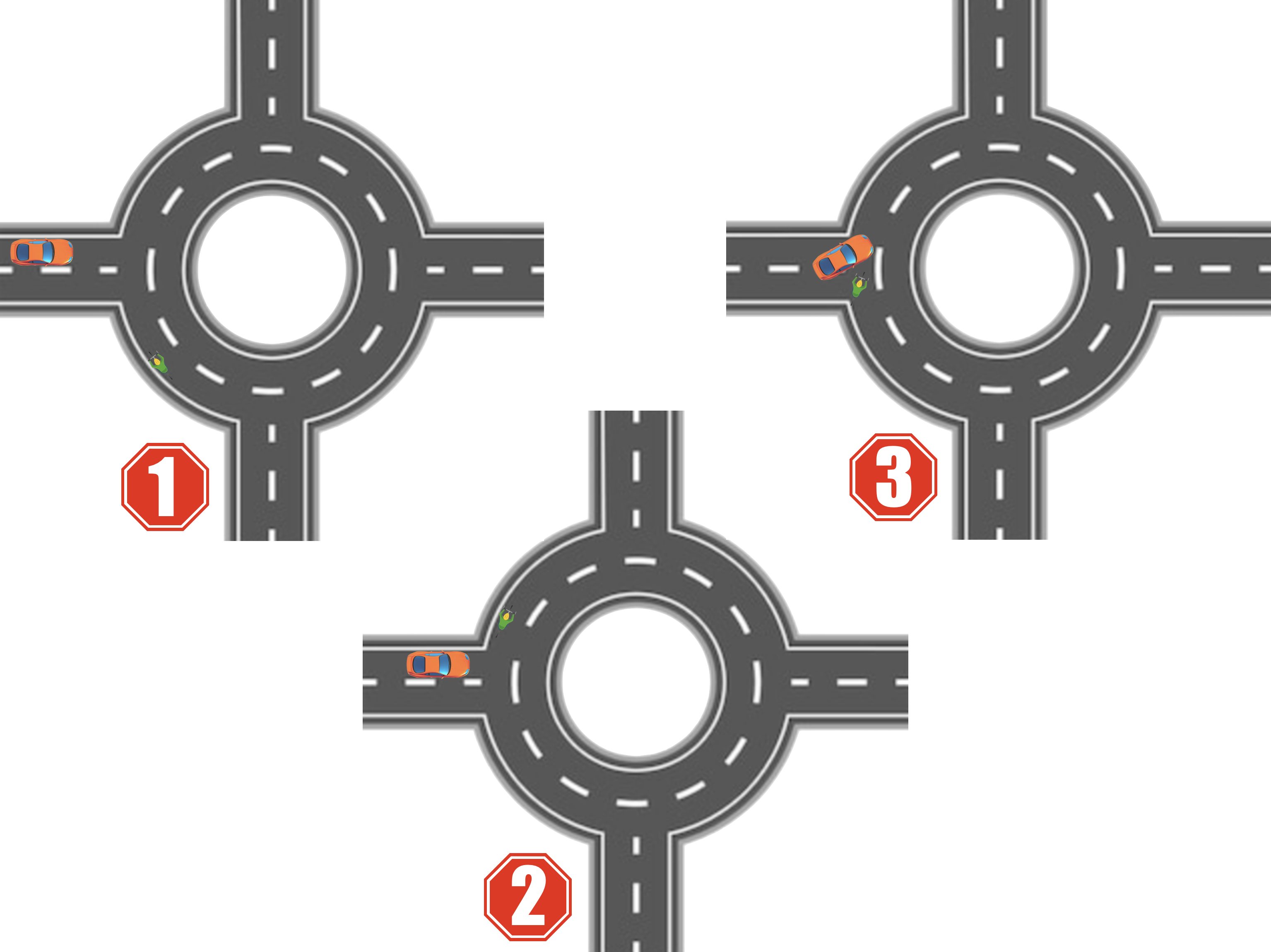
The same thing has happened to me at roundabouts. Instead of waiting for me to pass (1) and (2), the vehicle enters the roundabout right in front of me (3). There is a misapprehension in KL that the vehicle entering a roundabout has the right of way. In fact, vehicles already on the roundabout have the right of way.
Sometimes the driver makes eye contact so I know I have been seen. I can only assume a combination of impatience and misjudging my moving speed is the reason for pulling out in front of me. Even worse, there have also been times when a driver pulled out in front of me without first looking in my direction.
A more egregious example of impatience or inattention has happened to me at a four-way junction. The vehicle wanting to turn right should wait until I have ridden through the intersection before turning (1) and (2). Instead, I have had vehicles make the right turn across my path in front of me, forcing me to swerve left to avoid a collision.
This next situation happens because the drivers are looking at their mobile phones and not at the road. I know this because instead of (1) and (2) happening, I am forced to the right and alongside the vehicle as the driver pulls onto the roadway without looking behind the vehicle first (3). I see the driver looking at their mobile phone as they pull out to the right.
Another example that is almost certainly because drivers are looking at mobile phones is when vehicles weave to the left and right. It’s not much fun when you are beside the vehicle when it starts to weave.
All this makes it seem that it is dangerous to cycle in KL city centre. It certainly is not 100% safe, but I doubt it is any more dangerous than cycling in any other inner city would be. I ride a lot in the evenings. Cycling during rush hour is probably safer than at any other time. The traffic jams mean that no one is moving faster than I am.
I don’t fear for my well-being whenever I venture onto the city streets. That does not mean I cycle with careless abandon. You must ride smart.
Activate your front and rear lights.
Use hand signals early and make sure the road is clear behind you before making turns or crossing lanes.
Comply with traffic lights and road signs.
Do not ride in a vehicle’s blind spot.
Ride on quieter side streets where possible.
Finally, the key to cycling in any city centre is . . .
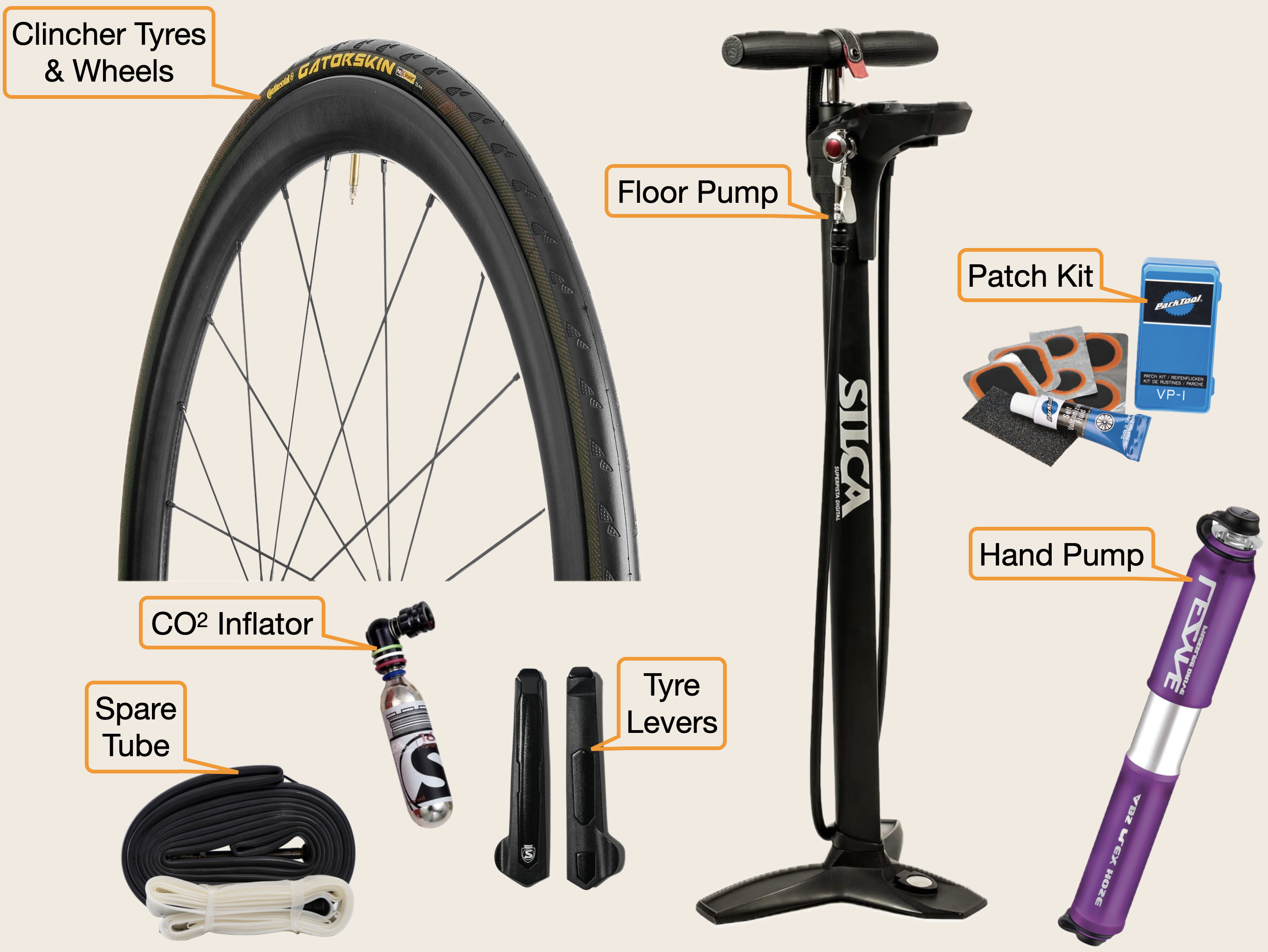
Soon after I bought my first bicycle in 2009, I had my first flat. This was when I learned that every cyclist must carry tyre levers, a spare tube and a pump or CO2 inflator whenever they ride. I put those items into a saddlebag, along with house and car keys. I don’t remember how I carried cash.
I went through a variety of saddlebags over the years. All were like these examples from Topeak and Lezyne.
By 2010 I was using a Rapha Tool Roll.
I liked this tool roll because I could cinch it tight under my saddle. This stopped items in the roll from rattling.
The white leather strap was held tight by teeth in the buckle. This worked well until the teeth lost their sharpness due to use and rust, and the leather strap began to fray. After one too many instances of the strap loosening and an inner tube and tools dropping onto the road while riding, I swapped the Rapha for a Silca Seat Roll Premio.
The advantage of the Premio was its BOA closure system. This was a more secure attachment method than the buckle and strap of the Rapha Tool Roll. I used the Premio from 2016 until 2018.
The reason for switching from the Premio to a Specialized KEG Storage Vessel is in this post from February 2018.
I still use the KEG to hold a spare tube, tyre levers, keys, etc.
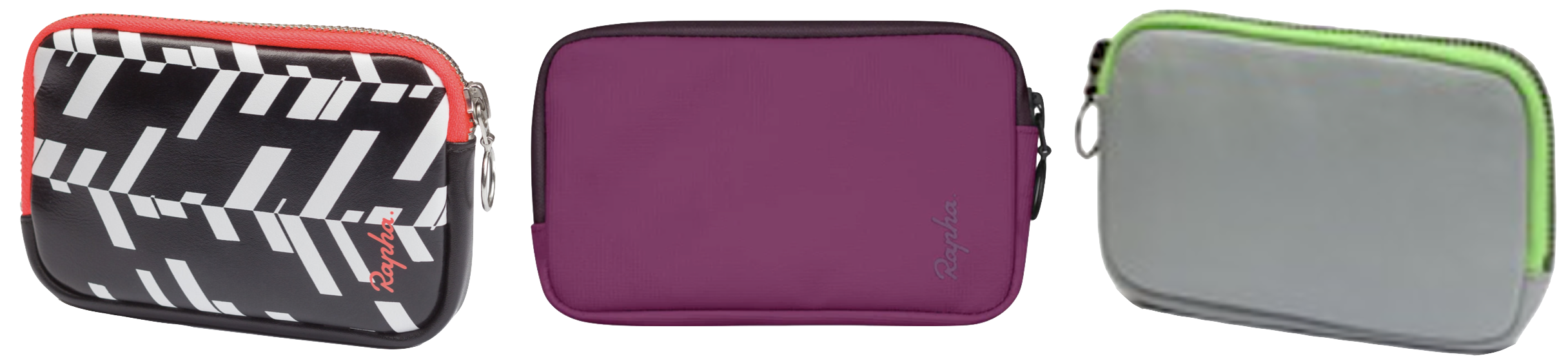
As I said at the top of this post, I don’t remember how I carried cash and a credit card in my early days of cycling. It would not have been long before I bought my first Rapha Rainproof Essentials case.
Over the next decade, that first Essentials Case was augmented by some others in different colours.
In 2018, I bought a Silca Phone Wallet. I had started doing multi-day credit card touring rides. I needed a waterproof rather than just a water-resistant wallet.
The Phone Wallet had an internal dry bag, making it ideal for protecting my mobile phone and cash. The downside was that the phone wallet was bulky. It only saw use on multi-day rides.
I stopped carrying my Essentials Case in a jersey pocket in 2018. That is when I discovered Cargo Bib Shorts with mesh pockets on the legs. No more struggling to take my wallet out of a jersey pocket while pedalling. And no more unloading a jersey pocket before settling into a chair.
The Rapha Rainproof Essentials cases were my go-to cycling wallets until the end of 2022. That is when I got an iPhone 14. The iPhone 14 was just a tad too long for the Essentials Case. So I ordered a Rainproof Essentials Case – Large. And broke out the Silca Phone Wallet, which is big enough to hold an iPhone 14, while waiting for delivery of the large Essentials Case.
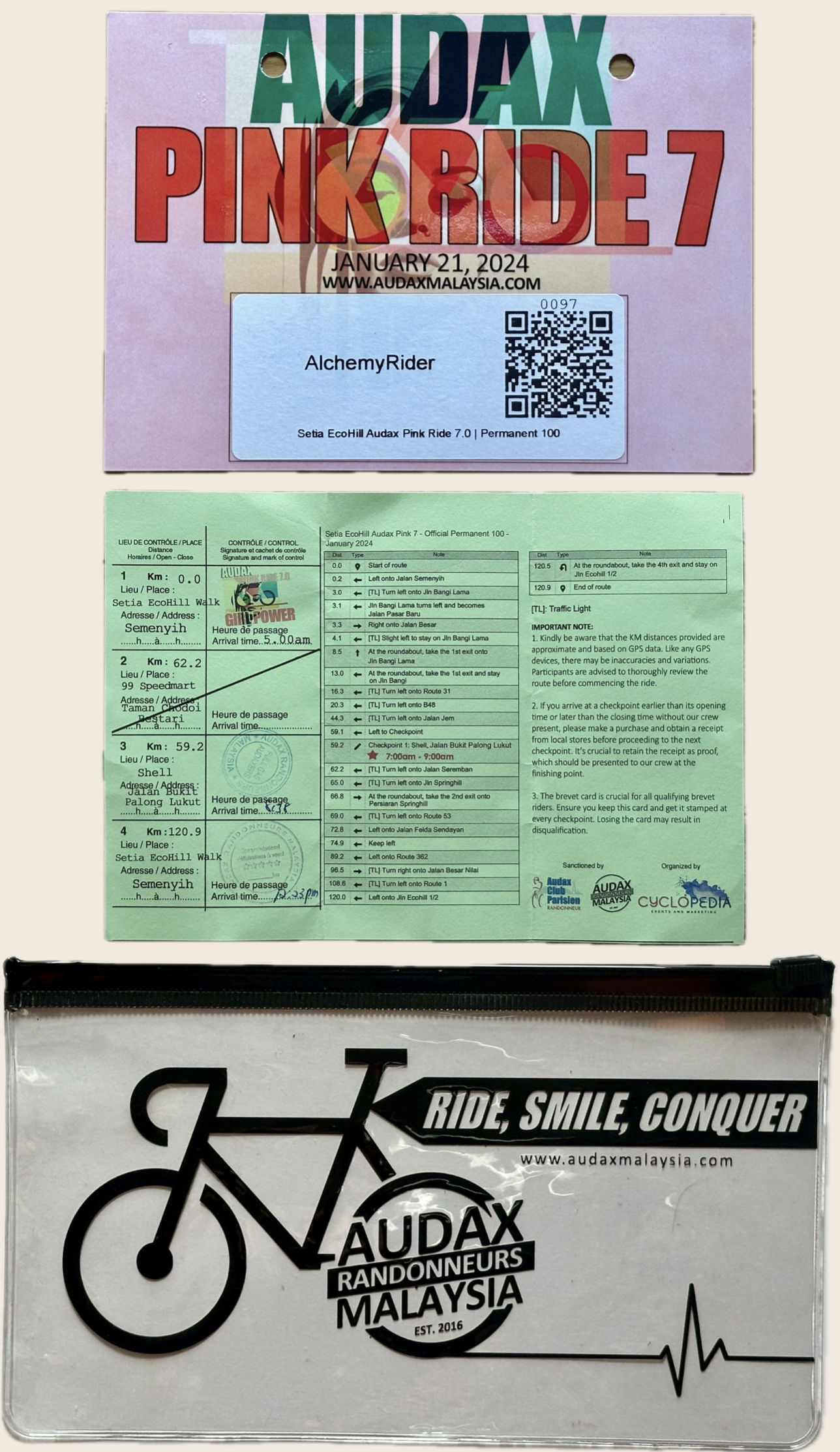
Early this year, I did the Audax Pink Ride 7.0. Each participant was given a clear plastic Cycling Wallet to stop their brevet cards from getting wet.
The pouch is big enough to hold my iPhone 14. I left my large Essentials Case at home and did the Pink Ride with my mobile phone, brevet card, cash and credit card in the Cycling Wallet.
I like not just being able to see my mobile phone screen through the wallet. I can also operate the touch screen through the wallet. No need to take the mobile phone out to use it.
The Audax Randonneurs Malaysia Cycling Wallet has become my method of choice for carrying whatever doesn’t go into my Specialized KEG Storage Vessel.
A new way to carry things on my bike might be around the corner. Evolution never stops.
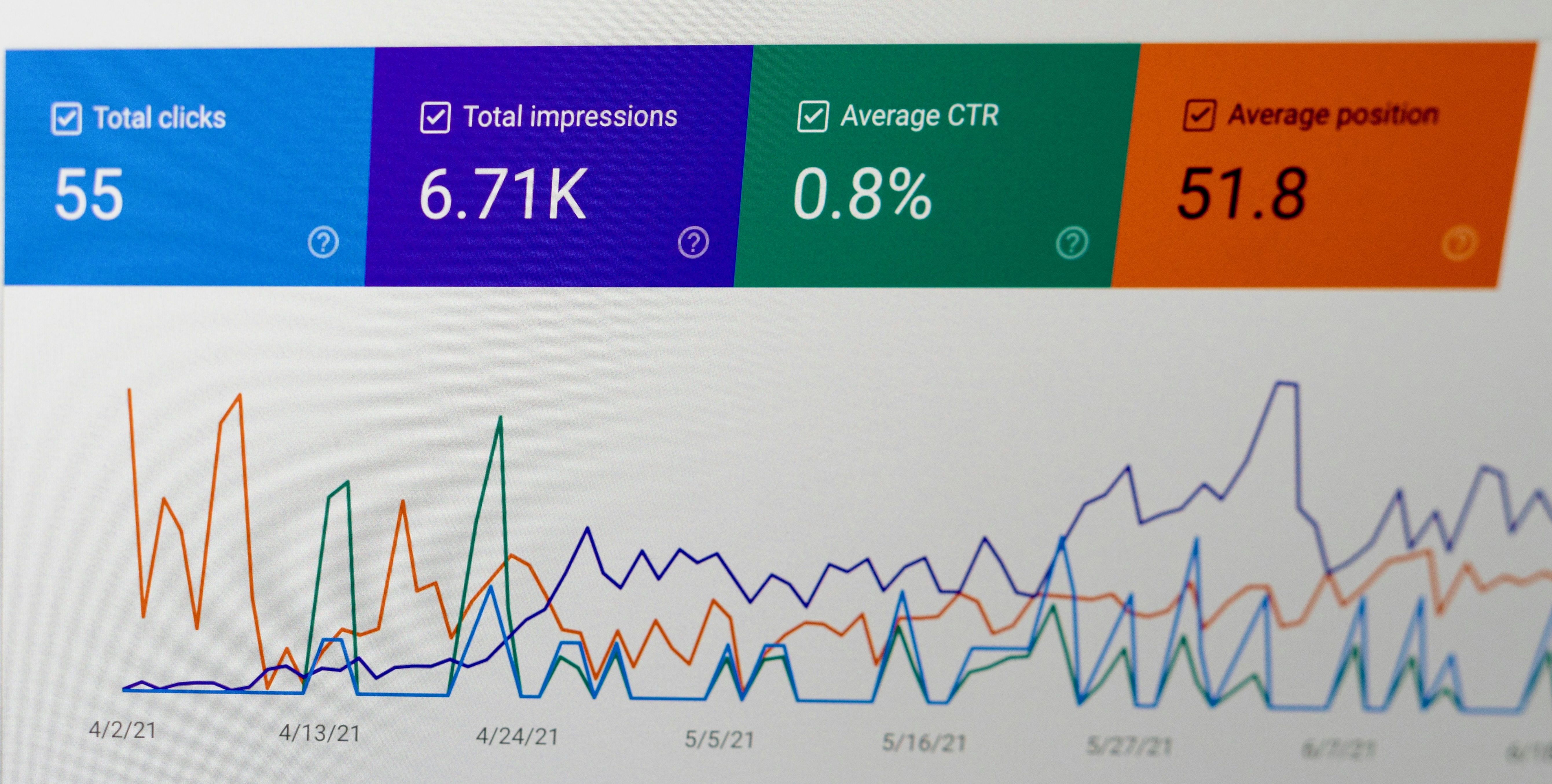
Photograph courtesy of Justin Morgan at unsplash.com
I was chatting recently with a friend about bell curves. We were discussing employee performance evaluations. Whether or not to force-fit performance evaluations to a bell curve is a debate that often comes up.
A bell curve is a graphical depiction of a normal distribution. The theory is that the majority of employees should fall into the “Average Performers” category, and 15% to 20% of employees should fall into either the “Low Performers” category or the “High Performers” category.
Graph courtesy of updconsulting.com
This morning, I clicked on a link for a post titled Strava Year In Sport Trend Report: Insights on the World of Exercise. The post summarised average speed and distance data for cycling activities uploaded to Strava between October 1, 2022 and September 30, 2023. I wondered where I fell on the bell curve of cycling performance as tracked by Strava.
The post lists average cycling speed and distance by age.
There is very little difference in average speed across the four age categories. Just half a kilometre per hour separates Gen Z at 20.8 kph and Millennials and Boomers at 20.3 kph. Gen X averaged 20.6 kph.
My average speed in 2023 was 20.8 kph (indicated by the *). Above average as a Boomer.
Interestingly, Boomers had the longest rides, averaging 33.6 km per ride. Millennials had the shortest, at 22.2 km per ride. Perhaps we retired Boomers have more time to devote to cycling.
I am happy that my average distance of 40.2 km (indicated by the *) is above average for not just my Boomers category but for all age categories.
I am on the right-hand side of the bell curve for both average cycling speed and average distance per ride. For the population of cyclists posting on Strava, anyway. As a Boomer, that is a blessing.
* μ (mu) represents the average or mean of a particular sample.
I have lived in several cities. All of which are memorable for one reason or another. As far as road cycling is concerned, I got into the sport in Houston. I saw how a city can be cyclist-friendly in The Hague.
Home, though, is Kuala Lumpur, or ‘KL’. I have lived on and off in KL for almost fifty years, in twelve different homes within a 10-kilometre by 13-kilometre rectangle.
Half of those homes, including the two most recent ones, sit within a 1-kilometre by 3-kilometre rectangle. I am definitely an inner-city dweller.
My Strava history in KL started in October 2012. Since then, I have ridden many kilometres within that 10-kilometre by 13-kilometre rectangle containing all the KL homes I have lived in.
Until recently, I remembered only eleven of those homes. Of those, one has been razed and is now a car park, and three have been replaced by multi-storey buildings. I often ride past five surviving buildings where I lived and past where the four used to be. The only previous home I have not cycled past is the apartment in Taman Bukit Pantai.
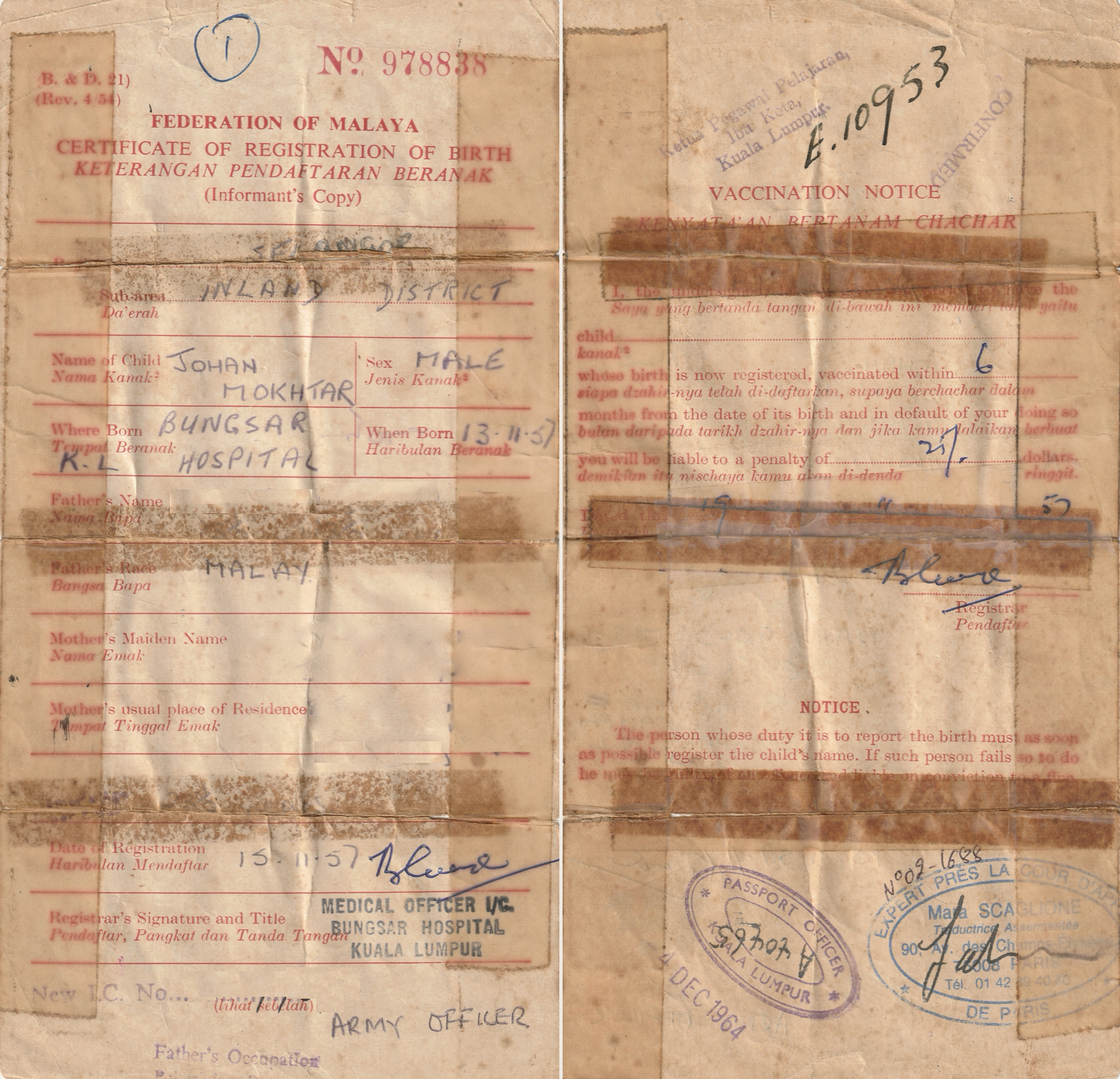
What of the forgotten home? I was digging through old documents and came across my original birth certificate. Hand-written in blue pencil on paper so creased it is held together with cellotape.
I have masked some of the details, including “Mother’s usual place of Residence.” A quick check on Google Maps revealed that I regularly cycle within 400 metres of that address.
A few days ago I took that 400 metre detour. The building is still there, sixty-six years after I was brought home to it from Bangsar Hospital.
Getting to this building involves twice merging across multiple lanes on a busy road. So, I am unlikely to ride past it much. It is nice to know it is still standing, though. Which is more than I can say for Bangsar Hospital.
Audax Randonneurs Malaysia has organised a Pink Ride since 2018. These Pink Rides are a celebration of female cyclists’ strength and unity. I wrote about the Pink Ride 2.0, the Pink Ride 3.0 and the Pink Ride 6.0.
Graphics courtesy of Audax Randonneurs Malaysia
The first five Pink Rides were BRM200 events. Brevet de Randonneurs Mondiaux (BRM) events are sanctioned by the Audax Club Parisien (ACP). The BRM events are run all over the world under rules laid down by ACP, which also records and validates the rides.
Last year, Audax Randonneurs Malaysia added a Permanent 100 Pink Ride option. Permanents are not sanctioned nor recognized by the ACP.
A Permanent 100 Pink Ride was offered this year as well. Although advertised as a 100km ride, it was 120km long.
Graphics courtesy of Audax Randonneurs Malaysia
I rode the Permanent 100 last year. That was the only 100km or further ride I did in 2023. Opting for the 120km ride this year instead of the BRM200 was a no-brainer. That also suited my three riding companions.
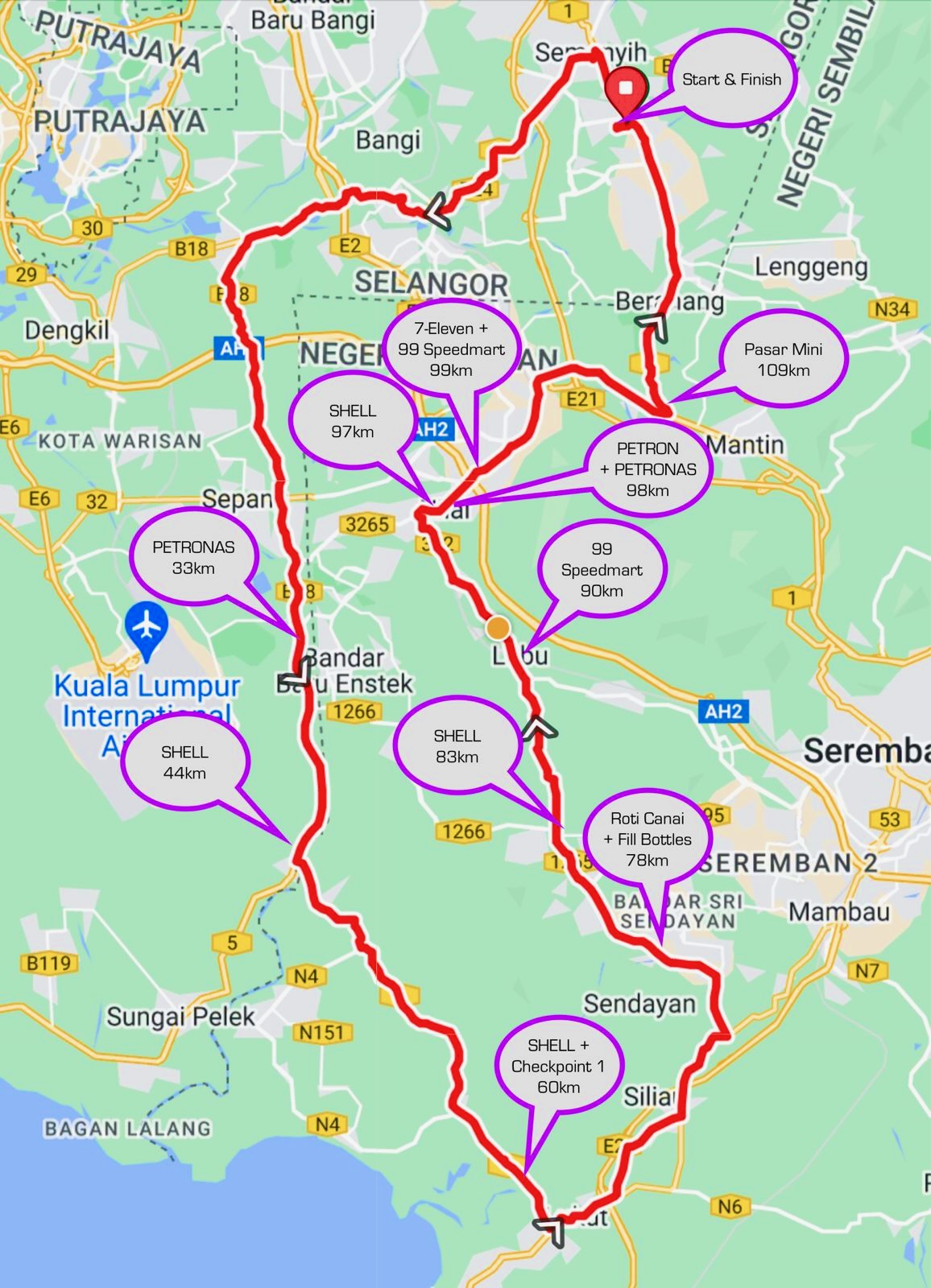
Once the route was confirmed, I set about identifying possible rest stops. I picked out more options in the second half. We would ride the first half in the early morning before the sun came out. The second half of the route has more than twice as much elevation as the first half, so we might need to stop more often. Finally, the stretch between Sendayan and Mantin is mostly through oil palm estates with almost no roadside facilities.
Base map courtesy of Ride With GPS
The start and finish was the Setia EcoHill Mall. That is about an hour’s drive from home. Rather than leaving home at 3:30 am on Sunday morning, I chose to stay at a hotel close to the mall on Saturday night.
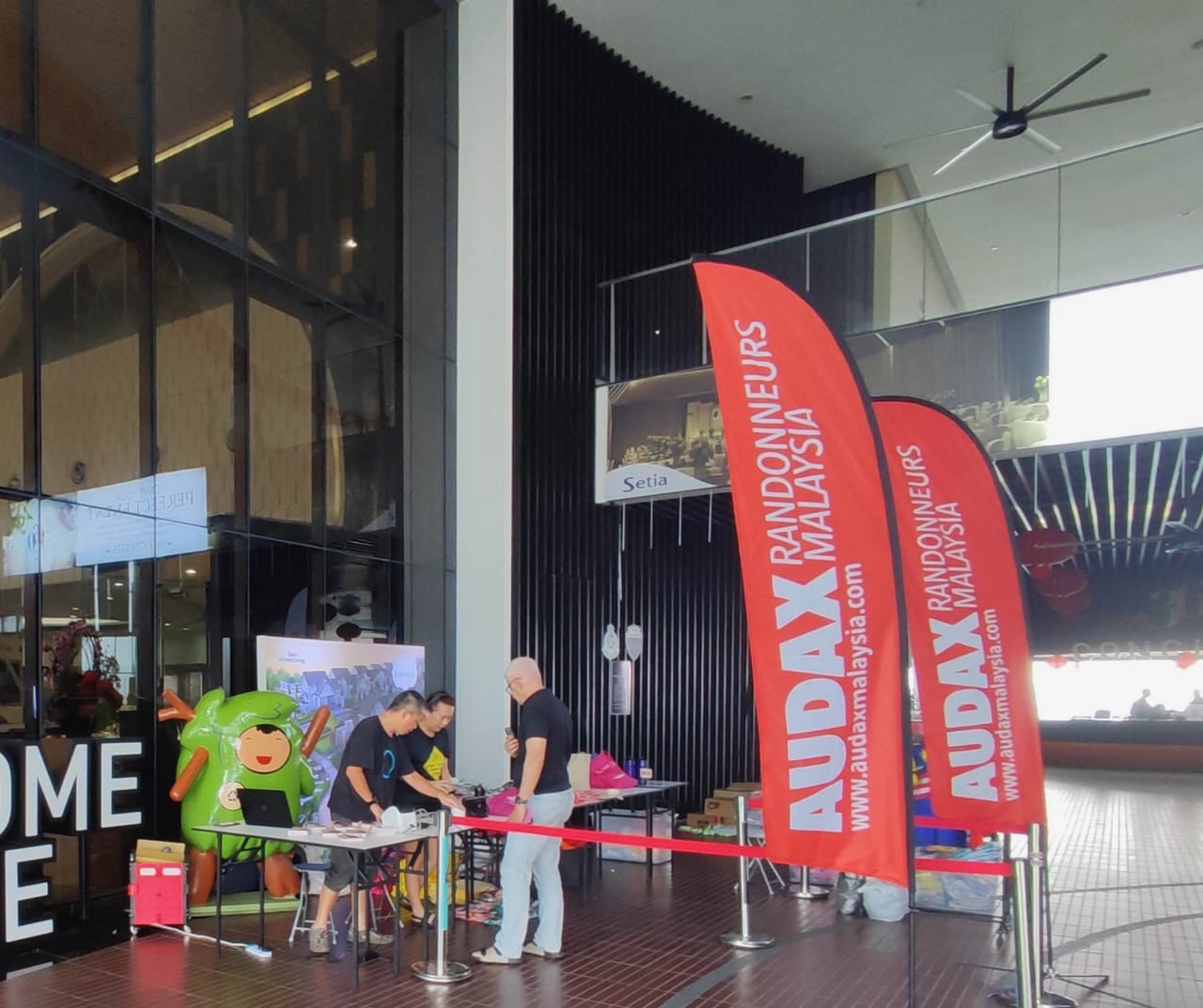
That allowed me to collect the event kits at the EcoHill Welcome Centre on Saturday afternoon. Each event kit contained a bike frame tag with a unique QR code, a brevet card with route cues and spaces for checkpoint stamps, and a waterproof envelope to hold the brevet card, cash, etc.
Photograph courtesy of ZAZ
My biker chick and I stayed at the Le’genda Hotel in Bangi. The decor and furnishings of this newly opened hotel are fresh and contemporary. The rooms are surprisingly large.
The hotel is part of Union Square. One side of the square is lined with restaurants. The Bangi Avenue Convention Centre sits on the opposite side of the square. Across the road from Union Square is the Bangi Wonderland Water Park.
Photograph courtesy of ZAZPhotograph courtesy of ZAZ
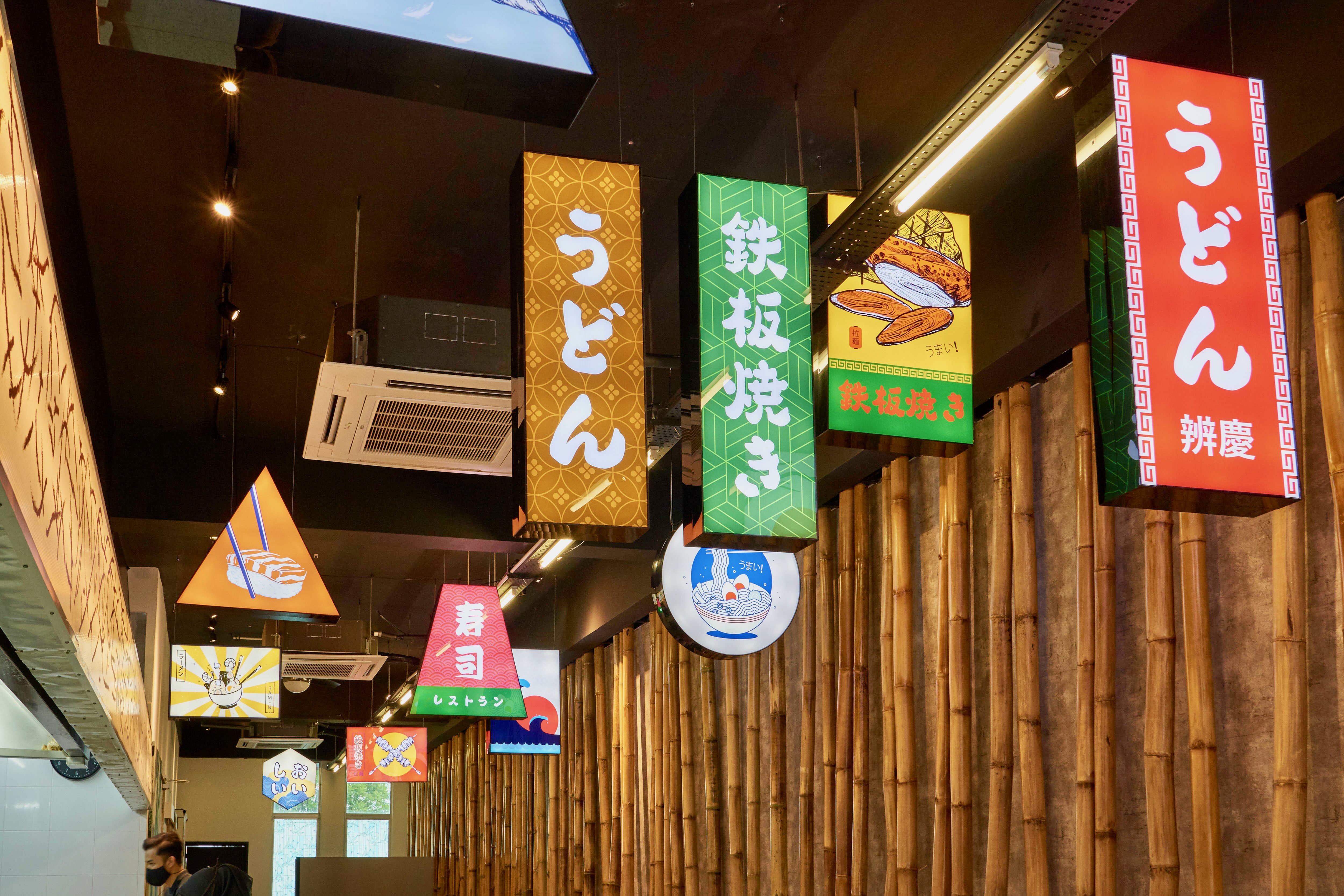
We hit Union Square for dinner. We went to Original Teppanyaki, and we were not disappointed. The food was excellent. An interesting twist is that the drinks and dessert menu is from My IceCream, a separate outlet.
Photograph courtesy of 10Q.com
The start time for the Permanent 100 was 6:15 am. The two remaining people who planned to ride with me would be at the Setia EcoHill Mall between 5:00 am and 5:30 am. The third person forgot about a previous commitment when she registered for this ride, so she had to pull out.
I received a message as I was about to leave the hotel for the 12km drive to the mall. One person was at the mall but had forgotten his bicycle helmet. He would be an hour late for the start if he drove home to get his helmet. So we were down to a group of two.
I met Geetha outside this restaurant. It was the most popular place in the area because it was the only restaurant in the mall that was open before 5:00 am, and most importantly, it had a toilet!
Photograph courtesy of GK
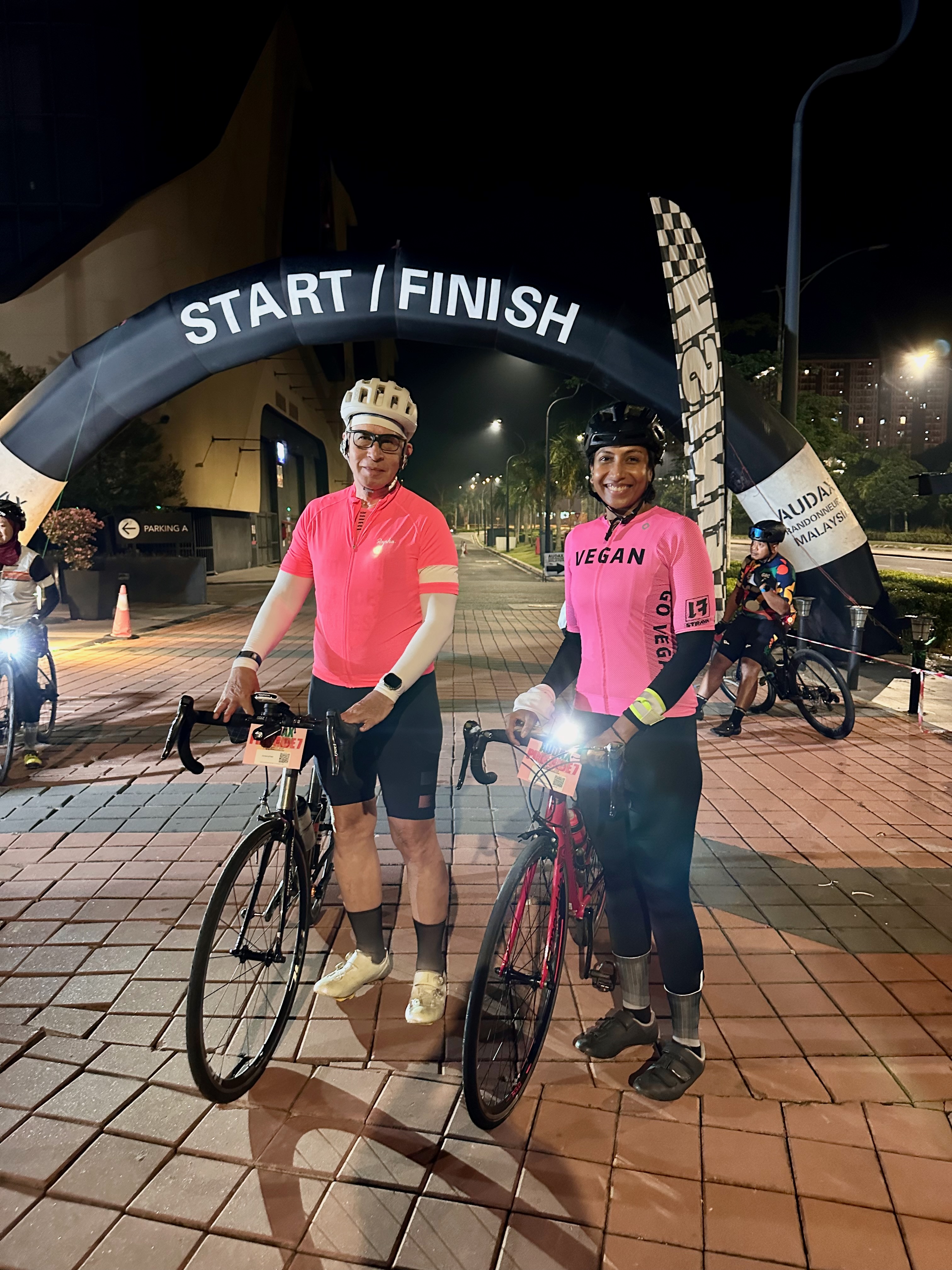
We rode to the Start/Finish arch, where Sam Tow, the driving force behind Audax Randonneurs Malaysia, took our photograph.
Photograph courtesy of ST
204 cyclists started the Permanent 100. The two of us were on our way at 6:00 am. Slightly early because the QR scanner wasn’t working. We would have our frame tags scanned at the Checkpoint 60km away.
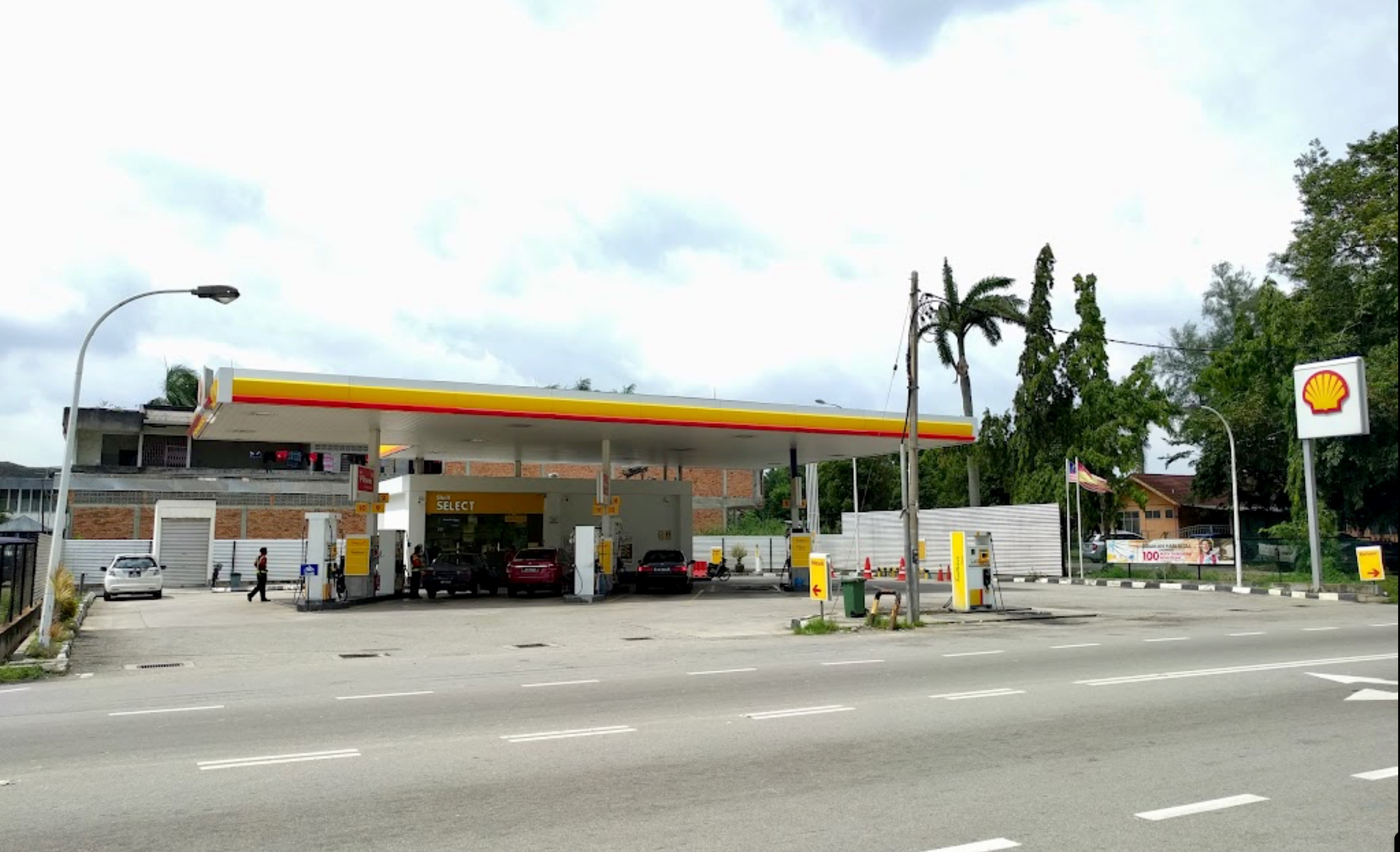
I emptied my bidon by the time we got to the Shell station at Pekan Sepang. We stopped for me to buy water and chocolate milk. We covered that first 44km at an average speed of 25kph. Only 16km to the Checkpoint.
Photograph courtesy of Google Maps
We were at the Checkpoint at 8:37 am.
Photograph courtesy of Audax Randonneurs Malaysia
The Checkpoint was at a Shell station a couple of kilometres outside Lukut.
Photograph courtesy of Google Maps
We got our frame tags scanned, and Geetha took my brevet card to be stamped. It was a humid morning, and I was sweating buckets. I went immediately into the Shell SELECT store to buy more water and chocolate milk.
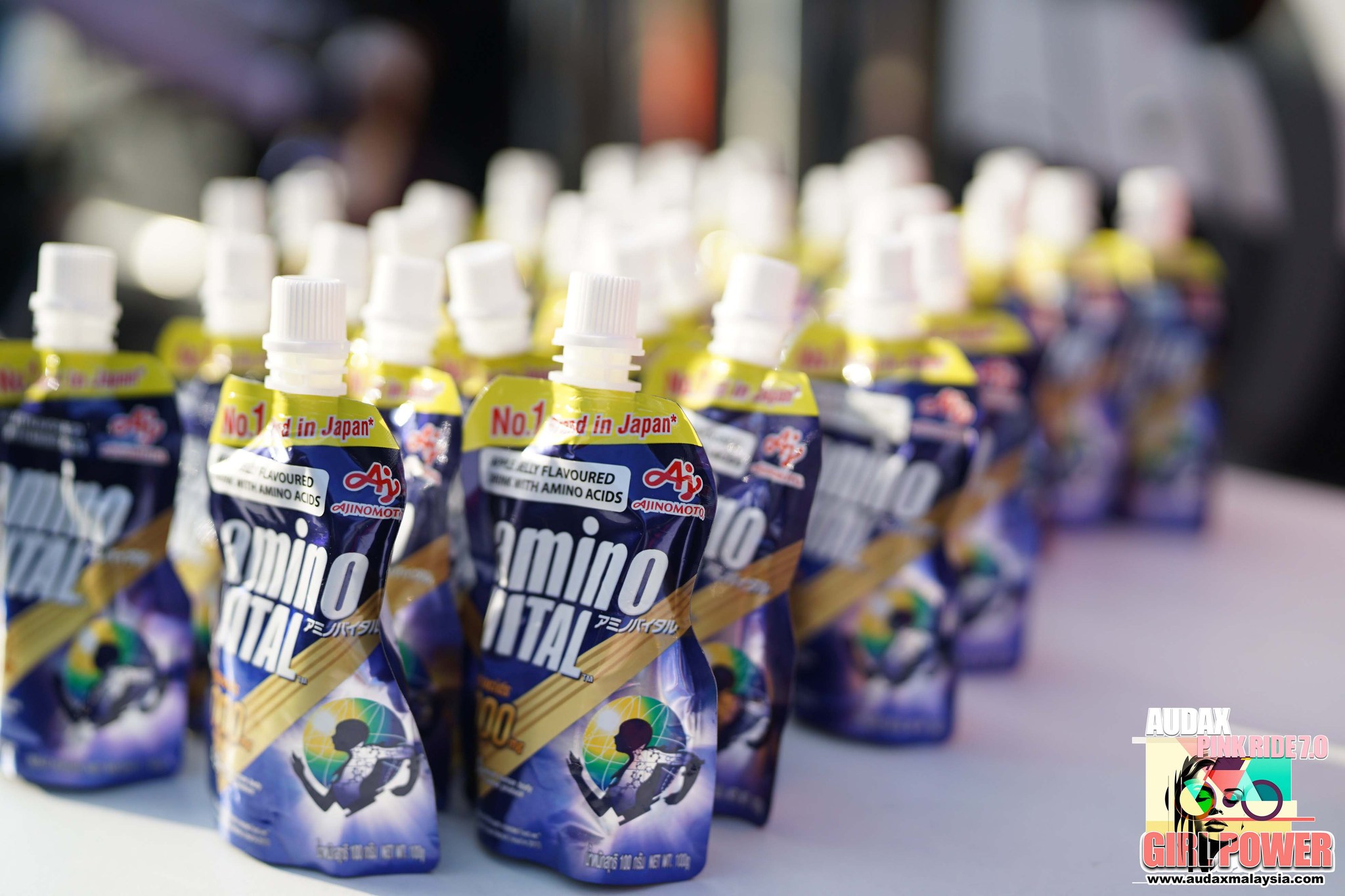
If I had paid attention, I would have noticed the supplies available behind where brevet cards were being stamped. Hydration, amino acid replacement, and muscle pain relief needs were all covered.
Photograph courtesy of ARMPhotograph courtesy of ARMPhotograph courtesy of ARM
We were on our way again eight minutes after arriving at the Checkpoint. We climbed about 280 metres already. We had about 625 metres of elevation ahead of us. It was time to slow down and conserve energy.
Graph courtesy of Ride With GPS
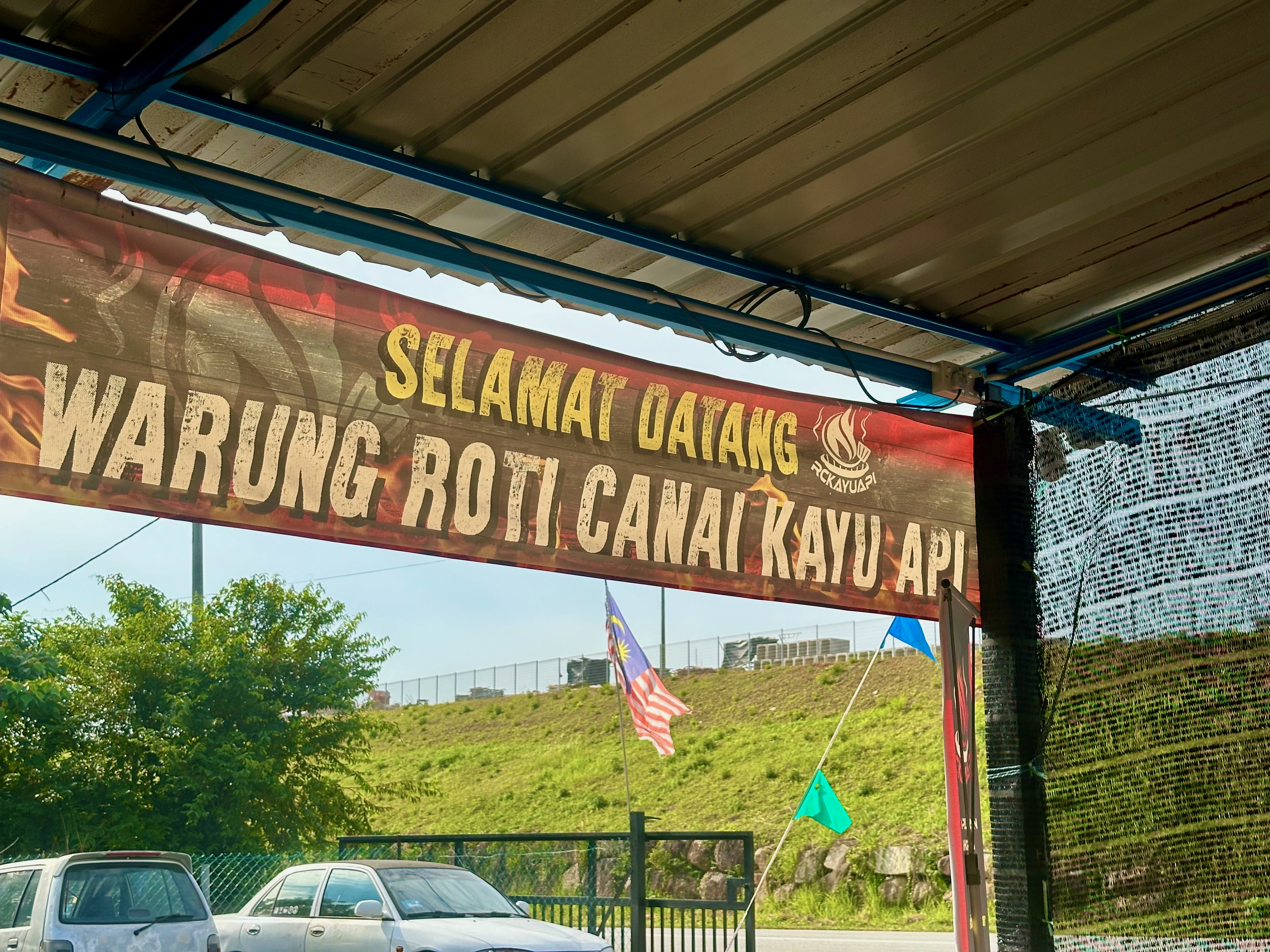
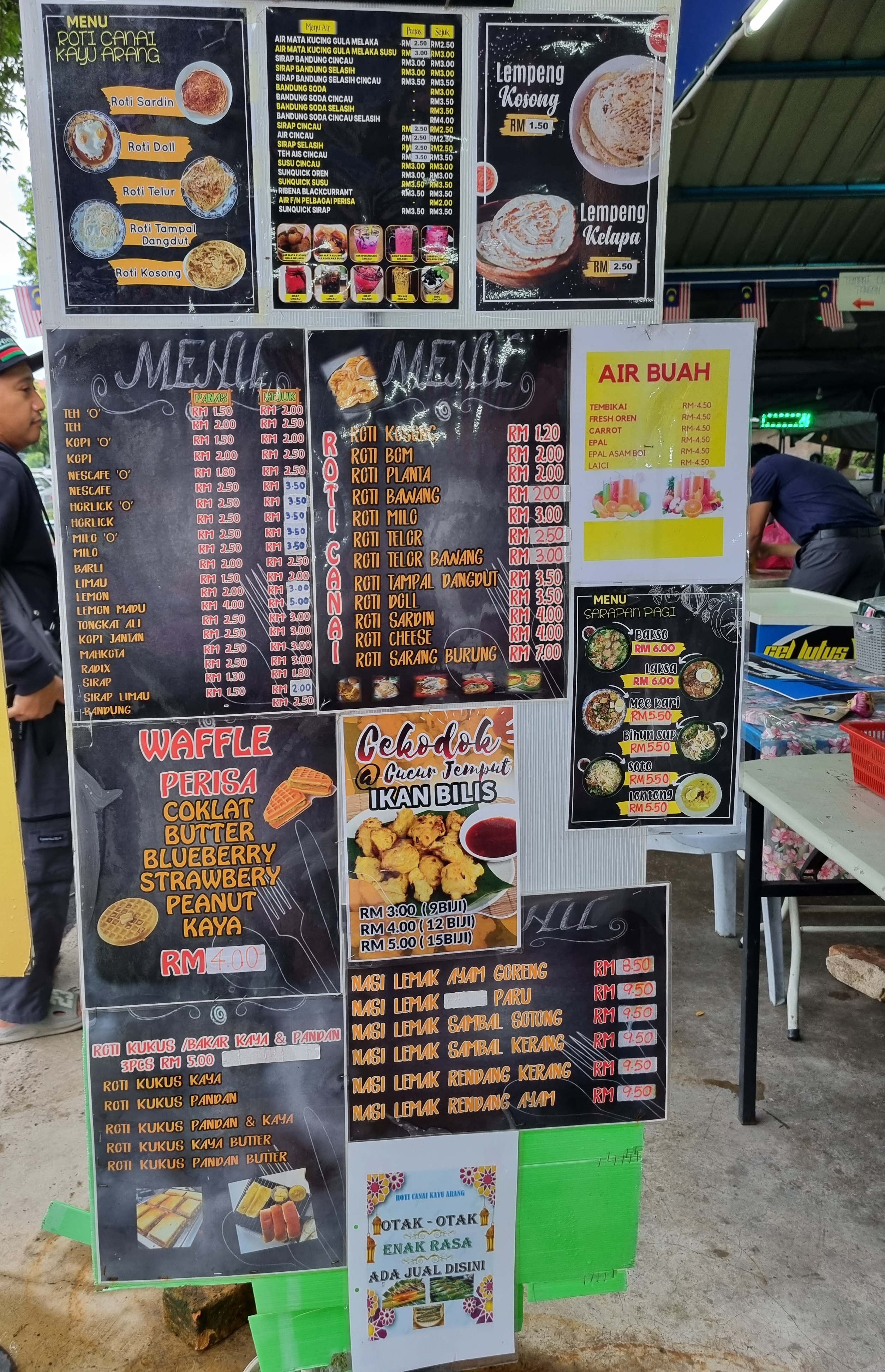
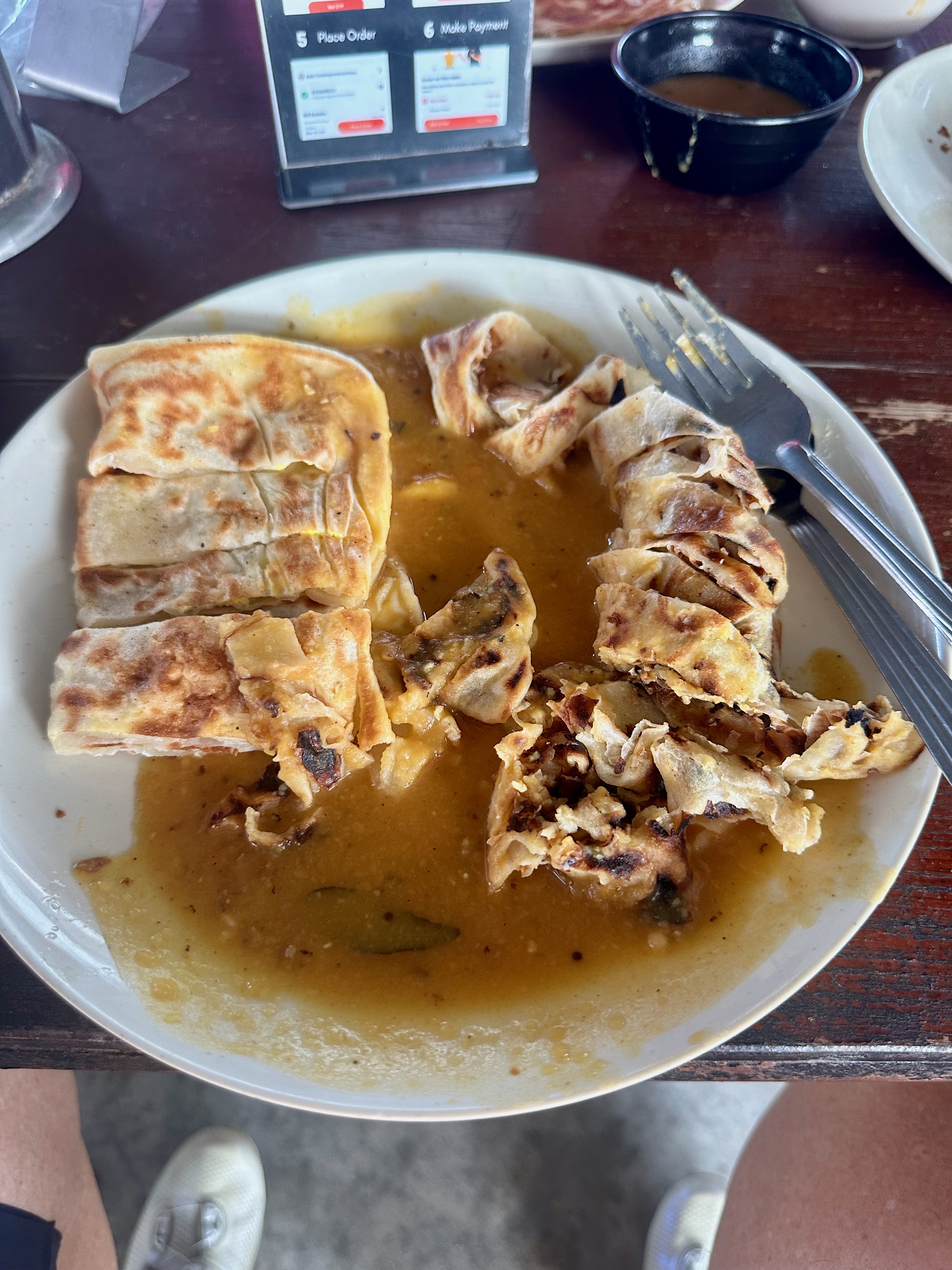
I was out of water again and ready to stop for a refill about 75km into the ride. When researching places to stop during the ride, I noted a roti canai place at kilometre 78. Roti Canai Kayu Api does not sell bottled water, but they have a help-yourself water dispenser. They also have an enticing menu. We joined a half dozen cyclists who had arrived before us and had something to eat. The roti telur kahwin roti biasa banjir combination was excellent.
Eating was an excellent idea. We had 400 metres of climbing in the 42km to go to the finish. The calories and sodium would come in very useful.
We hit the 100km mark at Kawasan Perindustrian Nilai. We were both feeling good with 20km to go. Confident that we would finish in good shape and with plenty of time to spare.
That was premature on my part. With less than 6km to go, I felt a twinge in my left sartorius muscle. An early warning of cramp. Where was that Salonpas Spray when I needed it?
I am susceptible to cramp in my sartorii. Those longest muscles in the body extend from the anterior hip to the medial tibia. When these muscles cramp, it is excruciatingly painful. I have learned to stop immediately and stretch a twinging sartorius to avoid a world of pain.
Graphic courtesy of images.ctfassets.net
I stopped and stretched. And stopped and stretched two more times after that. The last time, less than 1km from the finish. That stretching kept the cramp at bay.
Base map courtesy of Ride With GPS
In keeping with the Pink theme, a mobile unit from the Breast Cancer Welfare Association Malaysia was at the finish, offering free clinical breast examinations.
Photograph courtesy of Audax Randonneurs Malaysia
Geetha and I rolled through the Start/Finish arch at 12:23 pm. We were both delighted with how well our ride went. Our ride time of 6 hours 23 minutes was an hour faster than we anticipated. We enjoyed the ride immensely. Best of all, we both felt good at the end.
Photograph courtesy of ST
After the finish line photograph, we closed out our Permanent 100 with cold drinks at the adjacent Sri Rahmat Selera Kampung restaurant. “Yes,” all three limau ais were mine!
My last post looked at my Strava history, which started on 31st January 2010. I still own the bicycle I rode that day. But that is not my oldest cycling-related possession.
I started cycling on a Trek FX7.5 in May 2009. In classic newbie style, I was oblivious to the possibility of a flat tire. It didn’t take long for that possibility to become a reality. When I did have a flat, I was totally unprepared. No tire levers. No pump. No spare tube. I didn’t even know how to get the wheel off the bike.
Fortunately, someone stopped and asked if I needed help. “Yes, please!” That gentleman has remained a good friend.
The next day, I was in West End Bicycles to buy the basics to deal with flat tires. I walked out with a pair of Pedro’s tire levers, a Genuine Innovations Ultraflate Plus with some CO2 canisters, and a Park Tool MT-1 Multi-Tool.
I have different tire levers and CO2 inflator in my on-bike tool kit today. The Park Tool MT-1 has also been superseded. They are backups now. Note: I’m sure that the CO2 canister that is still inside the inflator does not date back to 2009 😄.
My collection of bike tools continued to grow. A pedal wrench. Various screwdrivers. Some bigger ticket items like a Feedback Sports Pro-Classic Work Stand and a Guistaforza torque wrench. Almost all of which I still have. But enough about tools. Unless you want to read more about the tools I have.
Back to the bike I was on when I started my Strava history. A steel bicycle custom-built by Alchemy Bicycle Company. Alchemy was based in Austin, Texas, then. I visited Austin a few times during the build process, which began in early November 2009.
During one of those visits, I went to Mellow Johnny’s Bike Shop. Mellow Johnny’s belongs to Lance Armstrong. At the time Alchemy was building my steel bike, Mellow Johnny’s was a must-visit for cyclists. The U.S. Justice Department’s investigation into possible crimes conducted by Armstrong and the U.S. Postal Service Cycling Team had not started. Armstrong’s name was still golden. His seven Tour de France-winning bicycles were on display in the shop.
The story is that Mellow Johnny’s got its name from Lance’s young son’s mispronunciation of Maillot Jaune, or Yellow Jersey. The Yellow Jersey is the symbol of the Tour de France, bestowed on the overall winner.
My souvenir from that visit to Mellow Johnny’s is this jersey. Made by Giordana, it has outlasted many other brand-name jerseys. It is my oldest jersey and is my second-oldest cycling item.
By mid-November 2009, the frame builder and I had confirmed the build kit and the paint scheme. By mid-December, tubes were being welded.
I drove from Houston in early January 2010 to collect the finished bicycle.
The frame in a jig at Alchemy Bicycle The bicycle now 23 December 2009 12 January 2024
This frame, with its Easton EC90 SLX fork, is my third-oldest cycling-related possession. Apart from the fork, every other component has been replaced since I took delivery of the bike 14 years ago.
The next oldest item is a cycling event finisher’s token I received on 19 March 2011. The Joop Zoetemelk Classic was a 150 km anti-clockwise loop from the Swift clubhouse around the Groene Hart (Green Heart) between Leiden and Utrecht.
I did some organised rides in Houston before moving to Den Haag, but none gave out finisher’s ribbons or medals. The Joop Zoetemelk Classic was one of the few organised rides in The Netherlands with a finisher’s token. Once I got back to Malaysia, my medal collection grew substantially. It was a given that the entrance fee for a century ride in Malaysia included a jersey and a finisher’s medal.
After that Mellow Johnny’s jersey, my next longest-lived item of apparel is my Rapha Climber’s Shoes. I bought these in November 2014.
New Well-worn
I regularly wear these shoes. The uppers are still in good condition. Both uppers partially separated from the carbon sole in the past couple of months. You can see traces of the rubber cement I used to glue uppers and soles together again.
Rubber cement also glued together the velcro straps that separated into two layers.
I am on my third set of heel pads. That is the part of the sole that gets the most wear. Rapha sent me the first replacement set free of charge. When Rapha discontinued this shoe, that service stopped too. Giro, who made these soles for Rapha, still carries spare heel pads.
There are no replacement toe bumpers. A piece of inner tube is a good stand-in.
The tools, the steel Alchemy and the medals will continue to age well. The Mellow Johnny’s jersey looks like it has more years of life. As long as the uppers stay glued to the soles, the Rapha shoes will continue to get regular use.
Strava and other activity tracking apps send out personalised annual activity summaries. My 2023 Strava cycling summary shows a bit of an uptick since a steady decline starting in 2018.
I took a look back at my cycling history as recorded on Strava. The chart below shows the year-on-year increase or decrease for total distance, total elevation, number of rides and average distance per ride for each year from 2010 to 2023.
The numbers show overall high and low totals in the relevant year.
Data courtesy of Strava, RWGPS and VeloViewer
I started cycling in September 2009. Just after starting a new job in Houston. This post explains why I started cycling:
The first ride I recorded on Strava was in Houston on 31st January 2010. By then I had graduated from my first bike, a Trek 7.5 FX hybrid, to a custom-built steel road bike from Alchemy Bicycle Company.
This post is about the process of getting that road bike:
My last ride in Houston was in April 2010. My next ride was in June 2010, on a rental bike while I was waiting for my Alchemy to arrive in my new home in The Netherlands.
The Netherlands now has 33,000km of dedicated cycling paths. I covered 9,787km exploring those paths in 2012. It helped that I had a lot of time to cycle because I wasn’t working while I was in the Netherlands.
This post describes some of the aids to navigating that vast network of bike paths:
My last Dutch ride was in September 2012. I had my first ride in Malaysia two weeks later, thanks to having air-freighted my bicycles home to Kuala Lumpur.
That ride was courtesy of a former colleague who introduced me to her cyclist brother. He linked me up with the Racun Cycling Gang:
I started working full-time again in 2013, so I couldn’t ride whenever I wanted. What my new Malaysian riding buddies and I were doing was cycling on Tuesday and Thursday nights. Nevertheless, I rode less in 2013 than I had in 2012. What did increase that year was the metres climbed. There are more hills around Kuala Lumpur than around Houston and Den Haag!
2014 saw my mileage fall to 3,198km. I did 59 rides, a third of what I did in 2012. I don’t remember why, but we did fewer Tuesday and Thursday night rides. I think marriages and births had something to do with it.
The major reason for the decline in 2014 was my crash in May:
That kept me off my bike for more than three months.
Regular service resumed in 2015. I rode 10,096km, including five imperial century (160km or more) rides and twenty-one other rides of more than 100km. That started a five-year streak of cycling 10,000km or more per year.
2015 was also the year when I did my first cycling vacation:
There are seven posts about my Cognoscenti adventure. You can read the following posts by clicking on the link or the arrow above and to the right of the post title.
The upward trend continued in 2016 and 2017. 2016 was when I had my longest ride. 445km in 27 hours:
2017 was the year I rode the furthest, the most often, and climbed the most. The year began with a 301km ride on New Year’s Day. By the end of the year, I had completed sixty metric century (100km or more) rides.
I rode more than 10,000km in 2018 and 2019. Including completing the Rapha Festive 500. A streak of Festive 500s that started in 2016.
2020 marks the start of the COVID-19 Restricted Movement Orders in Malaysia. Despite only doing 24 rides in five months, I rode enough in the other months to rack up 152 rides for the year. That included an Audax 300 ride in August.
Map courtesy of RWGPS
But 2020 was the start of a decline in annual mileage.
As you can see from the graph at the top of this post, my mileage fell in 2021 and 2022. I did 151 rides in 2021, which is a surprise as I had seven weeks off the bike after knee surgery. Despite doing just one less ride than I did the previous year, the average distance per ride fell. I covered 1,763km less than in 2020.
There were 99 rides in 2022. I was in Colombia for six months, where I cycled once.
I did manage to complete another Rapha Festive 500, though.
2023 started with the 115km Audax Pink Ride 6.0.
Photograph courtesy of Audax Randonneurs Malaysia
I had 41 more rides in 2023 than I had in 2022. But again, the average distance per ride was lower. This time by 10km. Despite riding more often, my total distance was just 650km more than my 2022 distance.
Hopefully, 2024 will bring another uptick in the total distance covered. The 120km Audax Pink Ride 7.0 is on the cards!
Image courtesy of Audax Randonneurs Malaysia
That will be my first metric century ride since the Pink Ride 6.0.
Life hack means any trick, shortcut, skill, or novelty method that increases productivity and efficiency in all walks of life.
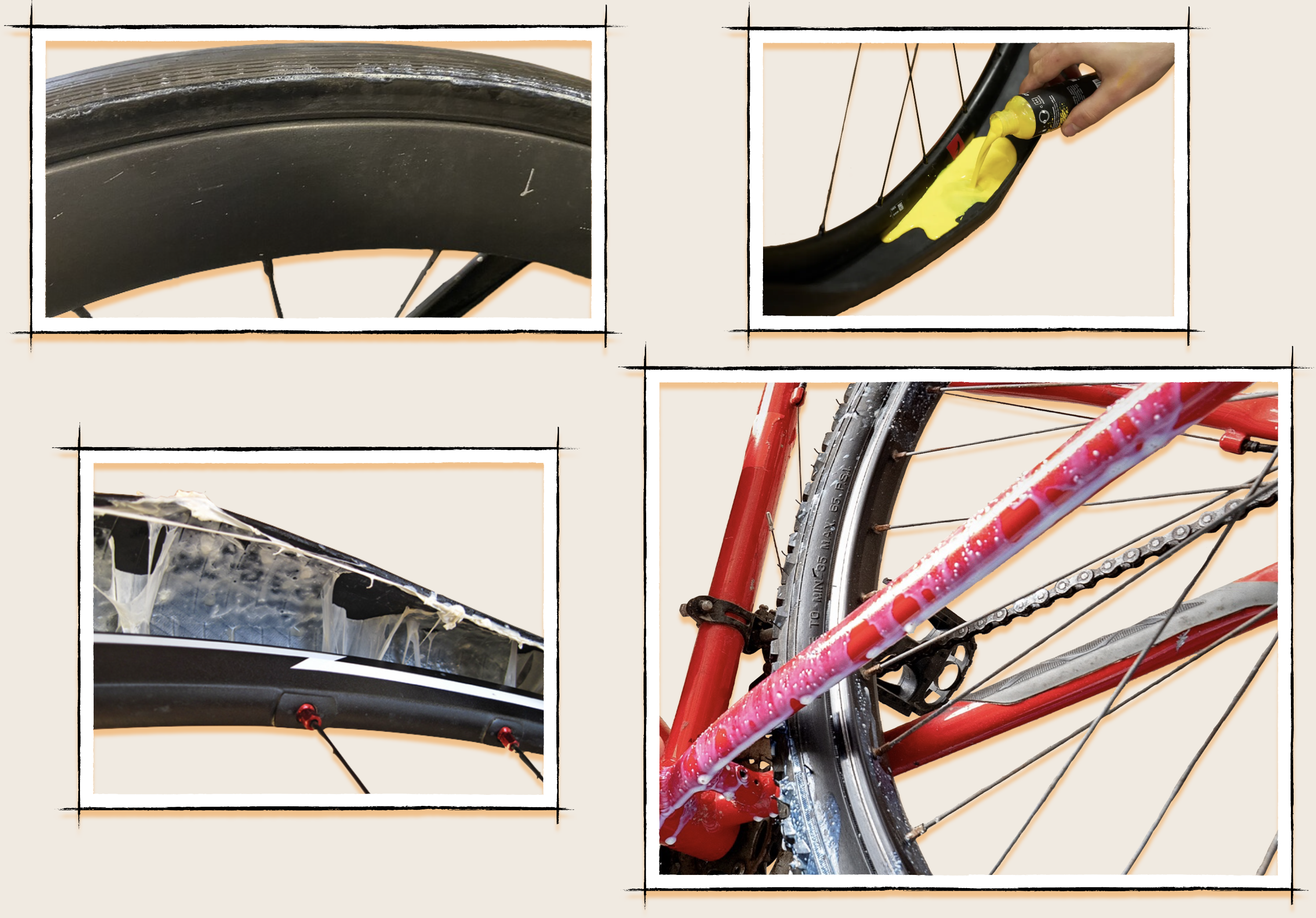
Naturally, bike hacks are a thing. For example, temporarily patching a large hole in your tire with a gel packet or a dollar bill. A process called booting.
I saw some arm screens while walking through a Decathlon store. These ones have a thumb hole on one side.
Using the thumb hole, the back of your hand gets protection from the sun.
Using the thumb hole doesn’t work for me. I don’t want slippery fabric between my palms and my handlebar.
I was still attracted these good quality arm screens because their price was amongst the lowest I have seen. RM29 for a pair with a UPF50+ UV protection rating. I have seen similar quality arm screens costing RM80 a pair and more.
A hack came to mind as I wondered whether I would use arm screens with holes in them.
I am the owner of a smart watch. Like with other smart watches and fitness trackers, there are sensors on the back of the watch. The watch must be worn under an arm screen for those sensors to have skin contact so that they work.
Which means having to pull the arm screen back to reveal the watch or leave my wrist uncovered.
The thumb hole is the solution. I wear these arm screens with the thumb hole uppermost on my wrist. My watch fits snugly in the hole.
Now I ride with my watch face showing through the hole on one arm and my Lifeline-ID tag showing through the hole on the other. A new bike hack.
I last rode to the Paya Indah Wetlands in June 2021. That time, it was in the company of about a dozen others. You can read about that ride here: Today, I had three others for company. We started from Rimbayu, after a few nervous minutes waiting for a shower to blow over. The rain cooled the air. We had a pleasant ride to the Wetlands.
Map courtesy of Ride With GPS
We got to the entrance at 8:00am, when the park opens.
Photograph courtesy of central.menarikdiri.com
Our first stop was at the Belibis restaurant for drinks and curry puffs.
Photograph courtesy of VV
It is clear that the park has seen better days. While clean (the toilets were spotless), the facilities are run-down. The restaurant kitchen is closed and replaced by a stall at the edge of the seating area. All the chalets are closed. Some advertised activities, such as kayak and paddleboat rental, are no longer offered. The restaurant staff told us that Gamuda Land, the developer of the adjacent Gamuda Cove, has taken over the park. Hopefully, better days lie ahead.
After finishing our drinks and curry puffs, we explored a small section of the 450 hectare park grounds.
Map courtesy of Ride With GPS
Our first stop was at the Crocodile Lake. This specimen is certainly not the largest crocodile there.
After oohing and aahing at the crocodiles, we went off-road.
Photographs courtesy of GK
There is a jetty at the western end of the route we rode.
Photograph courtesy of GK
The views over the water are spectacular.
On to the Menara Tinjau, or Lookout Tower.
Photograph courtesy of VV
The tower was closed the last time I visited. It is still closed. A thick layer of dry leaves covered the road leading up to the tower. We went up there anyway. To be greeted by quite a frightening sight. Dozens of dolls looking like Chucky from the horror film series “Child’s Play” were hanging from branches over the road.
Voodoo? Black magic? Whatever the reason for those dolls, I wrote to the Department of Wildlife Protection and National Parks, and to Gamuda Cove, to tell them about the dolls.
I received replies from both within a day. The dolls are props for an ongoing film shoot at the location. Those dolls will be removed once the filming is finished.
So much for our theories!
The Nile hippos are a highlight of any visit to the Paya Indah Wetlands. The hippos are a gift from the Government of Botswana.
We considered waiting thirty minutes to watch the hippo feeding, but it was getting hot. It was time to ride back to Rimbayu.
Our route intersects a section of the West Coast Expressway under construction. This 233 km toll road will connect Banting in Selangor with Taiping in Perak.
A flyover taking Jalan Bukit Perah over the WCE is built but not open to traffic yet. This Google Maps photograph shows the flyover under construction.
Map courtesy of Ride With GPSPhotograph courtesy of Google Maps
Naturally, we couldn’t resist riding up and over it.
Photograph courtesy of VV
It will be a while before this section of the WCE is open.
We might have been the first to cycle on that flyover. That was a highlight.
The lowlight was the ever-present gusting wind on the way back to Rimbayu.
We definitely felt those 28 kph gusts. Talk about a block headwind! What a relief to see the bridge over the South Klang Valley Expressway. Only a kilometre to go to the end of the ride. And an ice-cold drink.
It will be nice to go back to the Paya Indah Wetlands again. Perhaps in less than two years time 😆.