Watts Next?

Graphic courtesy of outsideonline.com

When you buy a complete road bicycle, including pedals, it is ready to ride. Sort of. To ride safely, you need front and rear lights and a bell. To ride for more than thirty minutes, you need bottle cages and some bottles. If you don’t want to fill your jersey pockets, you need a saddle bag to carry a spare inner tube, a multi-tool, etc. And if you want to keep track of how far and how fast you rode, you need a cycling computer.

Thus equipped, you are ready to tackle most rides. You will be tempted to upgrade various components, but you don’t need to add anything else to your bike. But when did “need” get in the way of “want?”

You may want a power meter. A valid reason to add a power meter to your bike is you are a competitive cyclist who wants to train using power. Most of us want to add power meters because they are cool pieces of technology. And we like cool technology.

Power meters came into being in 1989 when Ulrich Schoberer started selling crank spider-based power meters. At the time Schoberer Rad Messtechnik (SRM) was the only power meter game in town. And the prices were eye-wateringly high.

Since then the power meter market has grown to include hub-based, crank arm-based, bottom-bracket based and pedal-based power meters.
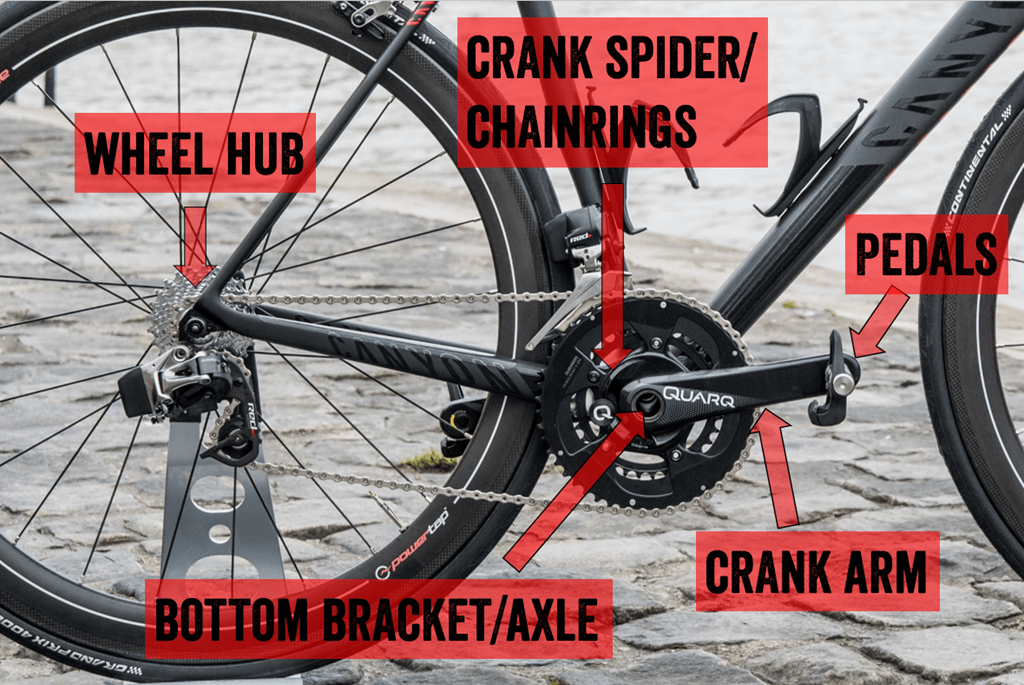
Graphic courtesy of dcrainmaker.com

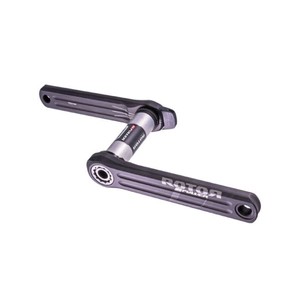
Examples of the various types of power meter are pictured below.
Prices have come down. SRM is still the price leader at about USD2,350 for the SRM Origin. Alternatively, a Quark DZero spider-based power meter costs USD399. At this price, you need to supply the chainrings and crank arms.

One downside of hub, spider, crank arm and bottom bracket-based power meters is that they cannot easily be switched between bicycles.

Pedal-based power meters are increasingly popular because they can be swapped from one bike to another with minimum fuss. However, power meter pedals are not available for all pedal interfaces. The Assioma Favero Duo, Garmin Vector, and SRM Look Exakt are Look pedal compatible only.

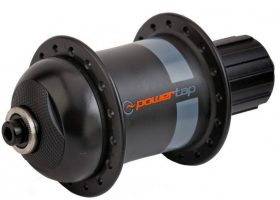
Lately, there has been a buzz around pedal-based power meters. In February, SRAM announced that it acquired Time, a French pedal manufacturer. SRAM owns Quark and Powertap. They have announced that the Powertap P2 power meter pedal will no longer be available. Will a Powertap P3 power meter pedal come soon, or even a Time pedal-based power meter?

Favero has hinted that it will launch a version of its Assioma Duo that will be compatible with Shimano SPD-SL pedal bodies.

Photograph courtesy of cyclingtips.com

Also, on the compatibility front, it seems Garmin is about to expand its range of power meter pedals to encompass the three most popular systems: Shimano SPD-SL road, Look Keo road, and Shimano SPD mountain bike interfaces. With a new name – Rally, instead of Vector.

Photograph courtesy of cyclingtips.com

Finally, Wahoo just announced the launch of its Speedplay pedal range. Wahoo acquired Speedplay two years ago, and there has been much speculation about the platform’s future. Along with four updated pedals, Wahoo announced the Powrlink Zero. Few details are available, apart from a Summer 2021 launch and the photograph below.

Graphic courtesy of dcrainmaker.com

If a SRAM Time-compatible power meter pedal hits the market, users of almost all pedal interface types – Shimano SPD-SL, Look Keo, SpeedPlay, and Time – will have a power meter pedal option.

Price remains a barrier to entry to the world of power meter pedals. A set of SRM Exakts cost USD1,699. Garmin Vector 3s go for USD1,000. There is no word yet on the pricing for the various Garmin Rally power meter pedals. A set of Favero Assioma Duo pedals costs about USD650. The expected retail price for the Wahoo Powrlink Zero is USD1,000.

Despite being a life-long SpeedPlay user, I don’t think a set of Wahoo Powrlink Zeros will be on my Watts Next list.
Something New at the Bicycle Shop

I recently read an online article in Bloomberg Pursuits about record growth over the past year in the market for musical equipment. And with it, a new affliction: gear acquisition syndrome (GAS).

GAS is defined as a tendency to purchase more equipment than justified by usage or price.

Music Radar states that guitarists are the most at-risk population for GAS. Middle-aged men are heavily represented.

It strikes me that cyclists can be added to the list of the GAS afflicted.

Graphic courtesy of pinterest.com

Cyclists, certainly the middle-aged ones, fit nicely into the 7 stages of Gear Acquisition Syndrome, as outlined in Music Radar.

Dissatisfaction

There was a time when you loved everything about your bicycle. But of late, every time you ride, you feel like every other cyclist is riding something better. Your bike isn’t as pretty as all those other bikes. The ones with custom paintwork and higher-range drivetrains. The grass is greener. . . .

Desire

You’ve seen the bicycle you want, and it is embedded in your brain. Only this bike can bring happiness. With it in your hands, your riding will improve.

You don’t just want it. You need it, to the point that you’re not entirely sure you’ll survive without it. It’s time to start edging towards making this new purchase a reality.

Research

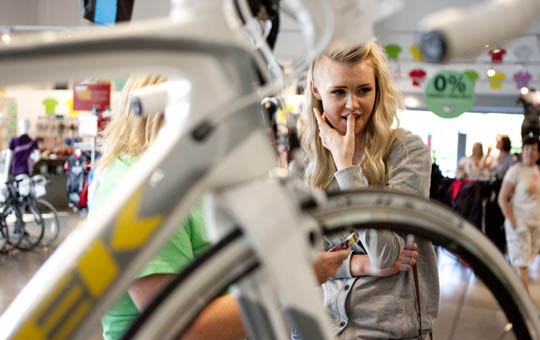
A hallmark of the 21st-century shopping experience is the paralysing indecision that comes after a couple of hours spent reading reviews of a product you thought you wanted.

For cyclists, the problem is much, much worse. Everyone will have an opinion on your potential purchase. One minute you will be feeling positive having read a lengthy, seemingly well-informed review. The next minute you’ll see multiple comments below it that destroy every positive point.

But if the GAS is strong with you, no amount of negative press can change your plan of action.

Purchase

You know what you want, and you know what you’re willing to pay. You go to the shop that has the right bike in stock or can order one for you.

You begin the process of haggling with the guy behind the counter, but your heart isn’t really in it, and he knows it. He offers you an insignificant discount, and you take it because you are blinded by desire.

Plastic is waved. Your heart is close to bursting with joy. Inevitably, it won’t last…

Guilt

For a week after you take delivery, the guilt ruins your enjoyment of your lovely new purchase. You can barely even look at your bicycle for the shame, so you hide it. Or claim that you just had it repainted.

Acceptance


You eventually stop feeling guilty. You rejoice! You finally own the bicycle of your dreams. The one you will take to your grave. Hooray! Except…

Relapse

If the purchase was relatively small, expect to experience GAS again quite quickly. You’ll be reading new product reviews without even realising it.

A high-end bicycle? Well, you’ve probably brought yourself a year or two. Eventually, though, the sense of glory diminishes. You swear the bike feels heavier.

You remember a friend telling you about a new bike shop. You’ll drop in to buy inner tubes.

After all, what’s the worst that could happen?

Disclosure

I have Gear Acquisition Syndrome. I own three bicycles and multiple cycling accessories and tools.

However, I didn’t buy a new bike during the writing of this post.

Still no Interstate Travel

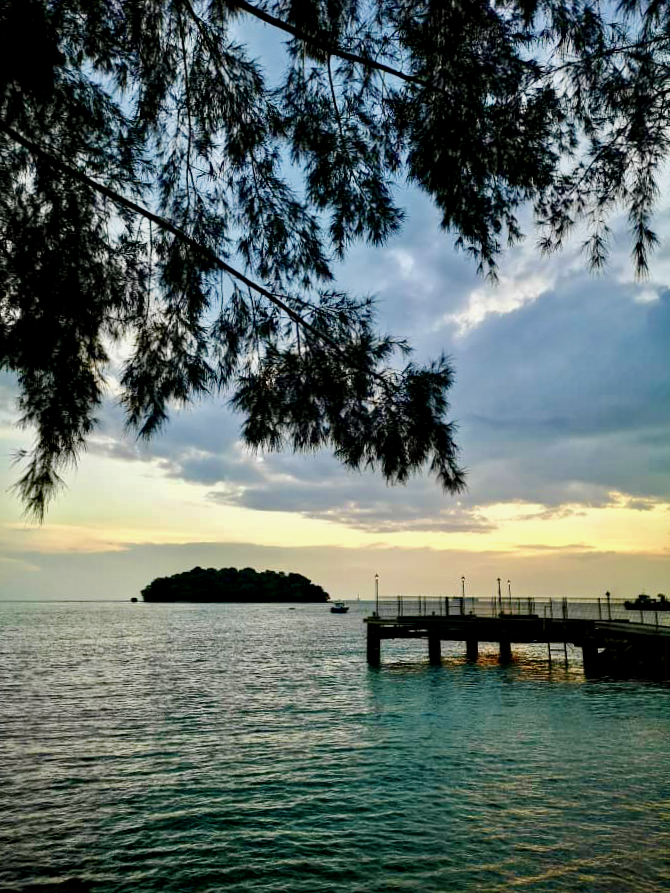
The Conditional Movement Control Order is extended to the end of March. With the possibility of further extensions after that if new COVID-19 infection numbers do not fall. Once again, hopes for a ride soon to places like these are quashed.

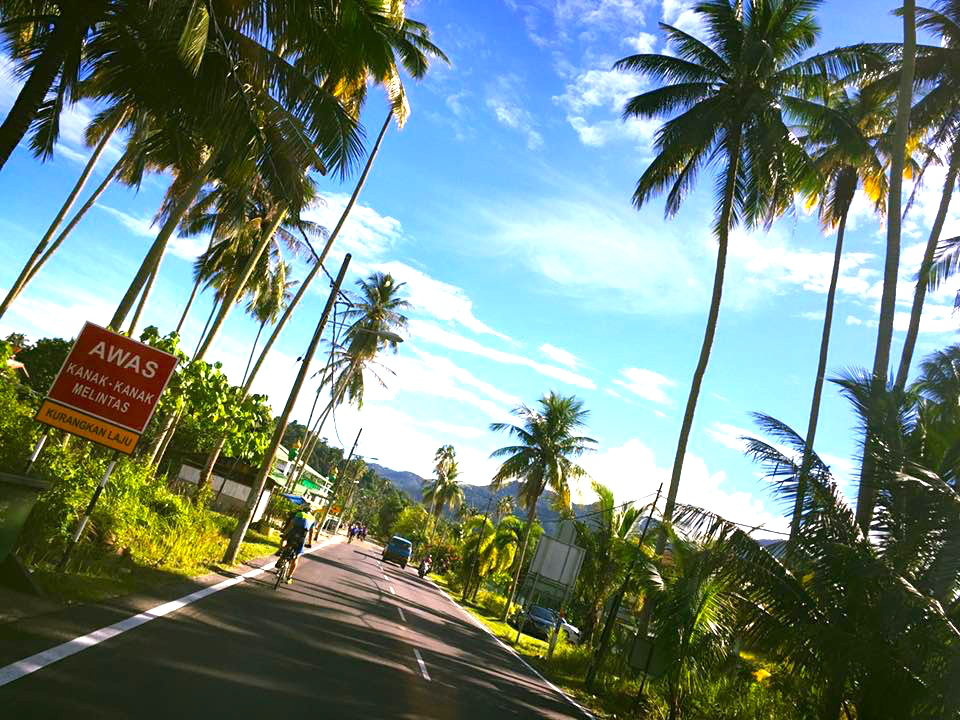
At least the whole of Selangor is accessible. We will be able to ride to here this weekend.

Chemical Soup

A few of the group on the 70km to 80km long ride last Sunday had not ridden in months. Everyone finished, but there were a few moans during and after the ride.

Graphic courtesy of cycling-passion.com

A long time off the saddle left some feeling a bit sore around the ischial tuberosities aka sit bones.

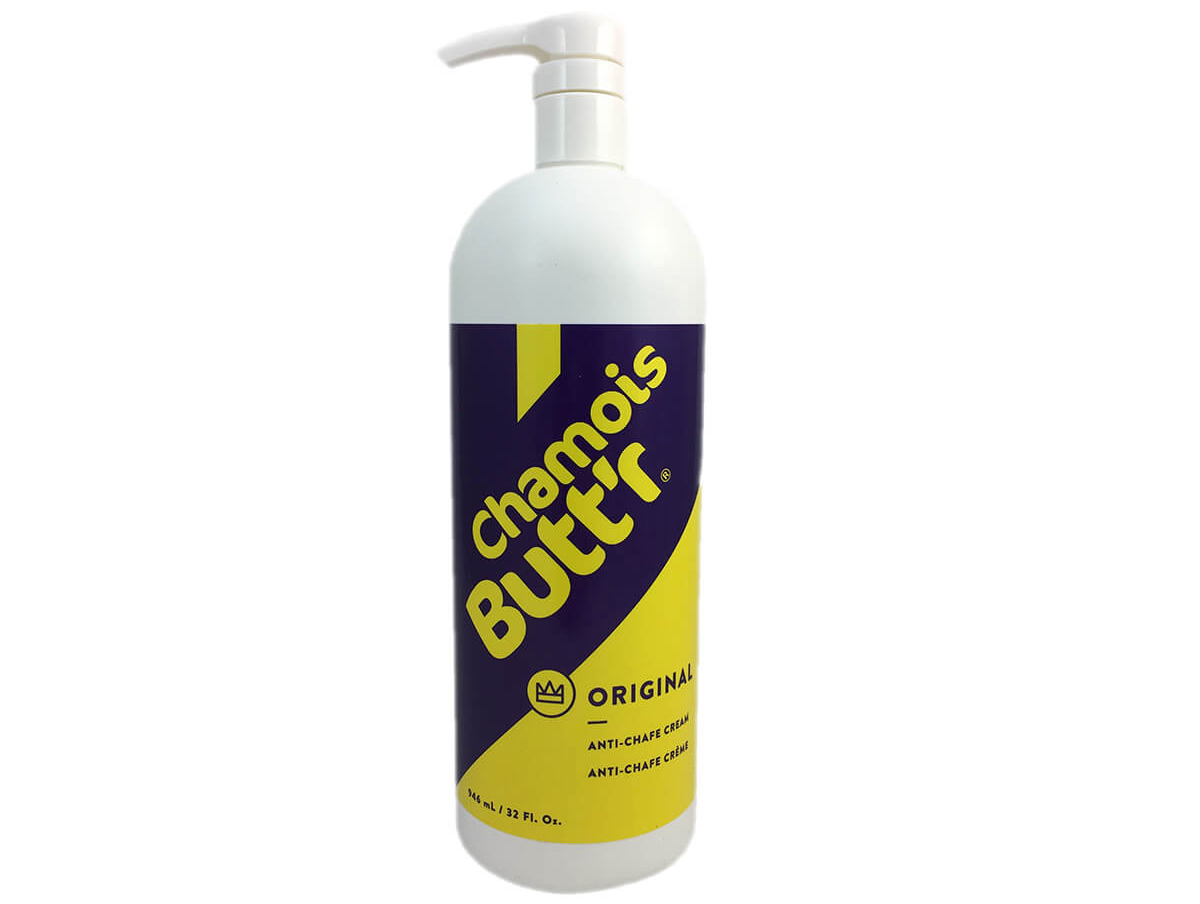
That led to a conversation about chamois creams. I religiously use chamois cream. The one time I didn’t, I developed a saddle sore. Since then, I ensure that I have a ready supply of Chamois Butt’r Original. My chosen brand of chamois cream. Unfortunately, Chamois Butt’r isn’t available locally.

I ordered some online a while ago. COVID-19 compromised logistics chains mean that I haven’t received my order yet. As I am running low, I recently bought some Assos Chamois Crème from my LBS. I have not used Assos Chamois Crème because it contains menthol. I didn’t want that “cooling” effect. But beggars can’t be choosers.
I looked at the Assos Chamois Crème jar to check if menthol is still on the list of ingredients. It is, along with a chemical soup of other ingredients.

I have been following a thread of comments on VeloNews about skin sensitivities. The conversation started with skin sensitivity to synthetic materials used in cycling bibs. The thread went on to include sensitivity to laundry detergents and chamois creams. That led me to research what each of the ingredients in a tub of Assos Chamois Crème does. Here is what I found.

Photograph courtesy of Assos of Switzerland
IngredientFunction
WaterSolvent
OctyldodecanolEmollient
Glyceryl Stearate SEEmollient
GlycerinEmollient
Propylene GlycolEmollient
Cetearyl AlcoholEmollient
Alcohol Sorbitan StearateEmulsifier
Polysorbate 60Emulsifier
CyclopentasiloxaneEmulsifier
OzokeriteEmulsifier
Viscosity Increasing Agent
Hydrogenated Vegetable OilEmollient
Menthyl LactateCooling agent
PhenoxyethanolPreservative
Stearyl StearateEmollient
PanthenolEmollient
Dimethicone/Vinyltrimethylsiloxysilicate CrosspolymerEmollient
Stearic AcidEmulsifier
MentholCooling agent
Hamamelis Virginiana Water (Witch Hazel)Anti-microbial
Tocopheryl Acetate (Vitamin E)Anti-oxidant
BHAAnti-oxidant
Denatured AlcoholSolvent
Citric AcidPreservative
Ingredient list courtesy of Assos of Switzerland

23 ingredients, presumably in decreasing percentage of total volume of the product. Which is 140ml / 4.73 fl. oz.

9 chemicals are emollients or moisturisers. 5 are emulsifiers. Emulsifiers are chemicals that stop fats and water from separating. 2 are anti-oxidants, which may preserve skin health. 2 are preservatives. 2 are cooling agents. We’ll see how well I get along with those. There are a couple of solvents. I imagine this product is mostly water. There is 1 anti-microbial.

Having put Assos Chamois Crème under the microscope, it was only fair that I did the same with Chamois Butt’r Original.

Photograph courtesy of Paceline Products Inc.
IngredientFunction
WaterSolvent
Mineral OilEmollient
Glyceryl StearateEmulsifier
Cetearyl AlcoholEmulsifier
Stearic AcidEmulsifier
GlycerinEmollient
LanolinEmollient
PEG-100 StearateEmulsifier
Diazolidinyl UreaAnti-microbial
Iodopropynyl ButylcarbamatePreservative
Cetyl Hydroxyethyl-CelluloseEmulsifier
Viscosity increasing agent
Potassium SorbatePreservative
Disodium EDTAStabilizer
Aloe Barbadensis (Aloe Vera) Leaf JuiceEmollient
Anti-Inflammatory
Tocopheryl Acetate (Vitamin E)Anti-oxidant
Retinyl PalmitateAnti-oxidant
Ingredient list courtesy of Paceline Products Inc.

The Chamois Butt’r Original has 16 ingredients. 4 emollients. 5 emulsifiers. 2 anti-oxidants. 2 preservatives. 1 stabilizer. 1 anti-microbial, and 1 solvent. Again, I assume water makes up the most of this 32oz pump bottle.

I am relieved to find that the Chamois Butt’r Original does not contain as many chemicals as the Assos Chamois Crème. Having said that, the Assos has more than twice as many emollients. Which I assume are the key ingredients in a product that is formulated to eliminate chafing. The 4 emollients in the Chamois Butt’r have been enough for me though.

I just hope that the menthol lactate and menthol in the Assos Chamois Crème aren’t too cooling.

Image courtesy of free vector.com

Change

The last time I rode along the road from Kota Puteri to Bandar Seri Coalfields was in January 2017. That was during an Audax BRM300. We had ridden 270km when we got to Kota Puteri.

Yesterday I rolled through Kota Puteri after a 60km ride from Bandar Utama to Kuang, Bestari Jaya and Simpang Tiga Ijok. We rode via Selangor Fruit Valley (or Selangor Fruits Valley, depending on who you ask). Another place I had not seen for many years.

Selangor Fruit Valley is a 646-hectare tropical fruit farm cum agro-tourism destination. The farm is at the northern end of our ride route.

Map courtesy of Ride With GPS

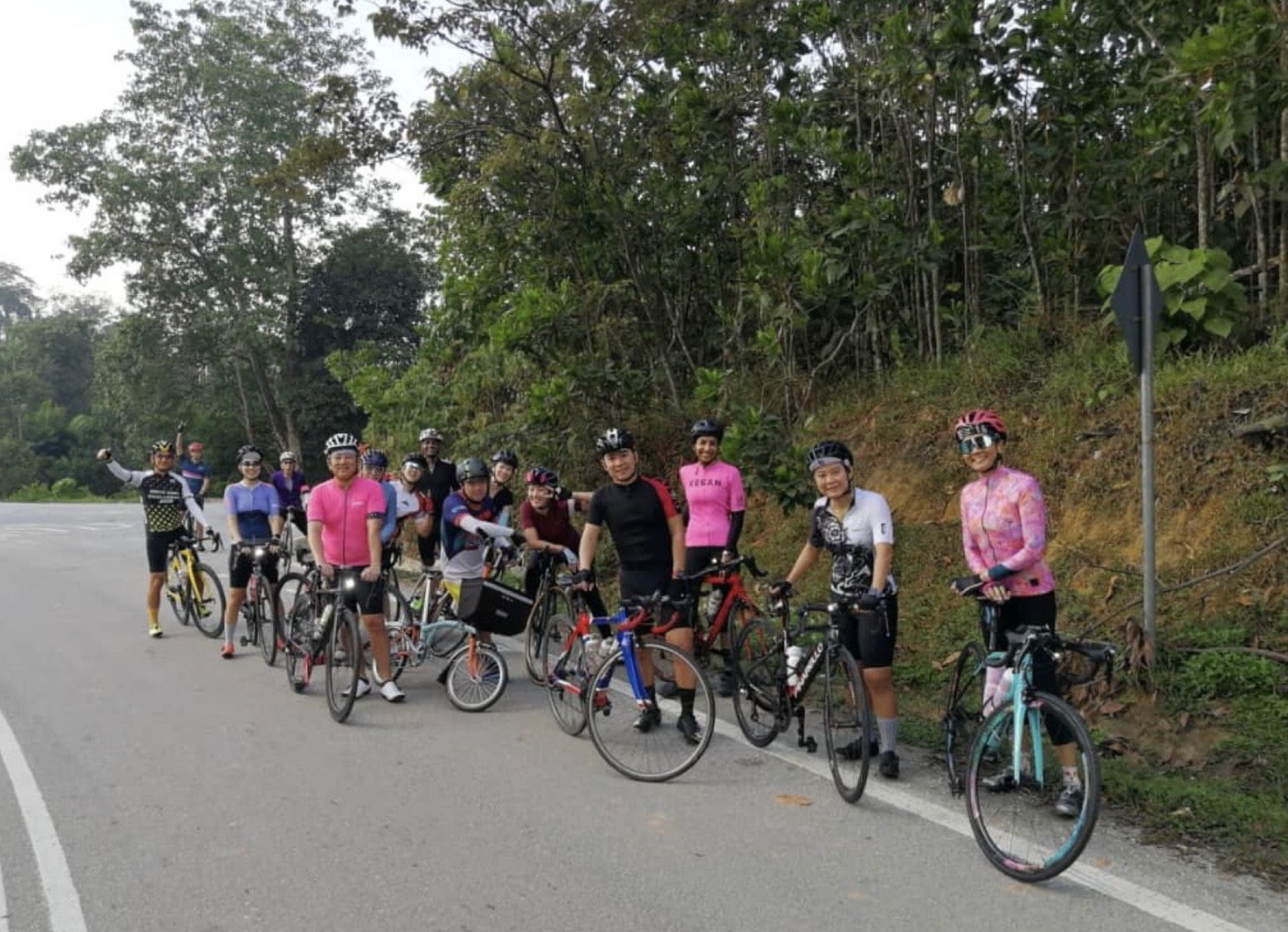
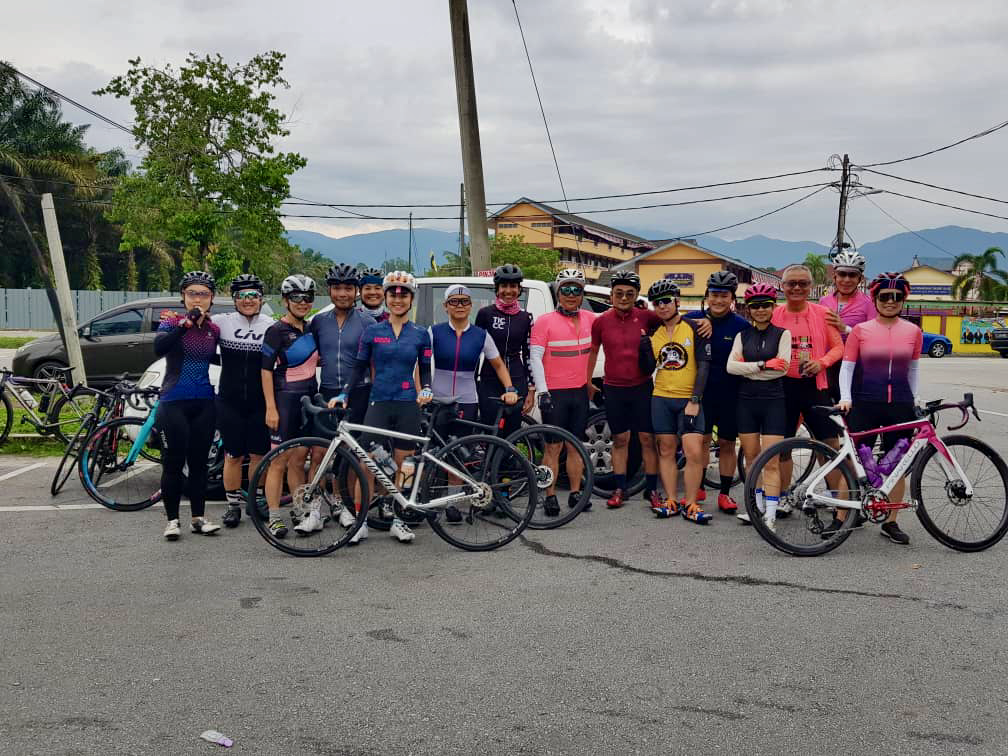
Twenty of us did this first proper R@SKLs group ride in months. We started as one group but soon split into two sets of cyclists. The first group waited at the junction with the road to Batu Arang for the rest of us to catch up.

We got there eventually!

Photograph courtesy of JS

Our next stop was at the Caltex station in Bestari Jaya.

Photograph courtesy of VV

More specifically, the FamilyMart at the Caltex station in Bestari Jaya. Where else can you get onigiri (Japanese rice balls) and Caramel Dalgona Coffee Sofuto?

What is the change alluded to in the title of this post?

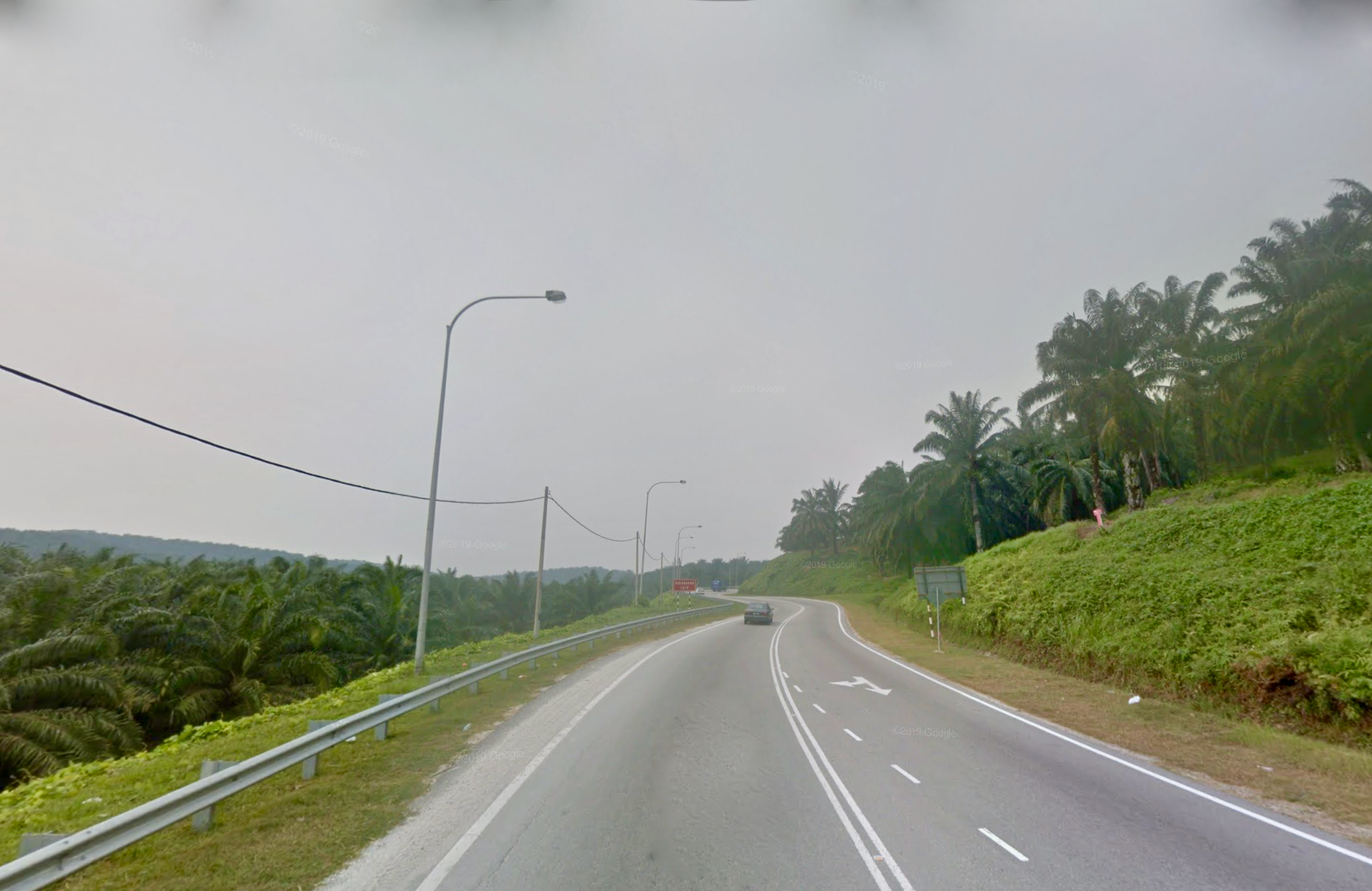
That came south of Kota Puteri. In 2017 the road there looked like this.

Photograph courtesy of Google Maps

A winding two-way road with a narrow shoulder.

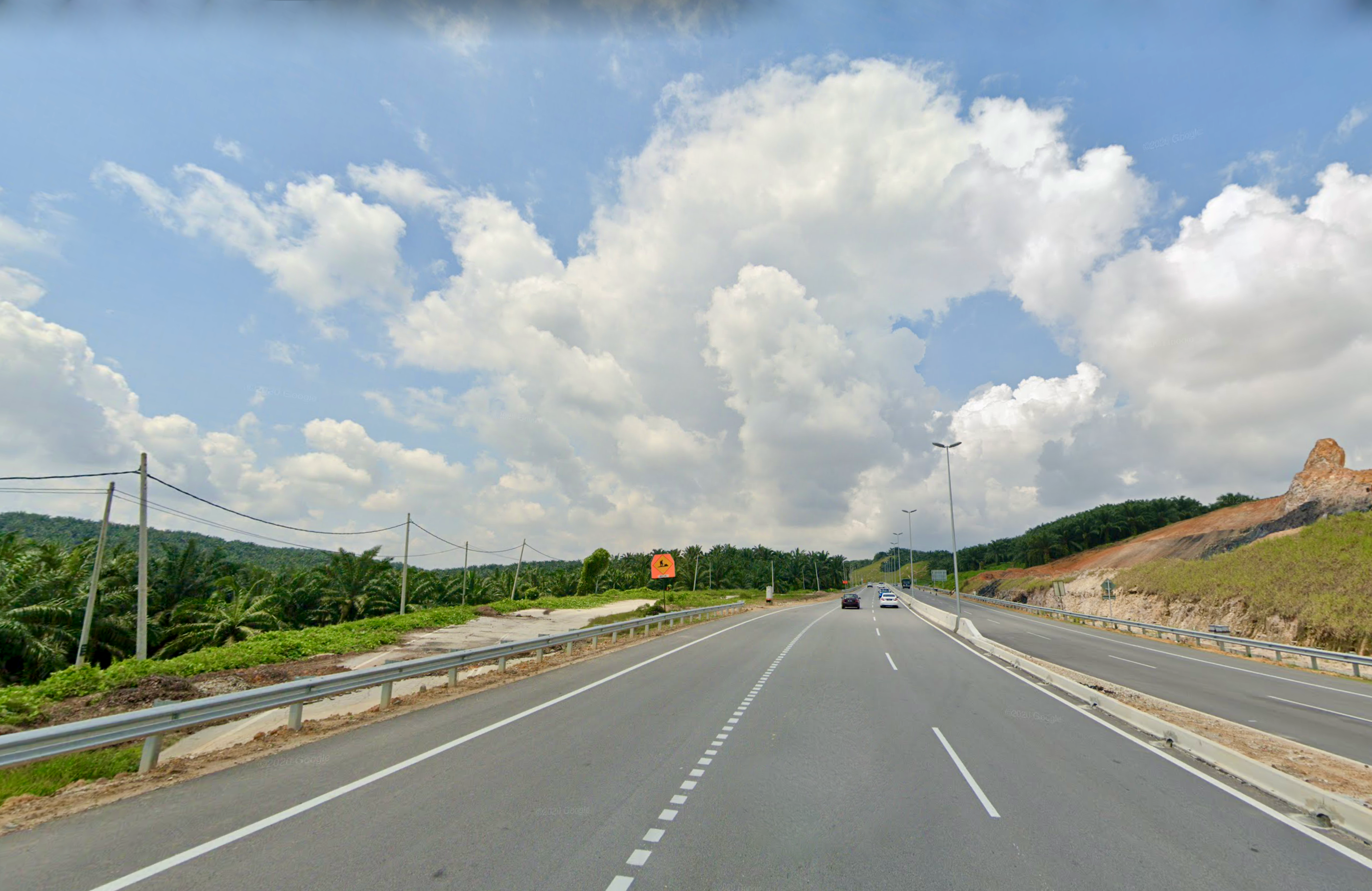
Today that road looks like this.

Photograph courtesy of Google Maps

A four-lane divided highway. You can see a remnant of the old road to the left.

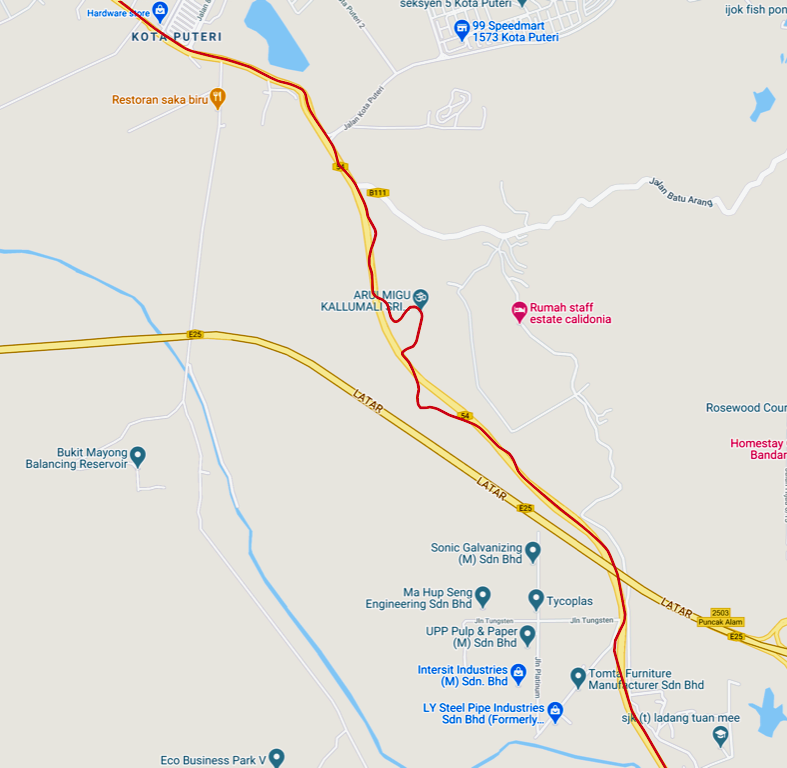
Here is my route from January 2017 overlaid on the current map of the area.

Map courtesy of Ride With GPS

The narrow winding road with ruts and bumps has changed into a relatively straight and smooth divided highway that runs from Simpang Tiga Ijok to the Sungai Buloh Prison. All part of improvements to Federal Route 54, starting from the junction with Federal Route 5 at Taman Assam Jawa to the west.
It is a welcome change.

Cycling in Malaysia during COVID-19 Restrictions

Photograph courtesy of Markus Spiske on Unsplash

On 18th March 2020, the Malaysian Government implemented a nationwide Movement Control Order (MCO) as a preventative measure in response to the COVID-19 pandemic in the country. There was a general prohibition of mass movements and gatherings across the country, including religious, sports, social and cultural activities.

The MCO was in place until 3rd May.

The main message during the MCO was:

Photograph courtesy of Alexas Fotos on Unsplash

The Malaysian government replaced the MCO with a Conditional MCO (CMCO) on 4th May. Outdoor sports activities not involving body contact were allowed on the condition that participants practised social distancing. Inter-state travel was prohibited.

On 7th June, the Prime Minister announced that the CMCO would end on 9th June, with the country entering the Recovery Movement Control Order (RMCO) phase from 10th June. Among the activities reinstated under the RMCO was inter-state travel.

Increasing COVID-19 case counts led to the reinstatement of the CMCO in selected states on 14th October, including the Federal Territory of Kuala Lumpur and the state of Selangor, which surrounds Kuala Lumpur. This time, the prohibition was not just on inter-state travel. We were not allowed to travel outside the district where we lived.

MCO restrictions were re-introduced in Selangor and Kuala Lumpur from 13th January 2021 following a surge in COVID-19 infections. In addition to the inter-district travel ban, travel was restricted to a 10km radius from where you lived.

On 5th March, Selangor and Kuala Lumpur exited the MCO lockdown and reinstated CMCO restrictions. Interstate travel was still prohibited, but the requirement to stay within a 10km radius and stay within your district was lifted.

This is how the various movement control orders affected my cycling in 2020.

Graphic courtesy of VeloViewer

I didn’t ride very much during the first few months of 2020. Partly due to some travel in February and March and some consulting work, also in March.

Increasing concern about COVID-19, first identified in December 2019, must have played a part. Those worries amplified when the World Health Organisation declared the COVID-19 outbreak a Public Health Emergency of International Concern at the end of January 2020.

We had to stay indoors during the early stages of the MCO. Even going for walks was prohibited. A week after the MCO started, I snuck in a ride around the block where I lived. Then people started getting fined for being outside their homes. I stayed off my bicycle until the CMCO came into effect.

There were mixed views about the wisdom of cycling during the CMCO. We understood little about how COVID-19 was transmitted. So to ride or not to ride turned on how risk-averse or risk-tolerant you are. I rode a lot in May. Mostly, by myself, and sometimes with two or three others. The phrase “I didn’t get dropped. I was just social distancing” entered the cyclists’ vocabulary.

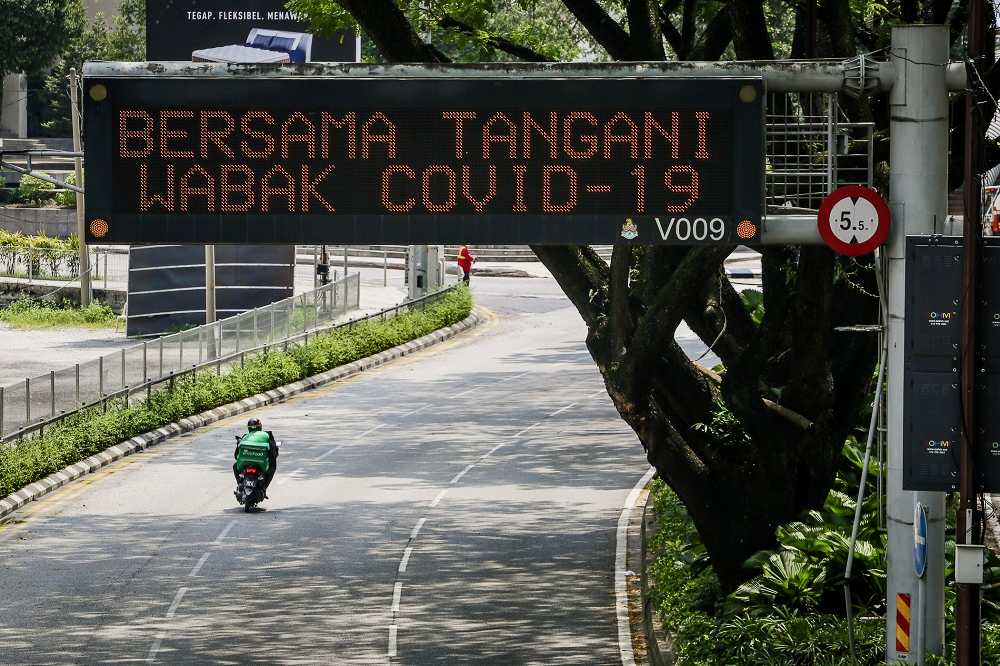
One definite plus in the early days of the lockdown was the empty roads, apart from the food delivery riders. They continue to provide an essential service, even after restaurants were allowed to have dine-in patrons again.

The sign translates to “Jointly tackle the COVID-19 outbreak.”

Photograph courtesy of MalayMail

Interstate rides, like trips to Port Dickson or Teluk Intan, were a distant memory. Masks joined helmets as mandatory items on every ride.

Photograph courtesy of Mike Baumeister on Unsplash

It didn’t take long for the R@SKLs to make an interstate trip after RMCO replaced the MCO on 10th June. It was “Hello Port Dickson!” on 12th June.

Photograph courtesy of Terry Shim

We were in Port Dickson again at the end of July.

Photograph courtesy of Marco Lai

I averaged 1,000km in May, June and July. That trend continued the following month. Helped by an Audax 300 ride on 30th August.

There was another inter-state ride in September. We devoted eight days to pedalling to Penang and back.

Photograph courtesy of Yaopey Yong on Unsplash

The first few weeks of October were a washout as far as cycling was concerned. I put it down to an attack of idleness following our Penang ride.

A surge in COVID-19 infections in some parts of the country, including Kuala Lumpur, prompted the move back to RMCO status in mid-October. This time with a prohibition on inter-district travel. The fine for transgressors was MYR1,000 / USD250. That kept me off my bike for most of the rest of October and November. I rode a total of 450km during those months.

By December, a weariness of the COVID-19 restrictions was setting in. More and more cyclists, including myself, were taking a chance on riding across district boundaries. I rode further in December than in any other month in 2020.

That enthusiasm was curtailed in January 2021.

Not only were we playing under MCO rules in mid-January, those rules included travel limited to a 10km radius around where you live. That 10km radius looks like this for me.

Map courtesy of 2kmfromhome.com

The imposition of the 10km radius limit coincided with a newfound enthusiasm to cycle amongst some friends. Friends who live within a couple of kilometres from me. Having someone to ride with, I have ridden on 50 of the past 56 days. Who would have guessed?

i have a new appreciation for the views within 10km of home.

On 5th March, we went back to CMCO rules. No 10km radius limit and inter-district travel prohibition any more. So my ride on the 6th was with friends I haven’t seen, let alone ridden with, since the end of 2020.

COVID-19 restrictions did curtail my riding in 2020. Especially in March, April and October.

2021 is off to a good start. I hope that with vaccinations on the way, we will have this pandemic under control. At last.

Photograph courtesy of Aljoscha Laschgari on Unsplash

2020 Rapha Festive 500

Photograph courtesy of cyclist.com.uk

The Rapha Festive 500 returned for the 11th year in 2020. The challenge remained the same. Ride 500km in the eight days between Christmas Eve and New Year’s Eve.

Different in 2020 was that indoor rides counted towards the 500km target. No doubt in recognition of a) the popularity of online riding platforms like Swift, Rouvy and FulGaz, and b) the various levels of COVID-19 lockdowns around the world.

Also different in 2020 was that Rapha would not send a woven roundel to everyone who completed the challenge. The reward in 2020 is a digital roundel in your Strava Trophy Case.

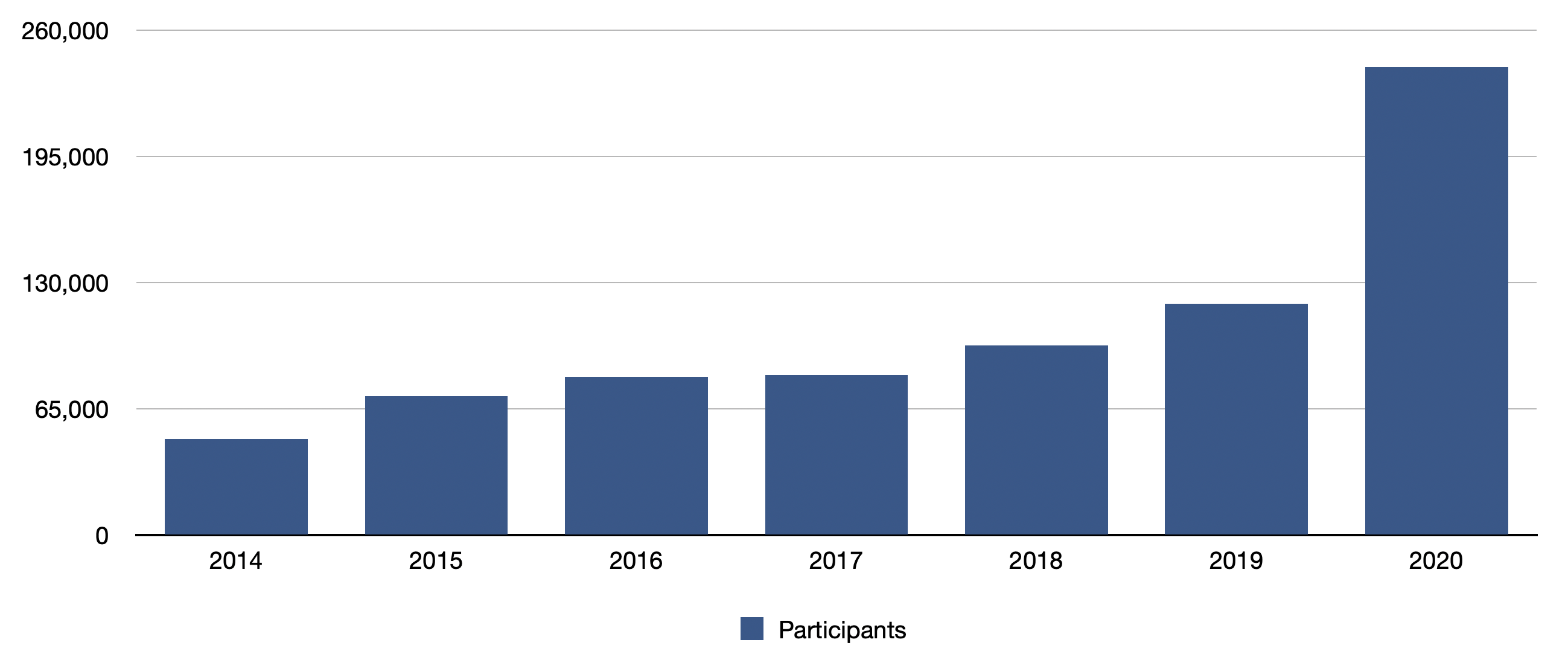
I assume that Rapha decided to stop sending woven roundels because the numbers of participants have mushroomed over the years. There were 84 participants in 2010. There were 119,206 participants in 2019. The cost of manufacturing and posting increasing numbers of roundels must be prohibitive.

These are the woven roundels that were sent to successful participants from 2011 to 2019.

Images courtesy of Rapha

Come to the 2020 edition of the Festive 500 and Rapha must be glad they stopped sending woven roundels. The inclusion of indoor rides more than doubled the number of participants compared to 2019. There were 240,991 participants in 2020.

Data courtesy of Strava

This is the digital roundel for 2020.

Image courtesy of Rapha

I am curious to see how many participate in the 2021 Rapha Festive 500. And what the digital roundel looks like.

Reflections

Photo by engin akyurt on Unsplash

I have been riding a bicycle for twelve years or so. As I mused about my Strava stats, I started reflecting on what I know now about cycling that I didn’t know when I bought that hybrid bike at the end of 2008.

There are the obvious things, like how to use cleats and how to select the right gear for the speed and the terrain.

There are other initially less obvious things that I came to learn and appreciate through experience.

Riding with the right group makes all the difference

Photo courtesy of THL

This is my number one realisation.

I really enjoy riding with a group of like-minded friends. By like-minded I means friends who ride for the same reasons as I do. For fun and food, rather than as a competition and to chase personal bests. Friends who ride at about the same pace as I do. Friends who don’t mind stopping to enjoy the scenery. Friends who wait for each other when there is a flat tire or other mechanical.

Take your time when repairing a puncture

Diorama courtesy of ZAZ

As I have discovered to my cost, haste in fixing a flat tire often leads to grief. Not taking the time to check the tire for embedded bits of grit, staples, etc. guarantees another stop to fix another puncture. Rushing to install an inner tube can lead to a twisted inner tube, which results in a bumpy ride. More commonly the tube is pinched between tire and rim. The outcome upon inflation is an immediate flat.

Protect your spare inner tubes

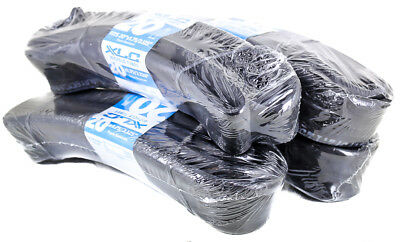
Inner tubes are usually carried together with tire levers, multi-tools etc. These items can puncture tubes. Constant abrasion against the sides of saddlebags can also put holes in inner tubes. Inevitably, you won’t know that your spare tube is punctured until you get a flat tire.

I forget where I picked up this tip. Sprinkle talcum powder on your spare inner tube, and wrap it in plastic wrap or a plastic bag. The talcum powder stops the inner tube from sticking to itself. The powder also makes the inner tube slippery, and therefore easier to install in the tire. The plastic wrap or bag protects the inner tube from the other items in your saddlebag.

Silca Tire Levers Premio

I have used tire levers from several other manufacturers like Pedro, Lezyne, Ritchey and Park Tool. Each of them had weaknesses. Some had tips that were too thick. Another set snapped.

These tire levers from Silca are my favourite because they have narrow tips which are easy to get underneath tight tire beads. These levers have a reinforced nylon shield which protects the rim. Useful for those who run carbon wheelsets. They are also relatively short and thus easy to store on the bike.

On-Bike Storage 

Photograph courtesy of Specialized

I used a saddle bag or tool roll for many years. As with tire levers, I tried bags and rolls from Silca, Rapha, Topeak etc. Each had a shortcoming. The biggest issue was that I preferred to use the space below my saddle to mount a rear blinker, or for my Apidura Saddle Pack when I went on overnight credit card tours.

Nowadays, I use a tool storage bottle. Mine is from Specialized, but Shimano, Cateye, Elite, Fabric and others make similar items.

You have to sacrifice one bottle cage. I use the bottle cage on the seat tube. However, only having one bottle is not a problem. I am never far from a petrol station, convenience store or sundry shop, so regularly refilling one bottle is not a problem. 

Street View

Image courtesy of Google

Ride With GPS is my go-to route mapping app. You need to subscribe to gain access to advanced route planning tools, but it is worth the money.

When I started planning routes, I dragged ‘Pegman’ over the map to see if the road I was thinking of riding on turned blue. I took this to mean that the road was mapped and rideable.

I was wrong. More than once, I led a group down a road that suddenly shrank to an unpaved track. Not a good thing in the middle of unfamiliar territory.

I now use Street View to preview the roads I plan to use. That helps prevent unpleasant surprises mid-ride.

Rain Vest

Photograph courtesy of Sportful

I don’t wear a rain vest to stay dry. It rains too heavily in Malaysia for that. I wear a rain vest because it protects my jerseys from muddy rear tire spatter. My rain vest consists of a polyester material that is easier to clean than my jerseys are.

Cargo Bib Shorts

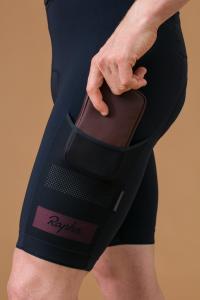
I don’t think cargo bib shorts existed when I started riding. They have become my go-to bib shorts for longer rides. The pockets on both legs and two more pockets on the upper back mean that I can ride with empty jersey pockets. I find that more comfortable. The leg pockets are easier to access than jersey pockets are. I can also fully unzip my jersey and not have the back weighed down.

Small Chain Ring and Smaller Cog

It took longer than it should have for me to realise that I must shift to the small chainring and a smaller cog before putting my bike in the back of my car. If I don’t, there is a good chance that the high spring tension in the rear derailleur will make the crank rotate backwards and drop the chain. More often than not, the rearward moving chain drops below the chain catcher and gets trapped between the small chainring and the seat tube. Greasy fingers guaranteed to try to get the chain back onto the chainring.

Shifting the chain to the small chainring and a smaller cog reduces the spring tension in the rear derailleur enough to stop the crank rotating backwards.

I wonder what wisdom the next decade of riding will bring.

Graphic courtesy of Strava

Penang with the R@SKLs in 2020 – Days 6 to 8

Photograph courtesy of HCP

Day 6

Pai and I had our Apidura saddle packs mounted on our bikes and were out of the Tien Terrace front door at 7:45 am. We had a short ride to the Penang ferry terminal. We got there just in time for the 8:00 am ferry.

Photograph courtesy of HCP

On Friday on the way to the ferry at Butterworth, I had lost one of my cleat covers. I went to look for it, after Pai and I got off the ferry. Amazingly it was still at the roadside. That was a fine start to the day.

We stopped at Persiaran Nasi Kandar Subaidah on Jalan Chain Ferry for breakfast. Then we were on our way along the same route we had taken to get to Penang.

Map courtesy of Ride with GPS

25km later we were on Federal Route 1. Our next turn was 50km away.

At 30km, we stopped at a Petron station to refill our bottles. At 63km we did the same at a Bestari Mart. The lady at the counter there was intrigued by a Mat Salleh speaking Bahasa. I gave her a short biography in response to all her questions.

5km later we stopped to take a photograph next to paddy fields. Ala the photographs taken during the round island ride.

Photograph courtesy of HCP

Simon please note that I sucked my tummy in for this photograph.

21km later we were at the Larut Matang Hawker Center in Taiping.

We had an early dinner at the Hu Jing Ge Chinese Restaurant in the Flemington hotel. The food was good and reasonably priced for a hotel restaurant. The suggestions of where to eat from the Taiping locals came in too late!

Photograph courtesy of HCP

After polishing off dinner, we went for a stroll in the Taiping Lake Gardens. The gardens were established in 1880. Some of the magnificent Angsana trees may date from that time.

Photograph courtesy of HCP

Day 7

The morning of Day 7 was wet.

We rode in the rain for the first 20km to Terong. I must have started the ride dehydrated because I needed to refill my bottle at the BP station in Terong.

Map courtesy of Ride with GPS

It was a struggle to get from Terong to Beruas because of the headwinds. Every flag we saw during those 34km was flapping in the wrong direction for us.

The rolling terrain did not help. I was glad to see the coffee shop at Beruas. One of the ladies working at the coffee shop asked where the rest of the R@SKLs were.

Our next stop was 36km later at a 99 Speedmart in Seri Iskandar. I thought we would find a place to stop along Federal Route 5 about 5 kilometres from Gelung Pepusu, but I was wrong. There is nothing between the Shell station 2 kilometres after the left turn onto Federal Route 5 and Seri Iskandar.

We needed that stop. It was 36ºC, and we still had that pesky headwind. The headwind seemed to change direction as we changed direction. It was our constant and unwanted companion.

We rode the remaining 34km to Taiping without stopping. We would have taken a break at D’Anjung Bali, but it was closed. For real this time!

We cycled straight to The Entertainment Hub for beers and lunch.

When we got to the Kampar Grand Hotel, we both upgraded to rooms with a bathtub. A hot soak worked wonders on our tired bodies.

We had an early dinner at The Entertainment Hub. It was lights out before 9:00 pm.

Day 8

There was a thunderstorm during the night. Simon had warned us that heavy rain was forecast for the day. It was overcast at dawn, but there was no more rain.

Photograph courtesy of HCP

We had the Western set breakfast at the hotel. The Flemington Hotel in Taiping beats the Grand Kampar Hotel in the breakfast stakes. The Flemington is a better hotel overall.

We were on our bikes at 8:17 am.

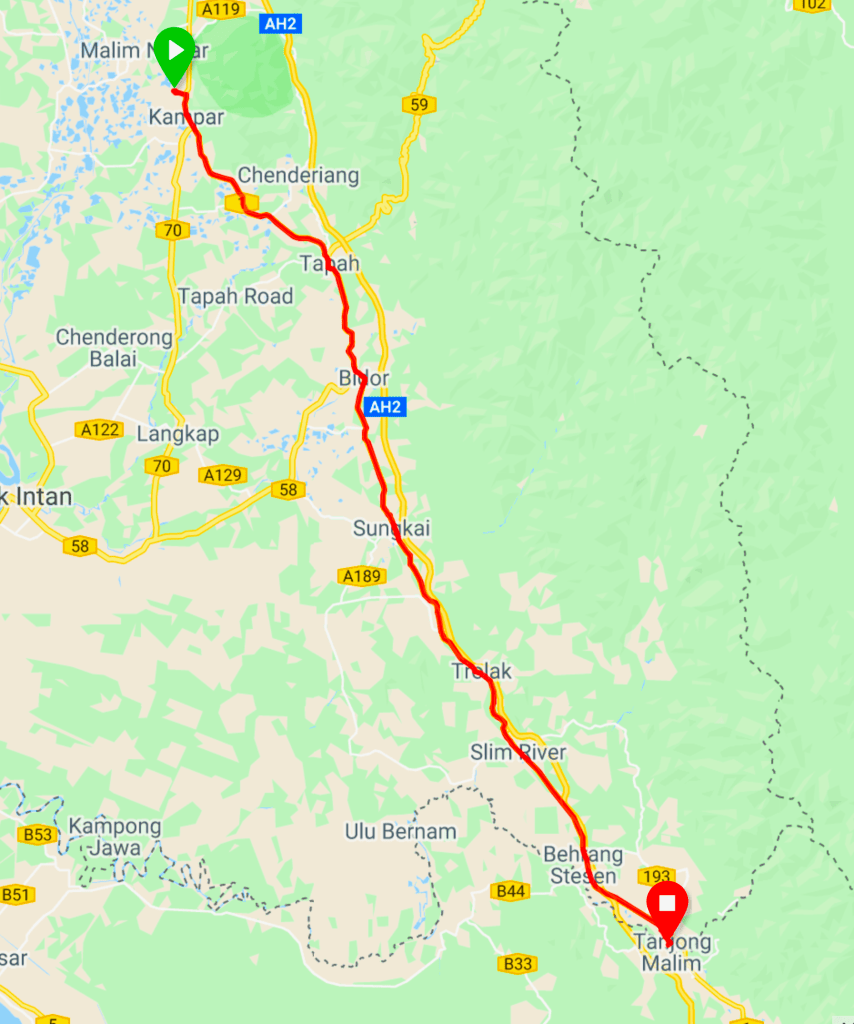
Map courtesy of Ride with GPS

It quickly got sunny and hot.

Photograph courtesy of HCP

We stopped at the PETRONAS station in Bidor to refill bottles. There was a staff training event there. One of the staff brought plastic chairs to us to sit on. That was very nice. We probably stayed for longer than we needed to because of those chairs.

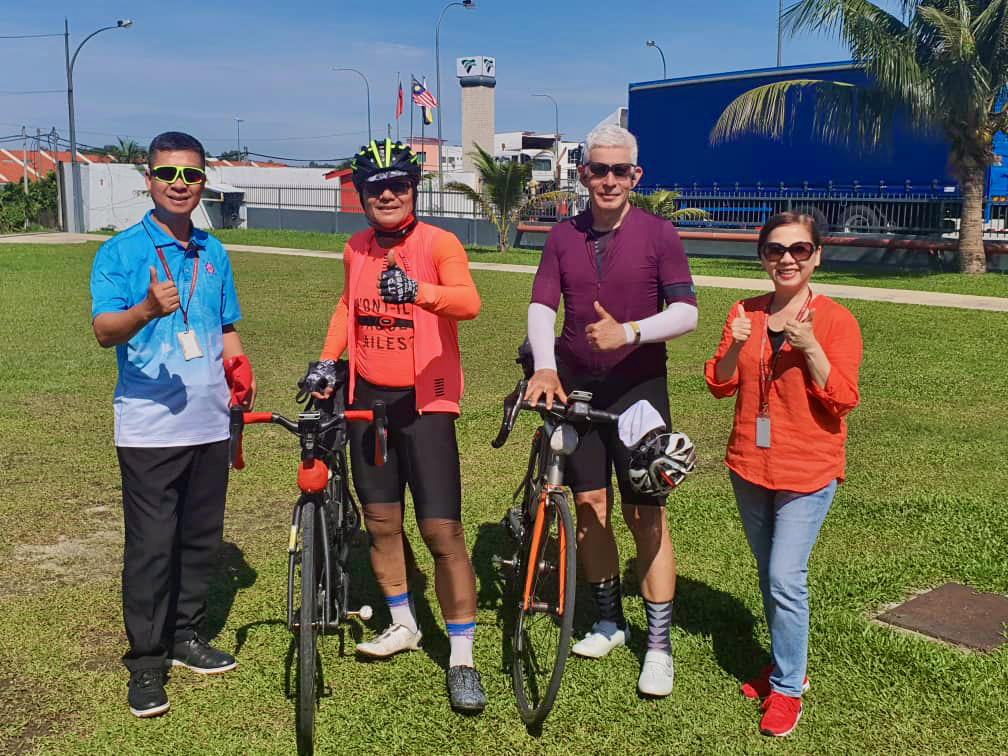
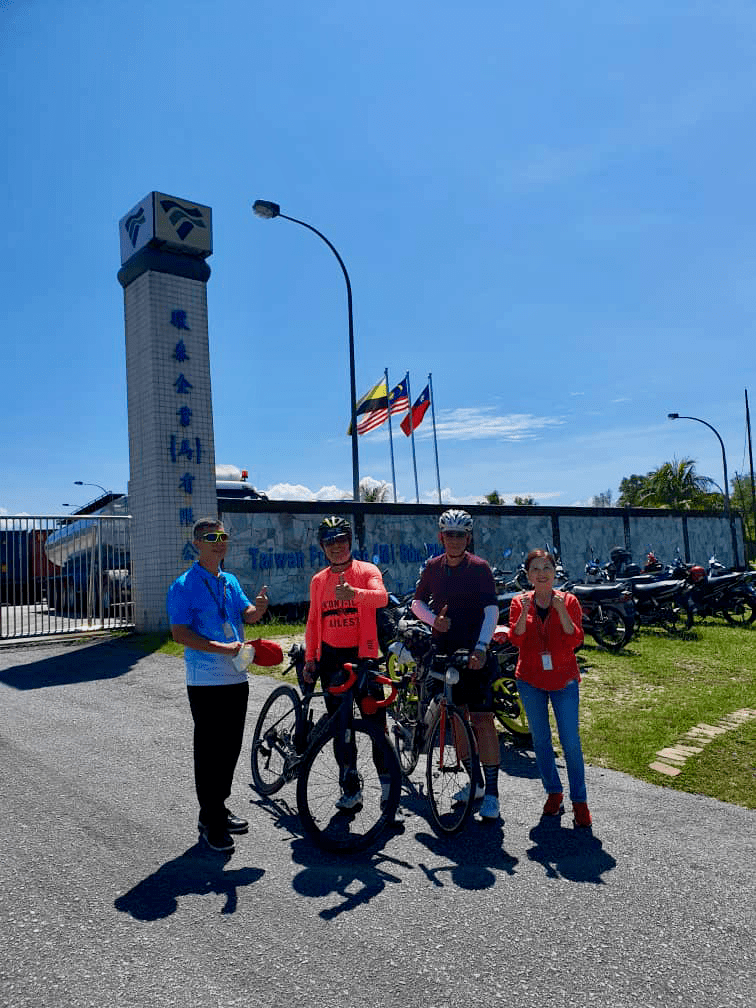
Our next stop was at Taiwan Fructose, just north of Sungkai. The R@SKLs may remember seeing that plant on the way up to Kampar and commenting about it to Pai. He knows the plant manager and his wife.

Photograph courtesy of HCP

We got a fascinating tour of the plant. Taiwan Fructose is one of two producers of fructose and maltose syrup in Malaysia. There is very little processed food and drink that does not contain fructose or maltose.

Photograph courtesy of HCP

We made one more stop at the PETRONAS station in Slim River. Having enjoyed sitting in chairs in Bidor, we borrowed stools from inside the Slim River station to sit on while we had our drinks.

23km later we were in the KFC at Tanjung Malim having lunch. We had plenty of time before the 2:55 pm train.

The rain started as we approached Rawang. Pai got off the train at the Segambut station.

Photograph courtesy of HCP

The rain stopped as I got to the Bank Negara station. A few kilometres later, I was at home. It was a safe ending to an epic trip to Penang and back.

Thank you R@SKLs for another most enjoyable Penang adventure.

Photograph courtesy of Mark Adriane at unsplash.com

Penang with the R@SKLs in 2020 – Day 5

Photograph courtesy of Keith Chan at unsplash.com

Some hardy souls were awake early to hike up Penang Hill.

Photograph courtesy of LY

Rain thwarted their plan to hike up and take the funicular train back down. I don’t think anyone minded aborting the hike and proceeding to breakfast instead.

All too soon it was time to pack for the trip back to KL. Bicycle storerooms at Tien Hotel.Residence and Tien Terrace emptied. Amy’s truck was loaded.

Photograph courtesy of ML
Photograph courtesy of AH

Everyone was on the road or in the air by mid-afternoon. Except for Pai, Zulfa and I. Zulfa’s (aka Biker Chick) flight was on Monday morning. Pai and I had the ride back to Tanjung Malim ahead of us.

Let no one say that the R@SKLs only eat while cycling.

Photograph courtesy of ML

Everyone got home safely, despite the weather in Kuala Lumpur.

Photograph courtesy of LY

Pai had a meeting that afternoon. Zulfa and I explored the Tien Terrace neighbourhood. She found reasons to come back to Tien Terrace.

I am sure all the R@SKLs who made this trip look forward to coming back to Penang for more.