Ride often enough, and you collect a set of preferred routes. Routes that you can navigate on auto-pilot. Here is a ride that my friends and I regularly make.
Map courtesy of ridewithgps.com
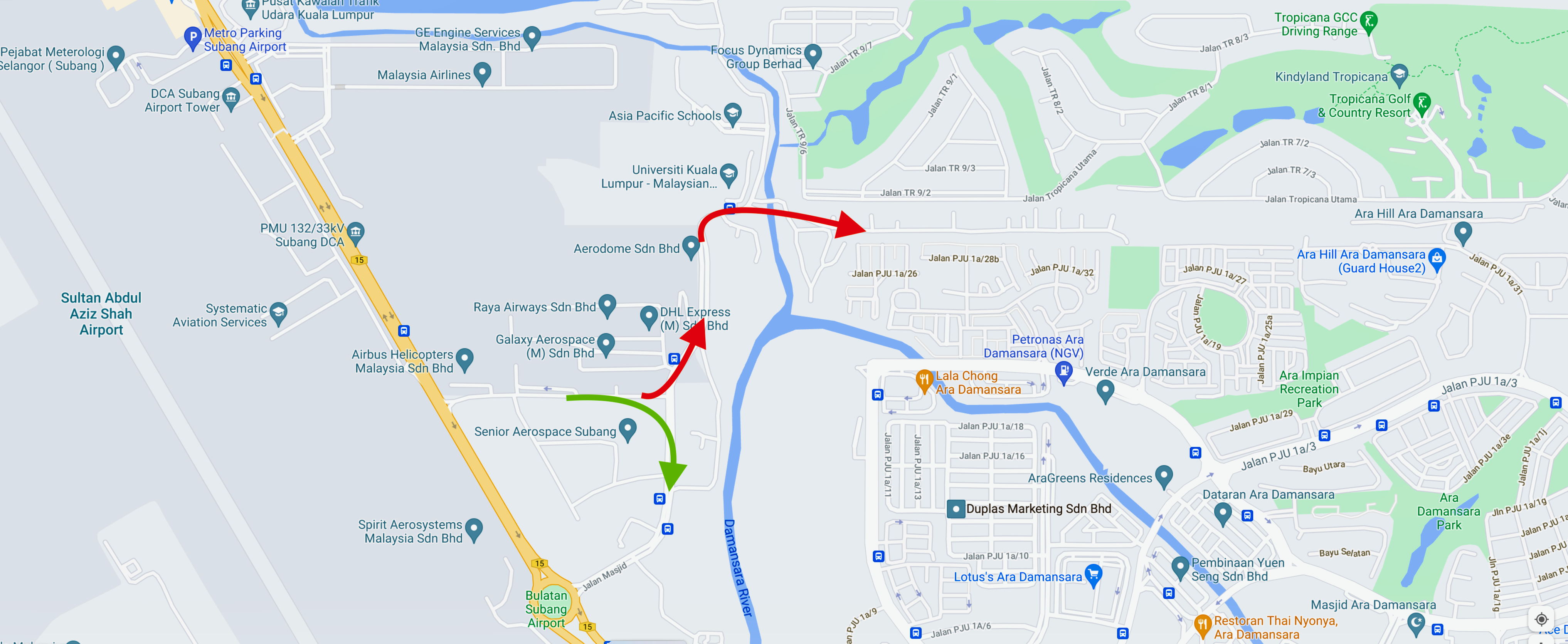
Occasionally we change things up a little by making diversions. For example, turning left off Jalan Lapangan Terbang Subang and riding the long way to the Subang Airport roundabout. Whenever we do this, we turn right at the T-junction to get back to the Subang Airport roundabout.
On our group ride yesterday I decided to turn left on Jalan Masjid instead. To see where the road would take us.
Map courtesy of google.com
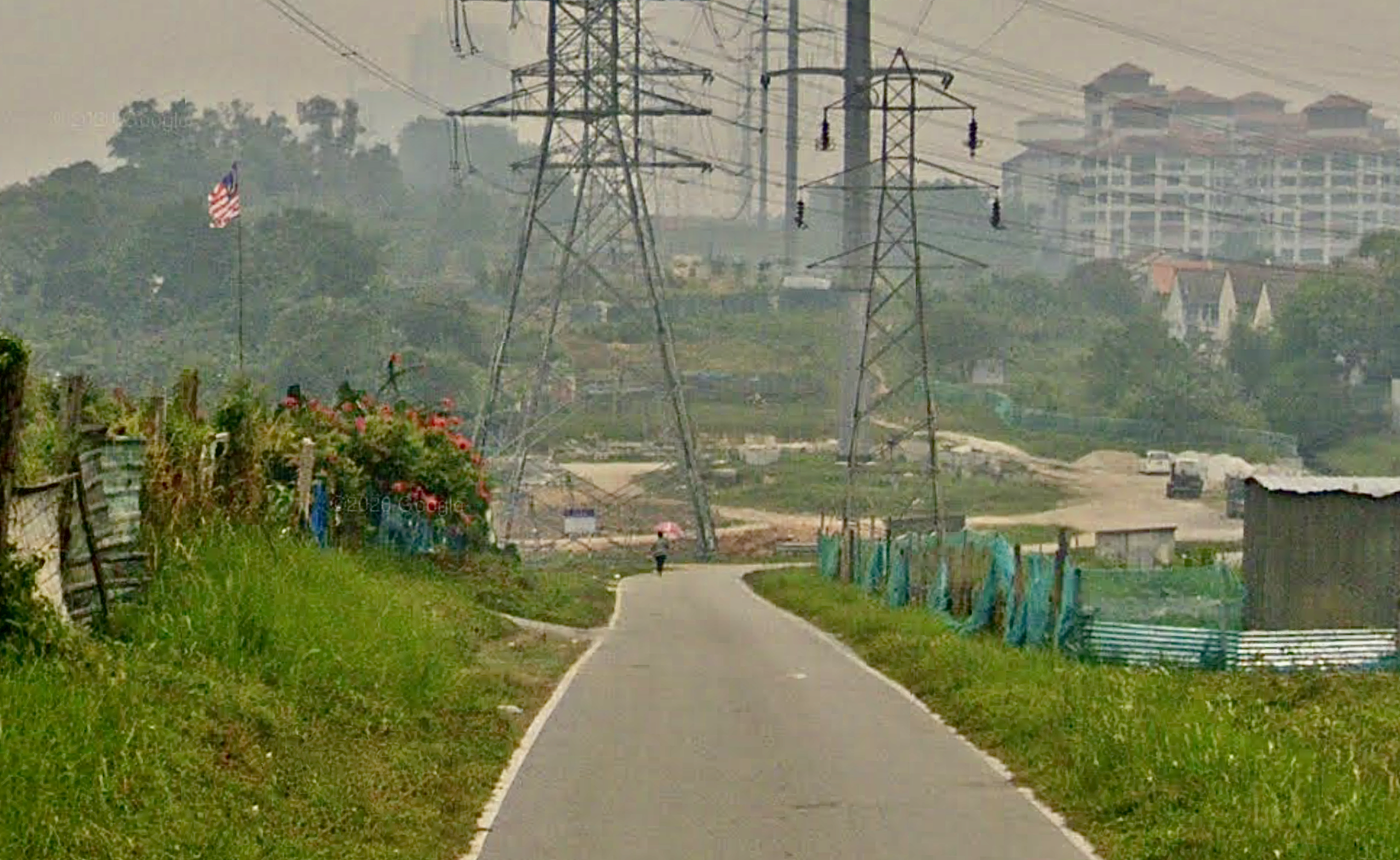
We had to turn right again at the Universiti Kuala Lumpur – Malaysian Institute of Aviation Technology. 1km later, the paved road became a mud track.
Photograph courtesy of google.com
Undeterred, I rode as far as I could on the mud trail. Which wasn’t very far. I started walking while the rest of the group watched me from the end of the paved road. 50 meters further on, a motorcyclist came toward me. The trail is too narrow to fit both of us side-to-side. He stopped so I could push my bike around his motorcycle.
Me: Does this track lead to a road?
Motorcyclist: Yes.
Me: How far is it to the road?
Motorcyclist: It is at the top of the hill.
Me (to myself): That doesn’t look very far.
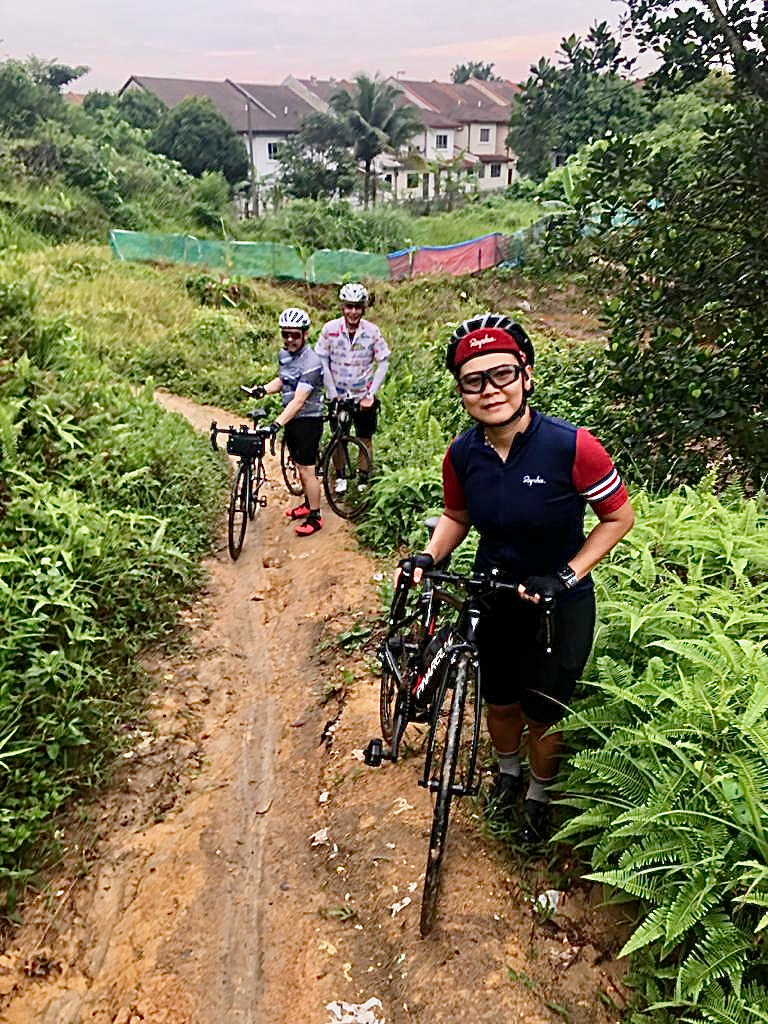
The motorcyclist rode on. I continued walking and one by one the rest of the group followed. I’m not sure that they wanted to follow me, but I give them credit for doing so.
Photograph courtesy of AL
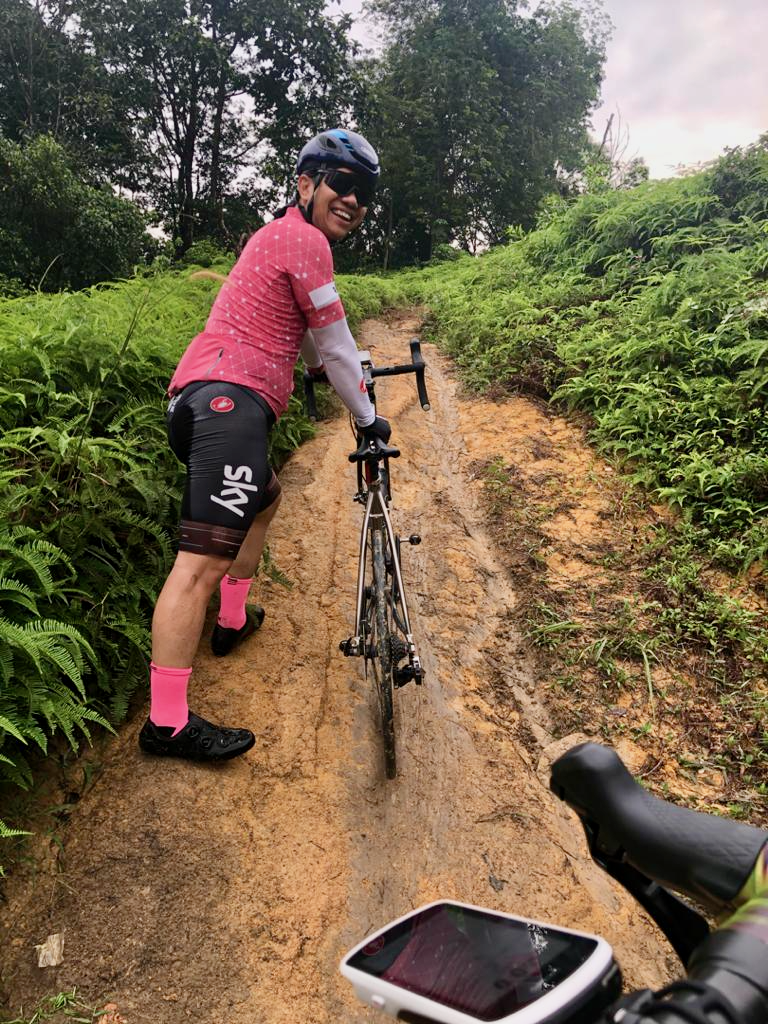
Well, the hill was further than it looked. The trail didn’t get any better as it turned upward.
Photograph courtesy of ALPhotograph courtesy of AL
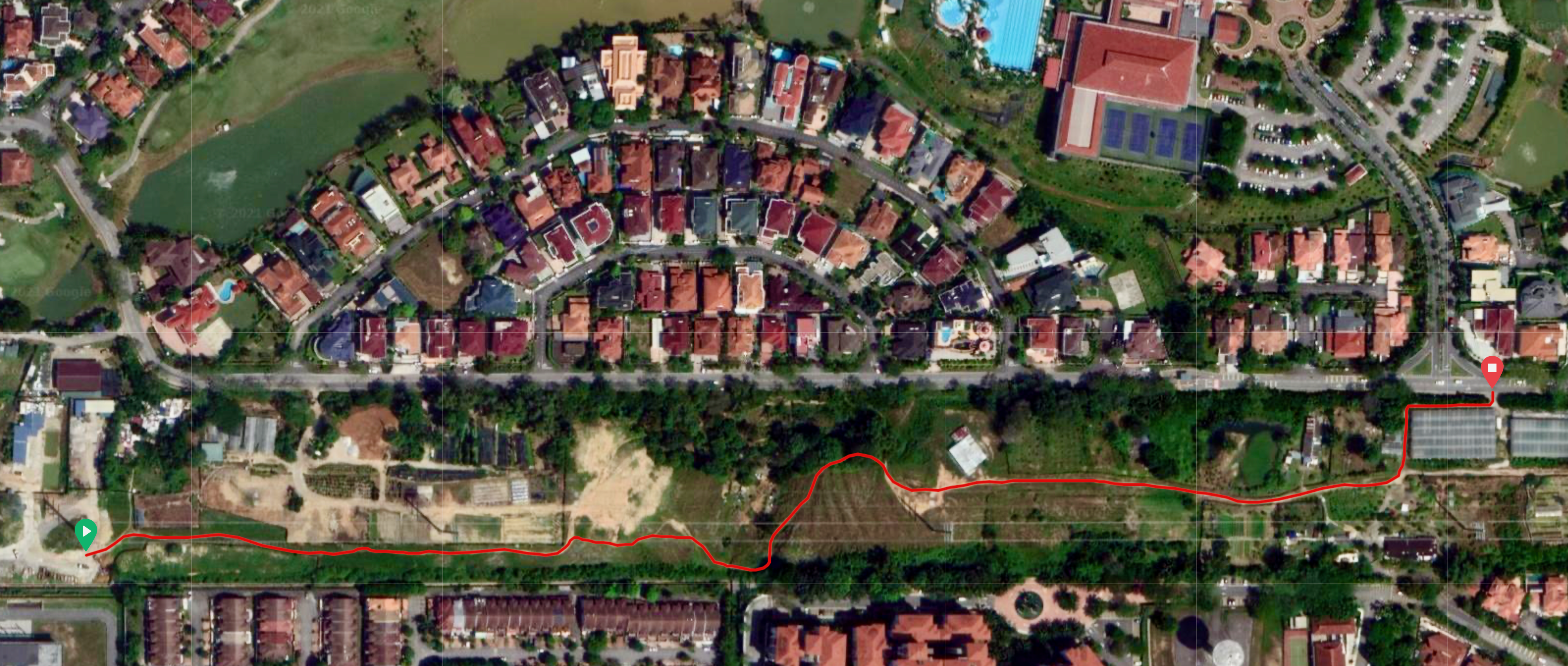
After 200 metres of clambering up the slippery slope, we got to the Sri Sakhti Durga Amman Temple at the top of the hill. As far as I can tell, the temple is accessible only via this track. We scraped the mud from our cleats and pedalled on along the now straight and flat trail.
Map courtesy of ridewithgps.com
200 metres later, Jake recognised the rear of the Tropicana Golf and Country Club nursery. We rode through the gate to the front of the nursery and Jalan Tropicana Utama.
Fortunately for the rest of us, Jake is familiar with the amenities at the Tropicana club. He led us straight to the golf buggy washing area. Where buggies can be washed, mud-packed cleats and bikes can be washed.
Photograph courtesy of JS
I think everyone enjoyed the bike hike. It was an experience. Now that I know where the left turn onto Jalan Masjid goes, I won’t be making that left turn again.
I fill my travel-restricted days by reading online newsletters and watching online documentaries and other programs. One of those shows is called Saved and Remade. People bring treasured but unused belongings to the Saved and Remade team, who reimagine and transform them into functional items.
In one segment a pile of swimming medals was transformed into fish-shaped wall display.
Wall Art courtesy of Elizabeth Knowles at bbc.com
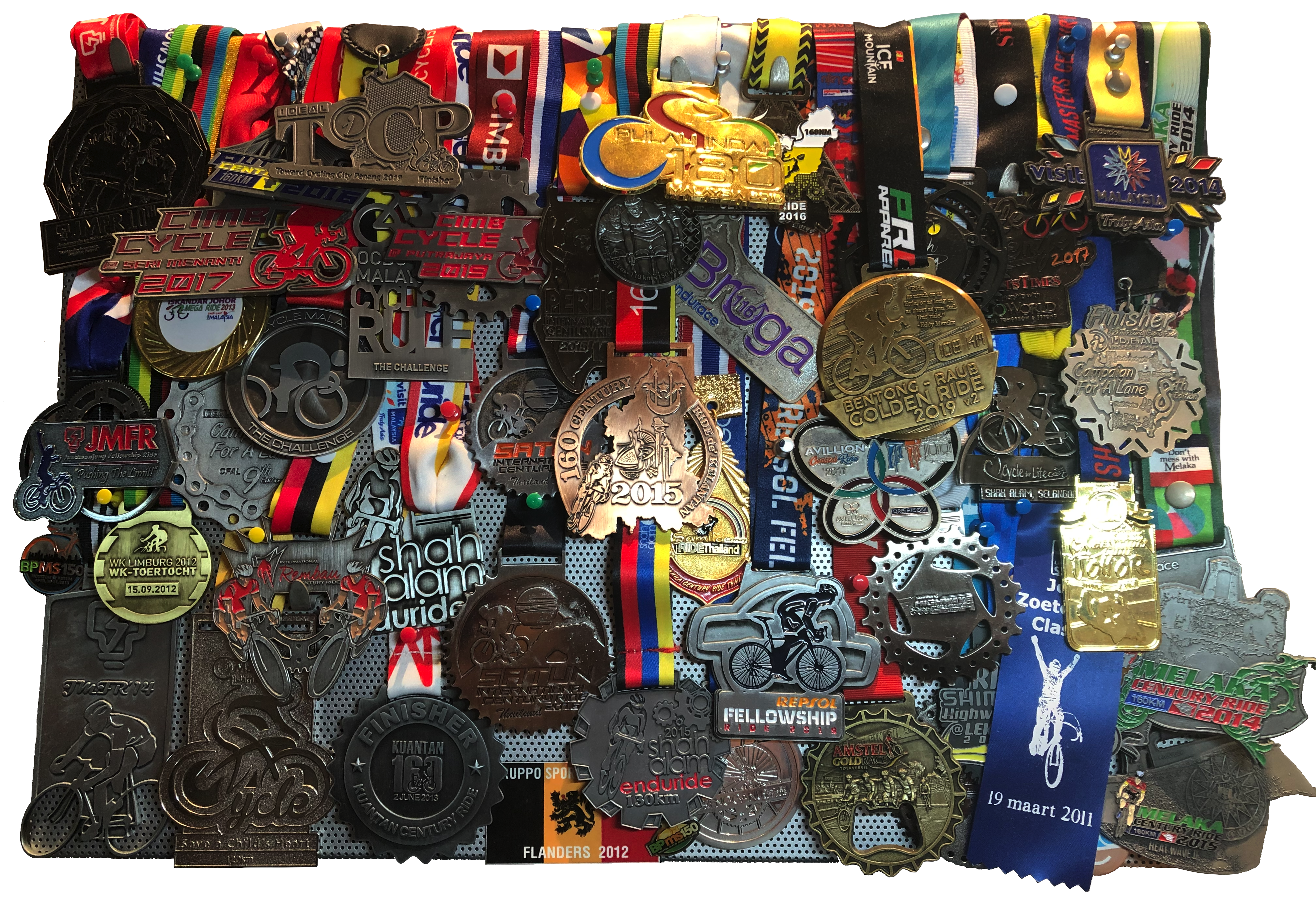
Some of these swimming medals are plain, while others look interesting. Seeing those medals made me look at the designs of the cycling medals in my collection.
Most are simple designs. The medals display the name of the event and incorporate a cyclist or a bicycle component in the design.
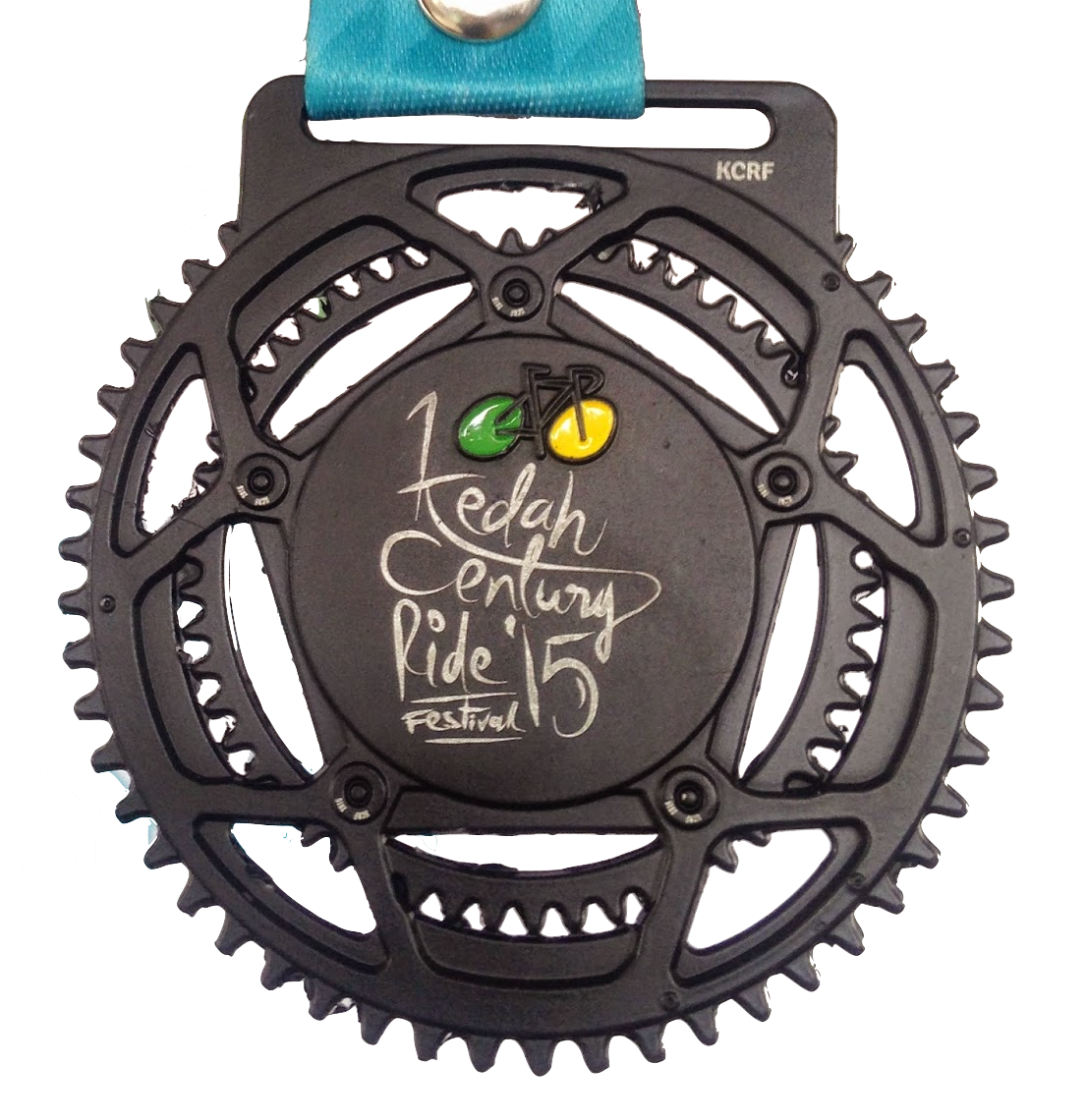
The 2015 Kedah Century medal mimics a bicycle chain ring.
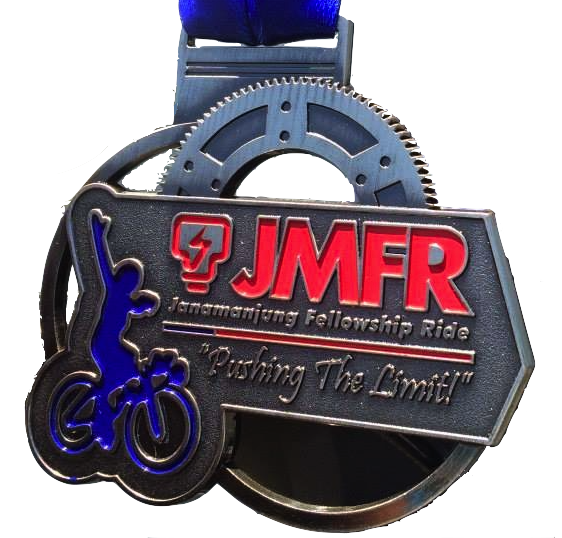
The medal from the 2015 Janamanjung Fellowship Ride includes a cyclist and a bicycle chain ring.
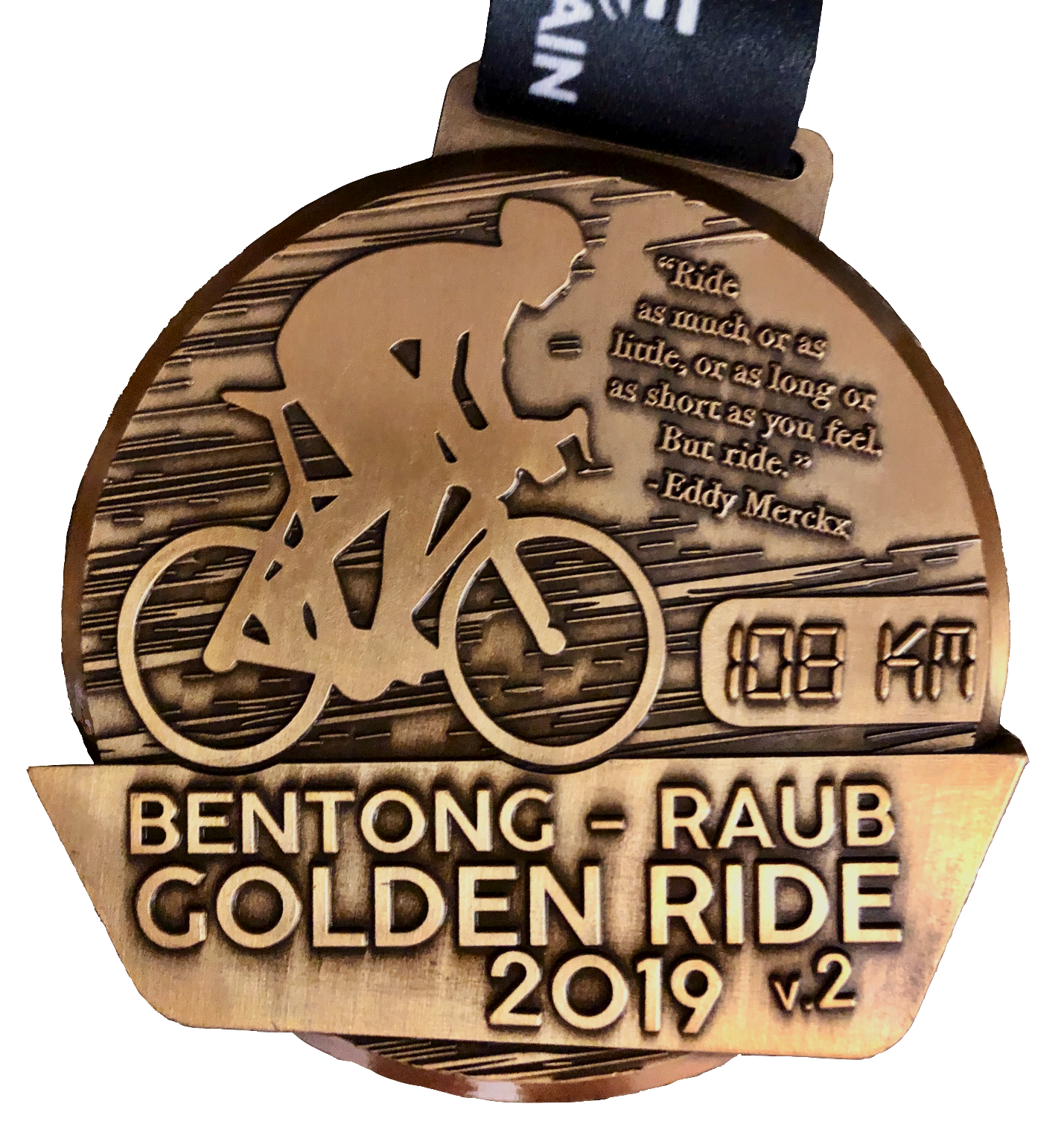
A bit more thought went into the design of the medal from the 2019 Bentong-Raub Golden Ride. Like many others, this one features a cyclist. But it also stands out because of the Eddy Merckx quote.
A few designers incorporated in their medals an element unique to the event. A simple motif is the logo of the event host. Here the Avillion logo provides shape and colour to the 2017 Avillion Coastal Ride medal.
Logo courtesy of avillionadmiralcove.com
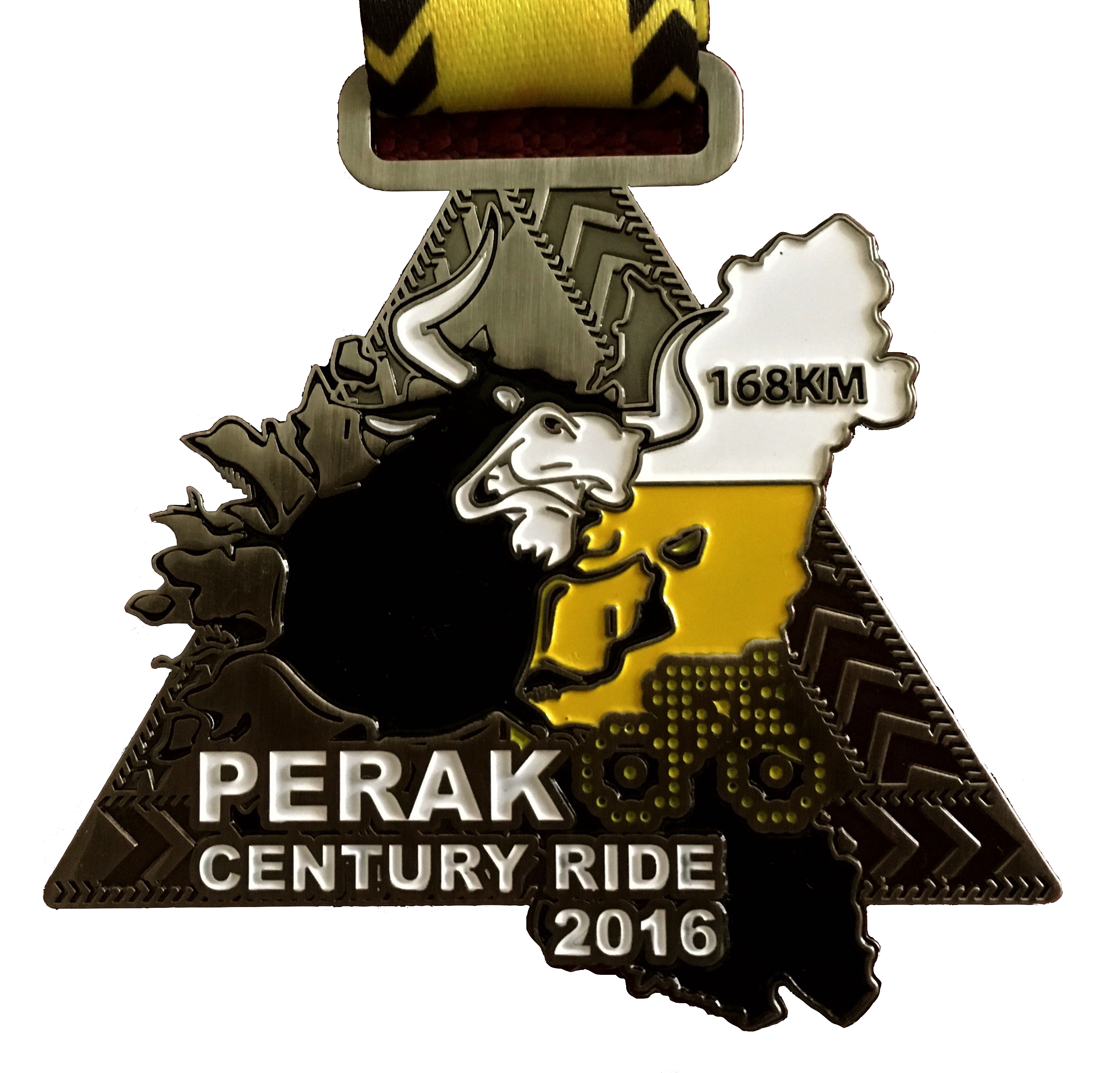
The designer of the medal for the 2016 Perak Century Ride must have been a soccer fan. That medal includes a Gaur or Seladang. The mascot of the Perak F.C. semi-professional soccer team. The design also has an outline of the state of Perak.
Photograph courtesy of zoochat.com
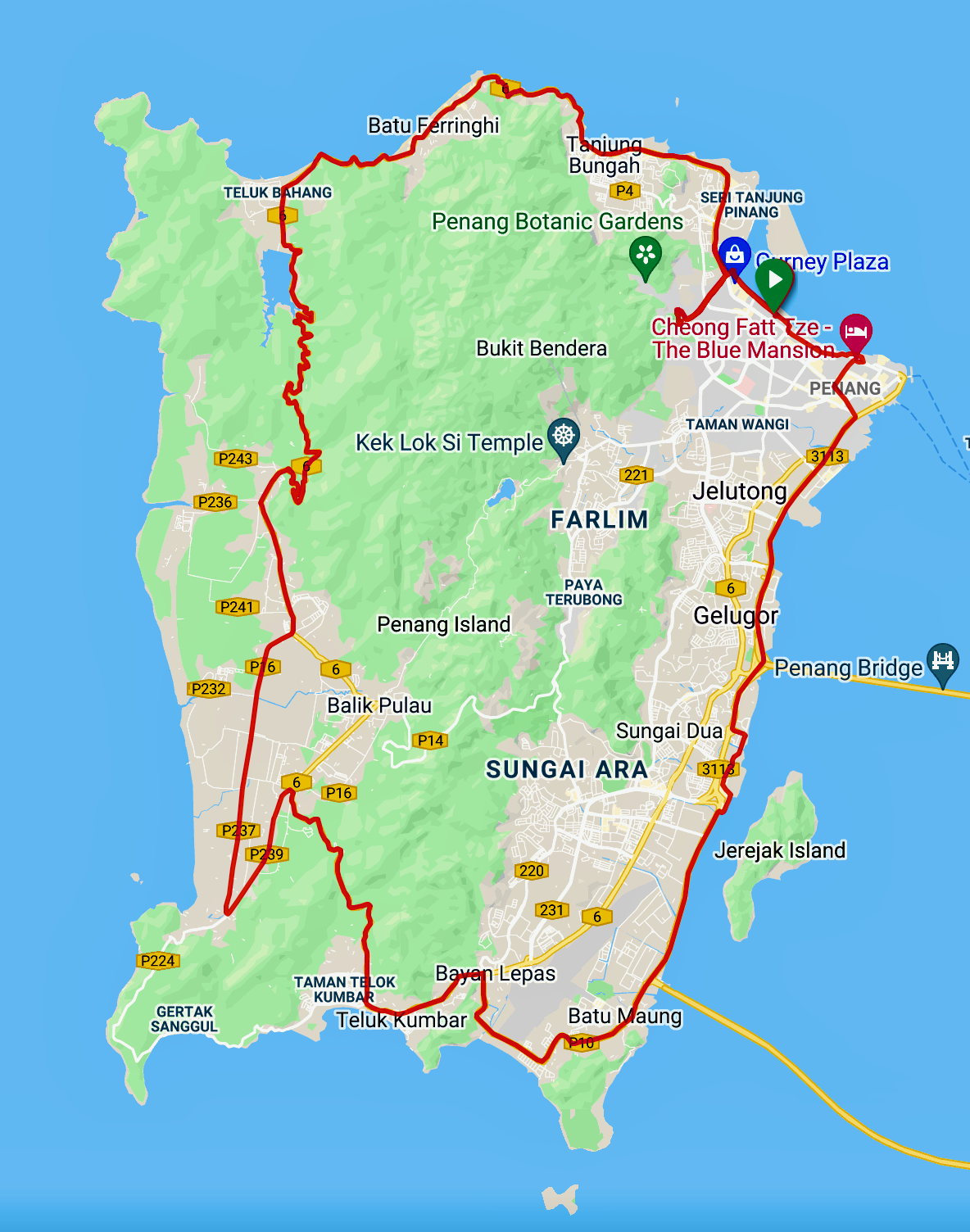
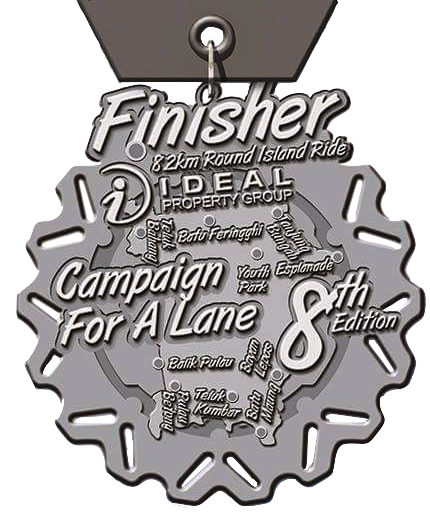
Another medal showing a geographical outline was handed out after the 2018 Campaign for a Lane ride. This medal has a map of Penang island that includes locations along the ride route.
Map courtesy of ridewithgps.com
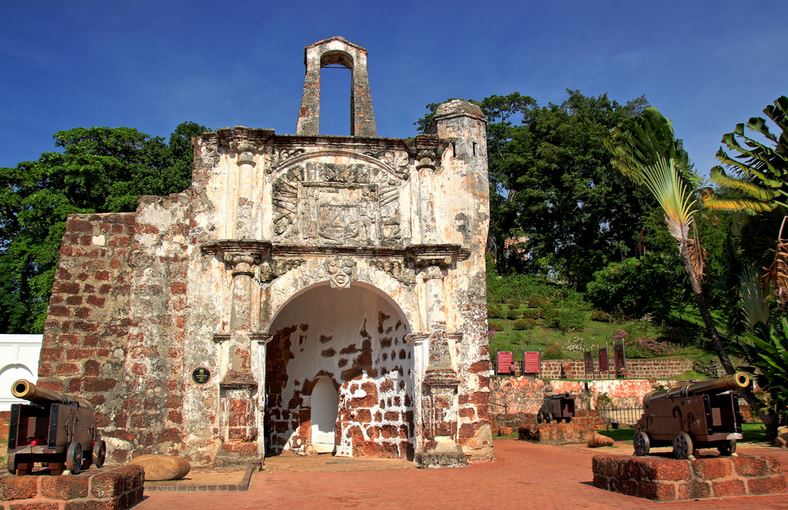
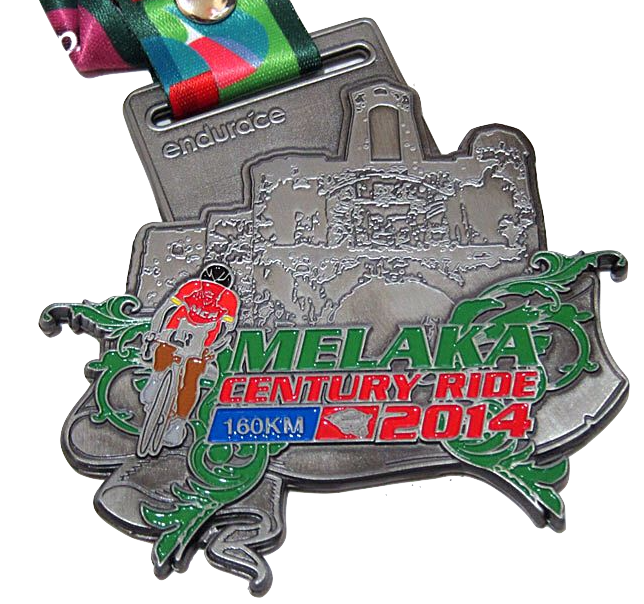
Two medal designs that incorporate cultural motifs come from the Melaka Century rides. The 2014 medal contains a depiction of the A’Famosa Fort. The Portuguese fort is a historical landmark in Melaka. It dates to 1512.
Photograph curtesy of juniechen.com
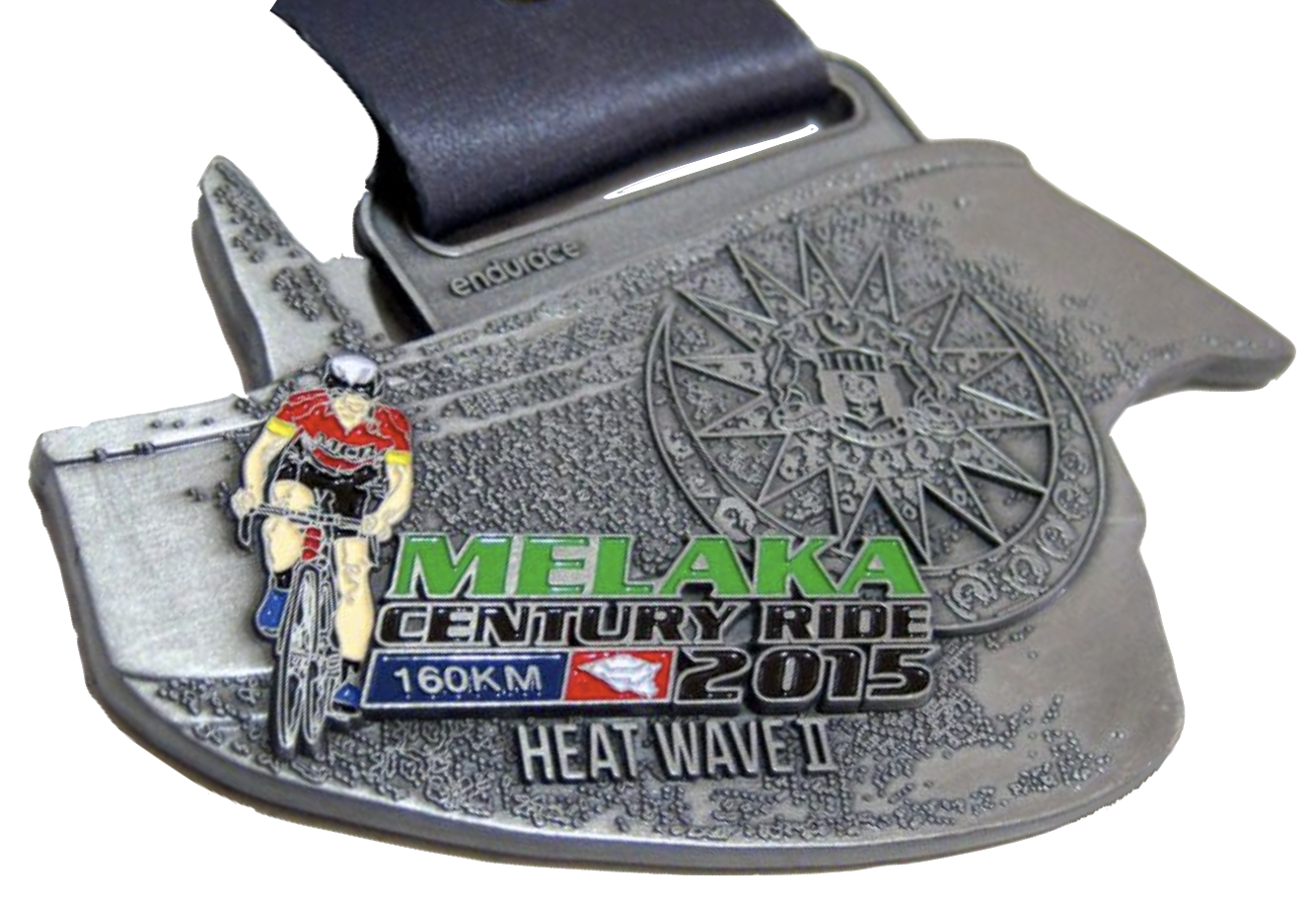
The 2015 Melaka Century Ride medal is in the shape of a Tengkolok. A tengkolok is the traditional Malay headgear that forms part of the formal regalia of the Agung (King) of Malaysia. The tengkolok is also part of the formal attire of Sultans and the Yang DiPertuan Besar, the monarchical state rulers.
Photograph courtesy of tengkolokwarisanyolasite.com
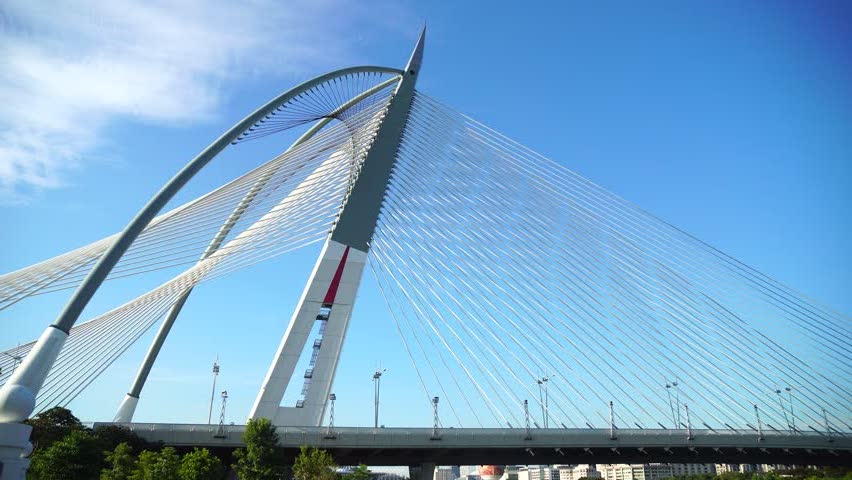
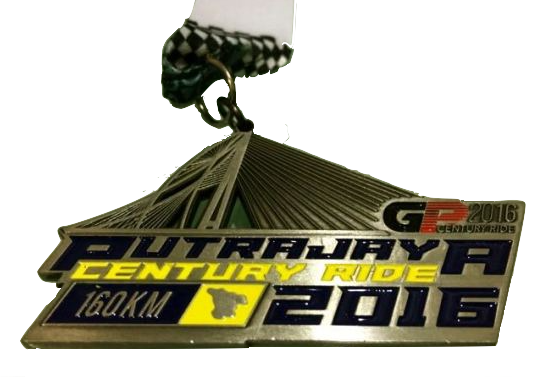
A more recent landmark to appear on a cycling medal is the Sri Wawasan Bridge. Putrajaya is the Federal administrative centre of Malaysia. It is a planned city built around a man-made lake. Eight bridges of different architecture cross Putrajaya Lake. The Sri Wawasan Bridge is a longitudinally asymmetric cable‐stayed box-girder bridge with an inverted-Y shape concrete/steel pylon 96 metres / 315 feet high. The main span is 165 metres / 541 feet long.
Photograph courtesy of shutterstock.com
Sponsor logos rarely feature on the cycling medals I have collected. The same is true of this medal, despite it being from the 2012 Amstel Gold Race sportive. Dutch beer brewer Amstel has served as the race’s title sponsor since its creation in 1966. This medal naturally carries the Amstel name. It also includes a group of cyclists crossing a finish line together. In a clever nod to the sponsor, this medal doubles as a bottle opener.
These rather plain medals display the logo of the Audax Club Parisien and part of a bicycle wheel. The Audax Club Parisien is the governing body for randonneuring worldwide.
The key differentiators are the colour of the medals and stripes. As well as the numerals. These medals were awarded to cyclists who had successfully completed an Audax ride of the stated distance. I earned 200km, 400km, 300km and one more 200km medals between 2016 and 2019.
Photograph courtesy of audax.ph
I included these medals because they reflect conscious design choices that are updated every four years. The design above was for 2015 to 2019. The 2020 to 2023 medals are below.
Photograph courtesy of wizbiker.com
Some design elements – the Audax Club Parisien logo, the colours of the medal and stripes and the text denoting the distance, and a bicycle wheel – have been kept. New elements are the round shape, a loop to hang the medal on a chain and the partial map of the world. I assume the inclusion of the map is recognition that randonneuring has become a global sport.
I have a 200km and a 300km medal from the latest series. I don’t see another 400km or a 600km or 1,000km medal in my future.
Cycling events in Malaysia became much less prevalent after one organiser absconded with the registration fees he had collected for a century ride in 2016. I picked up a few more participation medals in the following three years. And nothing since the COVID-19 restrictions on mass-participation events. It will be some time before I can look at new cycling medal designs.
Tempo Cyclist recently wrote a post about the issue of body weight in professional cycling and eRacing. He asks the question, “So in amateur cycling, is there an image problem around weight?”
I don’t see any concerns about body weight amongst the people with whom I ride. Then again, we aren’t competitive cyclists looking for our next PR or KOM.
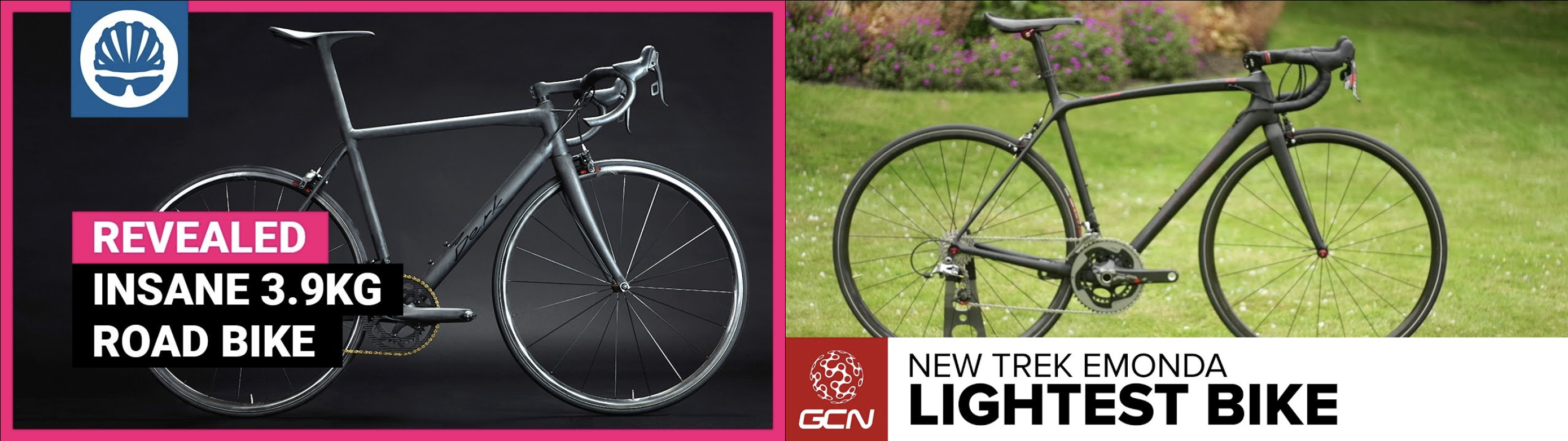
On the other hand, I do see a fixation with the weight of bicycles. Generally speaking, the lighter the frame or component, the better. A fixation that is common to cyclists around the world.
Photographs courtesy of bikeradar.com and globalcyclingnetwork.com
That reminded me of a bit of not particularly scientific research I did some time ago into the cost of reducing weight on your bike. I looked at the difference in weight and price between an alloy component, in this case, stems, bars and seat posts, and the equivalent carbon version.
In summary, I found each gram of reduced weight cost an additional MYR10 / USD2.42. On average, a carbon bar weighing 100 grams less than the equivalent model alloy version cost MYR1000 / USD242 more.
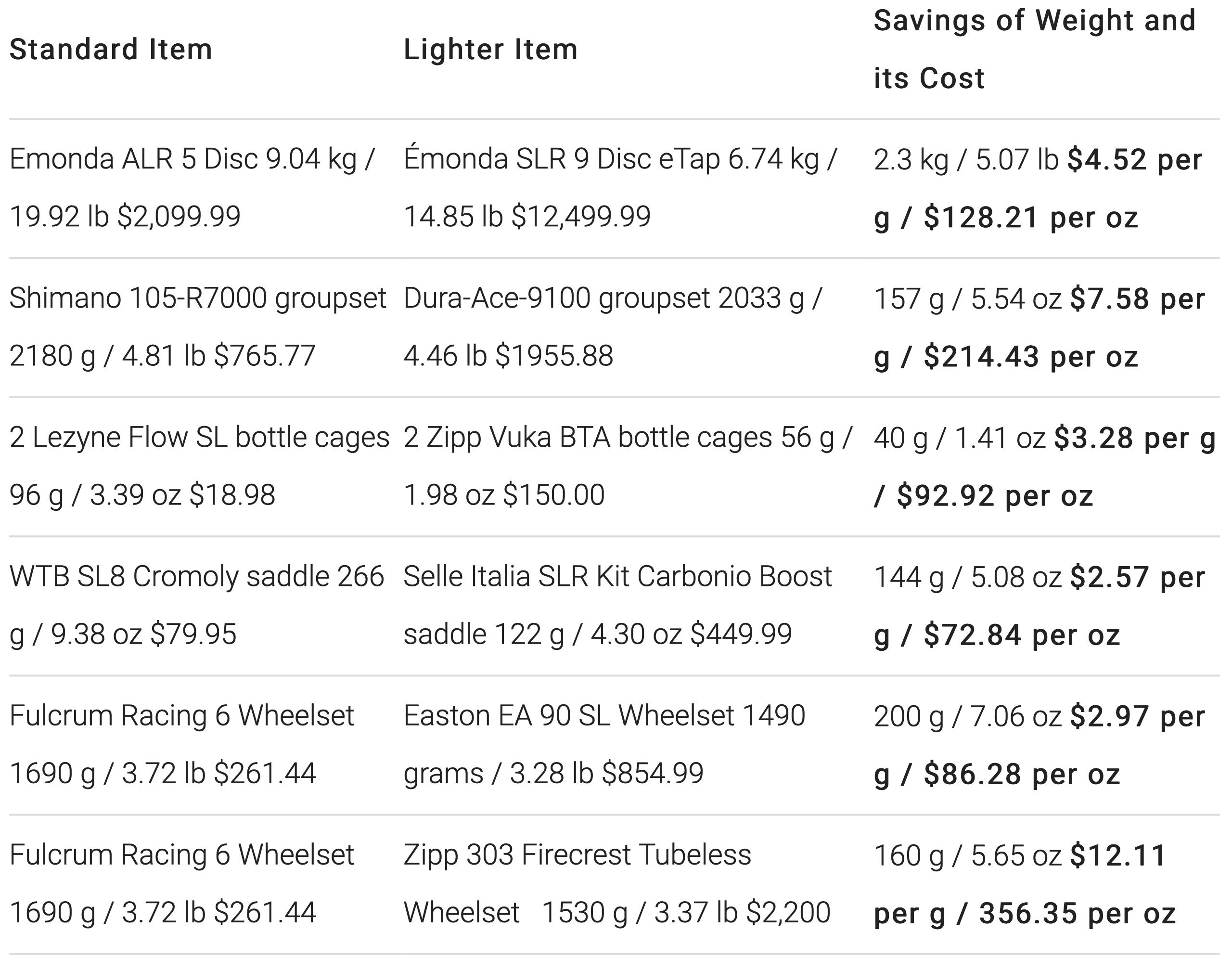
Coincidentally the latest issue of the Road Bike Rider newsletter has an article in it titled “How Much Does Bicycle Weight Matter?” In it, Kevin Kolodziejski presents a more thorough investigation of what it costs to reduce the weight of a bike. Kevin looked at websites like trek.com and competitivecyclist.com to compare the weight and price of “standard” items and their lighter equivalents. His findings are below.
Table courtesy of Kevin Kolodziejski
Kevin looked at a broader range of items than I did. His “all-in” review averages out to a premium of MYR22.69 / USD5.50 per gram of reduced weight (at prices as of 8th April 2021 and at current exchange rates).
He implies that there is little meaningful speed to be gained from the expense of reducing grams on your bike. With the exception of lighter wheels. Buying lightweight wheels is commonly accepted as the number one improvement you can make to your bike.
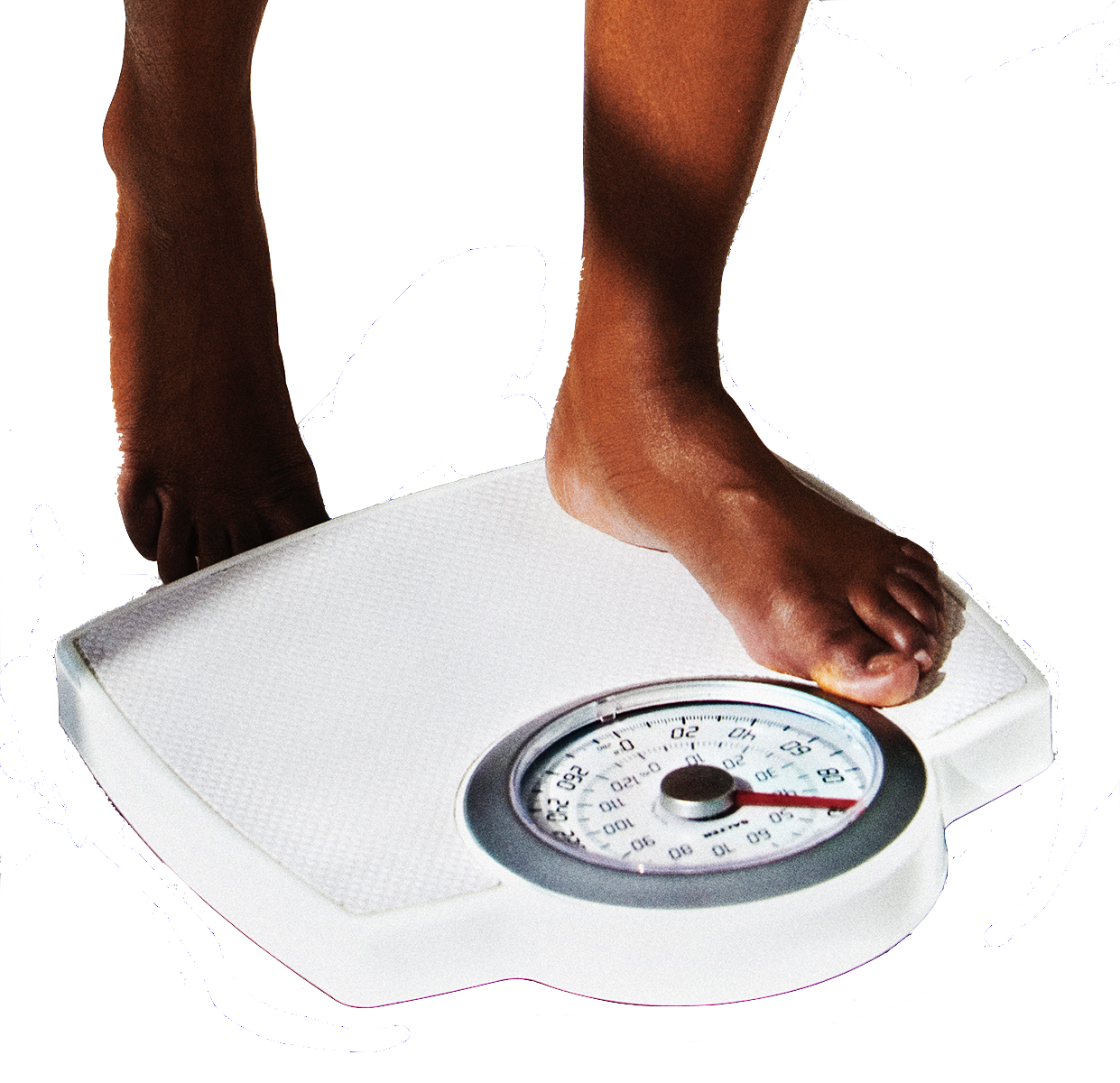
Kevin goes on to suggest more cost-effective ways of shedding weight on your bike. These include dieting. Taking one kilogram off your bike will cost between MYR10,000 – 22,690 / USD2,420 – 5,500 as per mine and Kevin’s data. Taking one kilogram off your body is free. In fact, you will save money by not buying so many of these.
Photograph courtesy of mcdonalds.com
I have to admit that buying a lightweight frame or component is much more fun than losing weight.
Graphics courtesy of someecards.com and shutterstock.com
Photograph courtesy of Martin Jernberg at unsplash.com
Mount Everest is 8,848.86 metres (29,028.87 feet) high. As of 8th December 2020 anyway. The day China and Nepal jointly announced the newly-agreed height of the world’s mightiest peak.
The verb Everesting refers to an activity where a cyclist climbs a cumulative total of 8,848 metres. It was thought George Mallory made the first Everesting attempt in 1994. That George is the grandson of George Mallory, who disappeared on Everest in 1924.
Inspired by the Mallory story, Andy van Bergen founded Hells 500, the creators and custodians of the Everesting concept. Incidentally, Andy and George are friends.
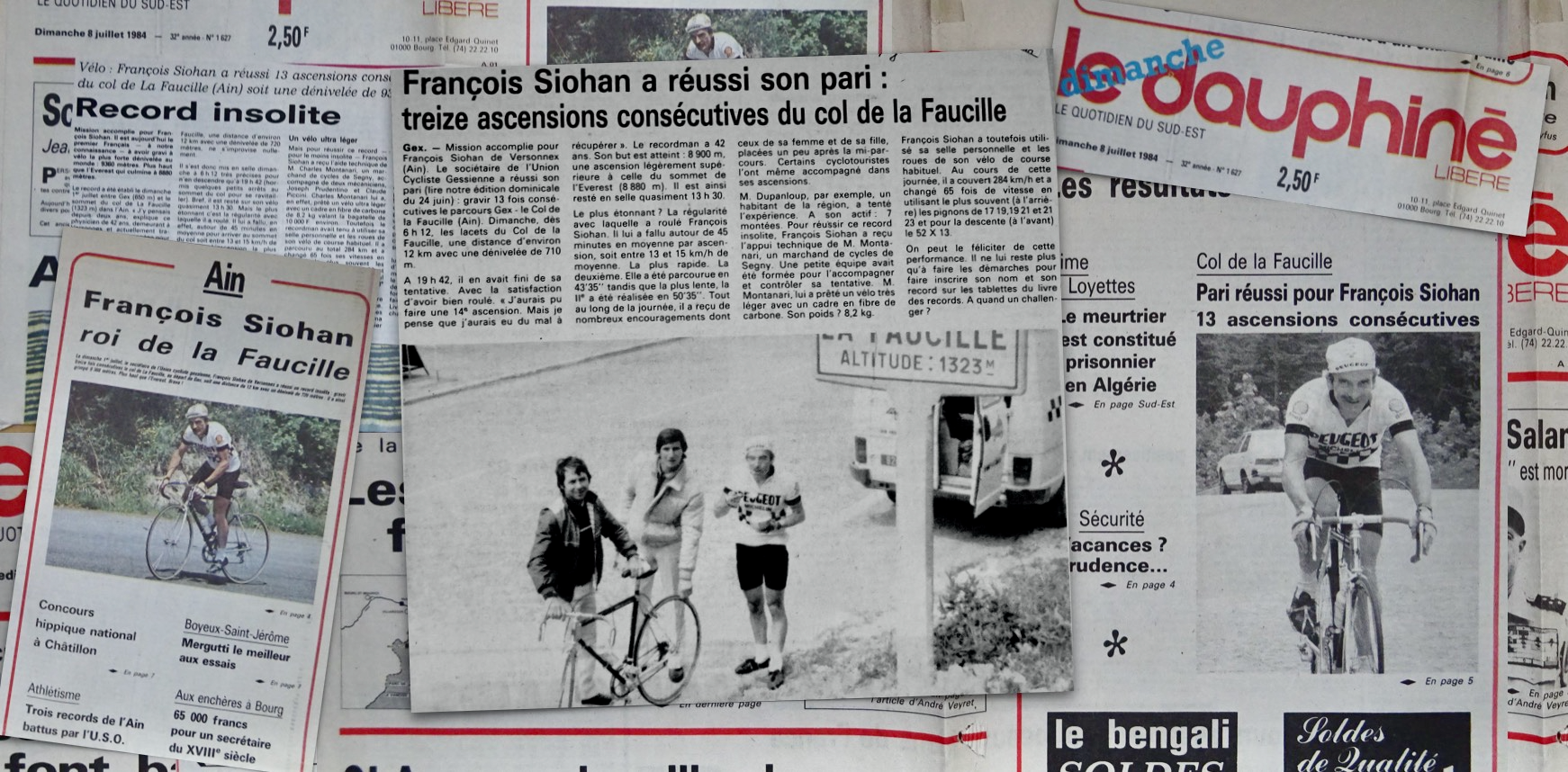
In June 2020, Andy received an email from Francois Siohan with evidence that he had Everested on 1st July 1984. The first Everesting is now acknowledged to have happened a decade before George Mallory did it.
Photograph courtesy of everesting.cc
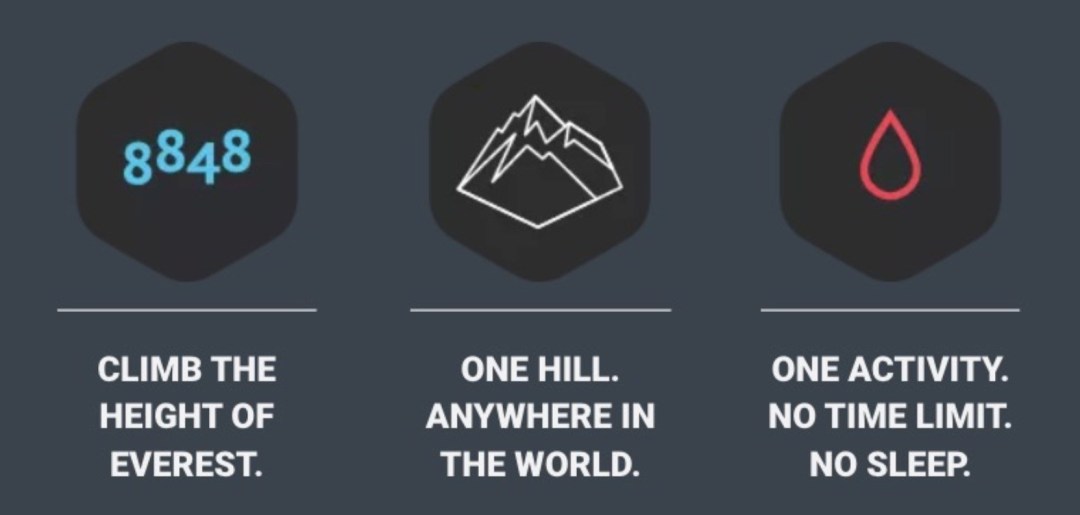
The rules of Everesting are simple.
Graphic courtesy of everesting.cc
An explanation of the rules and other information are available at everesting.cc
According to the Everesting Hall of Fame, there was only one successful Everesting between George Mallory’s in November 1994 and Carlo Gironi’s in July 2012. Klaas Veenbaas did it in June 2009.
Five cyclists completed this challenge in 2012. Ten did it the following year. Andy and the Hells 500 crew organised a group assault in 2014. Of the one hundred and twenty riders invited, thirty-three completed the challenge.
Since then, the popularity, if one can call it that, of Everesting has exploded. To date, 10,410 cyclists have Everested. 4,729 other riders have climbed at least the height of Everest on a trainer. On the home front, 151 Malaysians have Everested since August 2019.
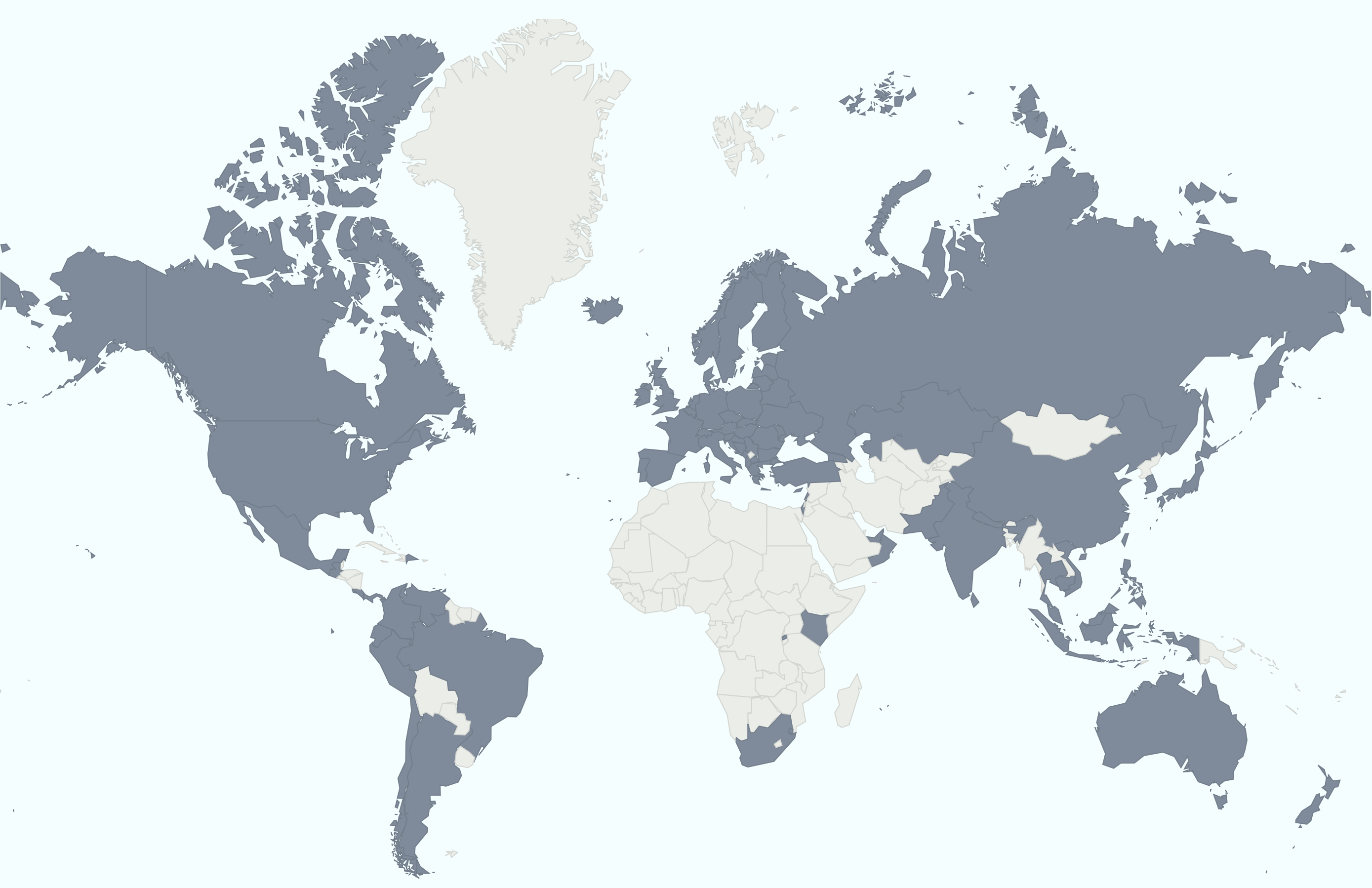
104 countries have at least one person who has Everested.
Map courtesy of everesting.cc
The number of hours it takes the average cyclist to climb 8,848 metres can reach into the twenties and beyond. Professional and elite cyclists do it in much less time.
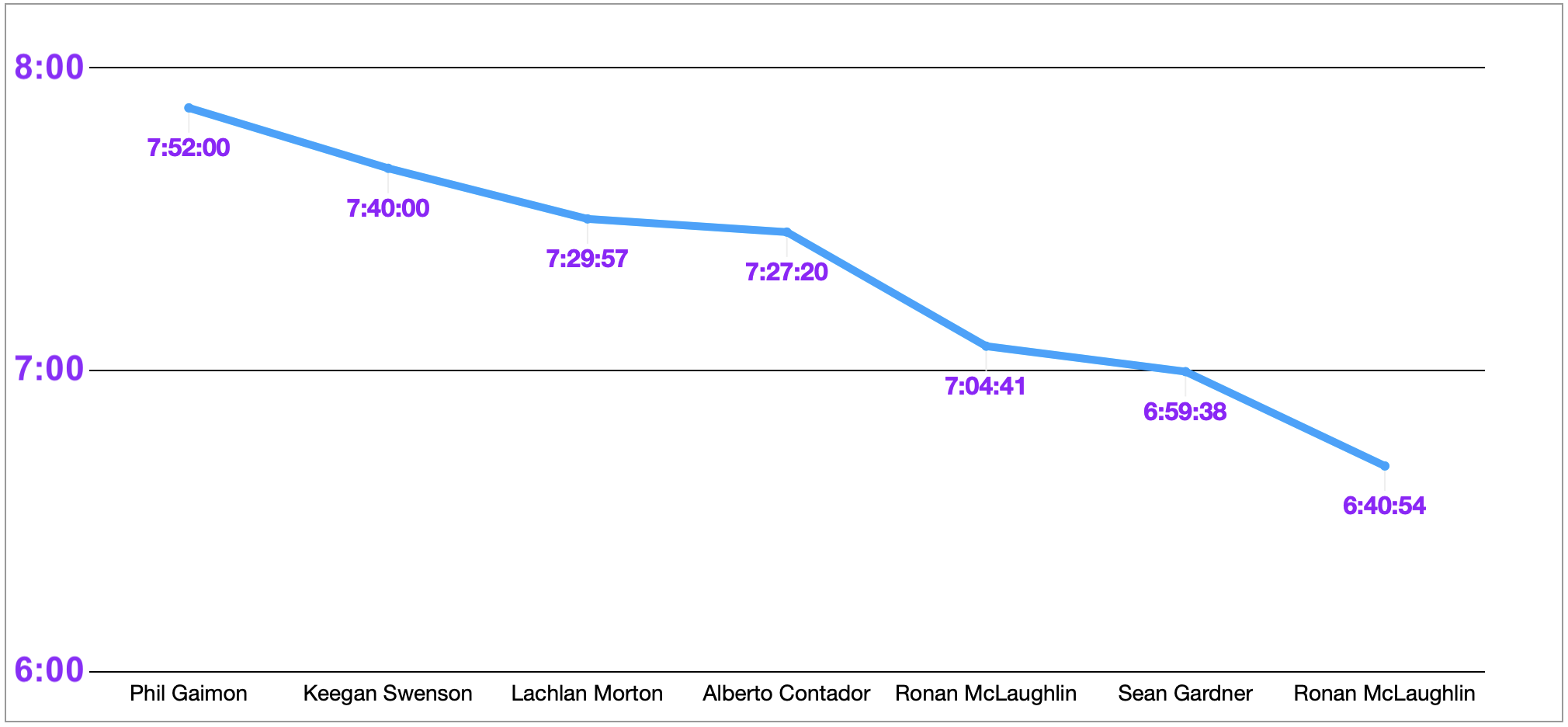
The chart below shows the evolution of the women’s world Everesting record from Alice Thomson’s 12 hours 32 minutes in 2018 to current record holder Emma Pooley’s 8 hours 53 minutes in July 2020.
Women’s Everesting World Record Progression
This is Emma Pooley during her world record ride.
Photograph courtesy of cyclingtips.com
The women’s world record fell 1 hour 8 minutes in five months last year.
This is the men’s chart.
Men’s Everesting World Record Progression
Lachlan Morton thought he had set a new world record in June 2020, only to have his attempt nullified due to bad elevation data. So he went out six days later and set a legal world Everesting record.
I rode with Lachlan in 2015. He looked like a potential Everesting world record holder.
Photograph courtesy of Kevin Batchelor
This is Lachlan during his world record ride.
Photograph courtesy of cyclingtips.com
The current record is held by Ronan McLaughlin. Ronan reclaimed the world record eight months after losing it to Sean Gardner.
Ronan did 78 laps of this almost dead-straight 810-metre section of road that pitches up at a punishing average gradient of 14.2%.
The men’s record has fallen 1 hour 11 minutes in less than a year. 6 hours 40 minutes is a phenomenal time in which to climb 8,848 metres. No doubt someone will come along and do it faster.
I won’t be earning one of these Everesting achievement badges. I have too much mass in my ass.
Graphic courtesy of everesting.cc
Here is a closing thought. Mount Everest is getting 2 centimetres higher every year. Will the record book have to be rewritten when Nepal and China announce that the mountain’s new height is 8,849 metres?
Bukit Hantu is probably the most challenging hill in Hulu Langat. Especially if you tackle it from west to east. The ascent is about 3.4 km with an average gradient of 7% and maximum gradients over 10%. The descent is shorter at 2.6 km. That descent comes with a tricky combination of turns in the final 500 metres, where the gradient approaches 10%.
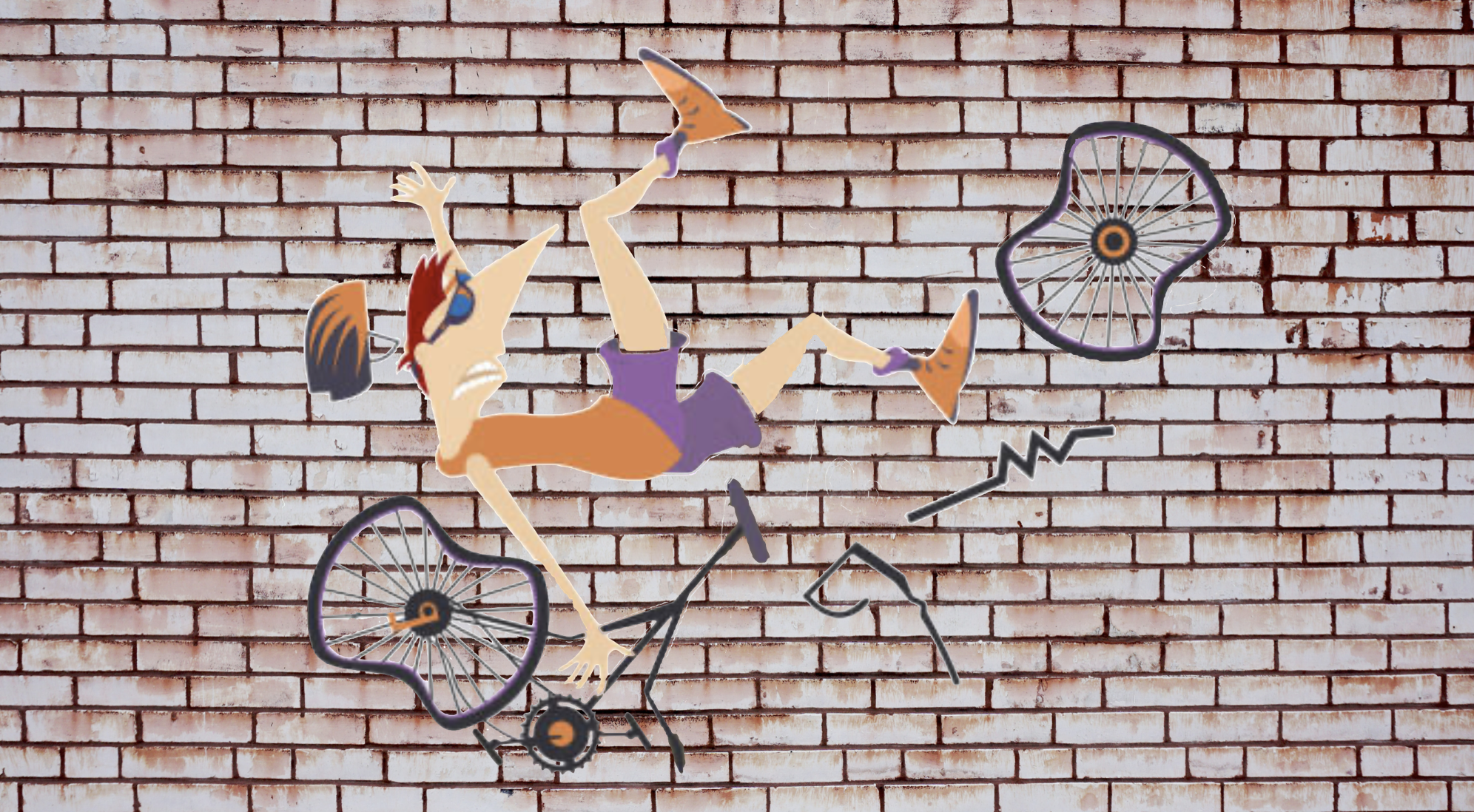
Unsurprisingly, some cyclists come to grief on the final curve and end up off the road to the right. That has happened a few times, just in the past week or so.
Map courtesy of Ride With GPS
Thinking about those crashes prompted me to research the forces acting on a bicycle while cornering. I found a very informative site: physicalcycling.com.
The site takes a deep dive into circular motion, centripetal and centrifugal forces, lean angles and the like. Interested in finding out more about F = mAc = mv2/R? This is the site for you.
The following simplified version is taken from the many pages of information about cornering on the physicalcycling.com website.
Graphic courtesy of adventurecycling.org
From Newton’s Laws, we know the inertial tendency of an object is to continue forward in a straight line (the blue arrow) unless acted upon by external forces. So a cyclist must apply a force to the bicycle to make it turn. The force making the bicycle deviate from its straight-line path to a curved path (the red arrow) is called the Centripetal Force (the green arrow).
Graphic courtesy of physicalcycling.com
The only part of the bicycle touching the ground are the tires. So when you turn your bar, the tires are not only rolling but also “biting” into the road.
This is what is causing you to turn. As your tires continue to roll through the turn, they resist the tendency to slide or skid. You can aggressively turn as much as you want as long as the force on the tires is not enough to cause them to slide out from under you.
The chart below shows the force on the tires, known as Cornering Centripetal Force, for various corner radii and speeds.
Table 1: Cornering Centripetal Force in Newtons
Table courtesy of Reagan Zogby
The data above assumes an elite cyclist weighing 68 kg and riding a bicycle weighing 7.25 kg. Green implies the tire force is approximately the combined weight of the rider and bicycle or less. A corner with a radius of 7.5 metres can be safely taken up to 32 kph.
Yellow is in the double range. Taking a 7.5-metre radius turn at 40 kph will test the limits of what the tires can handle.
Red is in the No Go range. Taking a 7.5-metre radius turn at 48 kph or faster guarantees a skid and a crash.
When cyclists take a corner, they encounter a force that tries to return the bicycle to straight-line movement. This force is often referred to as the Centrifugal Force. To counter centrifugal force, cyclists lean into the inside of the curve. This creates a counterbalancing torque to that of the centrifugal force and the lean “balances” out the bicycle’s inertial tendency to want to continue in a straight line.
Graphic courtesy of physical cycling.com
The cyclist instinctively searches for the right amount lean, or lean angle, depending on their mass and speed, and the radius of the curve.
It turns out the amount of weight pushing down on the tires decreases as the lean angle increases. As the weight on the tires decreases, the less traction the tires have. This limits the possible turning scenarios.
The table below shows the lean angle limits for various corner radii and speeds.
Table 2: Lean Angle
Chart courtesy of Reagan Zogby
Green denotes safe lean angles. Yellow lean angles test the limits of tire traction. Unsafe lean angles are red.
In summary, the limiting factor in taking a corner successfully on a bicycle is how well your tires grip the road. Go into a corner too fast, or lean too much, and your tires will lose their traction, and you will skid. Paradoxically, both too much weight on the tires and too little weight on the tires will cause a skid.
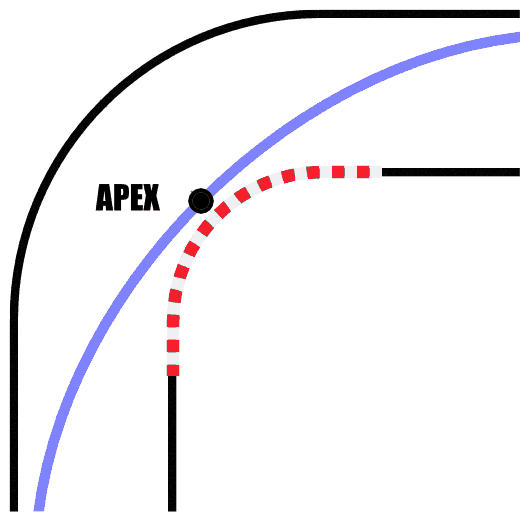
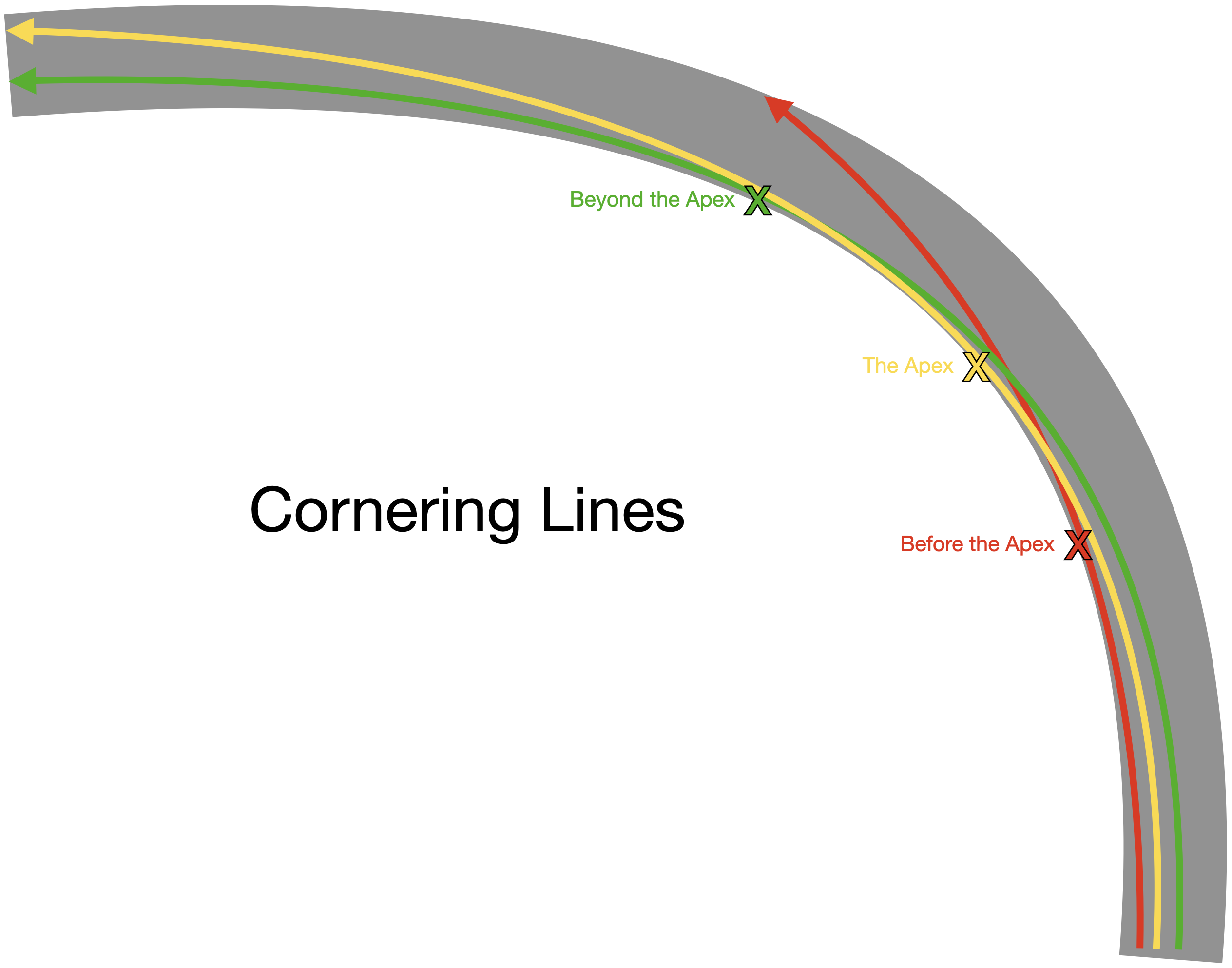
Another factor that may contribute to crashes on corners is the cornering line. The cornering line is the path taken around a particular curve. For any given corner, there is an infinite number of possible cornering lines. There is also an infinite number of possible cornering lines which do not make the curve. The apex refers to the “peak” of the cornering line located at the centre of the corner.
Graphic courtesy of drivingfast.net
Three cornering lines are shown in the diagram below. The red cornering line shows what happens when you turn in to a corner too early. The cornering line hits the inside of the turn before the apex. The radius of the cornering line is larger than the radius of the corner. The result is the rider ends up off the road at the outside of the curve. This is not good.
The yellow cornering line hits the apex. But the radius of the cornering line exceeds the radius of the turn. The ride stays on the road while making the turn but ends up on the wrong side of the road. Also not good.
The green cornering line hits the inside of the turn beyond the apex. Note that this cornering line starts in the middle of the road. This cornering line allows an exit from the turn on the correct side of the road. The cornering line also has a radius slightly larger than the radius of the road.
Getting cornering centripetal force, lean angle and cornering line right do not guarantee a successful turn. Road condition is important. The grippiest road type is paved, smooth and clear of sand, gravel and other debris. Debris on the road reduces tire traction.
Braking during a turn also reduces tire traction by adding additional Cornering Centripetal Force to the tires. If your speed and the turn radius put your Cornering Centripetal Force in the yellow zone shown in Table 1 above, braking will move you into the red zone.
Braking during a turn will cause your bicycle to be more upright. As we saw in the discussion about lean angle, this will reduce the counterbalancing torque against Centrifugal Force. The bike will straighten out rather than continue to follow the cornering line.
The road surface on the final section of the Bukit Hantu descent is good. The combination of too much speed, the wrong cornering line, and perhaps altering the lean angle either consciously or by braking has to be the reason for the crashes.
Cyclists cannot exceed the limits of cornering physics. Not if they want to
Some years ago I wrote a blog post about the importance of pacing during long rides. How cycling too hard at the start of an endurance event leads to a feeling of fatigue, light-headedness, tunnel vision, and confusion. In other words, a bonk.
I hear “bonk” being used to describe muscular tiredness. A bonk is more than that. Runners refer to “hitting the wall.” In German, this is known as “Der mann mit dem hammer.” Likening the sudden drop in performance to being hit with a hammer.
Graphic courtesy of clipart-library.com
A hallmark of bonking is a sudden and overwhelming feeling of running out of energy. This happens when you have exhausted your body’s glycogen stores, leaving you with abnormally low blood glucose levels. Your muscles have run out of glycogen, and your brain has told your body to stop exerting itself.
Your liver converts glucose into glycogen in a process called glycogenesis. Glycogen is stored in the liver and the muscles and is the primary fuel source for endurance athletes,
How can you tell if you are about to bonk? Sadly humans do not come with the equivalent of a “Low battery” warning. You don’t know that Der Mann mit dem hammer is behind you until he hits you. By then, it is too late to do anything about it.
Graphic courtesy of us123rf.com
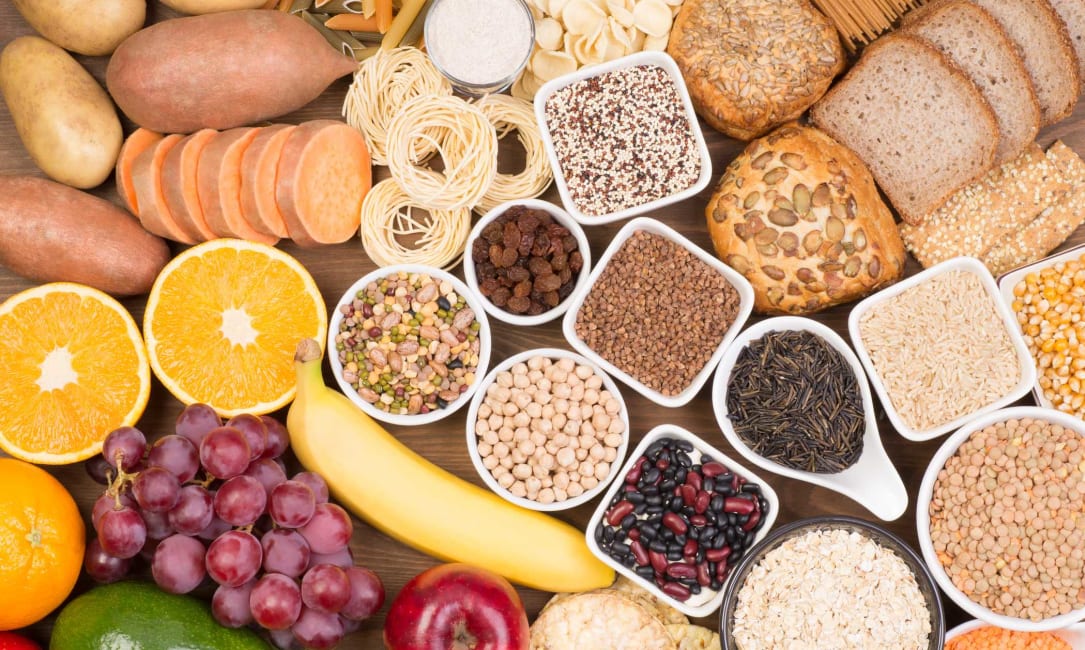
How can you prevent bonking? Carbo-loading before an endurance event is a common practice. This ensures that your initial glycogen levels are maximized. That means consuming complex carbohydrates. Pasta often comes to mind as a complex carbohydrate. peas, beans, wholegrains, and vegetables are also sources of complex carbohydrates.
Carbo-loading can ensure that your glycogen tank is full before you start riding. You need to make sure that your glycogen tank is kept topped-up during the event. This means eating regularly during the event. Some people like energy bars for convenience but foods like fruits, nuts, and potato crisps all work just fine.
Photograph courtesy of diabetes.co.uk
What to do if you have let your glycogen tank empty completely, and you are bonking? You need to quickly eat some simple carbohydrates that your body can quickly absorb in order to raise your blood glucose levels again. Simple carbohydrates include energy gels (make sure you drink water with these), kaya sandwiches, sugar cubes, or sweets such as jelly beans. Sugary drinks like Coke, Gatorade, and fruit juice are also good sources of simple carbohydrates.
Photograph courtesy of image.freepic.com
You need to also rest until you, hopefully, recover enough to continue cycling.
It is possible to train your body to convert glucose to glycogen more efficiently. In other words, to improve aerobic performance or the production of energy from chemical reactions that use oxygen. The aerobic energy system is the primary power source for endurance athletes.
Producing energy anaerobically, in other words, without using oxygen, is impossible to sustain for more than one to two minutes.
You may also hear about producing glucose from fat via a process called gluconeogenesis. This appeals to endurance athletes because the human body stores orders of magnitude more fat than glycogen. Being able to convert stored fat into glucose would mean the end of bonking.
The debate between proponents and detractors of Keto diets and being keto-adapted to take advantage of gluconeogenesis is fierce. I won’t enter that debate. You’ll have to research that topic yourself.
For the kind of riding I do, complex and simple carbohydrates in nasi lemak and cendol should stop this from happening to me.
Cyclist graphic courtesy of istockphoto.com Wall Photo courtesy of Jason Dent at unsplash.com
The Conditional Movement Control Order is extended to the end of March. With the possibility of further extensions after that if new COVID-19 infection numbers do not fall. Once again, hopes for a ride soon to places like these are quashed.
At least the whole of Selangor is accessible. We will be able to ride to here this weekend.
A few of the group on the 70km to 80km long ride last Sunday had not ridden in months. Everyone finished, but there were a few moans during and after the ride.
Graphic courtesy of cycling-passion.com
A long time off the saddle left some feeling a bit sore around the ischial tuberosities aka sit bones.
That led to a conversation about chamois creams. I religiously use chamois cream. The one time I didn’t, I developed a saddle sore. Since then, I ensure that I have a ready supply of Chamois Butt’r Original. My chosen brand of chamois cream. Unfortunately, Chamois Butt’r isn’t available locally.
I ordered some online a while ago. COVID-19 compromised logistics chains mean that I haven’t received my order yet. As I am running low, I recently bought some Assos Chamois Crème from my LBS. I have not used Assos Chamois Crème because it contains menthol. I didn’t want that “cooling” effect. But beggars can’t be choosers.
I looked at the Assos Chamois Crème jar to check if menthol is still on the list of ingredients. It is, along with a chemical soup of other ingredients.
I have been following a thread of comments on VeloNews about skin sensitivities. The conversation started with skin sensitivity to synthetic materials used in cycling bibs. The thread went on to include sensitivity to laundry detergents and chamois creams. That led me to research what each of the ingredients in a tub of Assos Chamois Crème does. Here is what I found.
23 ingredients, presumably in decreasing percentage of total volume of the product. Which is 140ml / 4.73 fl. oz.
9 chemicals are emollients or moisturisers. 5 are emulsifiers. Emulsifiers are chemicals that stop fats and water from separating. 2 are anti-oxidants, which may preserve skin health. 2 are preservatives. 2 are cooling agents. We’ll see how well I get along with those. There are a couple of solvents. I imagine this product is mostly water. There is 1 anti-microbial.
Having put Assos Chamois Crème under the microscope, it was only fair that I did the same with Chamois Butt’r Original.
Photograph courtesy of Paceline Products Inc.
Ingredient
Function
Water
Solvent
Mineral Oil
Emollient
Glyceryl Stearate
Emulsifier
Cetearyl Alcohol
Emulsifier
Stearic Acid
Emulsifier
Glycerin
Emollient
Lanolin
Emollient
PEG-100 Stearate
Emulsifier
Diazolidinyl Urea
Anti-microbial
Iodopropynyl Butylcarbamate
Preservative
Cetyl Hydroxyethyl-Cellulose
Emulsifier Viscosity increasing agent
Potassium Sorbate
Preservative
Disodium EDTA
Stabilizer
Aloe Barbadensis (Aloe Vera) Leaf Juice
Emollient Anti-Inflammatory
Tocopheryl Acetate (Vitamin E)
Anti-oxidant
Retinyl Palmitate
Anti-oxidant
Ingredient list courtesy of Paceline Products Inc.
The Chamois Butt’r Original has 16 ingredients. 4 emollients. 5 emulsifiers. 2 anti-oxidants. 2 preservatives. 1 stabilizer. 1 anti-microbial, and 1 solvent. Again, I assume water makes up the most of this 32oz pump bottle.
I am relieved to find that the Chamois Butt’r Original does not contain as many chemicals as the Assos Chamois Crème. Having said that, the Assos has more than twice as many emollients. Which I assume are the key ingredients in a product that is formulated to eliminate chafing. The 4 emollients in the Chamois Butt’r have been enough for me though.
I just hope that the menthol lactate and menthol in the Assos Chamois Crème aren’t too cooling.
The last time I rode along the road from Kota Puteri to Bandar Seri Coalfields was in January 2017. That was during an Audax BRM300. We had ridden 270km when we got to Kota Puteri.
Yesterday I rolled through Kota Puteri after a 60km ride from Bandar Utama to Kuang, Bestari Jaya and Simpang Tiga Ijok. We rode via Selangor Fruit Valley (or Selangor Fruits Valley, depending on who you ask). Another place I had not seen for many years.
Selangor Fruit Valley is a 646-hectare tropical fruit farm cum agro-tourism destination. The farm is at the northern end of our ride route.
Map courtesy of Ride With GPS
Twenty of us did this first proper R@SKLs group ride in months. We started as one group but soon split into two sets of cyclists. The first group waited at the junction with the road to Batu Arang for the rest of us to catch up.
We got there eventually!
Photograph courtesy of JS
Our next stop was at the Caltex station in Bestari Jaya.
Photograph courtesy of VV
More specifically, the FamilyMart at the Caltex station in Bestari Jaya. Where else can you get onigiri (Japanese rice balls) and Caramel Dalgona Coffee Sofuto?
What is the change alluded to in the title of this post?
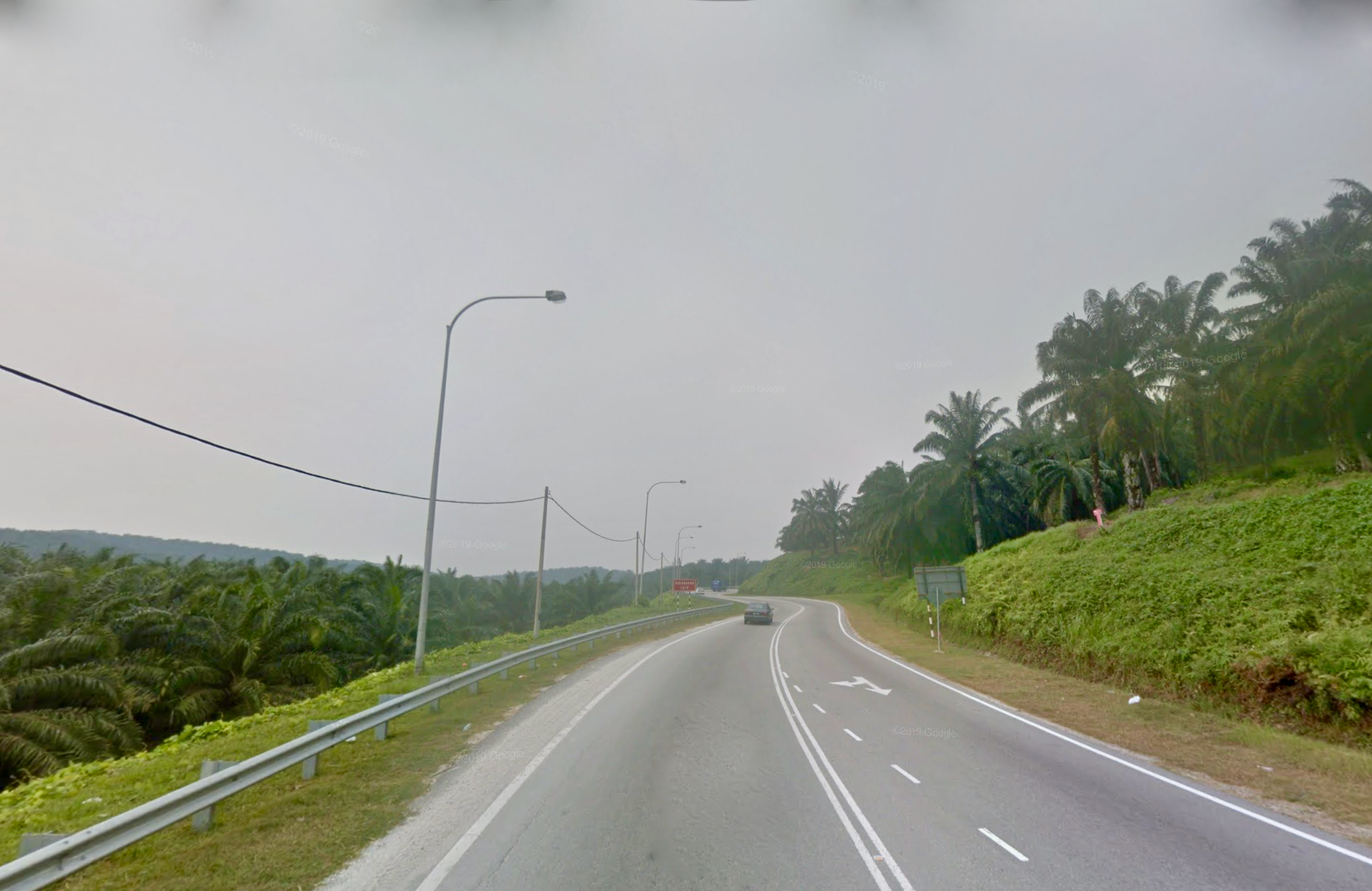
That came south of Kota Puteri. In 2017 the road there looked like this.
Photograph courtesy of Google Maps
A winding two-way road with a narrow shoulder.
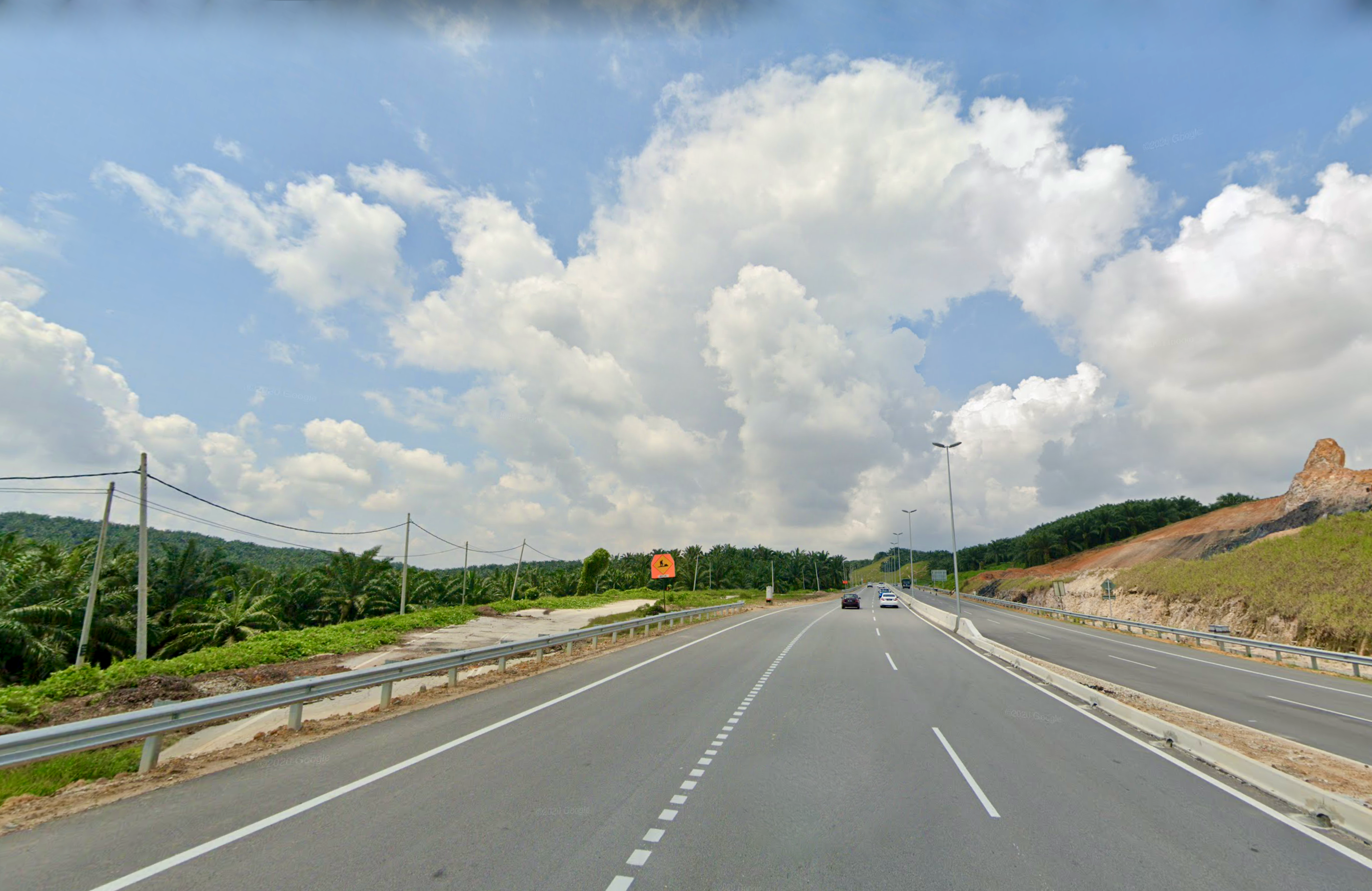
Today that road looks like this.
Photograph courtesy of Google Maps
A four-lane divided highway. You can see a remnant of the old road to the left.
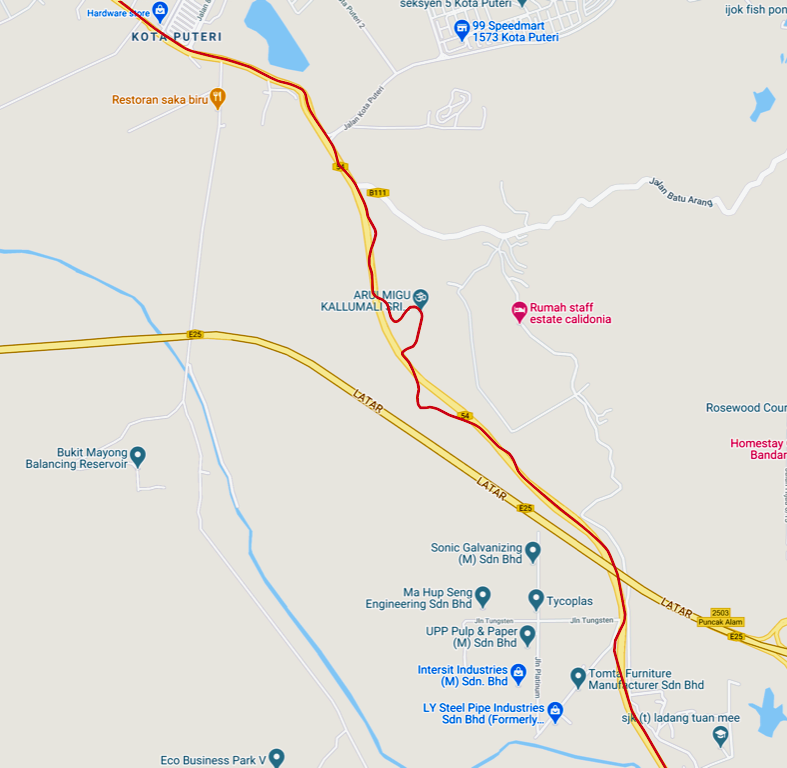
Here is my route from January 2017 overlaid on the current map of the area.
Map courtesy of Ride With GPS
The narrow winding road with ruts and bumps has changed into a relatively straight and smooth divided highway that runs from Simpang Tiga Ijok to the Sungai Buloh Prison. All part of improvements to Federal Route 54, starting from the junction with Federal Route 5 at Taman Assam Jawa to the west.
On 18th March 2020, the Malaysian Government implemented a nationwide Movement Control Order (MCO) as a preventative measure in response to the COVID-19 pandemic in the country. There was a general prohibition of mass movements and gatherings across the country, including religious, sports, social and cultural activities.
The MCO was in place until 3rd May.
The main message during the MCO was:
Photograph courtesy of Alexas Fotos on Unsplash
The Malaysian government replaced the MCO with a Conditional MCO (CMCO) on 4th May. Outdoor sports activities not involving body contact were allowed on the condition that participants practised social distancing. Inter-state travel was prohibited.
On 7th June, the Prime Minister announced that the CMCO would end on 9th June, with the country entering the Recovery Movement Control Order (RMCO) phase from 10th June. Among the activities reinstated under the RMCO was inter-state travel.
Increasing COVID-19 case counts led to the reinstatement of the CMCO in selected states on 14th October, including the Federal Territory of Kuala Lumpur and the state of Selangor, which surrounds Kuala Lumpur. This time, the prohibition was not just on inter-state travel. We were not allowed to travel outside the district where we lived.
MCO restrictions were re-introduced in Selangor and Kuala Lumpur from 13th January 2021 following a surge in COVID-19 infections. In addition to the inter-district travel ban, travel was restricted to a 10km radius from where you lived.
On 5th March, Selangor and Kuala Lumpur exited the MCO lockdown and reinstated CMCO restrictions. Interstate travel was still prohibited, but the requirement to stay within a 10km radius and stay within your district was lifted.
This is how the various movement control orders affected my cycling in 2020.
Graphic courtesy of VeloViewer
I didn’t ride very much during the first few months of 2020. Partly due to some travel in February and March and some consulting work, also in March.
Increasing concern about COVID-19, first identified in December 2019, must have played a part. Those worries amplified when the World Health Organisation declared the COVID-19 outbreak a Public Health Emergency of International Concern at the end of January 2020.
We had to stay indoors during the early stages of the MCO. Even going for walks was prohibited. A week after the MCO started, I snuck in a ride around the block where I lived. Then people started getting fined for being outside their homes. I stayed off my bicycle until the CMCO came into effect.
There were mixed views about the wisdom of cycling during the CMCO. We understood little about how COVID-19 was transmitted. So to ride or not to ride turned on how risk-averse or risk-tolerant you are. I rode a lot in May. Mostly, by myself, and sometimes with two or three others. The phrase “I didn’t get dropped. I was just social distancing” entered the cyclists’ vocabulary.
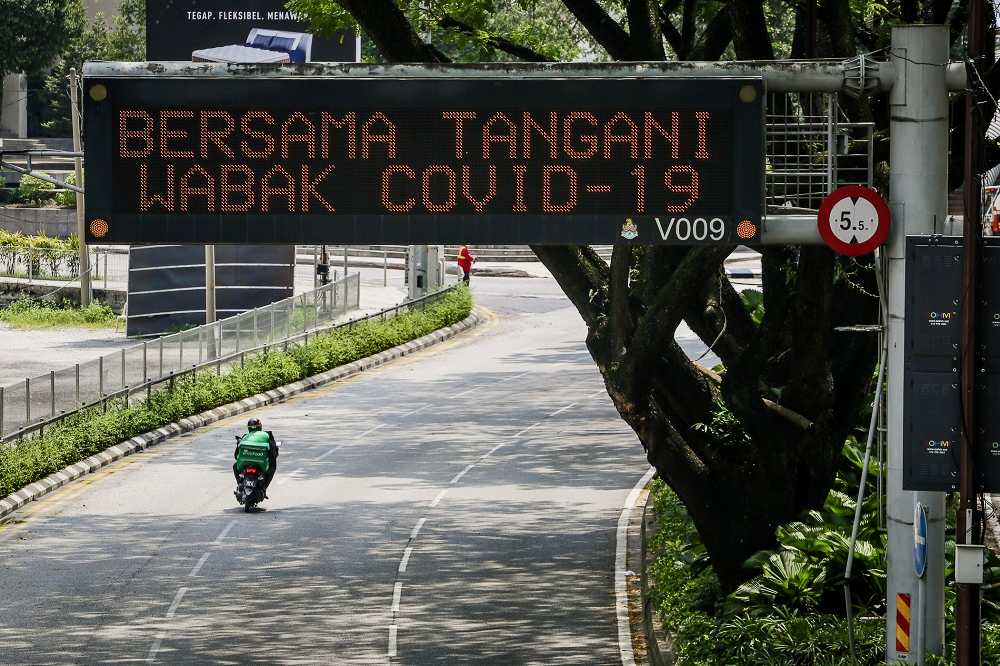
One definite plus in the early days of the lockdown was the empty roads, apart from the food delivery riders. They continue to provide an essential service, even after restaurants were allowed to have dine-in patrons again.
The sign translates to “Jointly tackle the COVID-19 outbreak.”
Photograph courtesy of MalayMail
Interstate rides, like trips to Port Dickson or Teluk Intan, were a distant memory. Masks joined helmets as mandatory items on every ride.
Photograph courtesy of Mike Baumeister on Unsplash
It didn’t take long for the R@SKLs to make an interstate trip after RMCO replaced the MCO on 10th June. It was “Hello Port Dickson!” on 12th June.
Photograph courtesy of Terry Shim
We were in Port Dickson again at the end of July.
Photograph courtesy of Marco Lai
I averaged 1,000km in May, June and July. That trend continued the following month. Helped by an Audax 300 ride on 30th August.
There was another inter-state ride in September. We devoted eight days to pedalling to Penang and back.
Photograph courtesy of Yaopey Yong on Unsplash
The first few weeks of October were a washout as far as cycling was concerned. I put it down to an attack of idleness following our Penang ride.
A surge in COVID-19 infections in some parts of the country, including Kuala Lumpur, prompted the move back to RMCO status in mid-October. This time with a prohibition on inter-district travel. The fine for transgressors was MYR1,000 / USD250. That kept me off my bike for most of the rest of October and November. I rode a total of 450km during those months.
By December, a weariness of the COVID-19 restrictions was setting in. More and more cyclists, including myself, were taking a chance on riding across district boundaries. I rode further in December than in any other month in 2020.
That enthusiasm was curtailed in January 2021.
Not only were we playing under MCO rules in mid-January, those rules included travel limited to a 10km radius around where you live. That 10km radius looks like this for me.
Map courtesy of 2kmfromhome.com
The imposition of the 10km radius limit coincided with a newfound enthusiasm to cycle amongst some friends. Friends who live within a couple of kilometres from me. Having someone to ride with, I have ridden on 50 of the past 56 days. Who would have guessed?
i have a new appreciation for the views within 10km of home.
On 5th March, we went back to CMCO rules. No 10km radius limit and inter-district travel prohibition any more. So my ride on the 6th was with friends I haven’t seen, let alone ridden with, since the end of 2020.
COVID-19 restrictions did curtail my riding in 2020. Especially in March, April and October.
2021 is off to a good start. I hope that with vaccinations on the way, we will have this pandemic under control. At last.
Photograph courtesy of Aljoscha Laschgari on Unsplash










































 Old Roots, New Routes