A Landmark Ride

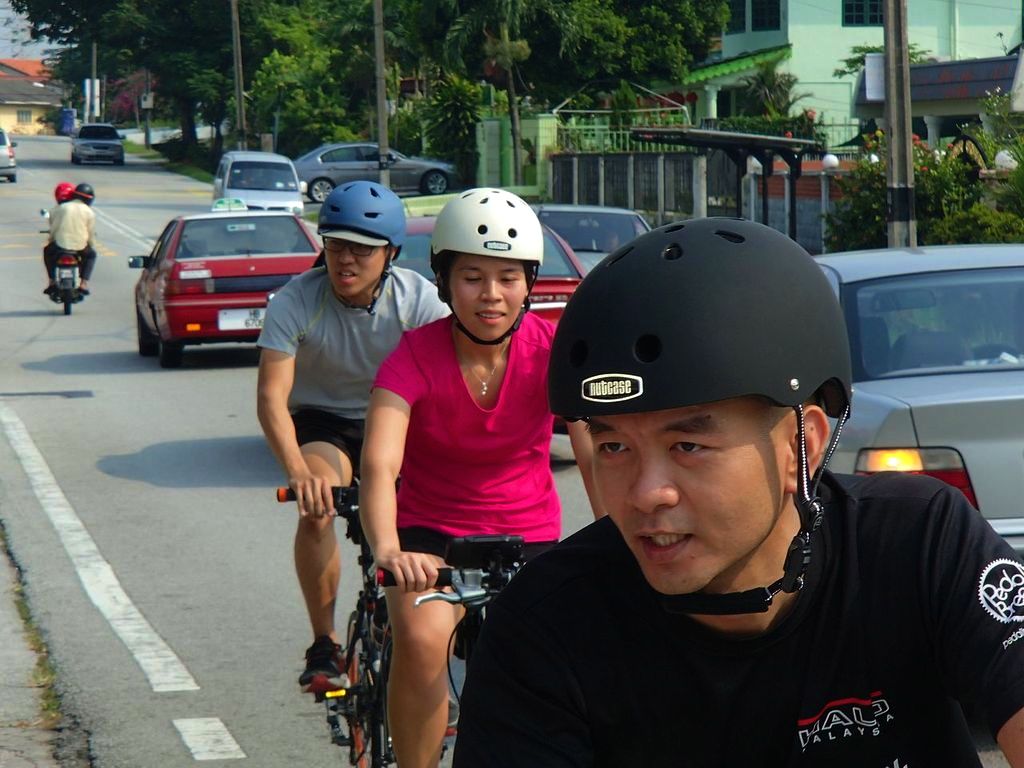
The Racun weekend group rides are usually not longer than 60 km.  If we start at 7am we can get to Kampung Kundang for breakfast and back to Bukit Jelutong by about 9.45am or so.  Before the day gets too hot.  The temperature is the limiting factor when it comes to ride length.

As a result a number of the group have never done a 100 km ride.  We decided to rectify that yesterday.  Mark planned a route that would take us from where he lives in Damansara Jaya to the Ijok exit on the LATAR highway and back.  About 110 km according to Google Maps.

Nine of us met at the car park in front of the Damansara Jaya post office.  Marco, Marvin, Peng Soon and Shahfiq were the 100 km ride neophytes (although Marco came close with a 95 km ride last weekend).

The route from the start to the Guthrie Corridor Expressway took us past the Sultan Abdul Aziz Shah Airport.  From 1965 to 1998 this was Kuala Lumpur’s international airport.  When it opened the runway was surrounded by jungle and plantations.  This was still the case when the Saujana Golf and Country Club  opened its doors at the south end of the runway some twenty years later.

As you can see from the route map below it is hard to justify the “Country” in Country Club these days.

Century Ride Route

The airport and club are now hemmed in by urban sprawl.  Where there was once jungle and plantations there are now Ara Damansara, Kampung Bukit Cherakah,  Taman TTDI Jaya, Taman Subang Perdana, Kayangan Heights and a host of other residential and commercial developments.

Jet-engined aircraft now take off and land at the Kuala Lumpur International Airport, which is about 80 km from the city centre.  Sultan Abdul Aziz Shah Airport is still used by commercial carriers operating turboprop aircraft.

The roads in the area have expanded to cope with the increased traffic.   The flyover at the north end of the runway was new to me.  And when did Jalan Lapangan Terbang Subang and Jalan Sungai Buloh become four lane divided highways?

Jalan Sungai Buloh took us to the the familiar surroundings of the Guthrie Corridor Expressway.  We stopped at the little rest area behind the Lagong Toll Plaza to regroup before turning onto the KL – Kuala Selangor Expressway.

Lagong Toll Plaza

Photo courtesy of Shahfiq Abdul Manap

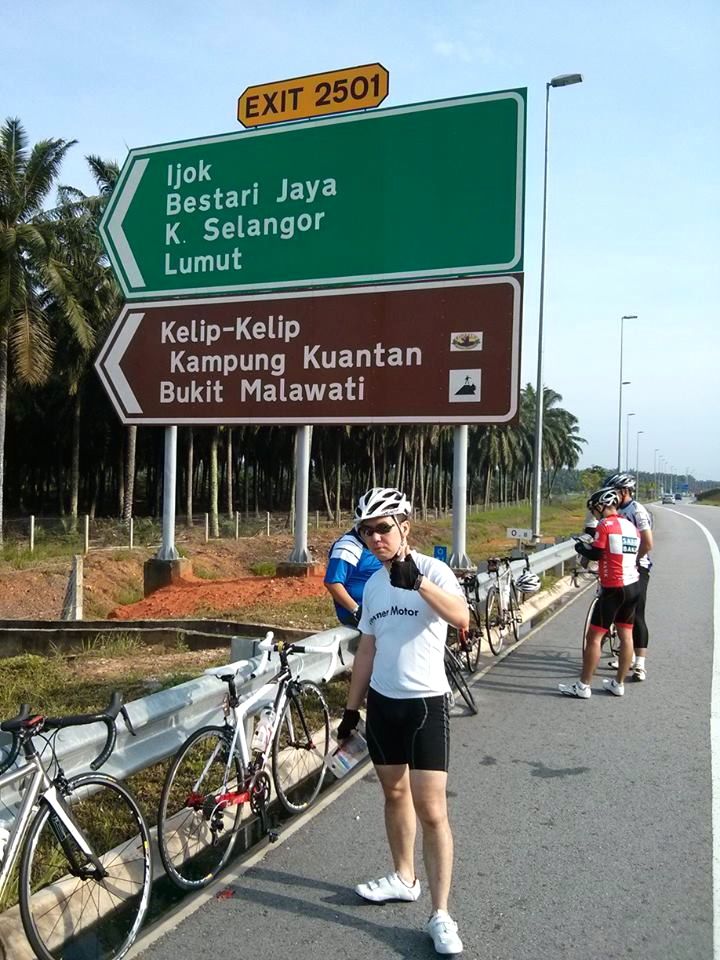
Our turn-around point was 20 km down the road at the Ijok exit.  Marvin looks ready for the return leg.

Photo courtesy of Shahfiq Abdul Manap

Photo courtesy of Shahfiq Abdul Manap

Marco, Peng Soon and Shahfiq (pointing skyward) look happy to be at the turn-around point too.

Photo courtesy of Mark Lim

We chose a hot day for this century run.  It was already quite warm by the time we got going again at about 9am.  Everyone was getting hungry as well.  Good thing a visit to our favourite breakfast spot was on the agenda.

Photo courtesy of Marco Lai

An hour later we were seated at Sharif Roti Canai.  The corrugated iron roof was radiating heat.  We were grateful to get a table under a fan.

We lingered under that fan for an hour.  Fortified by roti canai, teh tarik and soft-boiled free-range eggs we headed out to cover the 40 km back to Damansara Jaya.

The midday heat and a headwind made the going challenging.  We were all glad to get to the Elmina Rest & Recreation area where we could wash the sweat off our faces, pour water over our heads and sit in the shade for a while.

Congratulations to Marco, Marvin, Peng Soon and Shahfiq on their first 100 km ride.  Additional kudos go to Peng Soon, who hadn’t ridden more than 40 km in one go before.  He persevered despite aching legs and the heat.  In sneakers no less.

We will all be telling stories about this ride for a long time to come.

Let’s Get Ready to Rumble Part Three

Rumble 3

The third installment of Van’s Rumble Cycle Challenge had to be delayed.  The date for this event had been 16th June.  An unanticipated need to close the shop at 3 Two Square  took precedence.

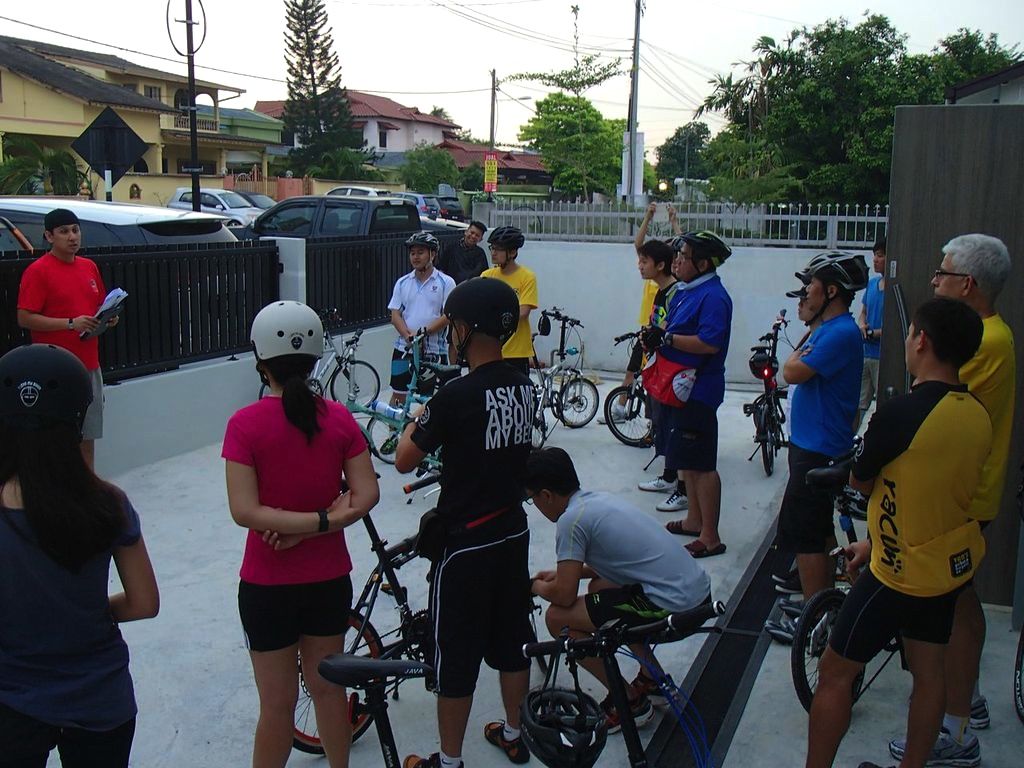
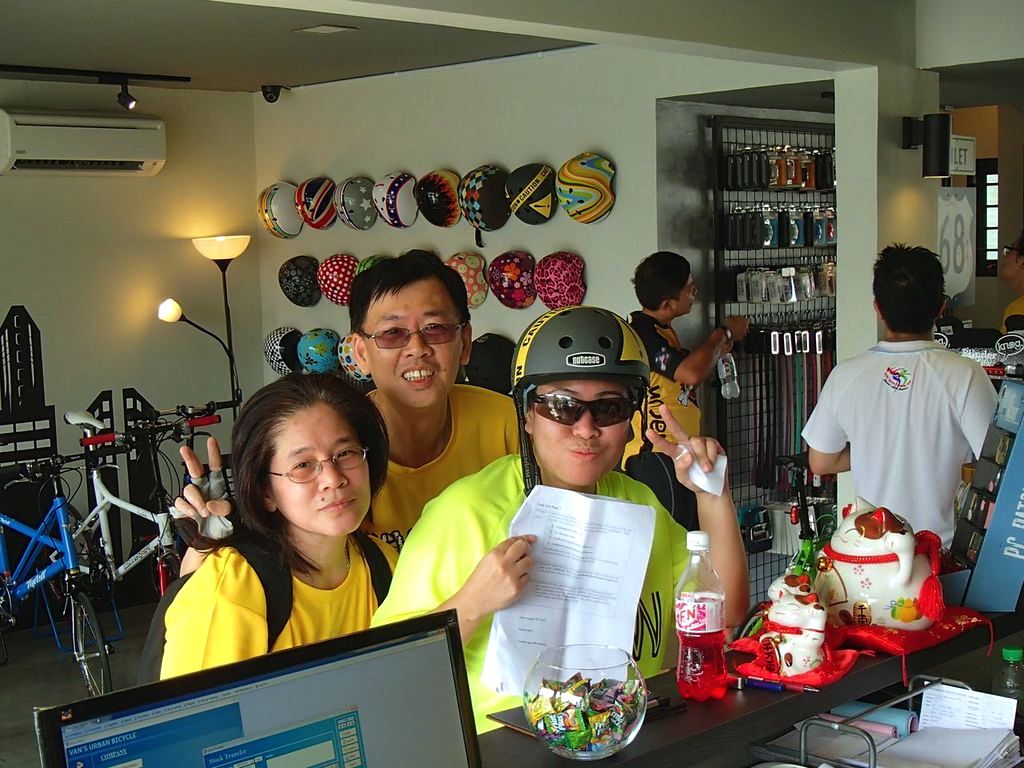
Twenty two participants met at VUBC‘s new shop in Kampung Tunku.  The early birds had time for a teh tarik, courtesy of Michael.

Photo courtesy of Albert Koo

Photo courtesy of Albert Koo

Each team of two or three had to ride to eight pit stops.  The challenge was to find each pit stop, in order, and once there to complete one or more task to earn points.  Winning required a combination of a fast finishing time and as many of the forty points available.  Amril covered the rules, regulations and safety advice, and then sent us on our way.

Photo courtesy of Albert Koo

Photo courtesy of Albert Koo

Some got away quicker than others.  Mark and I took a while to figure out how to get to the first pit stop . . .

Photo courtesy of Albert Koo

Photo courtesy of Albert Koo

The first stop was at a McDonald’s, where any customer wearing a red t-shirt was asked to pose for a photograph.

Photo courtesy of Albert Koo

Photo courtesy of Albert Koo

At the second pit stop we had to find and photograph a particular shop lot.

Photo courtesy of Albert Koo

Photo courtesy of Albert Koo

Mark and I had our mechanical problem of the day at this stop.  Mark’s rear tire was under-inflated.  I had a pump.  The tire went from being a bit flat to being fully inflated to being completely flat after the valve core unscrewed along with the pump hose.

We got going again fairly quickly and soon got the photograph and telephone number required at pit stop 3.

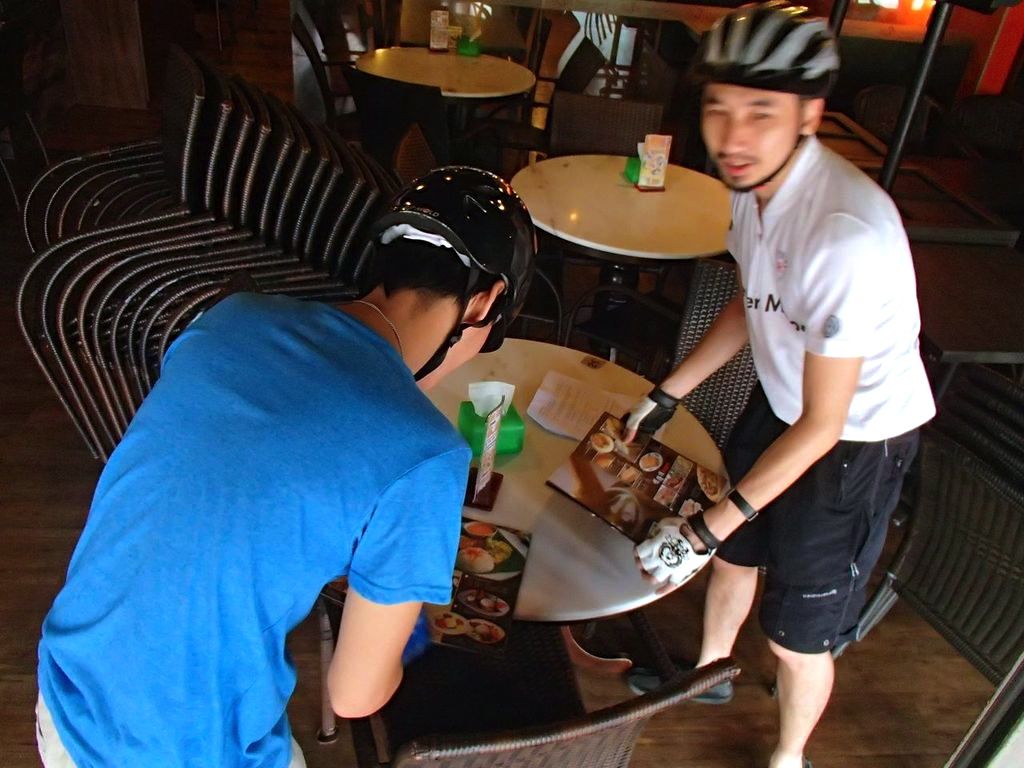
Pit stop 4 involved finding the price to three items on a restaurant menu.

Photo courtesy of Albert Koo

Photo courtesy of Albert Koo

The fifth stop was at the bus stop nearby.  We had to get the full name of the stop, and figure out the fare from that stop to another stop.

Photo courtesy of Albert Koo

Photo courtesy of Albert Koo

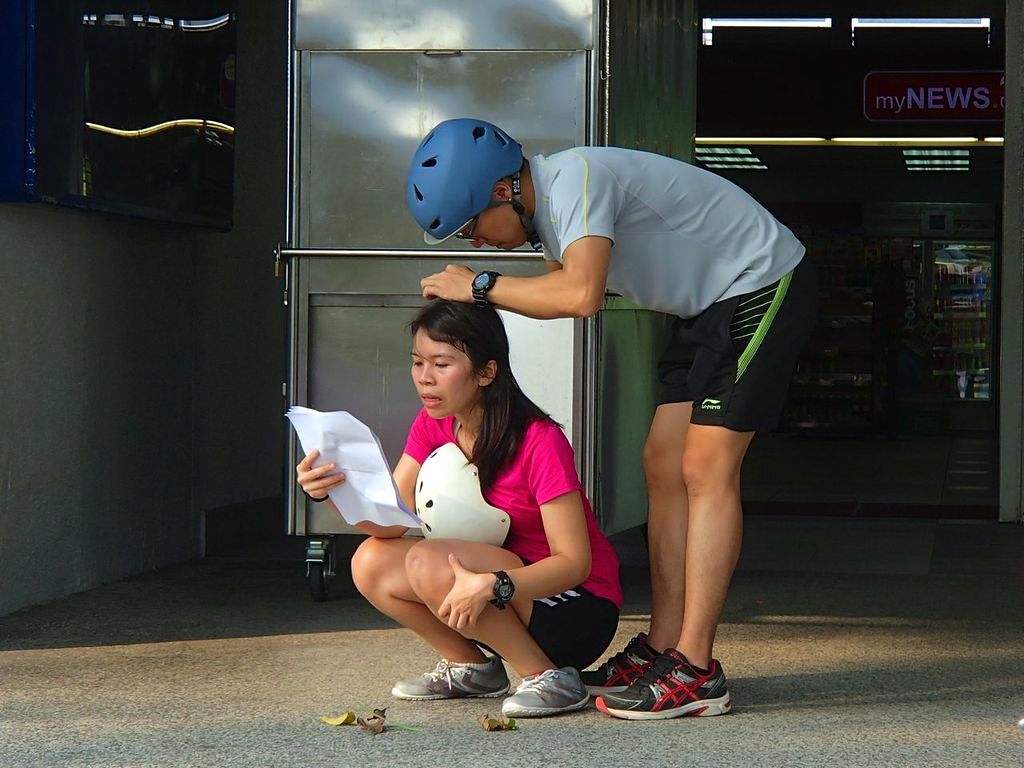
Pit stop 6 was at a Light Rail Transit station.  I didn’t yet know what the tasks were for this stop, so was very intrigued to see this as we arrived.

Photo courtesy of Albert Koo

Photo courtesy of Albert Koo

This was a collection stop.  Three different types of leaves (which you can see at her feet), three different types of flowers, three 10¢ coins, and three strands of white hair.

I was suddenly very popular!

Mark and I got it badly wrong trying to find pit stop 7.

Rumble_3_Route Annotated

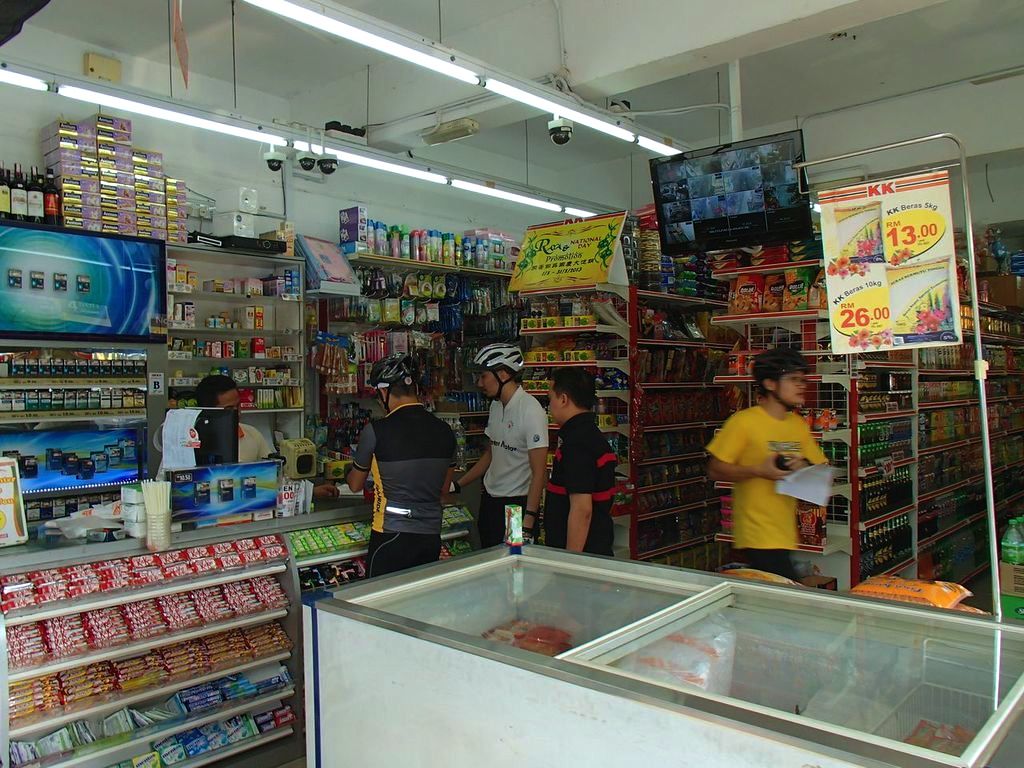
The destination was the KK Supermart, Dataran GLOMAC.  There are a number of places with GLOMAC in their names.  We elected to ride to one of the wrong ones.  A U-turn and some lost time later we arrived at pit stop 7.

We got through the task, which was to buy exactly RM1.90 worth of items, very quickly.  Mark went straight for a bottle of 100-Plus, which he knew cost RM1.90.

Photo courtesy of Albert Koo

Photo courtesy of Albert Koo

The task at pit stop 8 was to photograph a vehicle number plate that had a ‘0’ and a ‘5’ in it.  Followed by a dash back to the finish line at the VUBC shop.

Photo courtesy of Albert Koo

Photo courtesy of Albert Koo

All members of a team had to be in the shop to present their answer sheet and collected items before the clock stopped.

Photo courtesy of Albert Koo

Photo courtesy of Albert Koo

Then it was time for a cold drink and smiles all around as we waited for the results to be tallied.

Photo courtesy of Albert Koo

Photo courtesy of Albert Koo

Rumble 3 Done 2

It was a close contest.  A few seconds here and a wrong answer there separated the top three teams.  Chang Pak Loong and his team mate won the prizes for finishing first.  They got a goodie bag of Knog products and Bern helmets.  Here they are flanked by Vanessa of VUBC, and Wei Yeng of Wheeelove, who donated the Bern helmets.

Photo courtesy of Albert Koo

Photo courtesy of Albert Koo

Thank you everyone at VUBC for organizing a wonderful series of events.  We are all looking forward to the 2014 edition of the Rumble Cycle Challenge.

Velo Fit First Steps

Image

I announced the birth of Velo Fit in early April.  I had my Retül certification.  The Retül equipment and other bike fitting tools had been ordered.  The business had been registered.  The logo was being designed.  I had a location for my fit studio.

There were still things to do.  Design a website for instance.  But I was confident that I would make my target of first appointments in June.

What is it that Robert Burns said about the best laid plans of mice and men?

I opened for business in mid-August.

Here is what happened.  The lease at Van’s Urban Bicycle Co. came up for renewal and the expected rental increase was more than Vanessa, Ray and their business partners was willing to bear.  So there was a scramble to complete the renovations at the new premises and to vacate the old shop.  That pushed the availability of space for my studio to mid-July.

Also it took longer than expected to find a carpenter to build a rotating platform.  The platform isn’t an absolutely essential piece of kit, but having it makes a fitter’s life much easier.  Retül customers in the USA get a completed platform as part of their equipment order.  It is a very heavy item though.  Not surprising as it has to support the weight of at least two people, a bicycle, and a turbo trainer.  So international customers get a box of screws, washers, casters and other metal parts, and assembly instructions.

In early August my cousin Yasmin put me in touch with a carpenter who could read plans.  Two weeks later my rotating platform was delivered to the newly-opened Van’s Urban Bicycle Co. shop in Kampung Tunku.

In the meantime I had accumulated the other bits and pieces I needed to equip my studio:  some chairs, a trolley to hold a laptop, a projector, tools etc., and a massage bed for the biomechanical assessments.  I was ready for business.

My first client was Mark.

Mark Lim Fitting

My second client was Marco.  Thank you Mark and Marco for setting me on my way, and bearing through all the teething troubles as I got the equipment, and myself, up to speed.

Marco Bike Fit

As you can see I changed the studio set up as I went along.  Hanging a sheet on the back wall as a screen for the projector was a bad idea.  Here’s the studio as it is today.

Velo Fit Studio

Fortunately there is just enough space for the rotating platform to actually pivot.

I am excited to finally be up and running.  My website at http://velofit.org has already generated some appointments.  I am flashing my business card where ever I go.
Bizcard

Friends and family are helping me advertise.  The next few months will tell if this is a good idea.

In closing, here is a suggestion I got for a sticker that could go on each bike that comes through my studio:

Size doesn’t matter, but fit does!

The Cult of Strava

The Social Facilitation Theory argues that social evaluation has an impact on performance.

The psychologist Norman Triplett was the first to study this effect, starting in 1898.  He found that cyclists had better race times when in the company of other cyclists.  Further research demonstrated something we now consider obvious:  humans try harder when matched against others. Later work would demonstrate that the mere presence of others could inspire us to work harder.

Fast forward 110 years.   Social facilitation meets social sharing (think Facebook) and Strava is born.  Cyclists now have a way to record the details of a ride and compare those details with those of every other Strava member who has done the same ride.  Thanks to a smartphone app that does away with the need for a dedicated cycling GPS, some one million cyclists use Strava today, and that user base continues to grow.  Cyclists now have access to social evaluation on a massive scale.

Thousands of Strava users have created segments, or specific sections, of their cycling routes.  Any segments will be displayed as part of your ride data in the Strava application.

Strava Segment

The segments table shows your performance on the current ride relative to your previous efforts on the same ride.  Each segment is identified, and the segment distance, elevation, and your performance parameters are displayed.  If your latest performance on a segment is one of your better ones you get a little medal:  gold for a Personal Record, silver for a 2nd best and bronze for a 3rd best time.

Click on a segment and social facilitation comes into play.

Strava Leaderboard

Note: Rider names have been deleted

Now you see your best performance on a segment relative to every other rider on Strava who has ridden the same segment.  I see I need to ride this segment just 0.1 kph faster to be in the top 50!

If I want a hit to my ego I can view the results for men only.  Fortunately for my ego there is only one woman ahead of me on the leaderboard for this segment.  For now.

If I want to feel better I can view the results by age group.  There are only six of us in the 55 to 64 age group for this segment so I am definitely in the top ten!

The ability to virtually compete against others should be a boon, and it is for most riders.  Strava was created to encourage cyclists to train, to climb higher and go faster.  I get a kick out of achieving new personal bests, and this is true for many others as well.

I don’t have the physical gifts to challenge for King of the Mountain (KOM) status.  So there is no chance of seeing one of these, which signifies being atop a segment leaderboard,  on my Strava profile.

Strava KOM

I have been known to push hard for the fastest time in my age group for certain segments though.  Social facilitation in action.

The same social facilitation effect can be a bane as well.  There are people out there who are so competitive that every ride is a do-or-die race in the hunt for KOM crowns.   In some cases literally.  William Flint was killed when he collided with an oncoming car on a downhill stretch of road while apparently trying to reclaim his KOM status.

And in a sad reflection of the recent state of affairs in the professional peloton, riders so inclined can now even artificially enhance their Strava results by giving their data a boost with the help of the website DigitalEPO.com.

I’ll leave the KOM sniping to the insanely driven Type A personality riders.  But I do wonder if I can knock two seconds off my time for the Puchong Jaya climb tonight.

Ramadan Rides

We are in the ninth month of the Islamic calendar.  Ramadan.  Which for Muslims means fasting during the daylight hours from dawn to dusk.

The Islamic lunar calendar year is eleven or twelve days shorter than the solar calendar year.  There is no intercalation, or insertion of a leap day, week or month, to realign the lunar calendar with the solar calendar.  So Ramadan migrates through the seasons.

My biker chick and I spent the last two Ramadan months in the Netherlands.  Where the summer daylight hours extend for eighteen or more hours.  There are advantages to being back in Malaysia where there is little variation in the length of the day throughout the year.  Here we have only about fourteen hours between sahur, or the pre-fast meal, and iftar, or the fast-breaking meal.

The length of the fast at this time of the year in northern Europe means that iftar is not until almost 10pm.  So rather than spend the last hours sitting at home thinking about food I would go for an evening bike ride.  Sometimes on my own and sometimes in the company of David or others from the Not Possibles.

Ramadan Ride 1

After a loop like this one, and a shower, I was very ready for that iftar drink and meal.

I did the Saturday morning Not Possibles rides as well.  Those rides were too much fun to miss.  A very large banana and blueberry smoothie at sahur set me up nicely for the ride.  I must admit the post-ride koffie verkeerd and appeltaart at The Coffee Club were tempting.

Ramadan rides in Kuala Lumpur are a bit more challenging because of the heat and humidity.  Fortunately with iftar being at 7.30pm or so there is no need for evening rides to divert the mind from food and drink.  So rather than riding late in the day on an empty stomach, as I did in the Netherlands, I do the Tuesday and Thursday night rides in Kuala Lumpur on a very full stomach.  I am usually eager to get started at 9pm, but during this month I am happy for any delay that adds to my digestion time.

Weekend rides will continue here as well during Ramadan.  The heat and humidity mean that I have to be selective about the routes, and the pace.  The Guthrie Corridor Expressway route is very open and gets too hot for a ride sans hydration.  Which leaves Genting Sempah as the ride of choice.  That route winds though forest so is shaded and breezy.

Photo courtesy of abuomar at http://basikalgunung.blogspot.com

Photo courtesy of abuomar at http://basikalgunung.blogspot.com

Having lots of scenic spots for rest stops helps too.

Photo curtesy of Mark Lim

Photo courtesy of Mark Lim

There is the elevation to deal with, but if taken at a relaxed pace that isn’t a problem.  Most importantly for my non-fasting riding companions, the nasi lemak shop at the end of the ride is open during Ramadan.

I get to ride during Ramadan, and my non-Muslim friends get their teh tarik.  Everyone is a winner!

Road ID iPhone App Review

I have worn a Road ID Wrist ID Sport for more than three years.  I never go on a ride without it.  Fortunately my Road ID has never been used for what it was designed:  to identify me, list medical information, and provide emergency contact details to first responders to an accident or medical emergency.

My Road ID tag does give me some peace of mind when I am on my bike.  So I was very happy to get an email from Edward Wimmer, the co-owner of Road ID, inviting me to test their all-new Road ID app for the iPhone.  This app is designed to take advantage of the GPS and internet access capabilities of the iPhone to complement the Road ID tag.

Click on the Road ID app icon below to go to the iTunes Preview of the app.

Road ID App Icon

There are three things that you can do with this app.

The first is to create an image to use as the Lock Screen for your iPhone.  This image is displayed whenever your iPhone is turned on. Entering the data to be displayed is straight forward.  The app then creates the image for you.  The final step is to go into your iPhone Settings app to select this image as your Lock Screen, Home Screen, or both.  The Lock Screen looks like this.

Template

This screen identifies you, lists essential medical information, and shows emergency contact details for up to three people.  If you can’t speak for yourself, your Road ID Lock Screen will.

The second thing you can do with this app is to track your movements.  Road ID calls this eCrumb tracking.  You can select up to five of your contacts to receive a link that allows them to track your movements using any web browser on any device.  The app transmits your location on a regular basis, which is plotted as a track on a map.

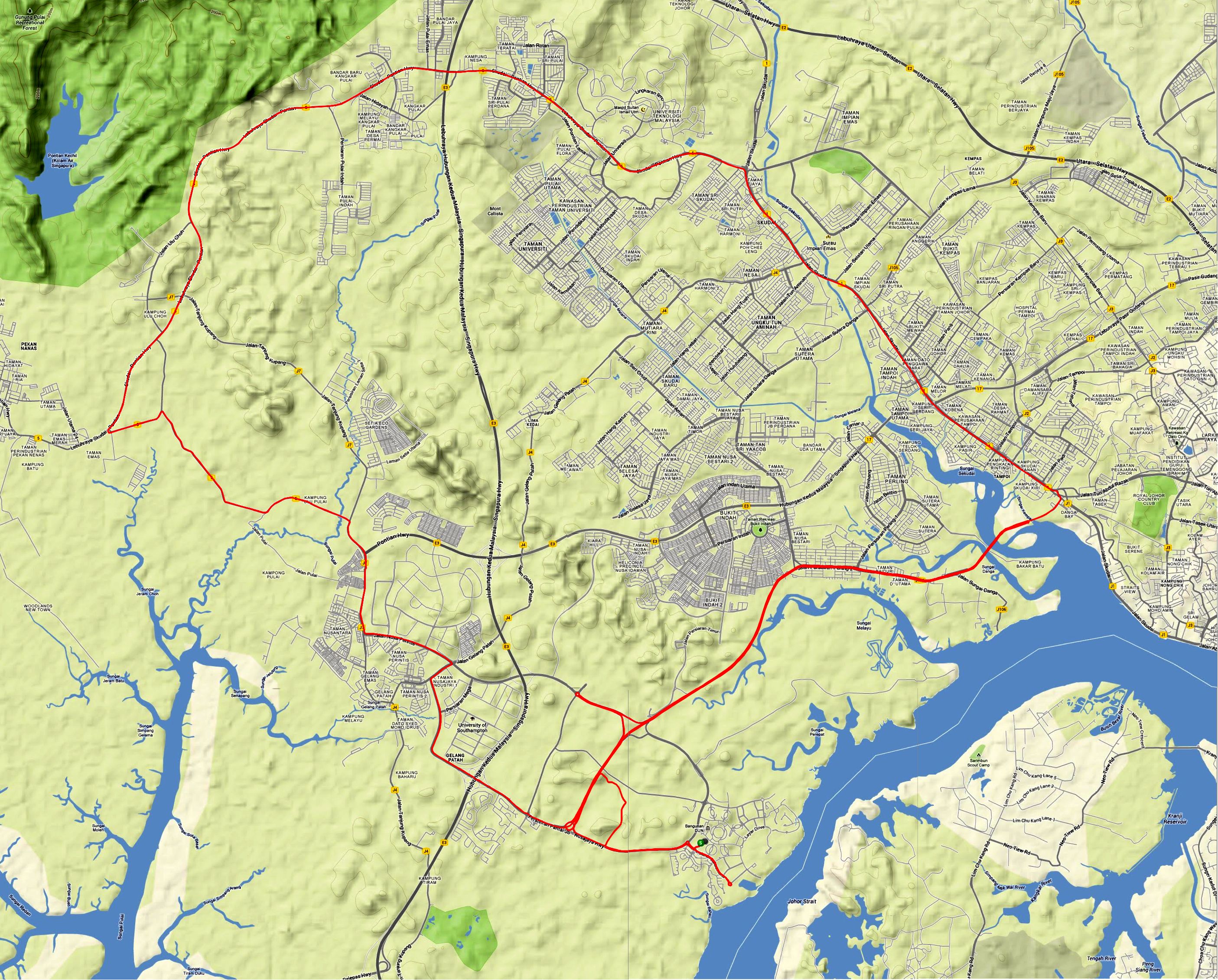
I tested eCrumb tracking during the Iskandar Johor Mega Ride.  This is the map showing where I started from, the route I took, and where my ride ended.  My biker chick followed my progress ‘live’ over the 100 km / 62 mi course.

Road ID App Map

The third thing this app can do is to send a Stationary Alert Notification to your selected contacts in the event that you stop moving for a pre-defined period of time.  The worst case scenario being that you have had an accident or a medical emergency and are immobile and / or unconscious.

The Alert message is customizable.  An audible 60 second countdown is activated if you stop moving for the chosen period of time.  That gives you the opportunity to cancel the Stationary Alert Notification if your stop is not because of an emergency.

You can activate eCrumb tracking only, or Stationary Alert Notification only, or both at the same time.

I have replaced the default Lock Screen on my iPhone with a Road ID Lock Screen.  When someone turns my phone on they see the same details that I have on my wrist tag.
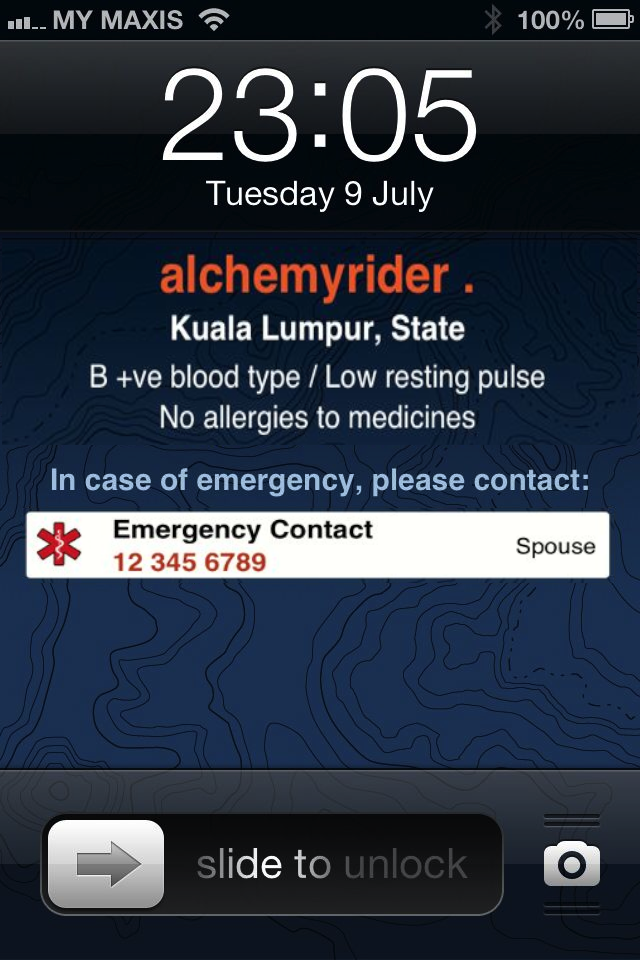
The eCrumb tracking works well and is a fun way for others to follow your progress while you are biking, running, skiing, hiking or whatever outdoors.

I have not tested the Stationary Alert Notification.

The Road ID iPhone app is currently in beta.  Edward Wimmer is actively soliciting feedback from early users to drive bug fixes and future enhancements.

I am very pleased with this app.  My only complaint is that eCrumb tracking cuts my iPhone battery life to just over three hours.  I think that eCrumb tracking should run for at least five  hours before completely depleting the phone battery.

Apart from the battery power management issue, I think this app is ready for prime-time.  It is an excellent safety aid for anyone.

Iskandar Johor Mega Ride 2013

Posted on

Team 165 drove to Johor, the southernmost state in peninsular Malaysia, for the Iskandar Johor Mega Ride.  A 120 km / 75 mi loop that started and ended at Kota Iskandar, the new administrative center for the state government of Johor.

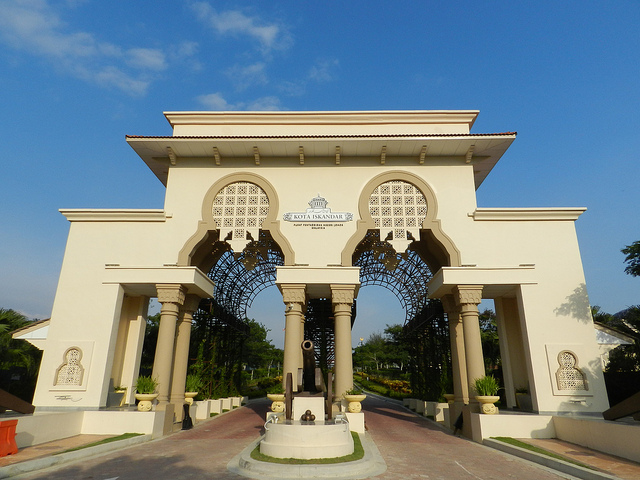
I had never been to Kota Iskandar, which is part of the larger Nusajaya development.  The arch at the entrance to the complex gives visitors some hint of what is to come.

Iskandar Johor Gate

Photo courtesy of Johor Real Estate

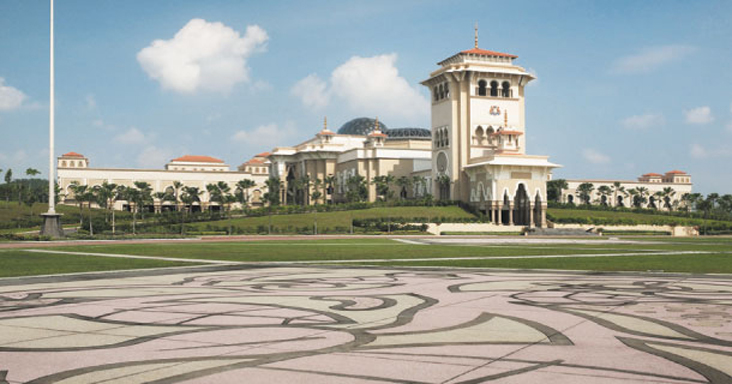
This is the Dato’ Jaafar Muhammad building.  Named after the first Chief Minister of Johor, this building houses the Office of the Chief Minister and State Secretariat.

Iskandar Main Building

Photo courtesy of syza aljufri

The Sultan Ismail building is the home of the State Parliament.

The ride started at 7.45am, a little behind schedule.  This is the young and fast group at the line, eager to get going.  Iskandar Start

Keat, Hans and I took our customary positions towards the back of the peloton.  As it turned out the first 30 km / 19 mi or so were at a controlled speed behind a group of police motorbikes.  The route started through the relative quiet of Nusajaya.  We rode past Malaysia’s first international theme park.  Legoland Malaysia opened less than a year ago.

Legoland Malaysia

Photo courtesy of Amin Khairuddin

Then it was along the Lebuhraya Pesisir Pantai (Coast Highway) and through the west edge of Johor Bahru, the capital city of Johor.  Johor Bahru is the third-largest city in Malaysia, and it has the morning rush hour traffic to prove it.

Iskandar Johor Route

The motorbike police stopped traffic from entering the highway as we rode past.  Despite having the police marshals we had to do some defensive riding, especially along Jalan Skudai, where the traffic was particularly heavy.

Once we got through Skudai there was a lot less traffic on the road with us.  Unbeknownst to us there were fewer cyclists as well.  A group of about thirty riders, including Keat, fell behind the marshals and got lost.  They ended up being directed back to the start and having their ride cut short.

The rest of us were pleasantly surprised to come upon a water stop after 40 km / 25 mi.  The route map showed the first water stop at 65 km / 40 mi.  Even better was the fact that the water being handed out was chilled.

I put my revised hyperthermia control strategy into action.  I poured a couple of bottles of cold water over my head, soaking my hair, jersey and arm coolers.  I did the same at the next water stop at the 80 km / 50 mi point.  That worked so well at keeping my core body temperature down that I didn’t bother to stop at petrol stations to buy ice cream.

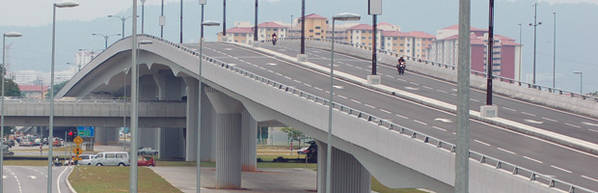
It helped that there wasn’t much climbing on this ride.  There was a lump to get over between 30 km / 19 mi and 46 km / 29 mi but the gradients were gentle.  The steepest bits were on the bridges and overpasses along the Pesisir Pantai Highway.

Flyover

When Hans and I got back to the Lebuhraya Pesisir Pantai for the second time we realised that the route had been changed.  About 20 km / 12 mi had been taken out of the early stages of the route.  That explained why we got to the first water stop so quickly.  We hit the finish line after just under 100 km / 62 mi of riding.

Hans and I rode the course at a reasonably fast pace (for us oldies anyway).  We averaged 30.8 kph / 19.2 mph for the ride.  So we didn’t complain that the route had been shortened.  Our relief was short-lived though.

Iskandar Medal

After we were given our medals I saw the message on my mobile phone from Keat saying that he got lost and had to truncate his ride.  Just after I sent him a reply asking him where he was, my mobile phone battery died.

Keat wasn’t at the finish area.  Hans and I rode to where we had parked.  No sign of Keat or his truck.  So we kept riding toward our hotel.

15 km / 9 mi of the route back to our hotel in Bukit Indah was along the 2nd Link Malaysia – Singapore Highway.  Where bicycles are not allowed.  Of course a pair of highway patrolmen pulled up behind us on that section.  Fortunately they bought my woeful tale of being abandoned in Kota Iskandar, and let us ride the last 5 km / 3 mi along the highway to our exit.  Hans and I covered 120 km / 75 mi and a bit more on the day after all.

Keat had driven back to the finish area to look for us.  He caught up with us on the road just after our encounter with the highway patrol, and escorted us back to the hotel.

Photo courtesy of Wai Leng Mann

Photo courtesy of Wai Leng Mann

More Team 165 adventures to come in August and September.

Things to See on a Bike in the Netherlands: Wall Art

Posted on

Drivers sometimes experience highway hypnosis.  That state of driving on autopilot and arriving at the destination without any memory of what you saw along the way.  Highway hypnosis is brought about by the monotony of driving along a boring road for an extended period of time.

I often finish a ride with little recollection of what was around me along the way.  But not because the ride was monotonous.  It is because the ride was fast.

The faster I ride the more I have to concentrate on the road just ahead of me.  Looking out for pot holes, gravel, sand, broken glass and other debris which could bring my ride to an abrupt halt.  If I am riding in a group my focus is even tighter; most of the time on the rider in front of me. Watching closely for sudden swerving or braking.  So I miss a lot of what is around me.

There is a web site called 18 Miles Per Hour, where “speed, calmness and observation all live together.”  The site is about seeing and absorbing the world around you while you ride.  Good reasons for going on slow rides once in a while.

I know I missed a lot of wall art the Netherlands.  Fortunately this wall was at the turn-around point in Alphen aan de Rijn.  I was going slow enough to notice it.

M.C. Escher is a very well-known Dutch graphic artist.  A number of his murals adorn buildings.  This three-dimensional mural, titled Fish and Birds, is on the Delfluent water treatment plant in Scheveningen.

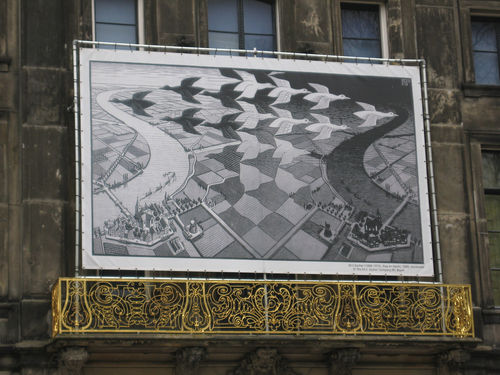
The Escher in het Paleis museum is in Den Haag.  A large print of his Day and Night hangs over the entrance.

Look who I discovered living in Harmelen.

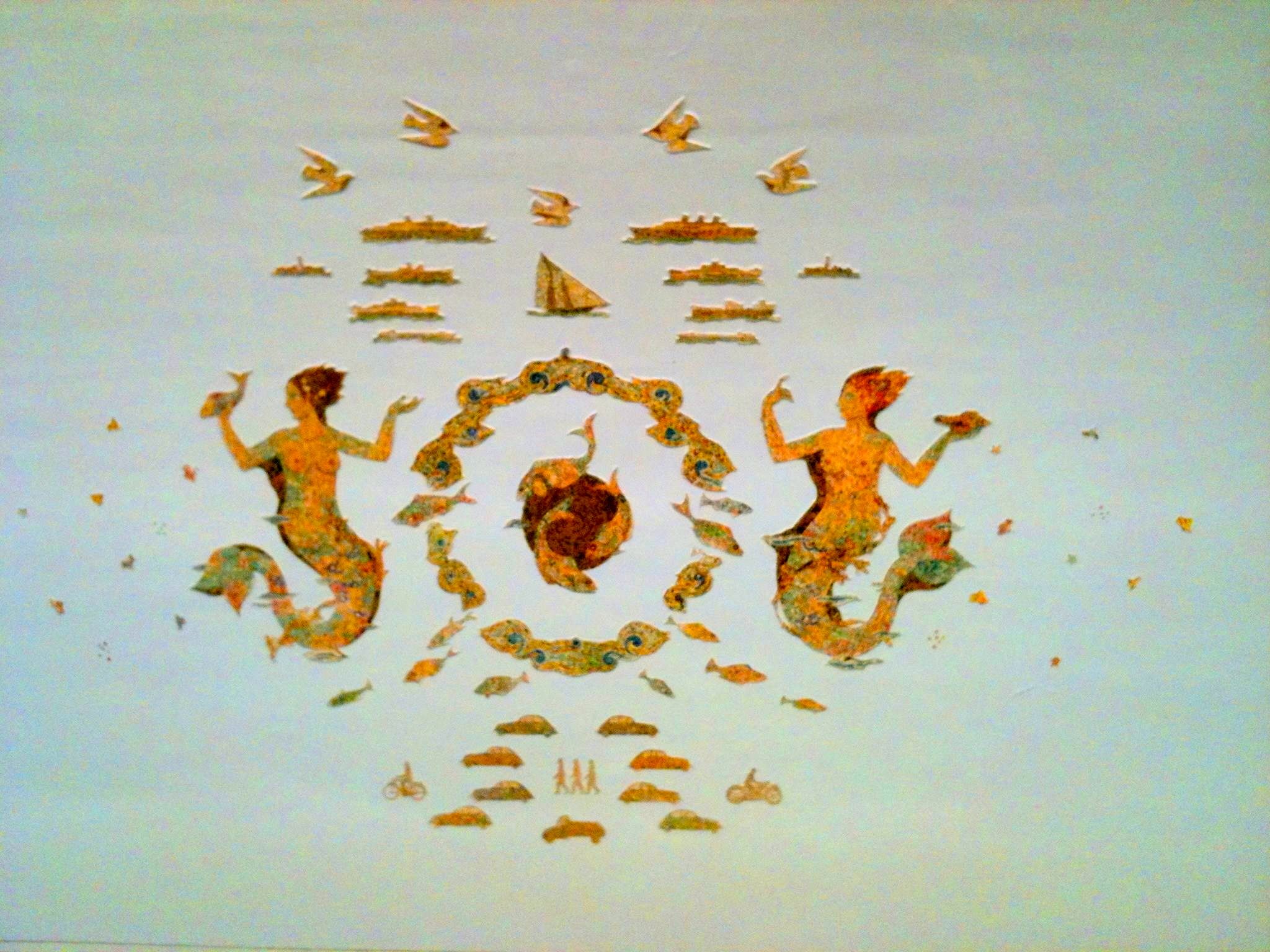
This mosaic is over the escalators that take pedestrians and cyclists in to and out of the south entrance of the Maastunnel in Rotterdam.  The tunnel is 585 meters / 1,920 feet long, and runs up to 20 meters / 66 feet below the river Nieuwe Maas.

The mosaic on the north side, visible in the following video, features mermen instead of mermaids.

Translated Lyrics
Two big copper dome roofs: north and south
Is where this tunnel sees them all go in and out
On the escalator cyclists stand oblique
They carry bags with lunch and start their working week

[Chorus]
Back to you, under the river Maas
Back to you, your echo I can’t lose
Back to you, and endless corridor
Tiles up the wall, I long for more
Back to you

I just go on, for there is still no end in sight
I get back in time, by the 1940’s light
The escalators rattle on the other side
You – at the end of this long tunnel – end my ride

[Chorus]

Closer to home is this mosaic on a wall of the sports center in Voorschoten.

The bike path to Rottermeren runs under the A12 highway and the train tracks near Moerkapelle.  The tunnels are tiled with patterns of flowers and birds.

This last piece was not on a wall but on the side of a truck.  It is however quite emblematic of the Netherlands, which is the center of production for the European floral market, as well as a major international supplier to other continents. More than Euro 5 billion worth of cut flowers are exported annually.

It certainly is worth slowing down to smell the flowers once in a while.

Things to See on a Bike in the Netherlands: Public Art

Posted on

It is not just windmills, cheese and tulips in the Netherlands.  The country is also a center for the visual arts, and has been since the 17th century.  Every town and city has at least one art museum.  The Dutch website Museum.nl lists 325 museums in the ‘fine arts’ category.

If you want to see a Rembrandt, a Vermeer or a van Gogh you will of course have to visit a museum.  (Click the arrow below to hear how the Dutch pronounce “Vincent van Gogh”).

Sculpture, on the other hand, is not confined to sculpture gardens like that at the Kröller-Müller Museum or the Museum Beelden aan Zee.  Public art is everywhere in the Netherlands.

Some is in a classic style.

This statue commemorates the many Maassluis residents who have lost their lives at sea. The inscription on this statue is from the poem “The Sea” by Antoine “Toon” Hermans, a noted Dutch comedian, singer and writer.

It reads “. . . en de zee zal mijn zwijgen wel verstaan . . .” / “. . . and the sea will understand my silence . . . ”

This memorial is in Hoek van Holland.  It is called “Channel Crossing to Life.”  It commemorates the 10,000 mainly Jewish children from Germany, Austria and Czechoslovakia, who were permitted to enter England without their parents and escape Nazi persecution.  Most crossed the English Channel to Harwich from Hoek van Holland.

This gentleman can be found in Delft.

This fine fellow is watching the world go by in Leiden.

Some public art is in a modern style.

This statue is in Maassluis.

The Dutch equine industry is highly regarded in the Sports Horse sector, and particularly in terms of the standard of breeding and bloodlines. The equine industry in the Netherlands is worth more than Euro 1.5 billion per year.  This horse graces a field in Valkenburg.

I see lots of people out and about on horseback Ho

I noticed Dick Tracey in Den Haag soon after I arrived.  It was much later before I discovered that the building behind him is occupied by a branch of the Dutch police.

I’ve never seen anyone lounging on this seat in Hoek van Holland.

I am embarrassed to admit that I rode this route on the outskirts of Zoetermeer many times before I noticed this sculpture.

And some public art is just plain weird.

This melange of animals stands outside the Stadhuis in Den Haag.

Den Haag Stadhuis Sculpture

Surrendering in Hoek van Holland.

This multi-headed creature is in the Grote Markt in Den Haag.

Somewhere near Rijpwetering.  Interpretations anyone?

Classic, modern or weird:  all are visible from your bicycle.

King of the Mountains #4: Cameron Highlands

Posted on

CNN.com ran a feature about the Cameron Highlands a few days ago.  The Cameron Highlands, along with Fraser’s Hill and Kuantan, was a favorite family holiday destination in the late sixties and seventies.  We would head to a rented bungalow in the highlands to escape the heat and bustle of Kuala Lumpur.  I have fond memories of the Cameron Highlands.

So it was with some anticipation that I signed up for King of the Mountains #4.  The fourth ride in Dave Ern’s Nine Kings of Mountains 2013 series.

There are three roads up to the Cameron Highlands.  The Tapah road provides better access to food and drink enroute than the other two roads.  We were a baker’s dozen at the start.

Cameron Highlands Ready to Roll

Photo courtesy of Ann Daim

Which was at the Lata Iskandar waterfall, about 22 km / 13.6 mi from Tapah.

Lata Iskandar Waterfall

It is all uphill from the waterfall to Ringlet, 21 km / 13 mi away.

Cameron Highlands Profile

The road is shrouded in jungle as it winds its way around the contours of the mountain.

Cameron Highlands Road

This section is dotted with roadside stalls run by orang asli, the indigenous people of Peninsular Malaysia.  Most were selling jungle produce like petai or stink bean, wild honey and fresh bamboo shoot.  A few stalls had other things, like this one that had angklung and bird’s nests.

My naturalist friend Irshad Mobarak tells me that the nests were made by the male Baya Weaver.  After weaving the nest the male bird dances and sings to invite a female to inspect it. If she approves of it she will mate with him. If she does not like it she will unravel the nest and the male has to build a new one for her.  The Baya Weaver makes many such nests in a tree, and likewise he also has many mates too.

Cameron Highlands Orang Asli Stall

Ringlet (I wish I knew the etymology of the name) is just over the border between Perak and Pahang.  It is the first town along the road from Tapah to the Cameron Highlands.  The highlands are the only place in Malaysia where strawberries are cultivated on a commercial scale.  Hence this welcome at the start of the 1 km descent into Ringlet.

Cameron Highlands Strawberry

We stopped in Ringlet to regroup..  I took the opportunity to test out my new temperature regulation strategy.  (See Hyperthermia.  Avoid It!)

Cameron Highlands Cornetto Royale Chocoluv

It worked so well that I stopped in Ringlet on the way down the mountain for one of these.

Cameron Highlands Magnum Choco-Cappuccino

The next town was Tanah Rata.  A further 12 km / 7.5 mi up the road.  There was a photo opportunity along the way at the Cameron Valley Tea House.  Incidentally the site of the first traffic jam I encountered as cars and buses jostled for parking at the side of the road.

The Cameron Highlands is the largest tea growing area in Malaysia.  Boh, founded in 1929, is the largest plantation owner.  My biker chick especially likes the Boh Seri Songket teas.  The other major tea producer is Bharat, which started operations in 1933.  Bharat sells under the Cameron Valley brand.

The valleys around Tanah Rata and Brinchang are carpeted with bright green tea bushes and dotted with buildings for tea processing.

Cameron Highlands Bharat Tea View

Tanah Rata is what I remember being the ‘centre’ of the Cameron Highlands.  The holiday bungalows were all in the area.  Like the Shell bungalow at Bukit Ruil.

Photo courtesy of KumarKT

Photo courtesy of KumarKT

That is where the golf course is as well.  The golf club has expanded since I last hacked divots from their fairways.

Cameron Highlands Golf Course

The fabled Ye Olde Smoke House Inn is still beside the golf course.

Cameron Highlands Smoke House Inn

I don’t remember the inn being so close to a major road.  The Cameron Highlands was a much quieter place when I was a schoolboy.

Just north of the golf course I saw just how much busier the place has become.  There was a one-way traffic system around and through a commercial hub that houses at least fifteen budget hotels and holiday apartment blocks, and the restaurants that cater to them.  Despite the one-way system and a number of traffic policemen working the flow, things were at a crawl.  It was faster by bike, despite the 6% incline.

There was a line of vehicles for the next 3 km to Brinchang and the Equatorial Cameron Highlands.  The resort is 1,628 meters / 5,341 feet above sea level.  The highest accessible point in the highlands.  From the resort grounds you can see how the tourist trade now lives cheek-by-jowl with the vegetable farms that the Cameron Highlands has long been known for.

Much of this market gardening happens under protective roofs and plastic sheets that extend in terraces up from the valleys.

Cameron Highlands Vegetable Plots

The farms have themselves become tourist attractions.

Butterflies have long been a feature of the highlands.  Sadly I saw just one butterfly during my ride.  Not counting these ones.

Cameron Highlands Butterfly Garden

I turned around not far past the butterfly garden.  It was time to claim my reward for all that climbing.  Chasing and overtaking cars, lorries and buses on the switchback road back to the Lata Iskandar waterfall.  One bus driver in particular was astonished to see that a bicycle can carve through turns faster than most four-wheeled vehicles can.

Cameron Highlands Switchback

I enjoyed my ride to Brinchang.  I was less enthused with the changes I saw along the way.  The area is suffering from its popularity with visitors.  The Cameron Highlands may well be a cycling destination again for me in the future, but it won’t be a holiday destination anymore.