Tag Archives: Tubeless

I Wouldn’t Want to Service a Modern Road Bike

Photograph courtesy of Getty Images on unsplash.com

I took a Bike Maintenance course in 2012 to learn how to service my bikes myself. On the final day of the course, we had to completely strip a bike down, including removing the fork, disassembling the chain rings etc., cleaning and lubricating all the parts, replacing cables as required, reassembling the bike and adjusting the shifting and brakes.

I still own a bicycle from that time, a 2010 Alchemy with mechanical shifting and brakes. I can still service that bike if I had to, although I gladly depend on my local bike shop to service my bikes for me now.
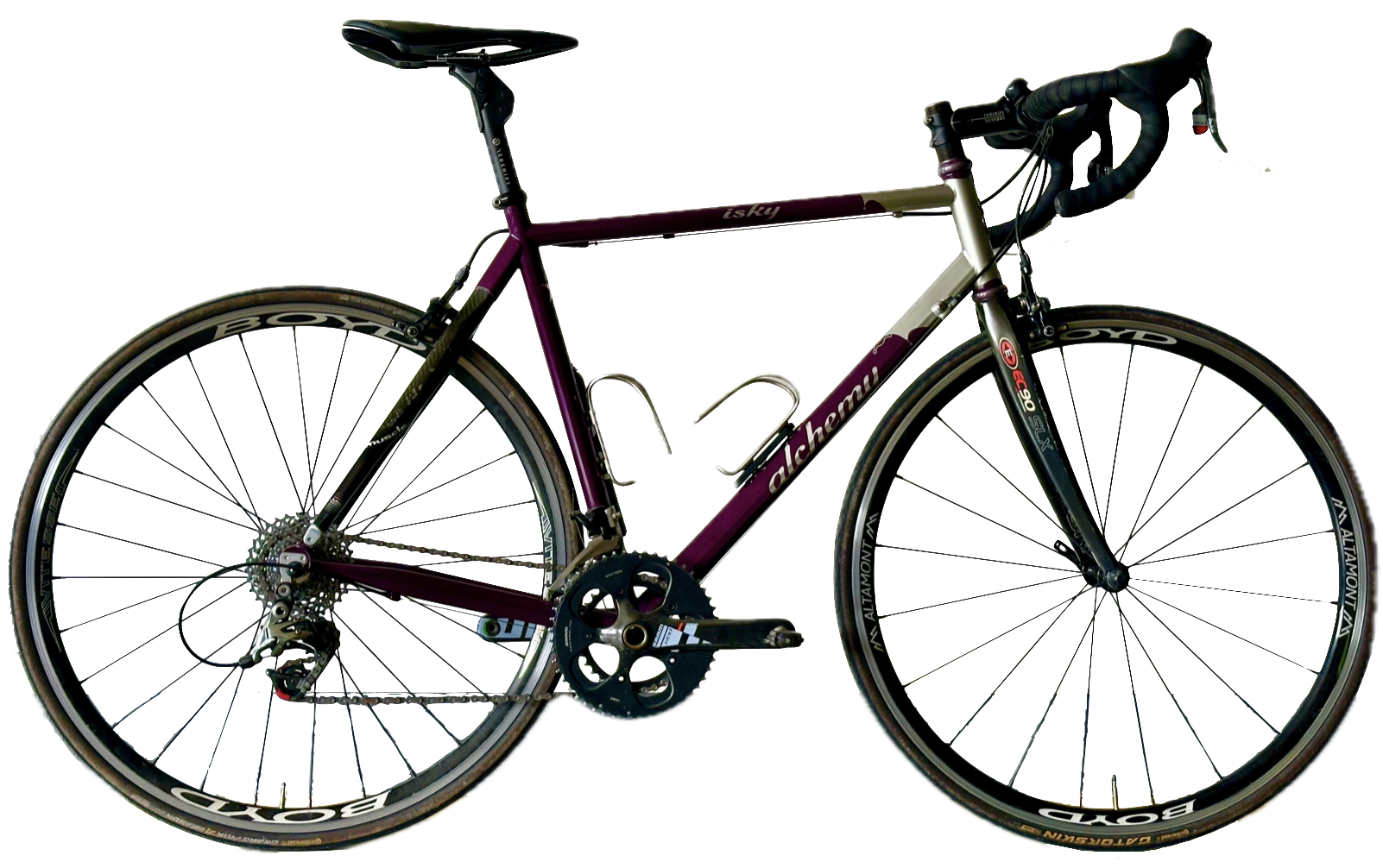
Bikes today are increasingly more difficult to service. I do not have the expertise or the tools to service a modern bicycle.

Advancements in modern road bikes make them more complex. Let us start from the top to compare my fifteen year-old bicycle with a modern one.

My bike uses externally routed cables to operate the brakes and gears.

Modern bikes use either partially or completely internally routed cables.
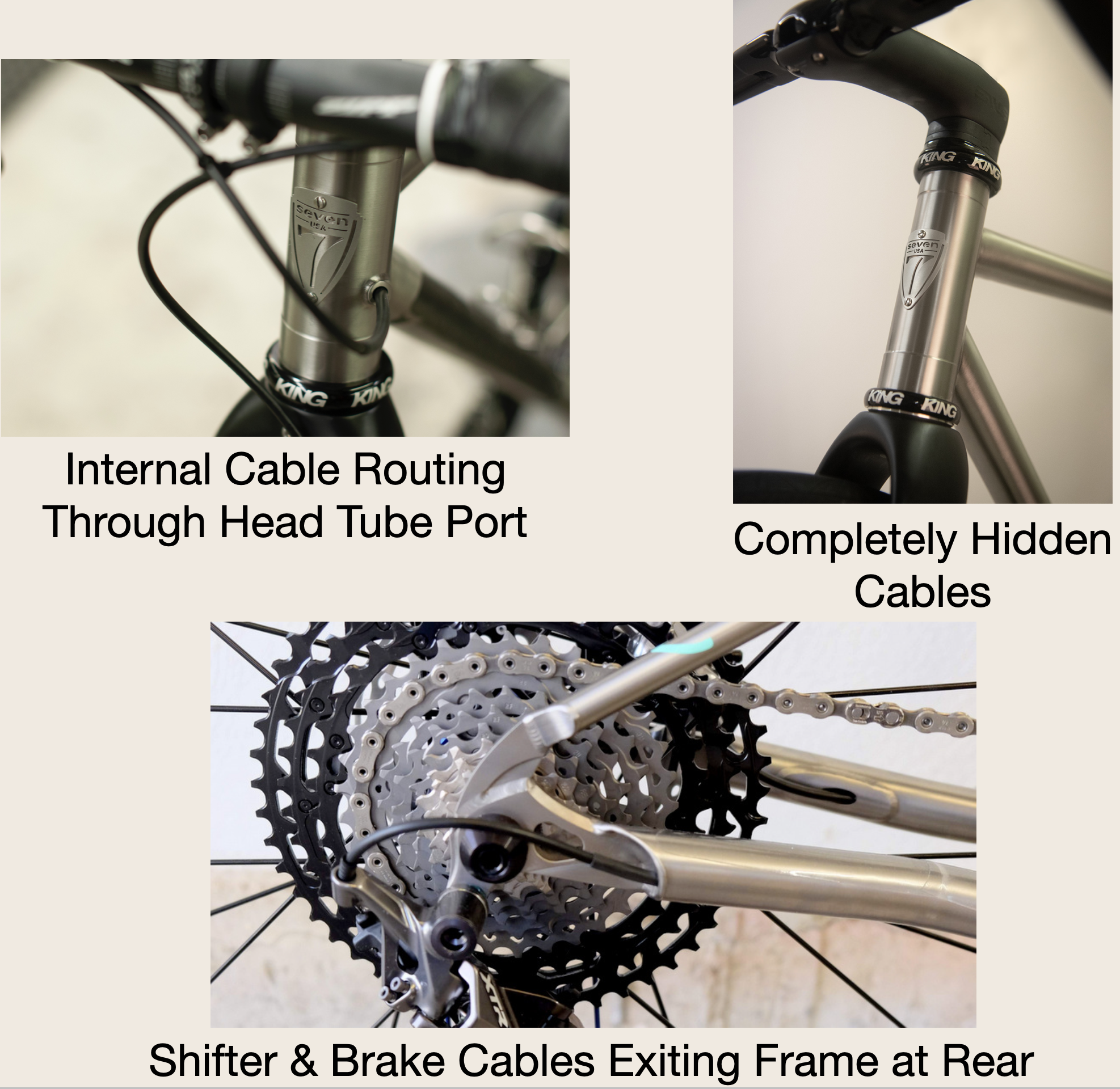
Photographs courtesy of sevencycles.com

Moving down the head tube to the brakes. My bike has rim brakes. Brakes on new bikes are exclusively disc. Often hydraulically operated.

Photographs courtesy of sram.com

Let’s now look at how these two advances make servicing more complicated.

When it comes to replacing cables on my bike, everything is visible so you can see what you are doing. The challenge with internal cables is that you have to thread them inside the frame blind, so to speak. Threading cables internally can be hindered by a tight curve around the bottom bracket.

A magnetic internal cable router is often needed.
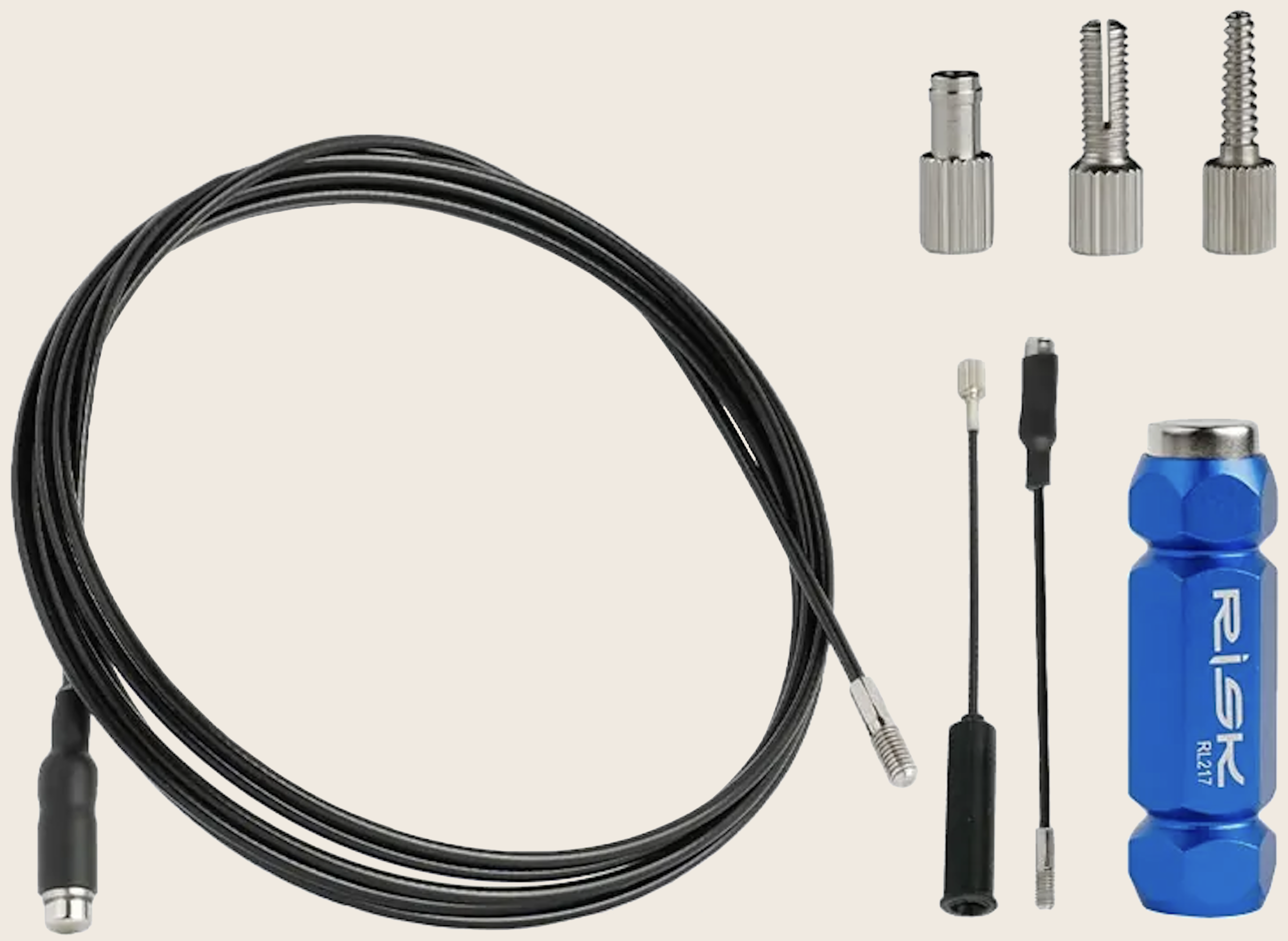
Photograph courtesy of freewheel.co.uk

Replacing internally routed cables is more complicated when they are fully hidden. The headset often needs to be disassembled because the headset components can obstruct access to the cable path. 

Photograph courtesy of freewheel.co.uk

Then there are the brakes. Apart from infrequent cable replacement, all I need to do to service my rim brakes is to replace worn brake pads. Rim brake pads for road bikes are a standard shape. To replace them, undo the screw that holds each pad in its holder, slide the old pad out and slide a new pad into the holder and tighten the screw.

Photographs courtesy of sram.com

How difficult it is to replace mechanically operated disc brake cables depends on whether they are externally or internally routed.

Replacing disc brake pads is a more involved process. First, you must choose the type of brake pad: sintered, organic and semi-metal. Your choice depends on the type of riding you do. You also need the right shape pads for the disc brake caliper you have on your bike.

Then you to use a tool to push and hold the brake caliper pistons apart. Woe betide you if the pistons close without brake pads in place. You must also ensure that you do not touch the pad surfaces or the disc rotor. Getting oils on the pads or rotor will adversely affect braking performance.

Lastly, you need to bed in the new pads. The bedding in process heats up the pads and rotor, transferring an even layer of material from the disc pad onto the disc rotor. Failing to bed in your disc brakes will almost guarantee to result in vibration, noise, poor modulation, and loss of power.

The brake servicing process is much more complicated if you need to replace your hydraulic brake hoses or bleed your hydraulic brakes. Bleeding requires the correct type of fluid for the disc brakes on your bicycle: mineral oil or DOT fluid. The bleeding process is too long to describe here, but you get a sense of the steps involved from the number of parts in the Disc Brake Bleed kit pictured below.
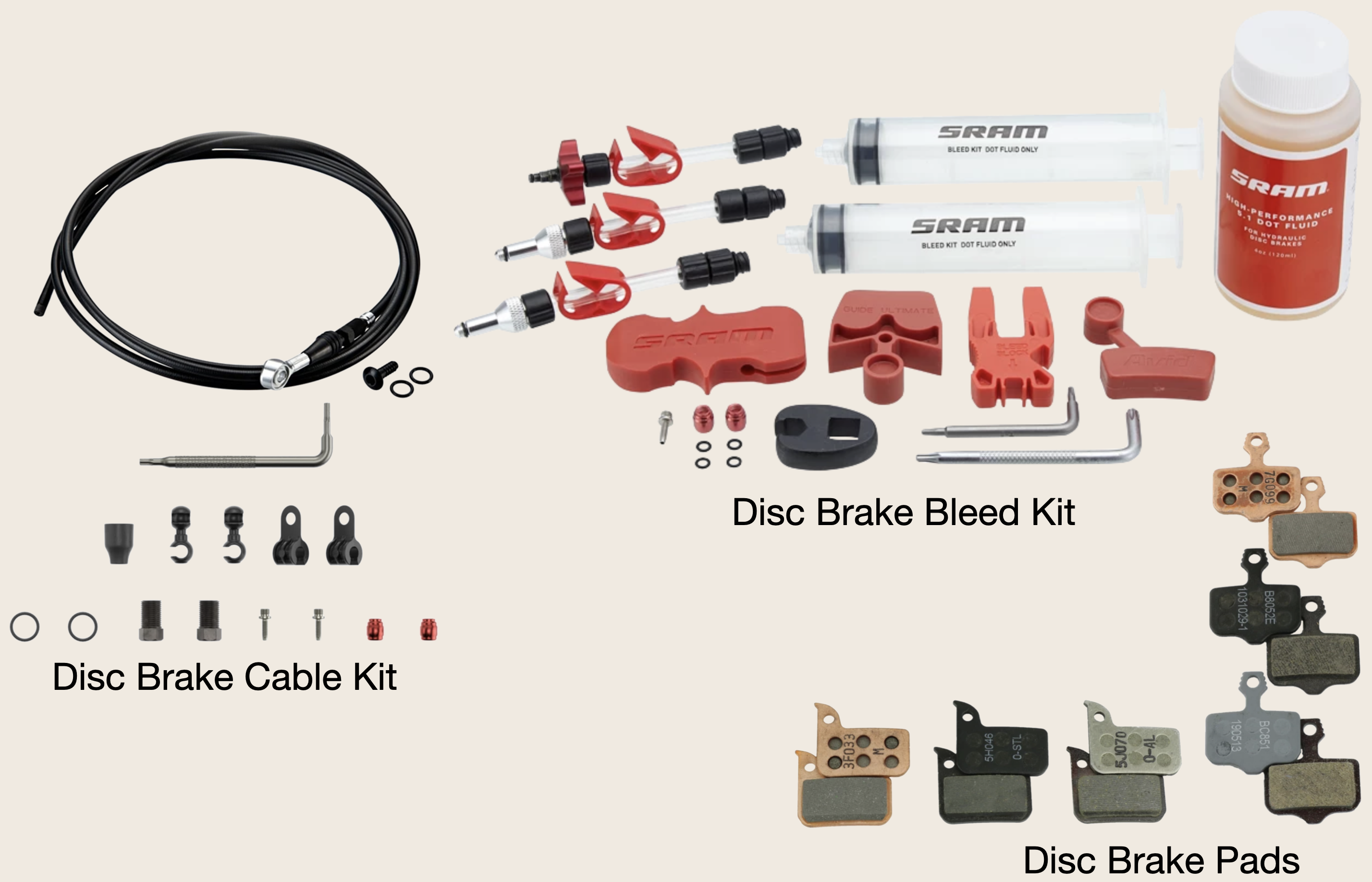
Photographs courtesy of sram.com

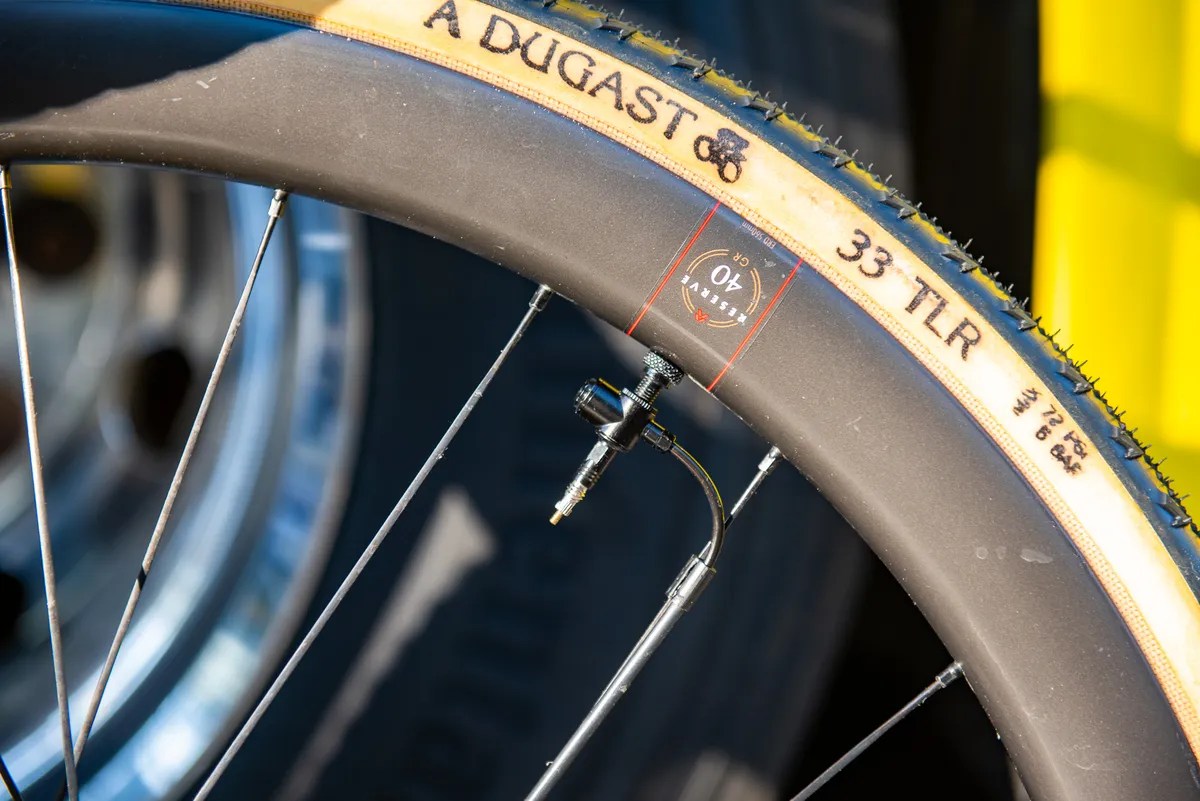
Further down the bicycle are tyres. My bike has clincher tyres and inner tubes. Many new road bicycles, particularly higher-end models, ship with tubeless-ready tyres and wheelsets. Some bikes may ship with tubes in the tyres to simplify showroom setup, but the wheels and tyres are often tubeless-ready.

You can argue that tyres do not need service. However, a tubeless setup requires semi-regular maintenance to keep it performing at its best, as brakes do.

Tubeless tyre sealant gradually dries out. Manufacturer recommendations for sealant top-off intervals range between three and six months. It is also suggested that you take your tyre completely off the rim every twelve to eighteen months to scrape out the dried sealant.

The need to regularly top off the sealant, scrape out dried sealant and the fact some tubeless tyres are tricky to mount and/or need a dedicated tubeless inflator or air compressor to seat makes tubeless setup and maintenance inherently more onerous than using clincher tyres and inner tubes.

Photographs courtesy of bike radar.com & bicycling.com.

Last year, I wrote a post titled Tubed or Tubeless Tyres? The photographs below from that post illustrate how much more stuff you need to run tubeless tyres versus clincher tyres.

I’ll stick with my fifteen-year-old bicycle. My bike mechanic and I prefer the simplicity.

Photograph courtesy of WordPress AI

Bicycle Tyre Upgrades: A Thing Since 1817

Clockwise from top left, photographs courtesy of bikeradar.com, lebelbicycles.com, cyclingnews.com and cyclingweekly.com

A web search for “Best Bicycle Upgrades” will produce suggestions with tyres at or close to the top of the list. It shouldn’t be surprising that tyre upgrades have been a “must have” since the bicycle was invented.

Illustration courtesy of bicyclehistory.net

Karl Drais invented his Laufmaschine (running machine) in 1817. Later known as a “draisine,” this vehicle had wooden wheels. Despite unpaved roads and solid wheels, Drais propelled his machine, Fred Flintstone fashion, nearly 16 kilometres in just over an hour.

Photograph courtesy of coimages.sciencemuseumgroup.org.uk

By 1866 Pierre Lallement received a US patent for a bicycle propelled by pedals attached to a slightly larger front wheel. These bicycles were called bone shakers because of the exceedingly uncomfortable ride caused by the stiff wrought-iron frame and wooden wheels surrounded by iron tyres.

Photograph courtesy of cars.bonhams.com

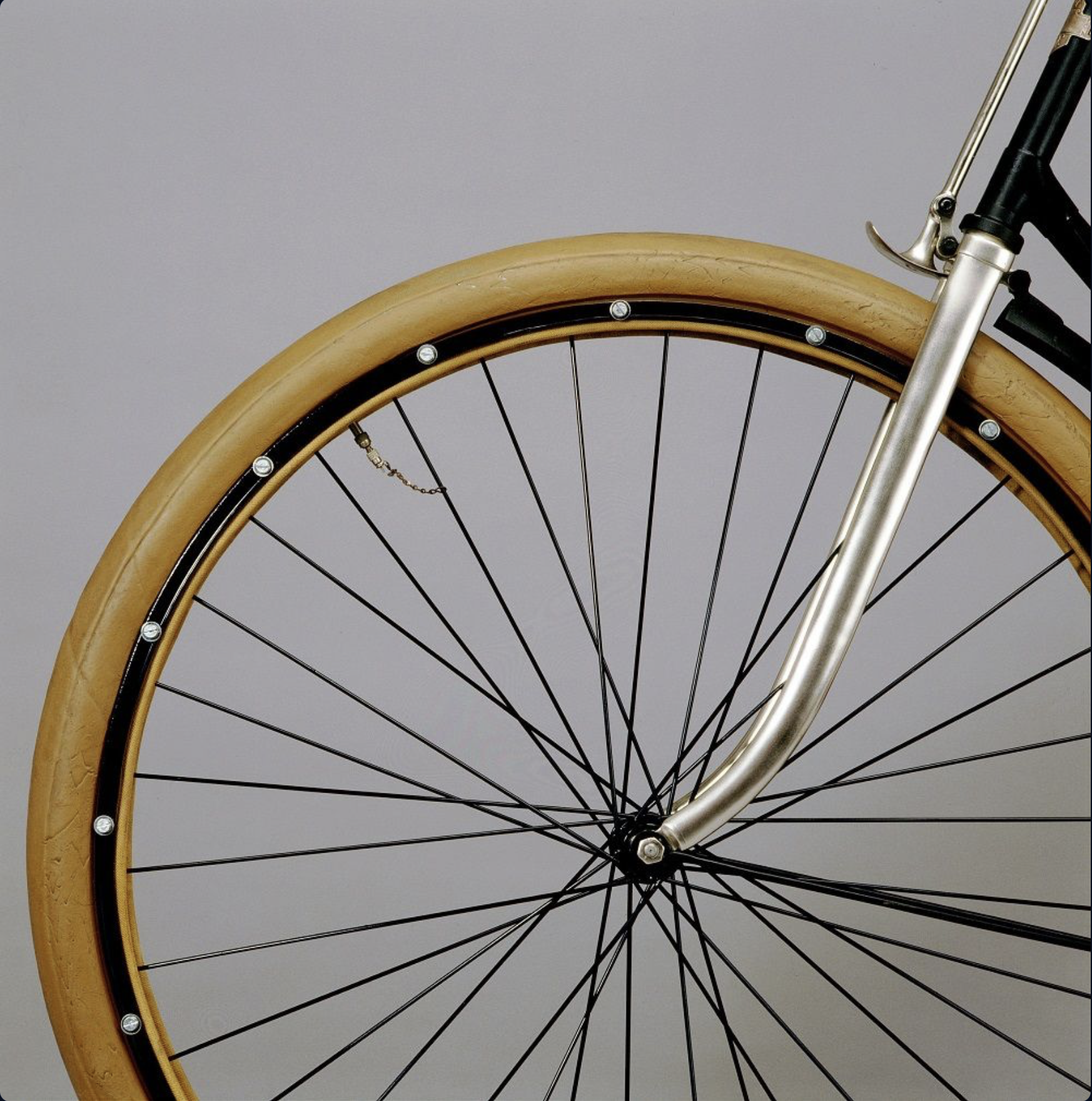
An upgrade, available since Charles Goodyear patented his vulcanisation process in 1844, was solid rubber tyres. Such tyres improved on solid wooden wheels or spoked wheels with iron rims, but they still gave a jarring ride.

Photograph courtesy of coimages.sciencemuseumgroup.org.uk

In 1885 John Kemp Starley and William Sutton introduced the Rover safety bicycle with a chain and sprocket drive and equally sized wheels. The Rover came with solid rubber tyres.

Photograph courtesy of heritage-print.com

Arguably the last major innovation in tyres came in 1887 when John Boyd Dunlop, in an attempt to smooth the bumpy ride of his son’s tricycle, nailed linen-wrapped inflated tubes to the solid wooden tricycle wheels. These were the first pneumatic, or air-filled, tyres.

The photograph above shows Johnny Dunlop riding his newly improved tricycle.

Photograph courtesy of progress-is-fine.blogspot.com

An improved version found immediate use among the growing number of enthusiastic bicycle riders. The first pneumatic tyre factory was started in 1889 to make tyres under Dunlop’s patent of 7th December 1888.

The photograph above shows Dunlop holding a bicycle fitted with pneumatic tyres.

Photograph courtesy of michelin.com

In 1891 André and Édouard Michelin introduced detachable pneumatic tyres for bicycles, and August Schrader invented his namesake Schrader valve. At the end of the 19th century, Etienne Sclaverand registered his patent for the Presta valve.

One can argue that the next step-change in bicycle tyres didn’t come until 1999 when Mavic introduced the first tubeless wheel and tyre system for mountain bikes. It was 2006 before Shimano and Hutchinson introduced a road tubeless standard. 

Photograph courtesy of cdn.mos.cms.futurecdn.net

The next bit of bicycle tyre innovation came when Marianne Vos showcased self-inflating tyre technology while winning the 2024 UCI Gravel World Championships. The Gravaa system uses tiny compressors within the wheel hubs to increase or decrease tyre pressure.

Despite these innovations bicycle tyres are what they were 135 years ago. They are air-filled tubes inflated via a valve. Admittedly bicycle tyres are better designed and constructed today.

Photograph courtesy of smarttirecompany.com

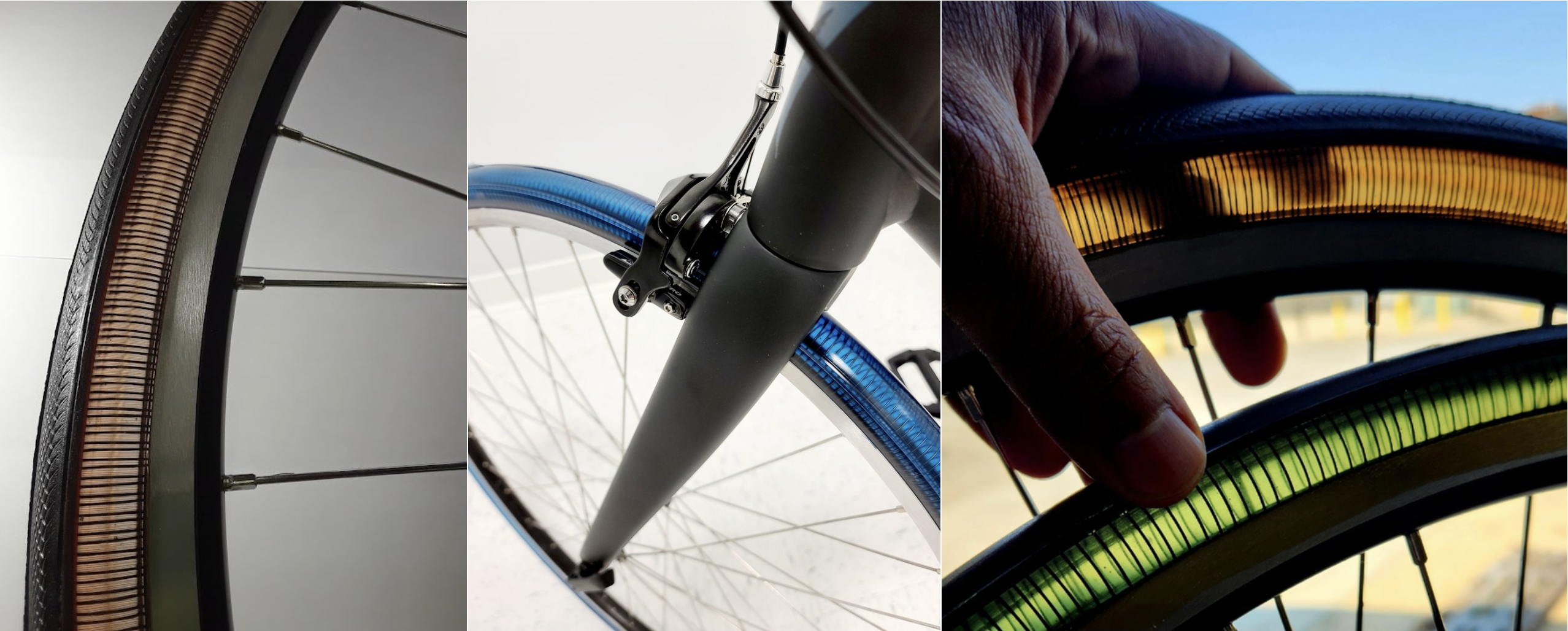
That may be about to change. The SMART Tire Company aims to commercialise an airless alloy tyre called METL (Martensite Elasticized Tubular Loading). METL was invented for space exploration. SMART is an acronym for Shape Memory Alloy Radial Technology.

METL promises to revolutionise bicycle tyres. Airless, never flat, elastic like rubber yet strong like titanium. At launch, these tyres are expected to cost USD150 each. The tread is rated for 13,000 km and retreads will be available for about USD10 per tyre.

The key phrase is “at launch.” The initial launch was expected to be in Q2 2022. That slipped to June and ,then Q4 2024. Today you can visit the SMART Tire Company’s website and add your name to a 2025 Wait List.

Photographs courtesy of smarttirecompany.com

I hope the SMART Tire Company does launch METL at an affordable price. That would be a proper tyre upgrade. Perhaps there will be an option for sidewalls that match your bike.

Tubed or Tubeless Tyres?

When I bought my bicycles in the early to mid-2010s, the only wheel and tire choice was tubular or clincher. Tubular tyres are glued onto the wheel. Clincher tyres have a bead that fits under hooks on the rim to hold the tyre onto the rim. If punctured, the repair of a tubular tyre can be more challenging, and, in many cases, it’s more feasible to replace it. A clincher tyre has an inner tube which is easy to replace.

Graphic courtesy of support.enve.com

Despite the advantages of tubular tyres – lightweight, better ride quality and lower rolling resistance, the choice of tyre for me was a no-brainer. I didn’t want to deal with glueing tyres and carrying a spare tubular tyre when I rode.

In 1999, Mavic introduced the first tubeless tyre for mountain bikes. In 2017, Mavic launched a ‘Road UST’ standard specifying dimensional and pressure requirements. This standard was then used by the European Tyre and Rim Technical Organisation (ETRTO) to develop road tubeless standards that were implemented in 2019.

There are three choices of non-tubular tyre and wheel combinations today. Clincher with tube, tubeless with hooks and tubeless hookless. Hookless rims are the most recent innovation in road cycling wheels. The ETRTO set standards for hookless rims in 2019.

Graphic courtesy of support.enve.com

The debate about whether to go tubeless is a lively one. There is no doubt about the benefits of road tubeless. As compared to tubed clincher tyres, tubeless systems offer:

  • Lower tyre pressures
  • Greatly reduced risk of puncturing
  • Repair options
  • Lower rolling resistance
  • Less weight

Tubeless tyres come with drawbacks as well:

  • Require compatible wheels
  • Can be difficult to install
  • Require sealant
  • Punctures can be messy
  • Require regular maintenance
  • Expensive

I still ride on clinchers. I don’t get many punctures and am happy to change an inner tube when I do. I don’t ride fast enough for lower rolling resistance and weight to make a difference. For me, the disadvantages of road tubeless outweigh the advantages.

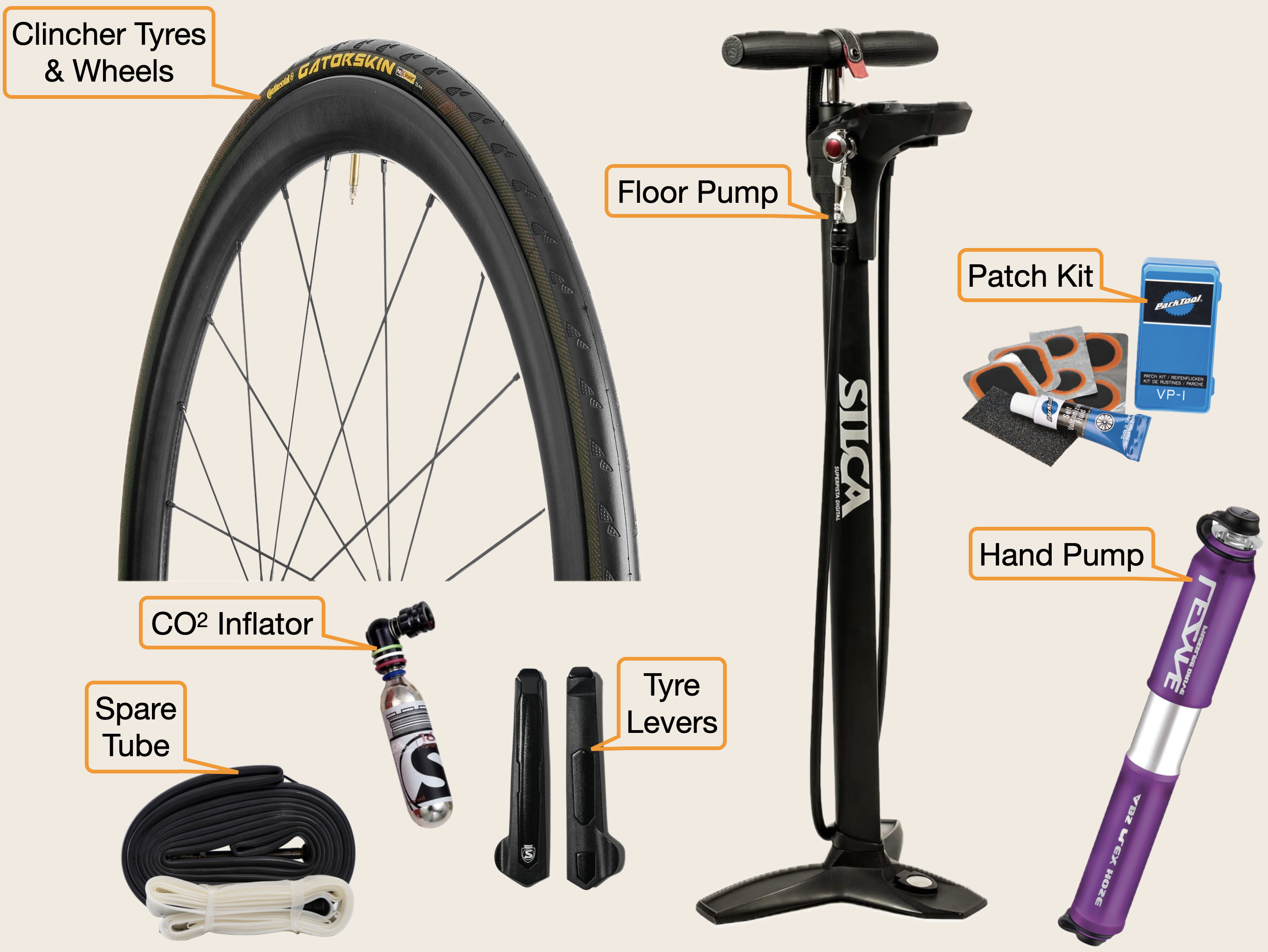
Someone switching to road tubeless tyres would require most, if not all, of the items below. I suggest tubeless rather than tubeless-ready wheels. Tubeless wheels do not require rim tape. Choose tyres that are on the wheel manufacturer’s compatible tyre list. An incompatible tyre might roll off the rim, potentially causing injury or even death. A tyre that is the right size for the rim may negate the need for tyre mounting pliers. Seating a tyre in a rim will require a high-pressure pump. Despite sealant in the tyres, pack a spare tube and a high-pressure pump or CO2 inflator in case a puncture is too large for a plug to repair.

What You Need to Run Tubeless Tyres

Apart from the carbon rims (I ride on alloy rims), the items below are the exact items I use to keep my bicycle wheels rolling. The Continental Gatorskins are not the lightest tyres but the PolyX Breaker™ cut and puncture-proof layer is worth the extra 115 grams over the Vectran™ Breaker layer in a Continental Grand Prix 5000 tyre. The only maintenance these tyres need is an occasional top-up of air using my Silca Superpista floor pump.

What You Need to Run Clincher Tyres

A challenge to greater acceptance of road tubeless tyres is the level of confusion around which tyres can be used with which rims. The ETRTO road tubeless standards act as a guideline for rim and tyre manufacturers, but there is no law forcing manufacturers to adhere to these standards. This is especially problematic with hookless rims.

Earlier this month the Union Cycliste Internationale (UCI) issued a statement stating it is investigating “recent incidents” involving hookless rims and tubeless tyres “as a matter of urgency… in the interest of rider safety” following Thomas De Gendt’s crash at the UAE Tour in March 2024, which saw his 28mm-wide Vittoria Corsa Pro TLR road tyre blow off a Zipp 353 NSW wheel, which uses hookless rims.

For those wanting the benefits of road tubeless tyres and especially hookless rims, there is hope for the technology to become much more accessible and easier to use as the industry agrees on new standard guidelines. The use of road tubeless tyres may one day match the almost 100% acceptance of tubeless tyres for mountain bikes, where tubeless compatibility is mostly straightforward.

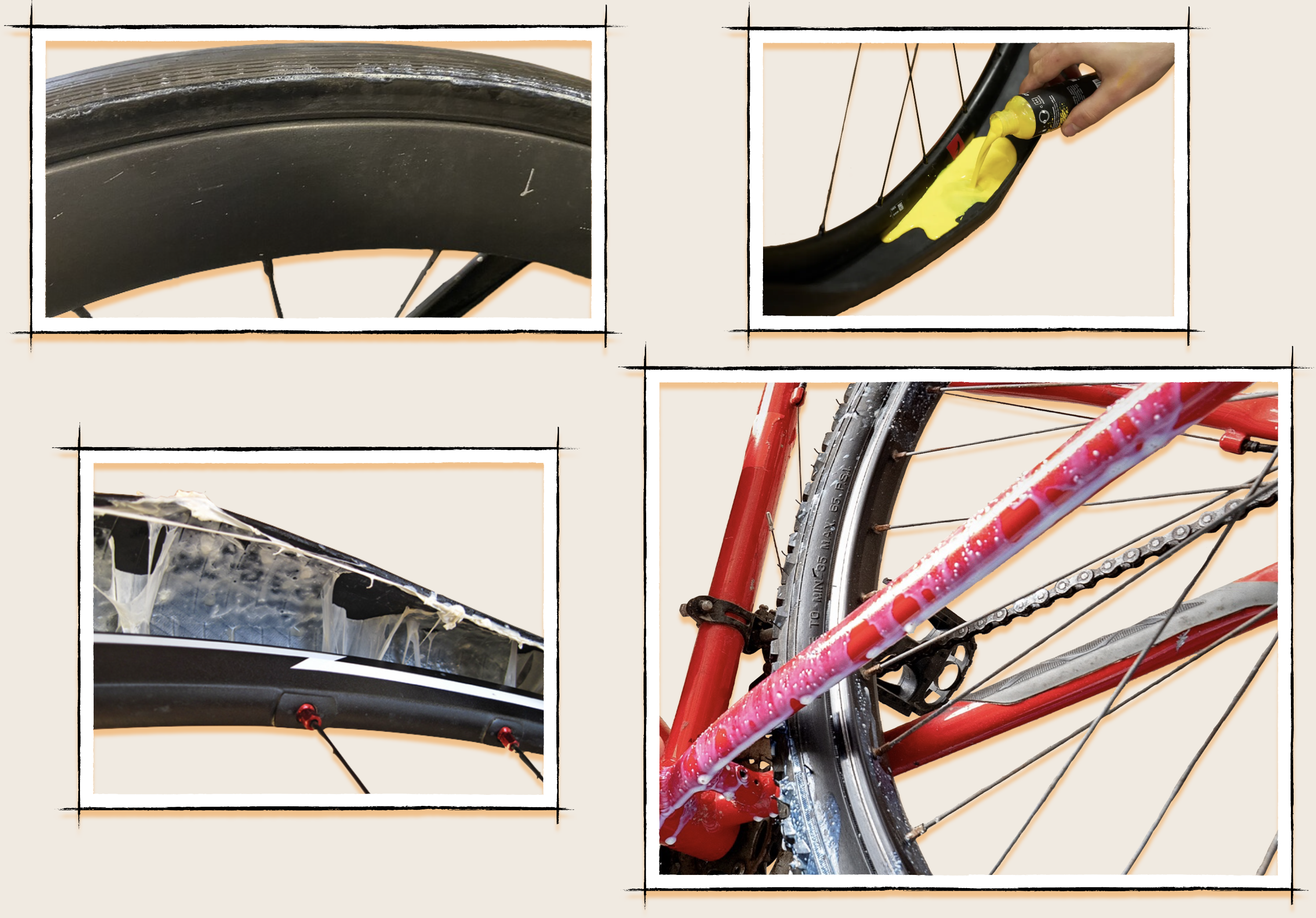
My issue with road tubeless tyres is the hassle sealant brings. Sealant oozing through sidewalls. The potential for spills when pouring sealant into the tyre. Sealant spraying out through a puncture. The need to remove dry sealant from inside the tyre and valve.

Photographs clockwise from top left courtesy of trainerroad.com, bikeradar.com, GCN Tech and slowtwitch.com

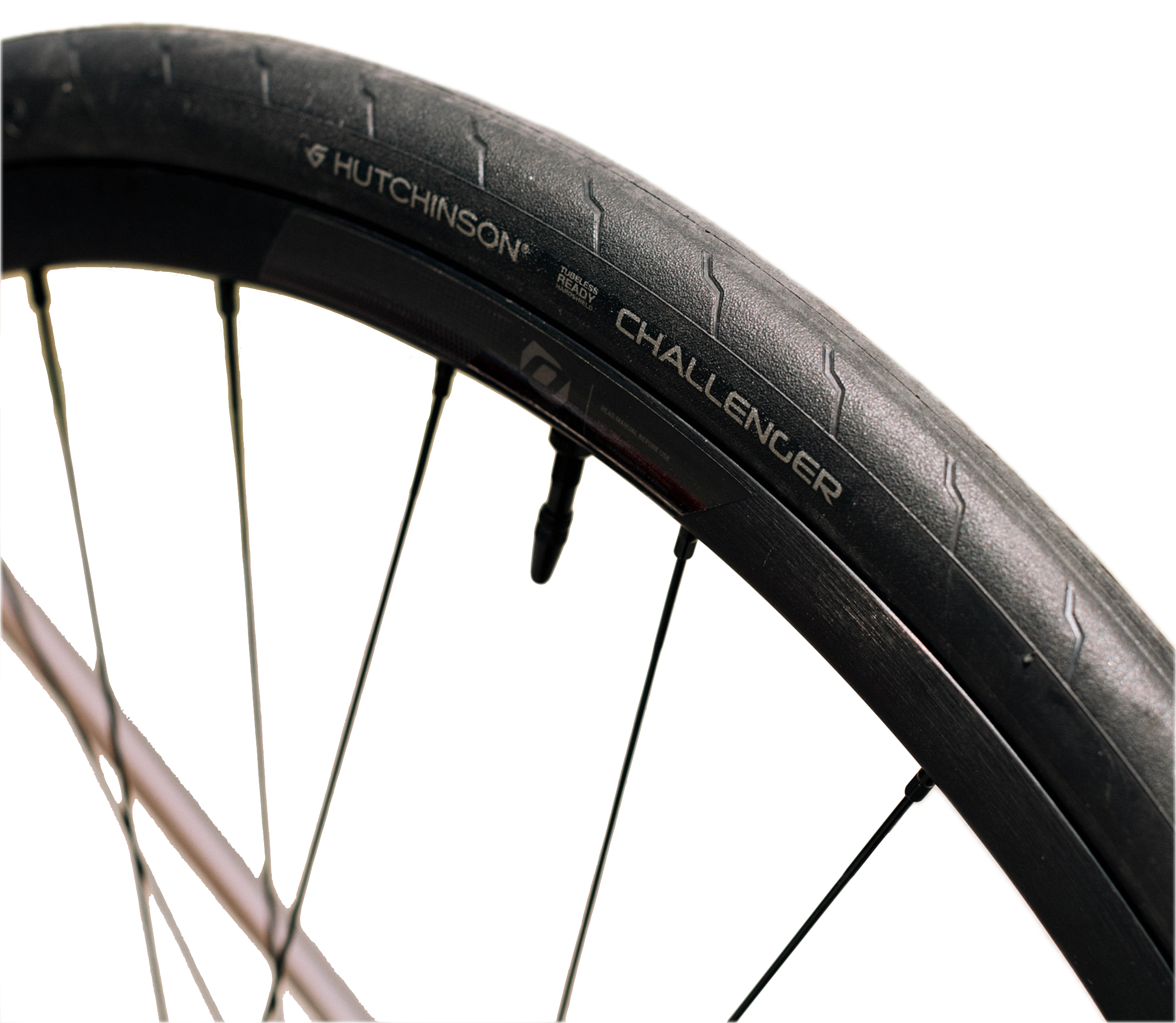
There is a new tyre on the market that may address these issues. The Hutchinson Challenger TLR. This tubeless tyre is designed to run without sealant.

Photograph courtesy of cycling.hutchinson.com

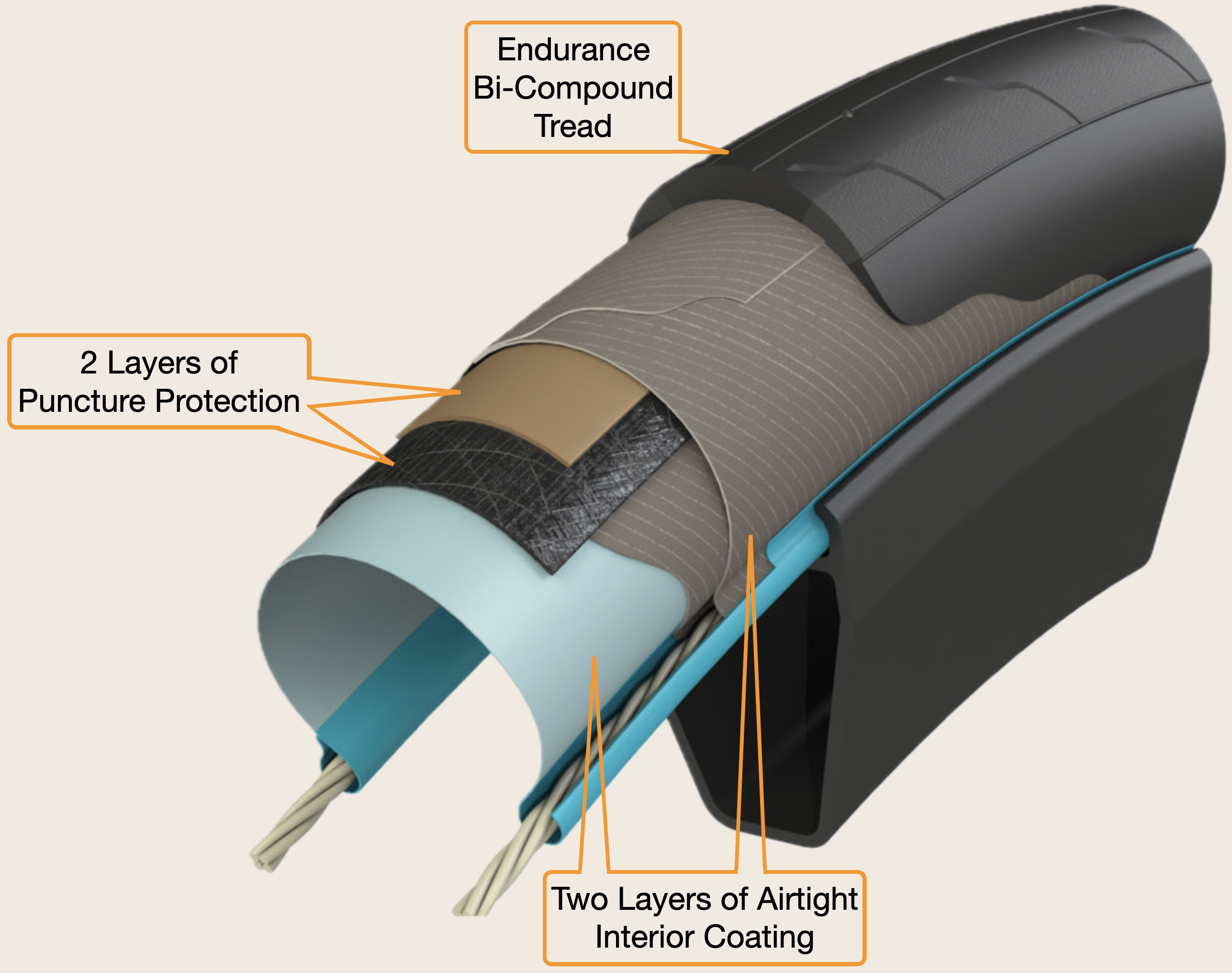
Hutchinson’s HARDSHIELD™ technology provides puncture protection. Their AIRSHIELD™ technology ensures the tyre is airtight.

Graphic courtesy of cycling.hutchinson.com

The Challenger TLR is an all-season tyre that apparently offers better ride quality than the Gatorskins I use now. At about €60 / MYR300 the Challenger TLR is not a cheap tyre. Nevertheless, when my clincher tyres need replacing I may take the plunge into the road tubeless world with the Hutchinson Challenger TLRs.