A grimpeur is a climbing specialist. A lightweight cyclist who can ride especially well up inclines. I am not one of those. I am more Magnus Backstedt, a retired professional cyclist who raced weighing 95 kg (209 lb), than Tadej Pogačar, who won this year’s Tour de France weighing 66 kg (146 lb).
Perhaps fortuitously, I started road cycling in Houston. A city where the only climbs are on overpasses.
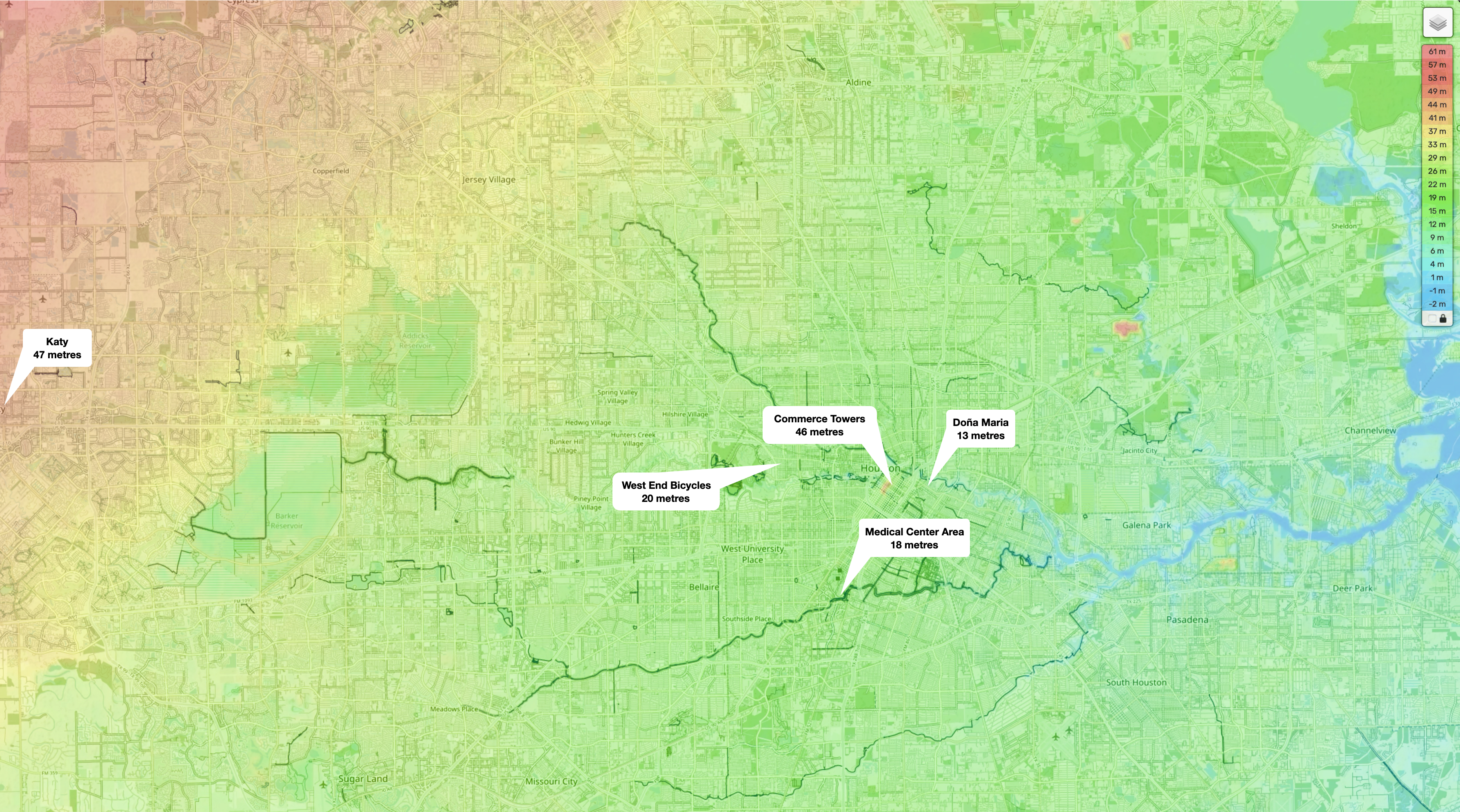
Map courtesy of en-gb.topographic-map.com
This topographic map shows just how flat Houston and the surrounding area are. I hadn’t realised that Commerce Towers, where I lived in Houston, is in the highest part of the city, at 46 m (151 ft) above sea level. It is downhill from there to West End Bicycles where my group rides started. Doña Maria, our Sunday destination for breakfast tacos, is even lower.
You must drive about 48 km (30 mi) west to Katy and onward another 43 km (27 mi) to Bellville (elevation 92 m) to do any hill cycling.
I moved from Houston to Den Haag. Another city not noted for hills. Much of the surrounding area is below sea level.
Map courtesy of en-gb.topographic-map.com
I lived on Van Hougenhoucklaan which is 5 m (16 ft) above sea level. The sand dunes to the west are a natural form of coastal defence. They form the highest parts of the west of the country. You go 43 km (27 mi) east to Ruiterberg to find land twice as high as Noordwijk. Or 170 km (106 mi) south to Valkenberg which sits at 137 m (450 ft) above sea level.
I moved back to Kuala Lumpur after two years of pan-flat cycling in the western Netherlands.
Map courtesy of en-gb.topographic-map.com
My first ride in Malaysia was to Genting Sempah which is 637 m (2,090 ft) above sea level. That was a shock to my system.
I don’t have to go far from home to find a hill. Bukit Damansara is 6 km (4 mi) west of Anggun Residences. I climb 80 m (262 ft) to get there. Higher climbs lie to the east. Anything from 158 m (518 ft) above sea level to 500 m (1,640 ft) above sea level.
The terrain to the west isn’t as high, but it is rolling. An 18.7 km (11.6 mi) ride along the Guthrie Corridor Expressway (GCE) can include 361 m (1,184 ft) of climbing as you cycle up and down between 16 m (52 ft) and 70 m (230 ft) above sea level.
Map courtesy of ridewithgps.com
I can’t avoid hills, especially if I start riding from home. Climbing is hard work. In my case, the effort is worth it. I enjoy the payoff a lot.
I first encountered a Decathlon store in France in 2002. I had not seen a store selling equipment for multiple sports before. An innovation that founder Michel Leclercq introduced to sports retailing at his first store in Lille in 1976. Today, Decathlon is the largest sporting goods retailer in the world, with 1,700 stores in 70 countries and regions.
Decathlon opened its first store in Malaysia in 2016. There are 16 Decathlon stores in the country today, including the largest Decathlon store in Southeast Asia. That store in Shah Alam has a 2-floor, 5,000 sqm sales area with 230,000 products from 60 sports.
Photographs courtesy of Decathlon Shah Alam
Decathlon was not a brand I associated with high-quality bicycles and cycling gear. I thought of Decathlon as a big-box retailer selling budget bikes. That changed in November 2023 when Decathlon was announced as the co-title sponsor of French WorldTour team AG2R in a five-year deal. The team will be called Decathlon–AG2R La Mondiale. Decathlon has also replaced BMC as the team’s bike supplier. The team uses Decathlon’s in-house designed and assembled Van Rysel bikes, the RCR Pro road bike and the XCR time-trial bike.
Photographs courtesy of vanryselcycling.com
Van Rysel developed three new helmets for the Decathlon–AG2R La Mondiale team. The RCR, the FCR, and the XCR. Complementing the helmets are the Perf 900 and Perf 900 Light sunglasses.
Photographs courtesy of vanryselcycling.com
I needed a replacement for a Knog Plus light. I clip these lights onto a jersey pocket and sock to make me more noticeable at night. The red one no longer holds a charge. These lights are sold on the KNOG website as a pair for USD34.95 / MYR167 at the current exchange rate.
Photograph courtesy of knog.com
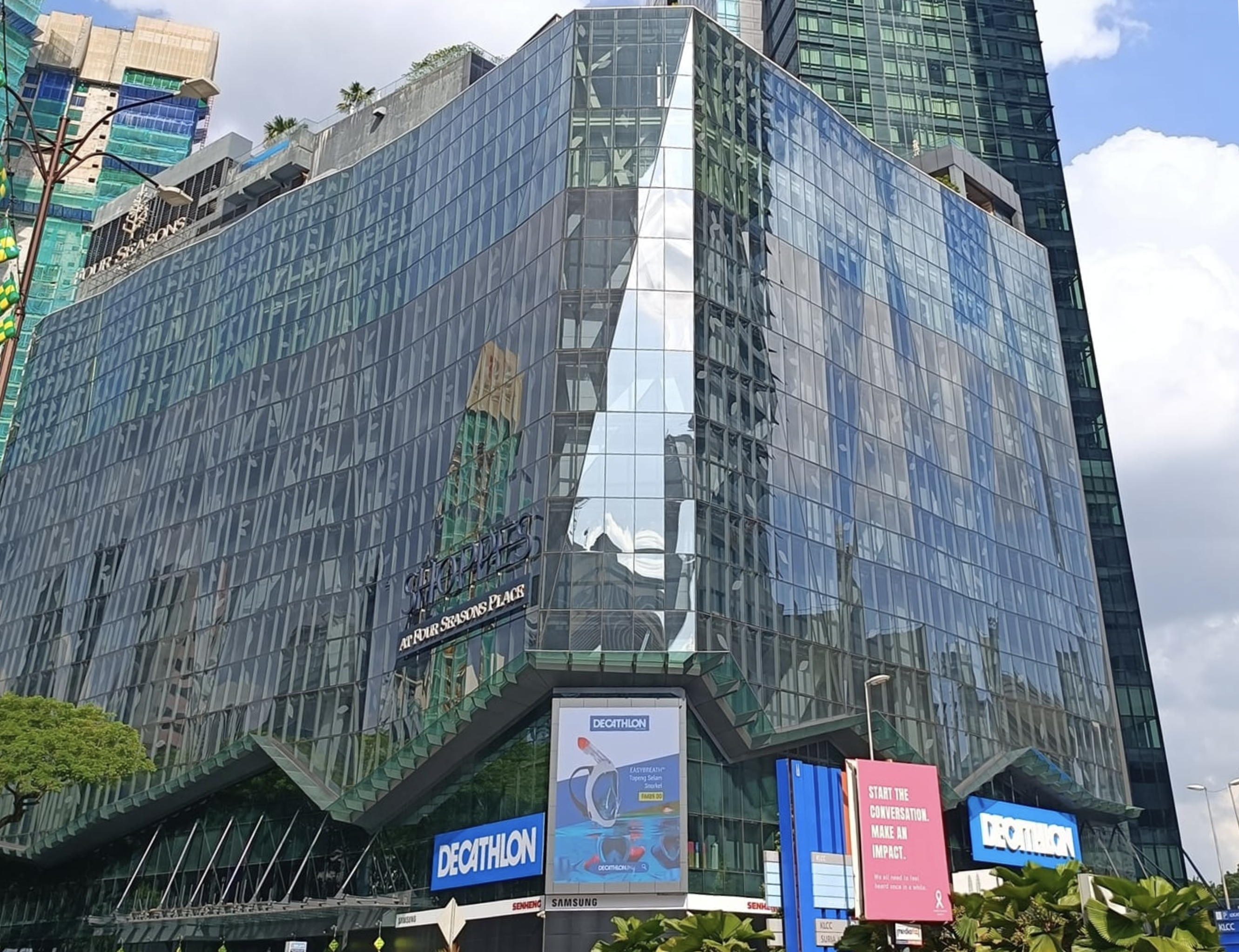
There is a Decathlon store in the city centre. It occupies the entire first floor in Shoppes at Four Seasons Place. Despite the AG2R La Mondiale connection, Decathlon doesn’t immediately come to my mind as a place to buy cycling gear. But having had a good experience with the arm screens I found there, I went to look for reasonably priced clip-on lights.
The Decathlon Malaysia website lists 679 products in its Home > Sports > Cycling section. Among those products are 6 types of bicycles, tools, lubricants, apparel, reflective wear, components, lights, and panniers. The list goes on and on. I suspect most of those items are available in the extensive bicycle section at the Decathlon store in the Shoppes at Four Seasons Place.
The same website shows 24 bicycle lights. Most of those are on display in-store. I wanted a light with flashing patterns and a clip. The Elops LED Front/Rear USB Bike Light CL 900 ticked those boxes. Elops is one of Decathlon’s in-house cycling brands. Others include Btwin, Rockrider, Triban and, of course, Van Rysel.
Photograph courtesy of decathlon.my
The CL 900 has 3 white modes and 2 red modes. I will use the 17-lumen red flash mode. Battery life is a claimed 9 hours in red flash mode. The clip is sturdy and secure. The CL 900 also comes with an elastic fastener to attach the light to a handlebar or other item that needs a looped fastener.
At MYR79 / USD16.65, the CL 900 is a good value. It does what I want, and it does those things well.
I have a new-found respect for Decathlon as a purveyor of bicycles and cycling accessories. Certainly worth considering for clothing and accessories like base layers and jerseys. The prices are certainly competitive.
Photographs courtesy of decathlon.my
The price of this Van Rysel base layer is ¼ of what other cycling apparel brands are asking. The usual cost of this Van Rysel jersey is at least 50% cheaper than other premium brands. The sale price is a steal.
I’ll be checking out Decathlon’s cycling gear offerings from now on.
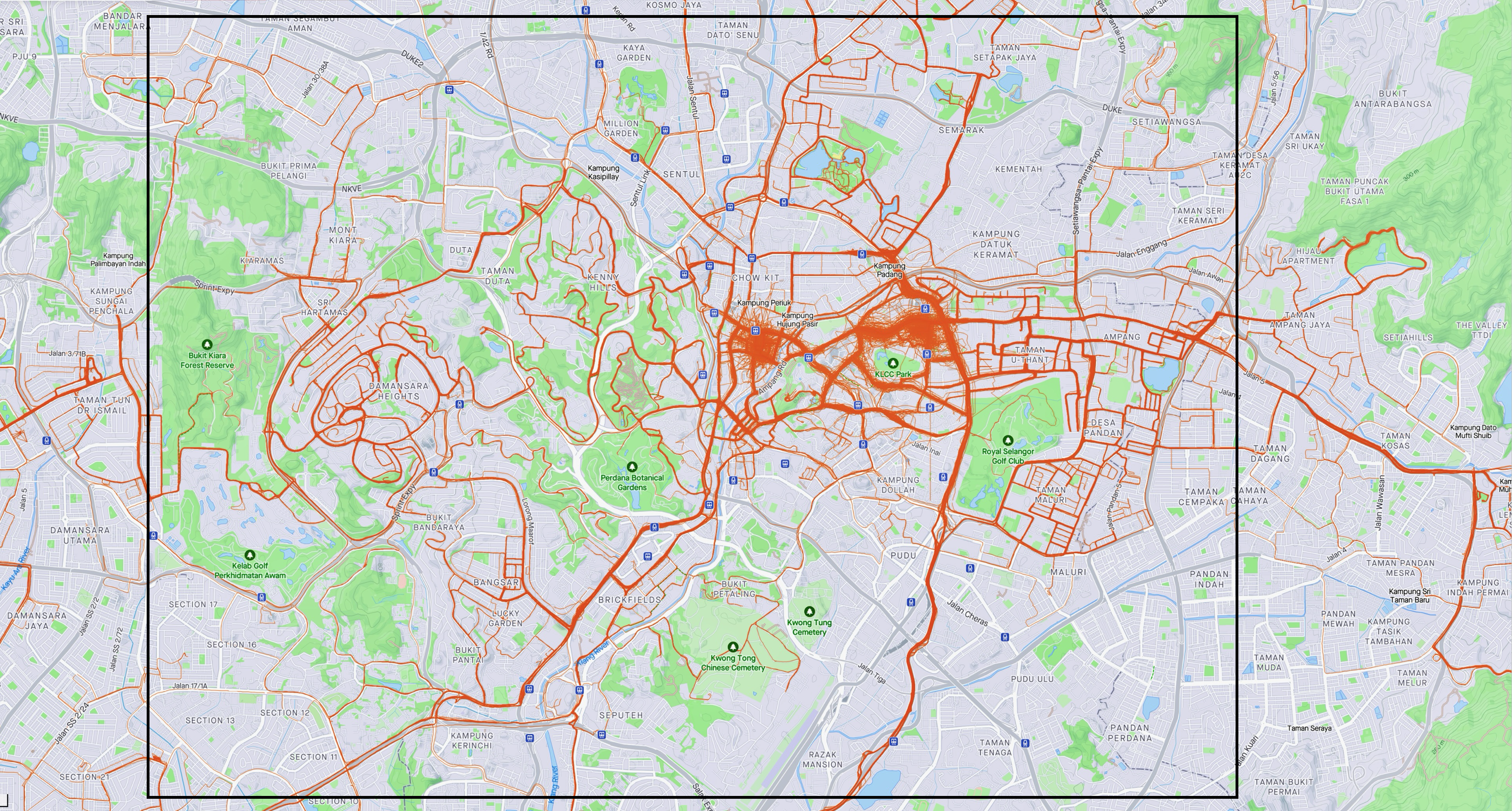
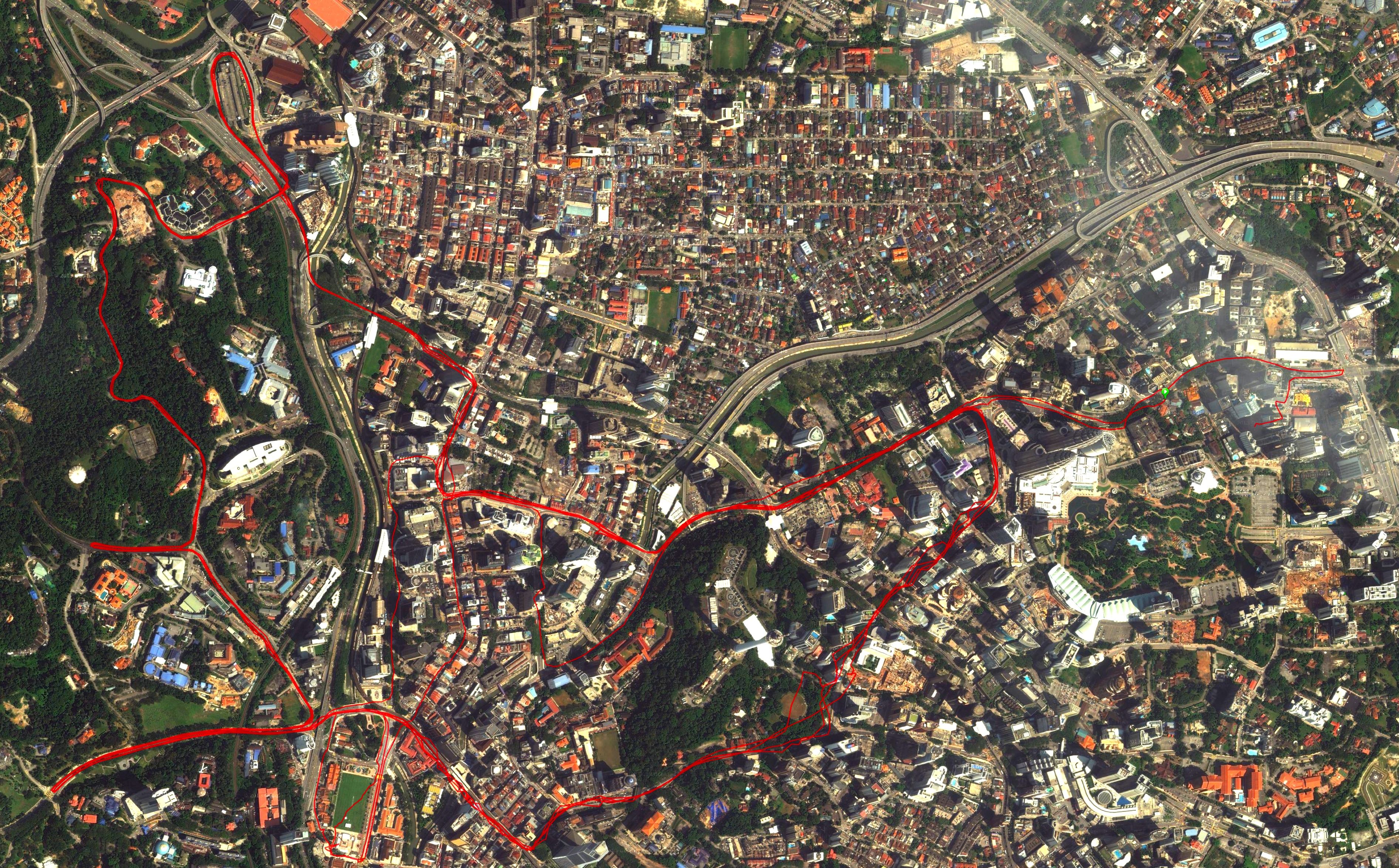
I came home to Kuala Lumpur (KL) in 2012. A city of 8.8 million people spread over 243km2. I have lived in the city centre since then. First, where the orange star to the right is, and now where the second star is. The pink compass rose marks the geographic centre of KL. The shaded grey area is the Central Business District and the city’s main shopping and nightlife district. I have ridden many kilometres in and around the city centre.
Personal Heatmap courtesy of Strava
Many of my friends are surprised that I ride so much in KL city centre traffic. “Isn’t it dangerous?” they ask.
The answer is “Yes, you need to be careful.” But not because it is in the city centre. You need to always have your wits about you because of the way some people people drive. Some drivers are impatient. Some drivers misjudge the speed at which cyclists are travelling. Some drivers are distracted by their mobile phones. These behaviours present dangers to cyclists no matter where they are riding.
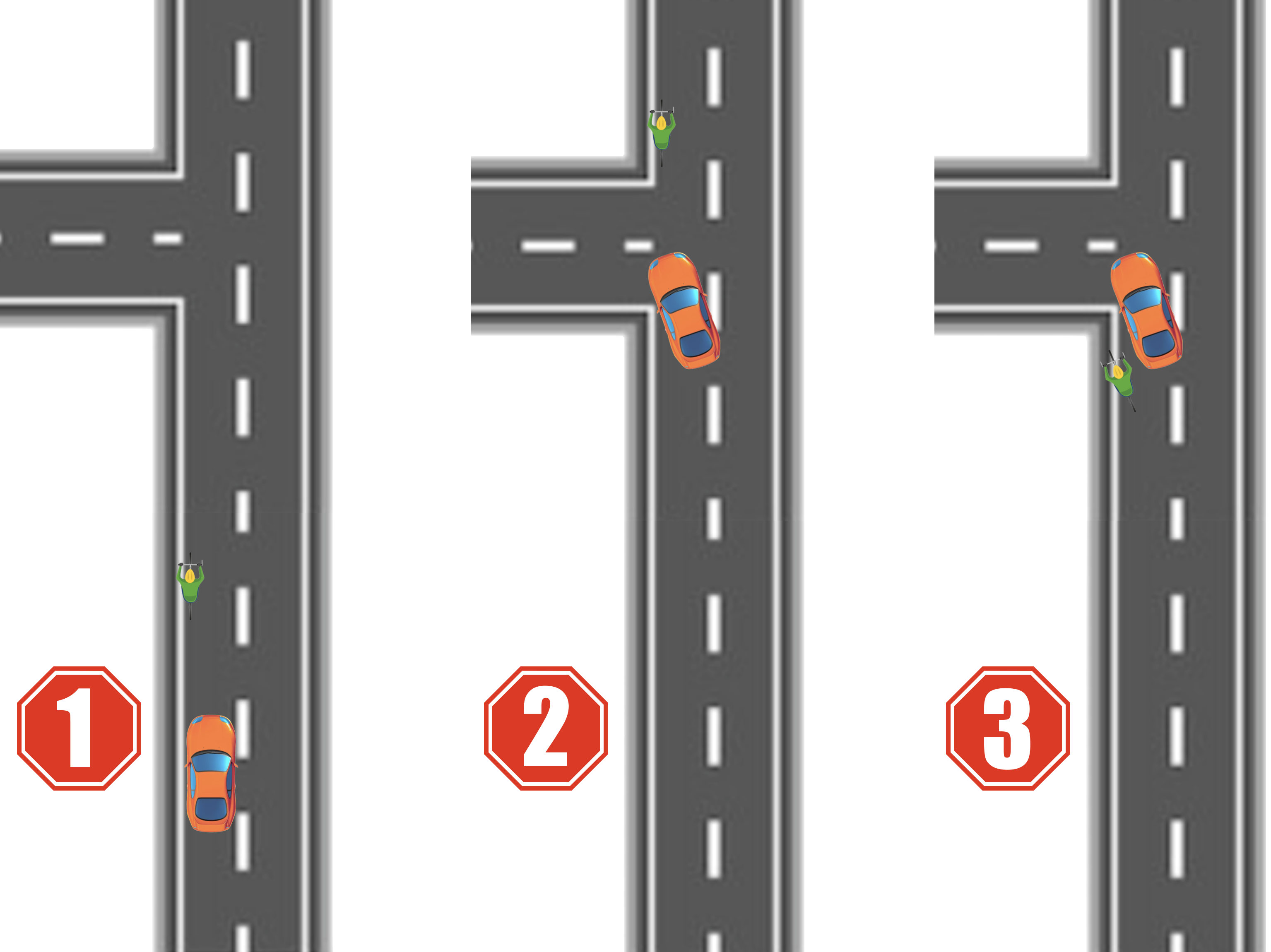
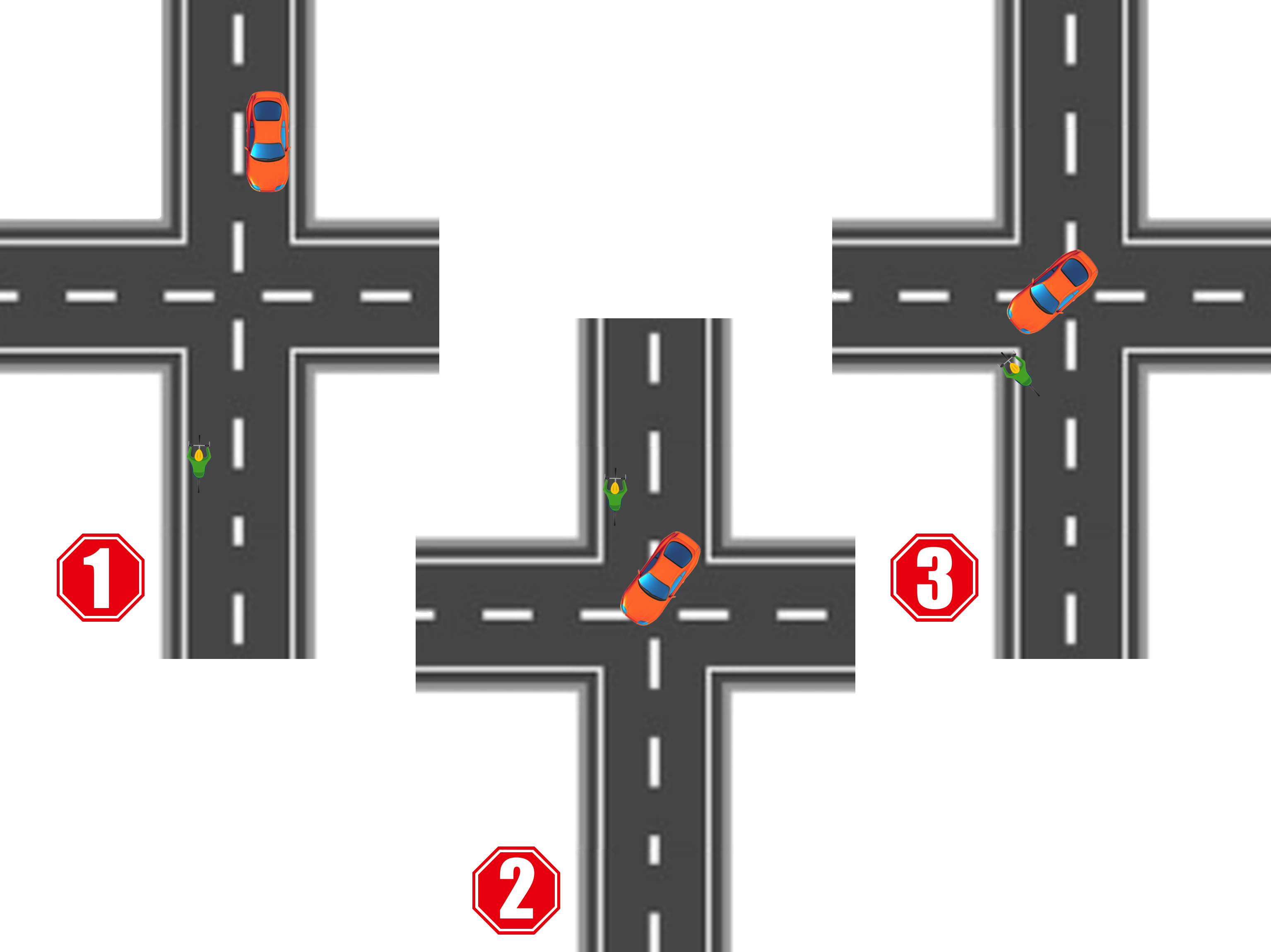
I will give you some examples. This is a common occurrence. I am within 50 metres of an intersection on my left. A vehicle behind me wants to turn left (1).
What should happen is the vehicle slows down, waits for me to ride past the intersection, and makes the left turn behind me (2).
What often happens is the vehicle overtakes and immediately turns left in front of me. There have been several instances where I have been forced to swerve left to avoid hitting the vehicle turning in front of me (3).
A similar thing often happens with buses approaching a bus stop. Instead of waiting behind me until I have ridden past the bus stop (1) and (2), the bus will overtake me and immediately pull into the bus stop (3).
I consider the above examples of driver impatience. The following examples may be because of misjudgement or distraction, as well as impatience.
In this case, a vehicle is waiting to turn from a side road onto the road that I am on. What should happen is the vehicle waits until I have ridden past before making the turn behind me (1) and (2). What sometimes happens is the vehicle pulls out in front of me and forces me to take evasive action (3).
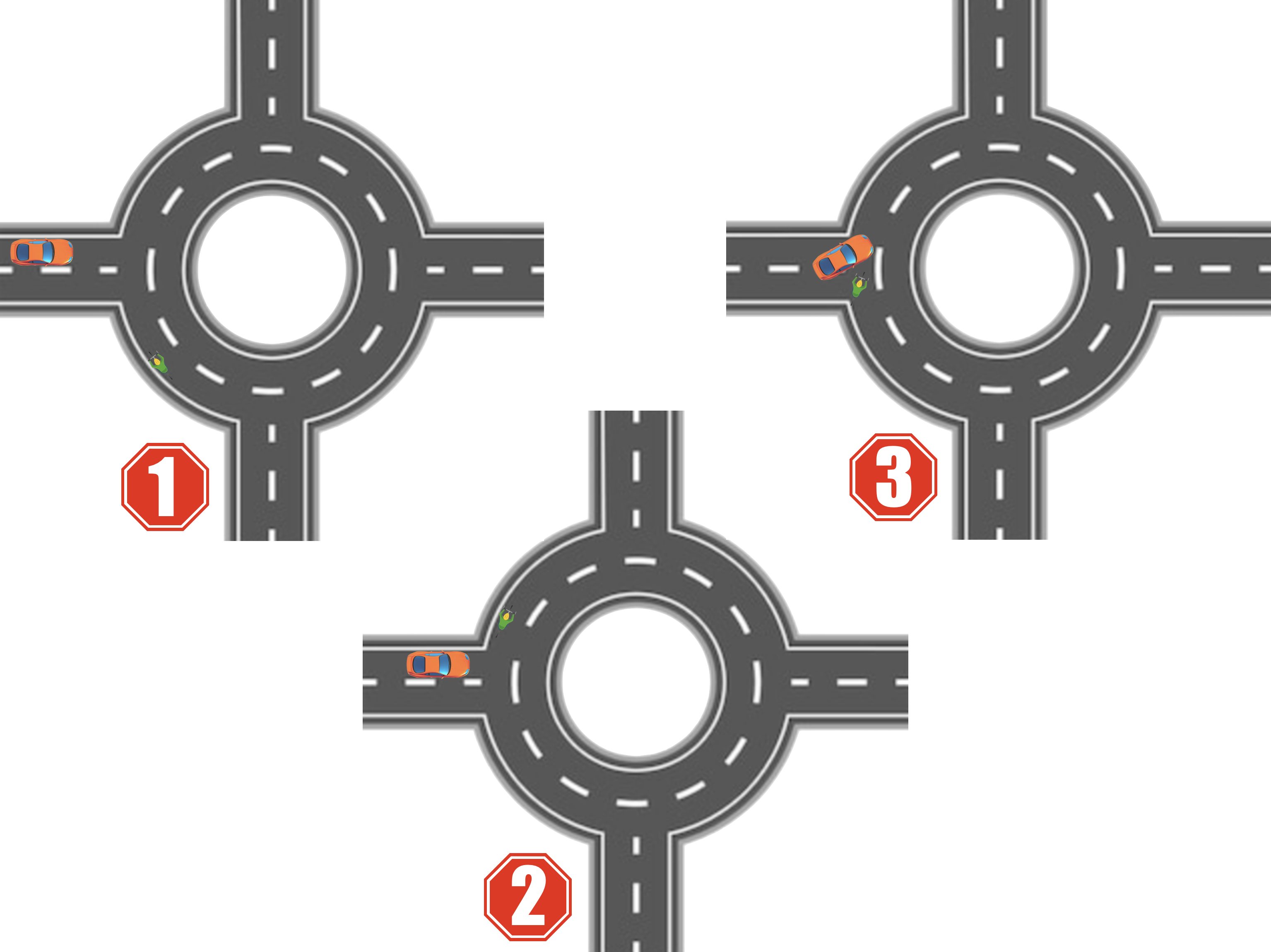
The same thing has happened to me at roundabouts. Instead of waiting for me to pass (1) and (2), the vehicle enters the roundabout right in front of me (3). There is a misapprehension in KL that the vehicle entering a roundabout has the right of way. In fact, vehicles already on the roundabout have the right of way.
Sometimes the driver makes eye contact so I know I have been seen. I can only assume a combination of impatience and misjudging my moving speed is the reason for pulling out in front of me. Even worse, there have also been times when a driver pulled out in front of me without first looking in my direction.
A more egregious example of impatience or inattention has happened to me at a four-way junction. The vehicle wanting to turn right should wait until I have ridden through the intersection before turning (1) and (2). Instead, I have had vehicles make the right turn across my path in front of me, forcing me to swerve left to avoid a collision.
This next situation happens because the drivers are looking at their mobile phones and not at the road. I know this because instead of (1) and (2) happening, I am forced to the right and alongside the vehicle as the driver pulls onto the roadway without looking behind the vehicle first (3). I see the driver looking at their mobile phone as they pull out to the right.
Another example that is almost certainly because drivers are looking at mobile phones is when vehicles weave to the left and right. It’s not much fun when you are beside the vehicle when it starts to weave.
All this makes it seem that it is dangerous to cycle in KL city centre. It certainly is not 100% safe, but I doubt it is any more dangerous than cycling in any other inner city would be. I ride a lot in the evenings. Cycling during rush hour is probably safer than at any other time. The traffic jams mean that no one is moving faster than I am.
I don’t fear for my well-being whenever I venture onto the city streets. That does not mean I cycle with careless abandon. You must ride smart.
Activate your front and rear lights.
Use hand signals early and make sure the road is clear behind you before making turns or crossing lanes.
Comply with traffic lights and road signs.
Do not ride in a vehicle’s blind spot.
Ride on quieter side streets where possible.
Finally, the key to cycling in any city centre is . . .
I have lived in several cities. All of which are memorable for one reason or another. As far as road cycling is concerned, I got into the sport in Houston. I saw how a city can be cyclist-friendly in The Hague.
Home, though, is Kuala Lumpur, or ‘KL’. I have lived on and off in KL for almost fifty years, in twelve different homes within a 10-kilometre by 13-kilometre rectangle.
Half of those homes, including the two most recent ones, sit within a 1-kilometre by 3-kilometre rectangle. I am definitely an inner-city dweller.
My Strava history in KL started in October 2012. Since then, I have ridden many kilometres within that 10-kilometre by 13-kilometre rectangle containing all the KL homes I have lived in.
Until recently, I remembered only eleven of those homes. Of those, one has been razed and is now a car park, and three have been replaced by multi-storey buildings. I often ride past five surviving buildings where I lived and past where the four used to be. The only previous home I have not cycled past is the apartment in Taman Bukit Pantai.
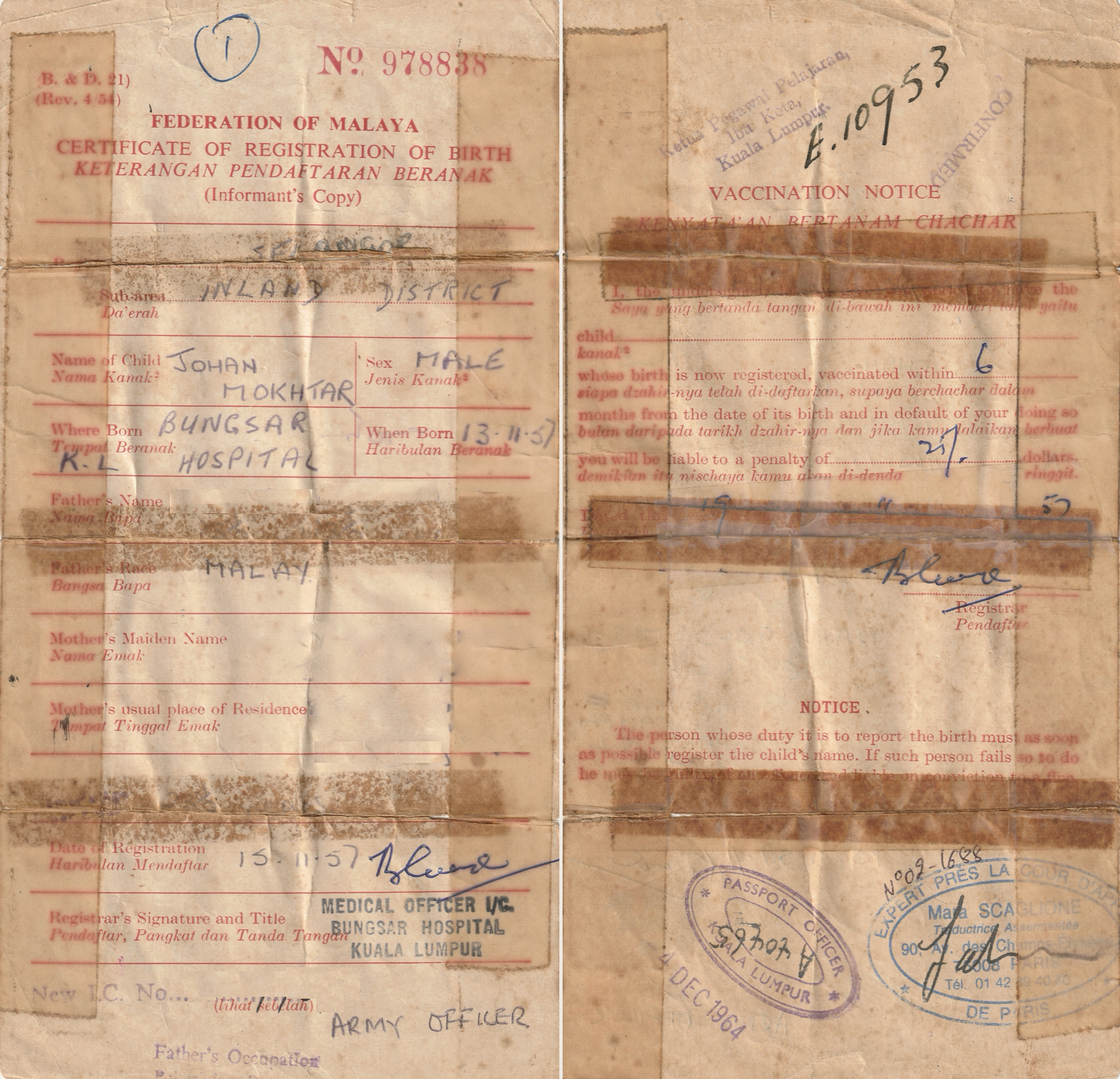
What of the forgotten home? I was digging through old documents and came across my original birth certificate. Hand-written in blue pencil on paper so creased it is held together with cellotape.
I have masked some of the details, including “Mother’s usual place of Residence.” A quick check on Google Maps revealed that I regularly cycle within 400 metres of that address.
A few days ago I took that 400 metre detour. The building is still there, sixty-six years after I was brought home to it from Bangsar Hospital.
Getting to this building involves twice merging across multiple lanes on a busy road. So, I am unlikely to ride past it much. It is nice to know it is still standing, though. Which is more than I can say for Bangsar Hospital.
On 18th March 2020, the Malaysian Government implemented a nationwide Movement Control Order (MCO) as a preventative measure in response to the COVID-19 pandemic in the country. There was a general prohibition of mass movements and gatherings across the country, including religious, sports, social and cultural activities.
The MCO was in place until 3rd May.
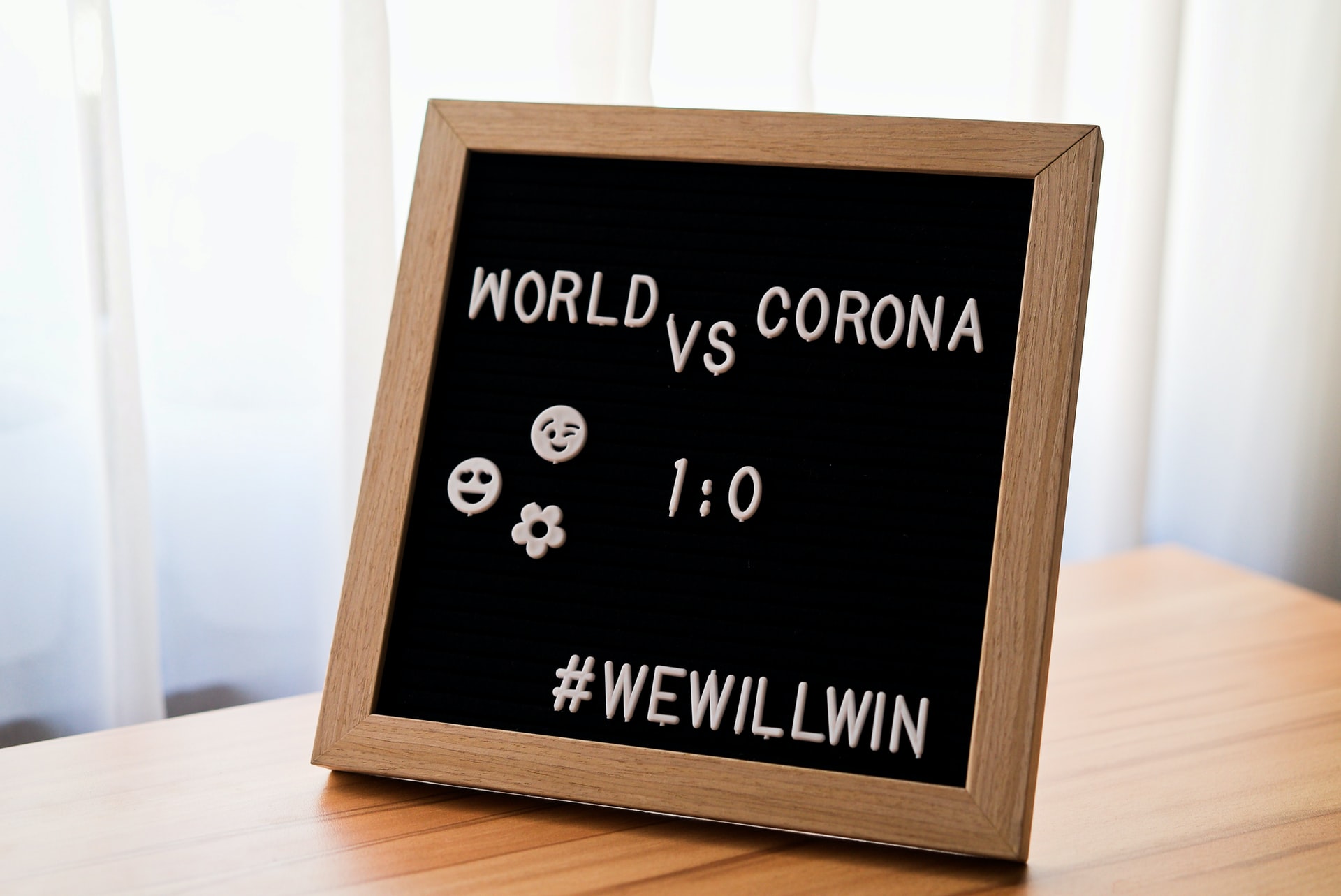
The main message during the MCO was:
Photograph courtesy of Alexas Fotos on Unsplash
The Malaysian government replaced the MCO with a Conditional MCO (CMCO) on 4th May. Outdoor sports activities not involving body contact were allowed on the condition that participants practised social distancing. Inter-state travel was prohibited.
On 7th June, the Prime Minister announced that the CMCO would end on 9th June, with the country entering the Recovery Movement Control Order (RMCO) phase from 10th June. Among the activities reinstated under the RMCO was inter-state travel.
Increasing COVID-19 case counts led to the reinstatement of the CMCO in selected states on 14th October, including the Federal Territory of Kuala Lumpur and the state of Selangor, which surrounds Kuala Lumpur. This time, the prohibition was not just on inter-state travel. We were not allowed to travel outside the district where we lived.
MCO restrictions were re-introduced in Selangor and Kuala Lumpur from 13th January 2021 following a surge in COVID-19 infections. In addition to the inter-district travel ban, travel was restricted to a 10km radius from where you lived.
On 5th March, Selangor and Kuala Lumpur exited the MCO lockdown and reinstated CMCO restrictions. Interstate travel was still prohibited, but the requirement to stay within a 10km radius and stay within your district was lifted.
This is how the various movement control orders affected my cycling in 2020.
Graphic courtesy of VeloViewer
I didn’t ride very much during the first few months of 2020. Partly due to some travel in February and March and some consulting work, also in March.
Increasing concern about COVID-19, first identified in December 2019, must have played a part. Those worries amplified when the World Health Organisation declared the COVID-19 outbreak a Public Health Emergency of International Concern at the end of January 2020.
We had to stay indoors during the early stages of the MCO. Even going for walks was prohibited. A week after the MCO started, I snuck in a ride around the block where I lived. Then people started getting fined for being outside their homes. I stayed off my bicycle until the CMCO came into effect.
There were mixed views about the wisdom of cycling during the CMCO. We understood little about how COVID-19 was transmitted. So to ride or not to ride turned on how risk-averse or risk-tolerant you are. I rode a lot in May. Mostly, by myself, and sometimes with two or three others. The phrase “I didn’t get dropped. I was just social distancing” entered the cyclists’ vocabulary.
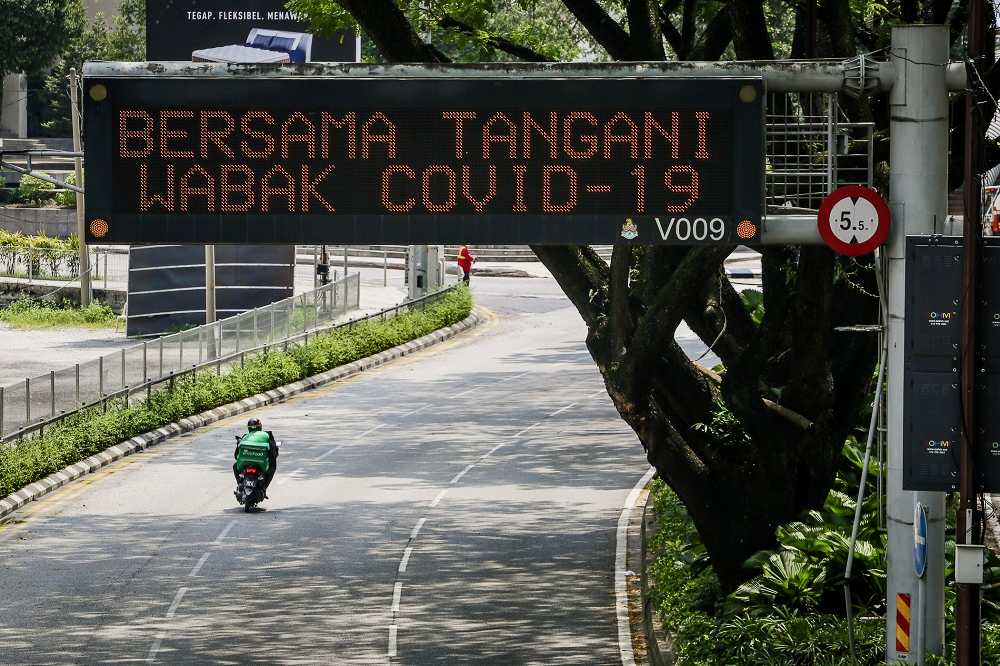
One definite plus in the early days of the lockdown was the empty roads, apart from the food delivery riders. They continue to provide an essential service, even after restaurants were allowed to have dine-in patrons again.
The sign translates to “Jointly tackle the COVID-19 outbreak.”
Photograph courtesy of MalayMail
Interstate rides, like trips to Port Dickson or Teluk Intan, were a distant memory. Masks joined helmets as mandatory items on every ride.
Photograph courtesy of Mike Baumeister on Unsplash
It didn’t take long for the R@SKLs to make an interstate trip after RMCO replaced the MCO on 10th June. It was “Hello Port Dickson!” on 12th June.
Photograph courtesy of Terry Shim
We were in Port Dickson again at the end of July.
Photograph courtesy of Marco Lai
I averaged 1,000km in May, June and July. That trend continued the following month. Helped by an Audax 300 ride on 30th August.
There was another inter-state ride in September. We devoted eight days to pedalling to Penang and back.
Photograph courtesy of Yaopey Yong on Unsplash
The first few weeks of October were a washout as far as cycling was concerned. I put it down to an attack of idleness following our Penang ride.
A surge in COVID-19 infections in some parts of the country, including Kuala Lumpur, prompted the move back to RMCO status in mid-October. This time with a prohibition on inter-district travel. The fine for transgressors was MYR1,000 / USD250. That kept me off my bike for most of the rest of October and November. I rode a total of 450km during those months.
By December, a weariness of the COVID-19 restrictions was setting in. More and more cyclists, including myself, were taking a chance on riding across district boundaries. I rode further in December than in any other month in 2020.
That enthusiasm was curtailed in January 2021.
Not only were we playing under MCO rules in mid-January, those rules included travel limited to a 10km radius around where you live. That 10km radius looks like this for me.
Map courtesy of 2kmfromhome.com
The imposition of the 10km radius limit coincided with a newfound enthusiasm to cycle amongst some friends. Friends who live within a couple of kilometres from me. Having someone to ride with, I have ridden on 50 of the past 56 days. Who would have guessed?
i have a new appreciation for the views within 10km of home.
On 5th March, we went back to CMCO rules. No 10km radius limit and inter-district travel prohibition any more. So my ride on the 6th was with friends I haven’t seen, let alone ridden with, since the end of 2020.
COVID-19 restrictions did curtail my riding in 2020. Especially in March, April and October.
2021 is off to a good start. I hope that with vaccinations on the way, we will have this pandemic under control. At last.
Photograph courtesy of Aljoscha Laschgari on Unsplash
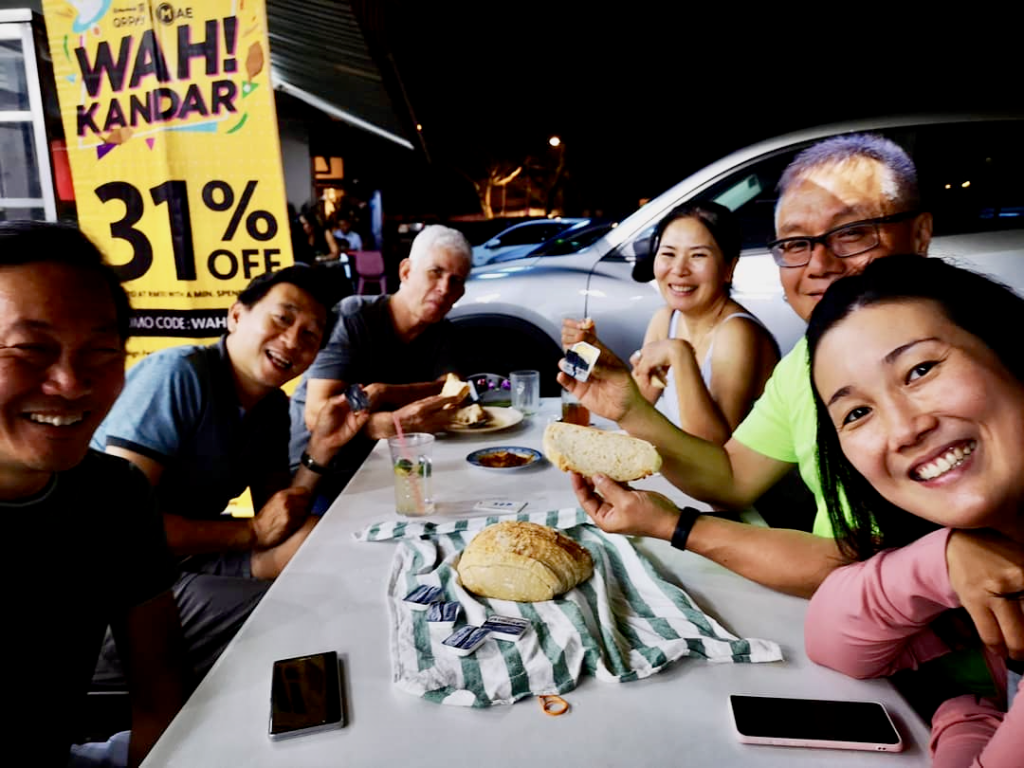
Planning for a three-day ride from KL to Penang started in August. Culminating with a last meeting over roti canai and thosai. And a loaf of home-baked sourdough bread courtesy of AiLin.
Photograph courtesy of Mark Lim
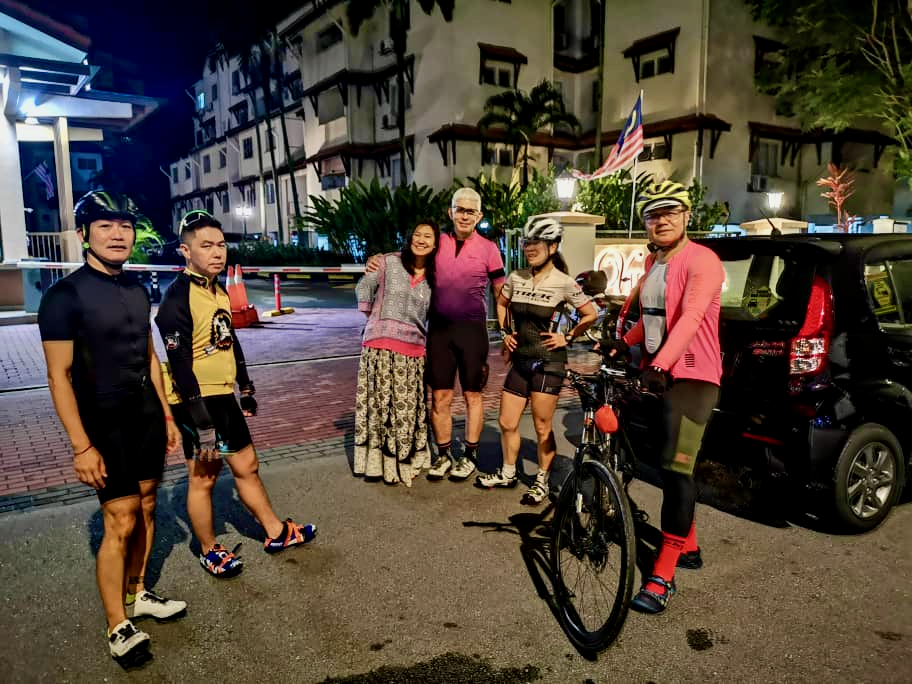
Lay, Marvin, Amy, Pai and I were ready to go at 5:15. Mark isn’t in this photograph because he was the cameraman. Martin isn’t in the photo either because he was slightly late (he had to finish the breakfast his wife made for him before he was allowed out of the house).
Photograph courtesy of Mark Lim
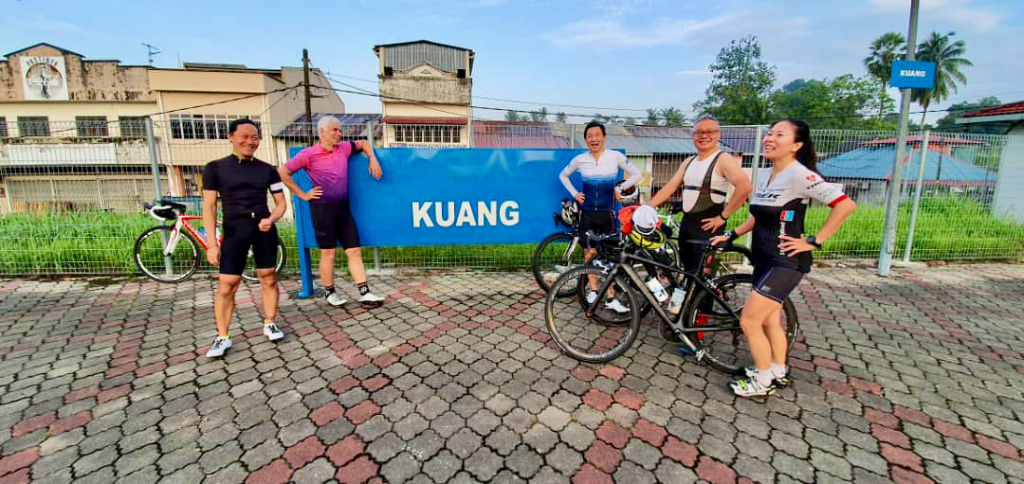
The first leg for the day was from Taman Tun Dr Ismail to the KTM station in Kuang. It had rained during the night so the roads were wet. Our freshly-washed bicycles didn’t stay clean for long.
Staying true to the R@SKL raison d’etre there were two themes to this adventure. Riding and eating. Our first food stop was at a coffee shop across the road from Kuang station. Three of us fuelled up with plates of noodles for the train ride to Tanjung Malim.
The 7:27 am train was on time so we didn’t spend much time striking poses on the platform.
Photograph courtesy of Marvin Tan
We had most of the carriage to ourselves. Once settled in our seats the first order of business was checking mobile phones. We did speak to each other during the one hour journey to Tanjung Malim. And one not-to-be-named person took a nap.
Photograph courtesy of Marvin Tan
Amy provided her truck as a support vehicle. That was very helpful because we could put bags in the truck instead of riding with saddle packs. Mark was the driver on the first day because Daddy duties prevented him from riding with us at 5:15 am.
We met Mark at a roadside stall about a kilometre from Tanjung Malim station. We had only ridden 30km / 19mi but were already into our second meal of the day. Roti canai for those who hadn’t eaten in Kuang. If you ever find yourself on Jalan Ketoyang, north of Tanjung Malim station, stop at Restoran Al Kassim Maju. Their roti is the bomb.
Photograph courtesy of Hsing C Pai
Photograph courtesy of Mark Lim
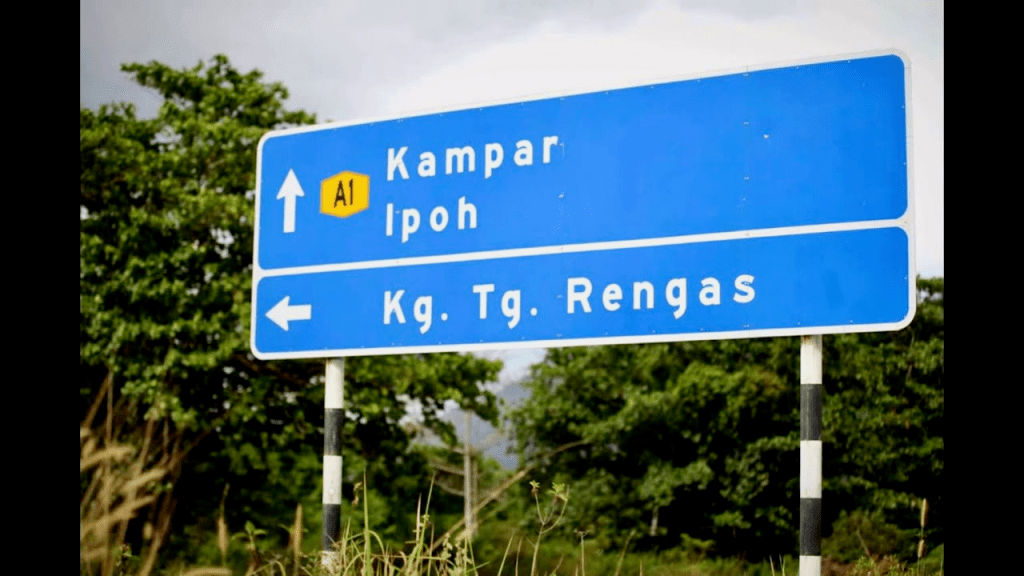
The riding then started in earnest. Our final destination for Day 1 was Kampar. 88km / 55mi north on Federal Route 1. Mark would drive ahead of us and park on the side of the road. After we went past him he would leapfrog us again.
Photograph courtesy of Marvin Tan
After ninety minutes we stopped for a break at Kampung Gajah, which is just south of Sungkai. Drinks only for all of us except for Martin, who had burned through his home-cooked breakfast and was hungry.
Photograph courtesy of Marvin Tan
We were riding under clear blue skies. The temperature was rising steadily. It was 25º C / 77º F when we left Taman Tun. It was 38º C / 97º F when we rolled into Bidor at noon.
Photograph courtesy of Marvin Tan
We had plenty of time to cover the 30km to Kampar. There was no point getting there before we could check in to the hotel. We spent ninety minutes consuming cold drinks and kai chai pang (chicken biscuits) under a fan at Restoran Mee Wah. Why the name “chicken biscuits” is a mystery because they do not contain any chicken.
Soon after we got going again clouds rolled in and we got drizzled on for a while. No one complained because the cooler temperature was appreciated by all.
10km / 6mi from Kampar the sky to the east got dark and the wind started to blow. A thunderstorm was on the way. We picked up the pace and got to the Kampar Boutique Hotel just ahead of a burst of rain.
After a shower and a short nap, we headed out to look for snacks. We found cendol, ais kacang and noodles.
Photograph courtesy of Hsing C Pai
It started to rain again, this time heavily, as we sat drinking and eating. We were trapped on the wrong side of the road from our hotel. After twenty minutes we gave up waiting for the deluge to stop and ran across the road through the rain.
Mark, Marvin and Pai were stuck on the hotel side of the road because of the rain, and couldn’t join us for cendol. Instead they went to Restoran Yin Phun Low, which is next door to the hotel. The rest of us joined them for dinner and beers. The food was so-so. I don’t recommend this restaurant.
The highlight of our time in that restaurant was deciding who would drive the truck the next day. In the week before the ride, everyone expressed a desire to drive. There was the talk of taking turns through the day as a way of getting some time off the saddle.
By the end of Day 1, that sentiment had changed. We had ridden at a relaxed pace. No one needed a break from riding. And Mark made it clear that the stop and start driving was no fun. There were no volunteers to drive the next day.
So Mark held out a fan of one ringgit notes and we each took one. Pai drew the note with the lowest last digit in the serial number. To the relief of the rest of us!
You would have thought that dinner would be the end of eating for the day. You would have been wrong. Kampar is noted for its Claypot Chicken Rice. A couple of the guys ventured out later that night for some.
Photograph courtesy of Mark Lim
The rest of us called it a night. We had another early start planned for Day 2.
I enjoy studying graphic representations of data. Like this map illustrating 59,036 routes between 3,209 airports on 531 airlines spanning the globe.
Graphic courtesy of openflights.org
And this chart showing our galaxy’s relative size and position within the known universe.
Graphic courtesy of nationalgeographic.com
The latest graphic to pique my interest is one created by Sisu.
Sisu takes your exercise data from Strava or Runkeeper, and turns that data into a print. Sisu has been around since at least 2014. Co-founder Peter Roome posted the first blog entry on the Sisu website in May that year.
I found out about Sisu last week, when cycling friends started posting their Sisu prints on Facebook.
There are a few designs to choose from on the Sisu website. I like their original design that displays all the routes you covered between your chosen start and finish dates. The plots of each route are sized so all of them fit on one page. Thus the plots are not to scale.
Below are the routes I rode in 2010, the year I started cycling. The first four rows show rides within and around Houston, Texas. The rest of the routes are either loops or out-and-back rides starting from Den Haag, The Netherlands. I moved from Houston to Den Haag in May 2010.
The rides range from 14.5km / 9mi (row two, far right, which was a short run from my Houston home to Hermann Park and back), to 124.5km / 77mi (row six, third from the left, which was from my Den Haag home to Kinderdijk and back).
Graphic courtesy of madewithsisu.com
Even with only fifty rides in 2010, patterns emerge from the plots. Most of my Houston rides were with the West End 6:30 group. We rode a consistent route through the city every Tuesday and Thursday. Most of those are shown on row three.
Den Haag is just a couple of kilometers from the coast. You can’t ride very far west before you run into the North Sea. So a lot of my rides in The Netherlands followed the coastline, either south-west or north- east from Den Haag.
As you lengthen the timeline, the Sisu plots of each route get smaller. To ensure that, in this case, 885 routes fit on one page.
This print shows my entire Strava ride history.
Graphic courtesy of madewithsisu.com
I think this print is a fascinating way to review my cycling history. It is obvious from the graphic that my Kuala Lumpur friends and I spent an awful lot of time on the KESAS Highway in 2013 and 2014, as shown by all the horizontal, slightly squiggly routes in the middle third of the print.
There was a time when the Bukit Damansara route was popular. This route appears a dozen times in the centre rows.
Highlights stand out too.
An evening’s ride around the Sepang International Circuit produced this plot . It is not too difficult to find, about two-thirds of the way down the print.
More difficult to pick out is this route, my longest ever ride at 445km / 276.5mi . It is in the fourth row from the bottom.
Of course, what my Facebook friends and I should be doing is paying Sisu for a print.
Prints come on 300 grams per square meter Matt Photorag stock. 300gsm paper stock is at the higher end of paper thickness.
The print size is 12 inches by 16 inches for US orders, and A3 size (297mm by 420mm) for orders from the rest of the world. The price for a physical print, or a digital download, are above.
I’m thinking of a present to myself when I hit 60,112km / 37,351mi. That is 1.5 times around the circumference of the Earth. Which should be in two months or so.
And now we have a bike-friendly cafe. The Grumpy Cyclist, in Taman Tun Dr. Ismail.
Look for the black awning and white logo at 26 Jalan Datuk Sulaiman.
There is outdoor seating at the front of the cafe.
The first hint that this is a cafe for cyclists. . . .
Confirmation that this is a cafe for cyclists. . . .
The space is warmly lit and welcoming. The decor is of course cycling-themed, right down to the gear rings cemented into the floor and the bicycle wheel light fixtures. The staff are friendly and helpful. The menu tends to the cyclist’s staples of coffee and cake, but it has already expanded to include wraps and pasta. A dinner menu is planned.
The cycling paraphernalia gives the Grumpy Cyclist a bicycle-oriented feel. All well and good. But this place really earns its chops as a cafe for cyclists by providing bike racks, helmet and gear storage, and perhaps most useful, given KL’s heat and humidity, a shower. The next time I am there I’ll have to check if the shower is stocked with toiletries and towels.
The Grumpy Cyclist welcomes everyone. You can spot the cyclists though. They are the ones looking closely at the bikes on display. The piece de resistance for me is this Colnago Master 55th Anniversary bicycle on the back wall of the cafe. This example is number 1 of 99 ever made.
Click on the photograph and then zoom in to appreciate this work of art.
I feel the need for a latte fix. Time to pedal over to Taman Tun.
The streets of Kuala Lumpur were taken over by bicycles between the 17th and 19th of January. The OCBC Cycle Malaysia events were back in town for the third time.
Photograph courtesy of baikbike.com
This year there were seven events on Saturday, including a tricycle ride for 2 to 5 year olds, kids rides for various age groups, an Ultimate Foldies Challenge, and a Criterium.
Photograph courtesy of ocbc.cyclemalaysia.com.my
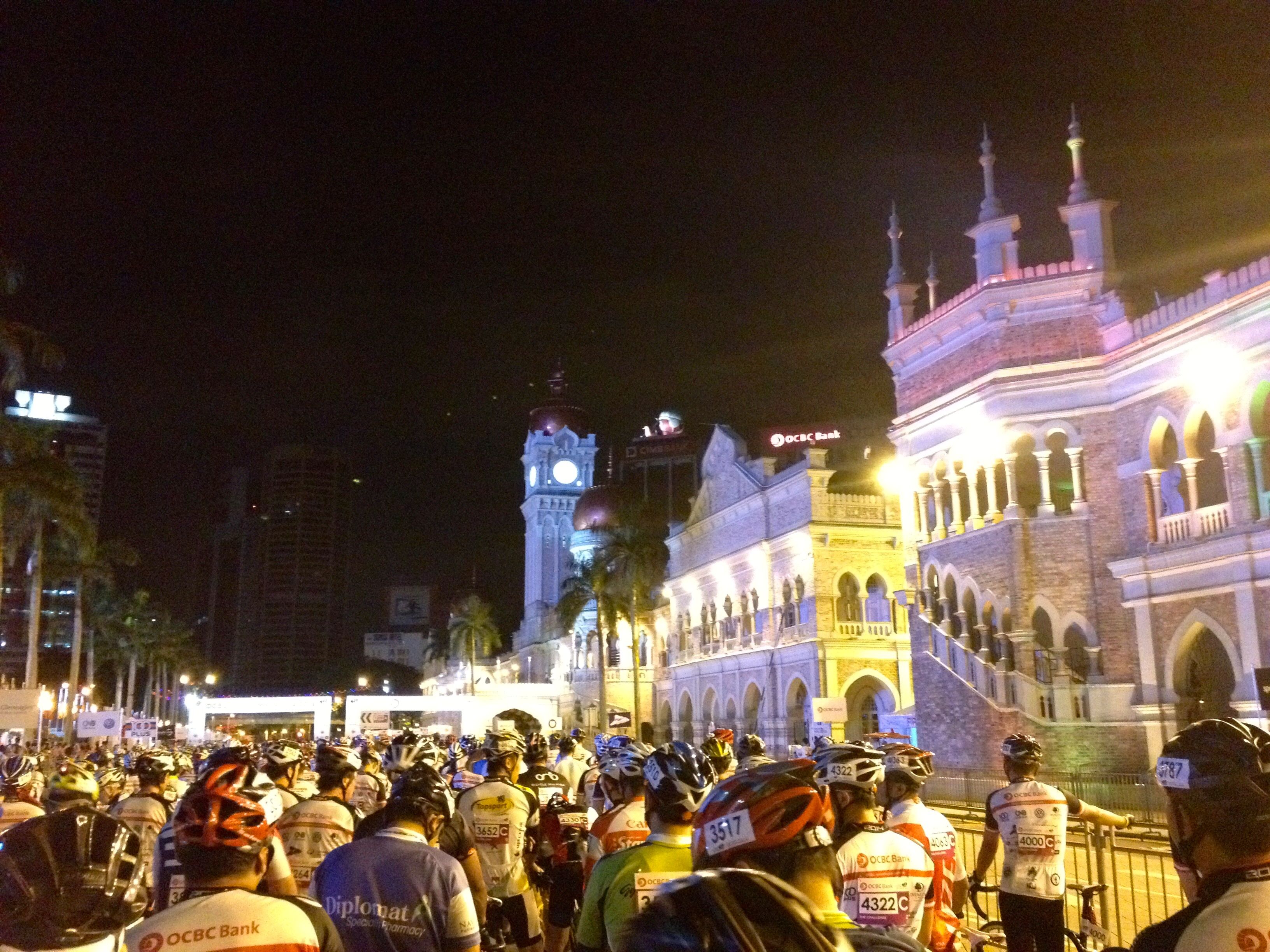
3,000 of us rode in one of the two events on Sunday. The 48 km Challenge ride. Four loops on closed roads in the center of KL. Click on the photograph below for a larger image. Zoom in and you’ll see the PETRONAS Twin Towers just outside the loop on the right.
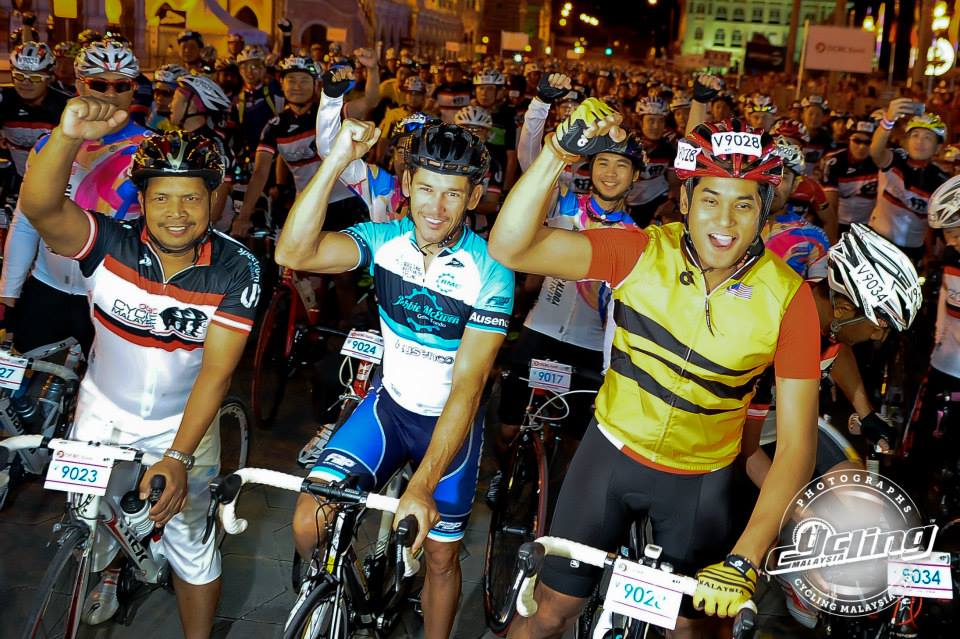
The guest of honor and a participant in the Challenge Ride was the Minister of Youth and Sports, Yang Berhormat Encik Khairy Jamaluddin (number V9028).
Photograph courtesy of Cycling Malaysia magazine
It was nice to have his support, but I wish he had been on time. The poor drummers had to work overtime to keep the riders entertained while we all waited.
Photograph courtesy of Cycling Malaysia magazine
We got underway at a few minutes past 7.00am. Once the speed demons had squeezed their way through to the front we all settled down to a relaxed spin through the city. I struck up a conversation with a rider next to me on the second lap. Alan and I kept each other company for the rest of the ride.
Photograph courtesy of Cycling Malaysia magazine
While I was waiting after the finish a reader of this blog came up to me and said “hello.” What a treat that was! He came all the way from Kuala Terengganu to ride in The Challenge.
Azlan, Shahfiq and I met up here. I’m not sure how anyone found their friends in crowds like this before we all had mobile phones.
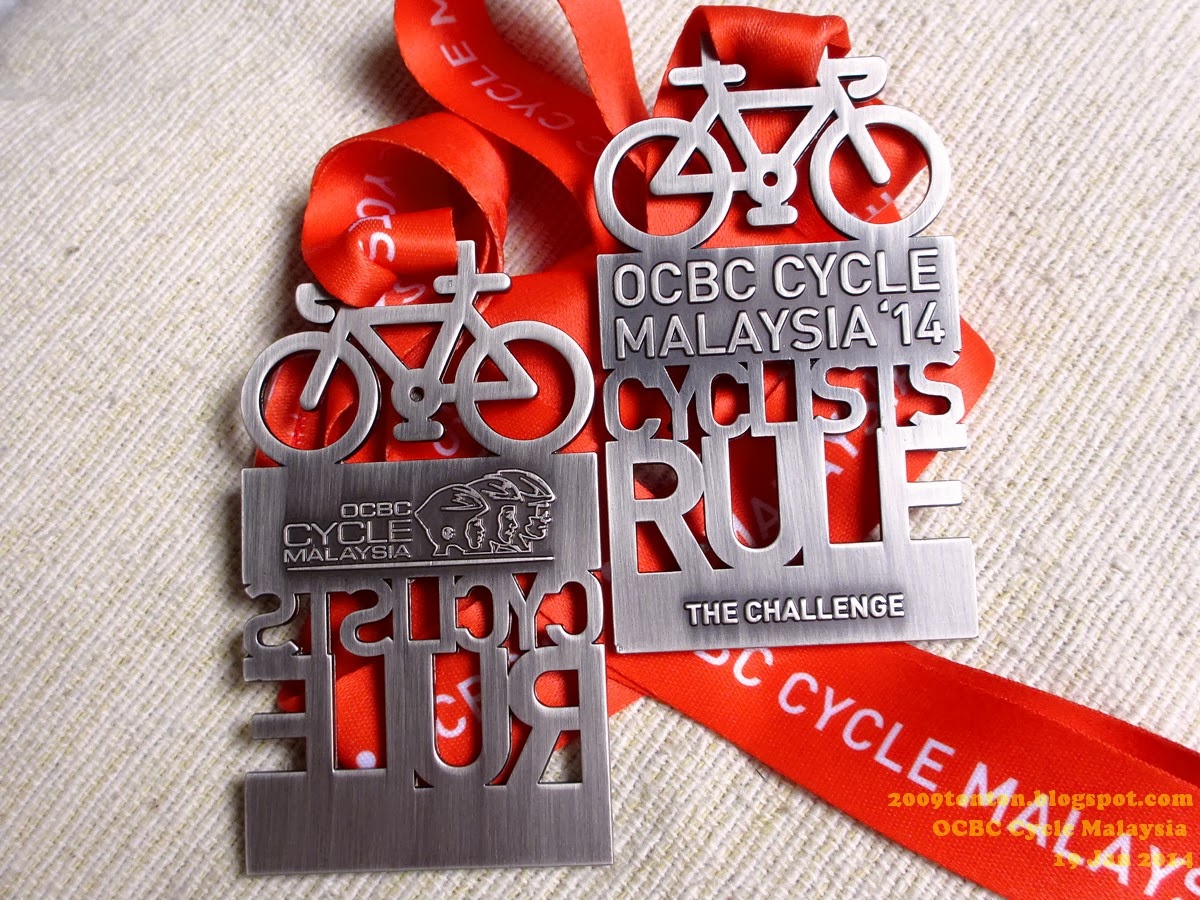
The rest of the Racun and Flipsiders groups met up on the other side of the finishing area to take a photograph with their medals.
Photograph courtesy of Jason
Azlan, Shahfiq and I cycled back onto the ride route to get to the Twin Towers area, where they had parked. As we passed Kedai Makanan Yut Kee on Jalan Dang Wangi we noticed some familiar faces at one of the tables.
Jason, Cedric, Keat and others were tucking into breakfast. The three of us stopped and had soft-boiled eggs, toast with kaya and coffee too. A great end to a fun morning on my bicycle with good friends.
I started keeping track of my rides in January 2010. I had a new road bike, and an even newer Garmin Edge 705 cycle computer. Uploading the details to the Garmin Connect web site after every ride became standard practice. That year I rode 3,173 kilometers.
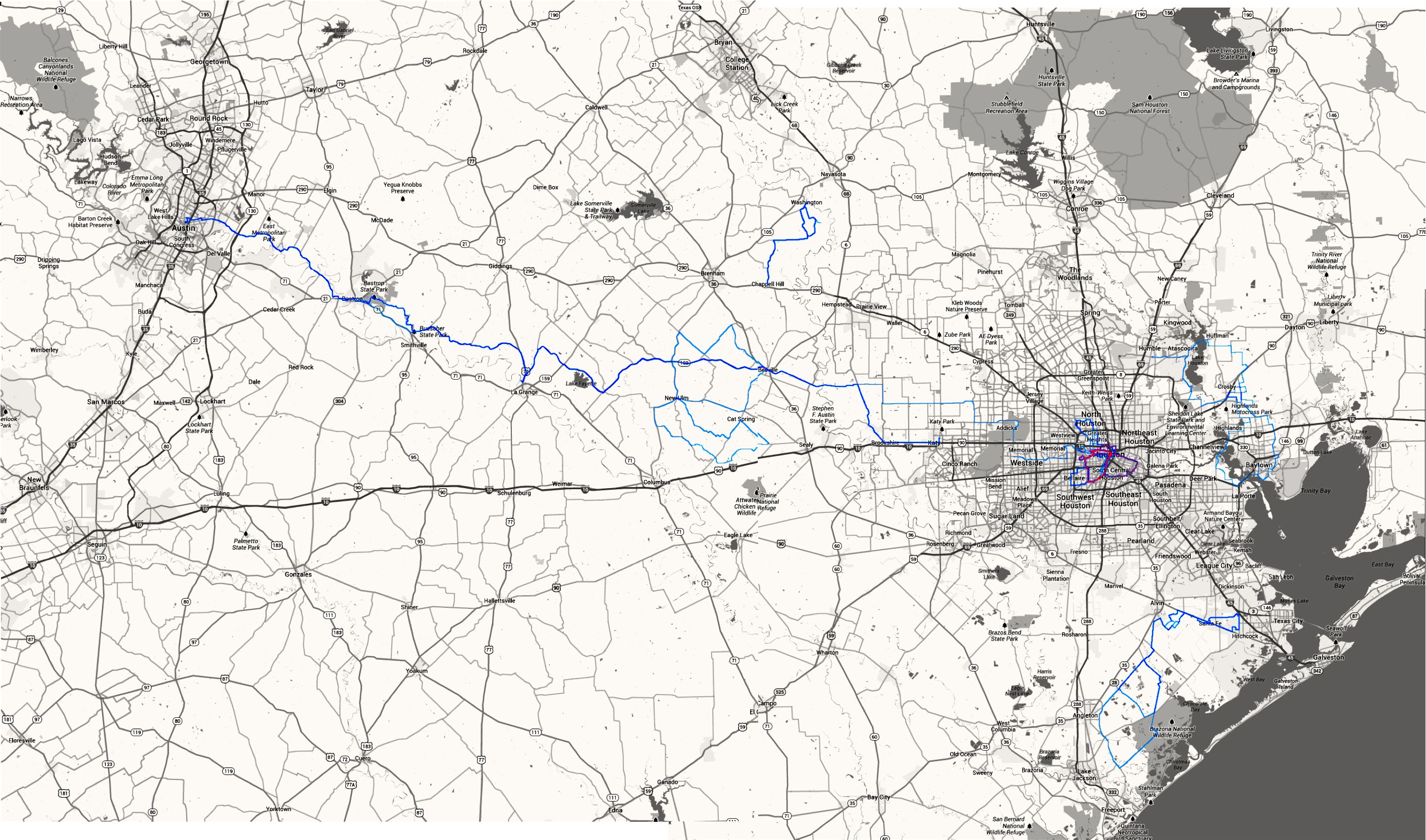
The heat map below shows where I rode for the first six months of 2010. The most-ridden routes are depicted in red. Click on the heat map to open the image in a new window. You will see that most of my kilometers were accrued on the West End Tuesday and Thursday evening rides, and the Sunday Taco rides through Houston.
Heat Map courtesy of Strava
I had some big rides outside metro Houston: The Humble Lions Club Ride, The Space Race, and the BP MS150. But I didn’t have a kilo month, which is my term for riding more than 1,000 kilometers in a month.
In mid-2010 I moved with my biker chick to The Netherlands. The excellent cycling infrastructure there gave me more opportunity to ride, albeit on my own as I didn’t connect with a cycling group until the following year.
I started riding with the Not Possibles in March 2011. The Saturday and occasional weekday rides with them boosted the distance I rode in 2011 to 6,985 kilometers. In 2012 that number increased to 11,054 kilometers. Almost of those kilometers were around Den Haag, with the 2011 and 2012 Ronde van Vlaanderen sportives, and the 2012 UCI World Championships sportive in Belgium thrown in for good measure.
Heat Map courtesy of Strave
I racked up my first kilo month in August 2011. The fine summer weather allowed me to ride eighteen times that month for a total of 1,085 kilometers.
Somewhat surprisingly I didn’t have another kilo month until January 2012, when I rode 1,091 kilometers. I then had four more kilo months that year. March, and three in a row from June to August. My Not Possibles friends and I had a good summer that year. My biggest ever kilo month was in July, when I rode 1,718 kilometers. I had the luxury of being able to go on twenty five rides that month.
In October 2012 my biker chick and I moved home to Kuala Lumpur. My ride frequency and average distance dropped dramatically for some months before slowly increasing again. So it took more than a year before I had another kilo month, in September 2013. Helped by five rides of at least 100 kilometers each.
My 2013 heat map looks a lot like my 2010 Houston heat map in that most of my rides are limited to a couple of routes. Int his case KESAS and the Guthrie Corridor Expressway, with Putrajya and Genting Sempah thrown in for variety. Scattered around the map are the one-off events that I rode in Johor Bahru, Kuala Terengganu, Kuantan and Penang, My Racun buddies and I also rode to Fraser’s Hill, and I joined Dave Ern on a ride to Cameron Highlands. You can also read about the Bike X and Broga 116 rides.
Heat Map courtesy of Strava
It looks like I will ride about 7,300 kilometers in 2013. And perhaps have another kilo month this quarter. Garmin Connect will reveal all.






















 appears a dozen times in the centre rows.
 . It is not too difficult to find, about two-thirds of the way down the print.
 . It is in the fourth row from the bottom.






 Old Roots, New Routes