Category Archives: Gear and Tools

Garmin Edge 1050

Photograph courtesy of garmin.com

I started using a Garmin Edge cycling computer in 2010. My Edge 705 served me well until 2016, when I upgraded to an Edge 1000. A design fault with the power button made me retire the Edge 1000 and start using an Edge 1030 in February 2018. A crash in July 2024 snapped one of the tabs on the quarter-turn mount interface on the underside of my Edge 1030. You can read about that adventure by clicking here.

I continued to use the 1030 despite it popping off the out-front mount whenever I hit a bump. The screen damage incurred during the same crash worsened progressively over the next two months. My son got me a good deal on an Edge 1050 in September 2024.

I very much like the Edge 1050.

Each generation has progressively gotten larger and heavier. Interestingly, each generation is thinner than the previous one, which illustrates the increasing miniaturisation of components. The ever-larger width and height are due to the display size nearly doubling from the Edge 705 to the Edge 1030/1050.

The key improvements of the Edge 1050 over the Edge 1030 are the increased screen resolution and the switch from a transflective LCD to a transmissive LCD with a screen brightness of 1,000 nits. The Edge 1050 has a bright, high-resolution touch screen with more vivid colours.

Specification Edge 705Edge 1000Edge 1030Edge 1050
Physical Dimensions (W × H × D)51mm × 109mm × 25mm58mm × 112mm × 20mm58mm × 114mm × 19mm60.2mm × 118.5mm × 16.3mm
Display Size (Diagonal)5.6 cm7.6 cm8.9 cm8.9 cm
Display Resolution
(Pixels)
176 × 220240 × 400282 × 470480 × 800
Weight104g 114.5g124g161g

There are also improvements inside the Edge 1050. Hardware changes include a much faster processor that delivers a smoother, more smartphone-like experience when scrolling, zooming maps, and navigating menus. The inclusion of Multi-band GNSS offers more precise tracking and positional accuracy. The basic beeper in previous devices has been replaced by a built-in speaker with an electronic bell and audio prompts.

Software improvements let you download and update maps via WiFi on the device and make contactless payments. There are hazard alerts and improved group-ride features. Lastly, the User Interface has been redesigned and is more responsive.

I progress through these three screens at the start of every ride. On the left is the Home screen that usually displays after the device has booted up.

In the centre is the Status widget screen. Widgets provide at-a-glance information like weather and notifications. Swiping down from the Home screen reveals the Widget screen. I usually turn on my Edge 1050 inside a car park. I use the Widget screen to confirm that my Edge 1050 has acquired a GPS satellite signal.

Touching the light icon at the bottom of the Widget screen reveals the Light screen. I control my Garmin Varia UT800 front light from the Light screen.

Swiping up from any Widget screen returns the display to the Home screen. From the Home screen, I can start a ride by touching the large ROAD activity profile button, start navigating by touching the NAVIGATION button, or access the system settings by touching the MENU button.

Touching the ROAD activity profile button goes to the data screen on the left below. Data screens, widget screens and activity profiles are all easily customisable. I have customised this screen to show the data fields I use the most.

I swipe left from my preferred data screen to reveal the Music screen. I ride with Shokz bone conduction headphones. The open-ear design lets me listen to music and navigation prompts without drowning out or masking the sounds around me. I can still hear a vehicle approaching me from behind and be in conversations while using the headohones.

I use the Music screen to control which track is playing and to adjust the playback volume.

I swipe right from the data screen to access the Map screen when I want to see the layout of the roads around me.
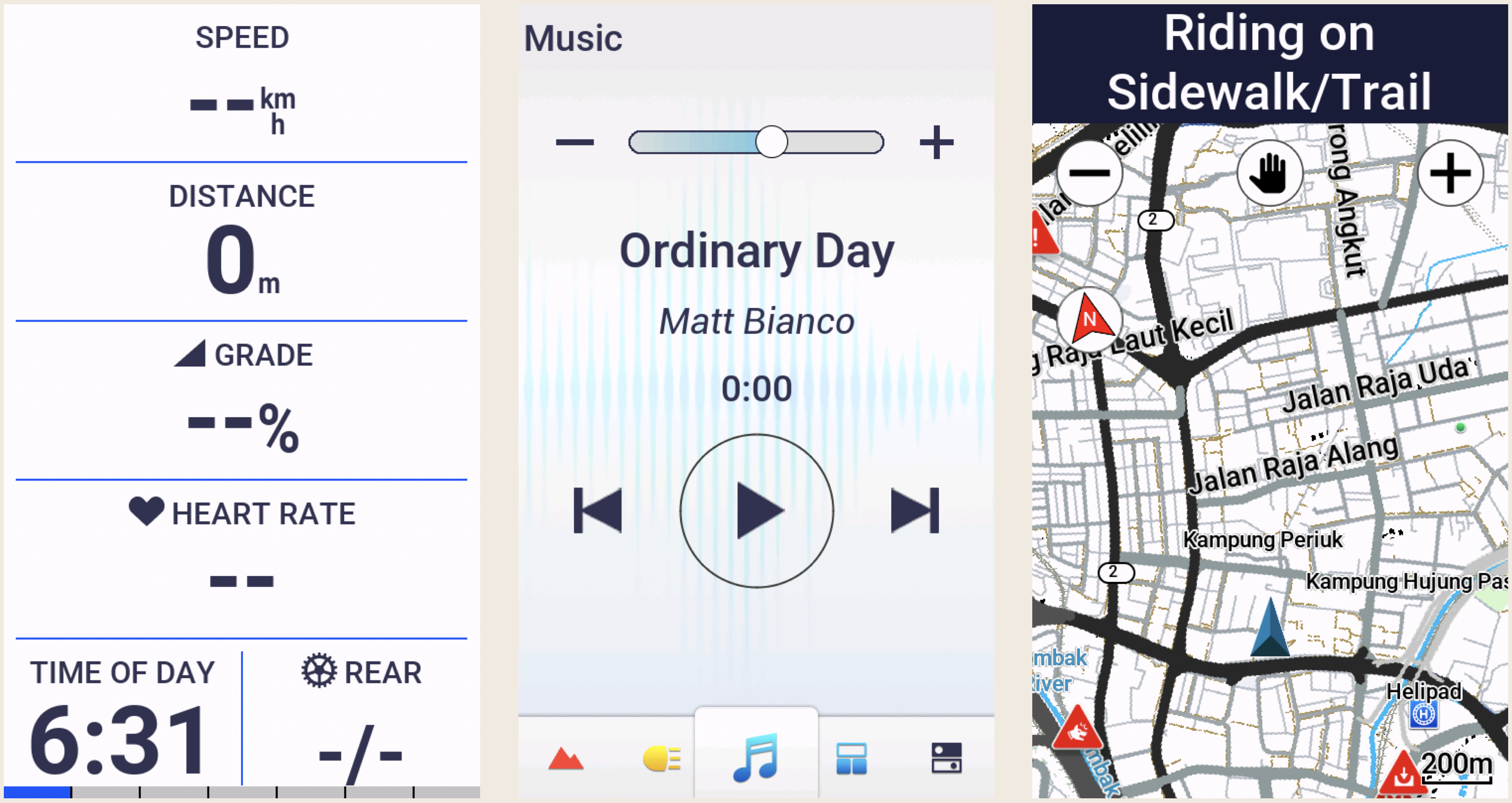
I often follow pre-loaded routes or courses that I created using the Route Planner on ridewithgps.com. I upload these custom courses wirelessly to my Edge 1050. The Map screen below is in navigation mode. The course is highlighted and a directional arrow is displayed.

If the navigation screen is not already displayed while following a course, it will pop up automatically about 100 metres before an upcoming turn.

The other two data screens display data fields that I occasionally refer to. I most often want to know the current temperature and how much climbing I have done.
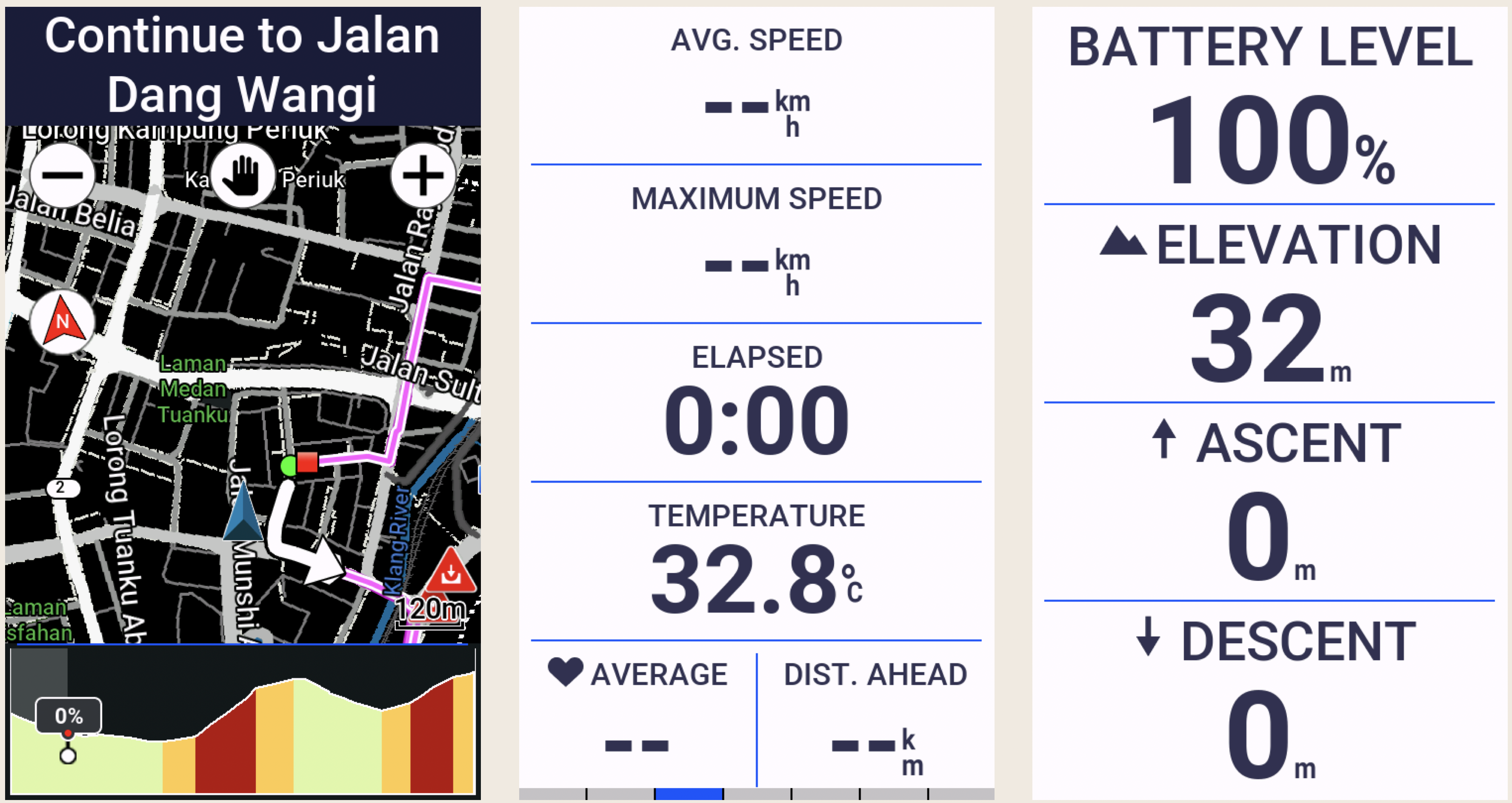
I mentioned that the data screens are customisable. You can create up to 10 custom data screens for each activity profile on an Edge 1050. Each of these screens can be customised to display up to 10 data fields by default. While 100 data fields per activity profile sounds like a lot, Garmin provides 151 data fields to choose from, across the following categories, in alphabetical order:

Data TypeNumber of FieldsExamples
Cadence3Average cadence, Lap cadence
Cycling Dynamics19Time seated, Time standing
eBike5Assist mode, Travel range
Elevation12Average ascent velocity, Grade
Gears8Di2 shift mode, Gear ratio
Graphical13Graphs showing Current Power Zone, Current Cadence Range
Heart Rate17% of Heart Rate Reserve, Heart Rate Zone
Lights4Light mode, Battery status
MTB Performance6Grit, Lap flow
Navigation14Next waypoint, Time to destination
Other11Temperature, Number of laps completed
Power32current power output, Average left/right power balance
Smart Trainer1Trainer controls
Speed5Average speed, Lap speed
Stamina4Current remaining stamina, Remaining potential stamina
Timer7Elapsed Time, Lap Time 
112Distance to go, Step Distance

The Edge 1050 is capable of much more than I use it for. I don’t use features like Event Adaptive Training, Livetrack, Cycling Dynamics, and Garmin Group Ride Radio.

The features I do use work very well. Heart rate tracking, turn-by-turn navigation, Bluetooth, Wi-Fi and ANT+ connectivity, and the built-in speaker.

The bell, which can be rung from the Timer overlay screen, is an appealing new feature. The initial implementation of this feature was a bit clunky. It required tapping the screen to view the timer overlay, and then tapping the Bell icon in the bottom right corner of the main menu. It often took a few pokes to accurately hit the Bell icon.

The latest software update simplifies ringing the bell. Now, double-tapping on any data screen rings the bell. Oddly, double-tapping does not work on widget screens. Nevertheless, a welcome improvement that fixes the only niggle I had with my Edge 1050.
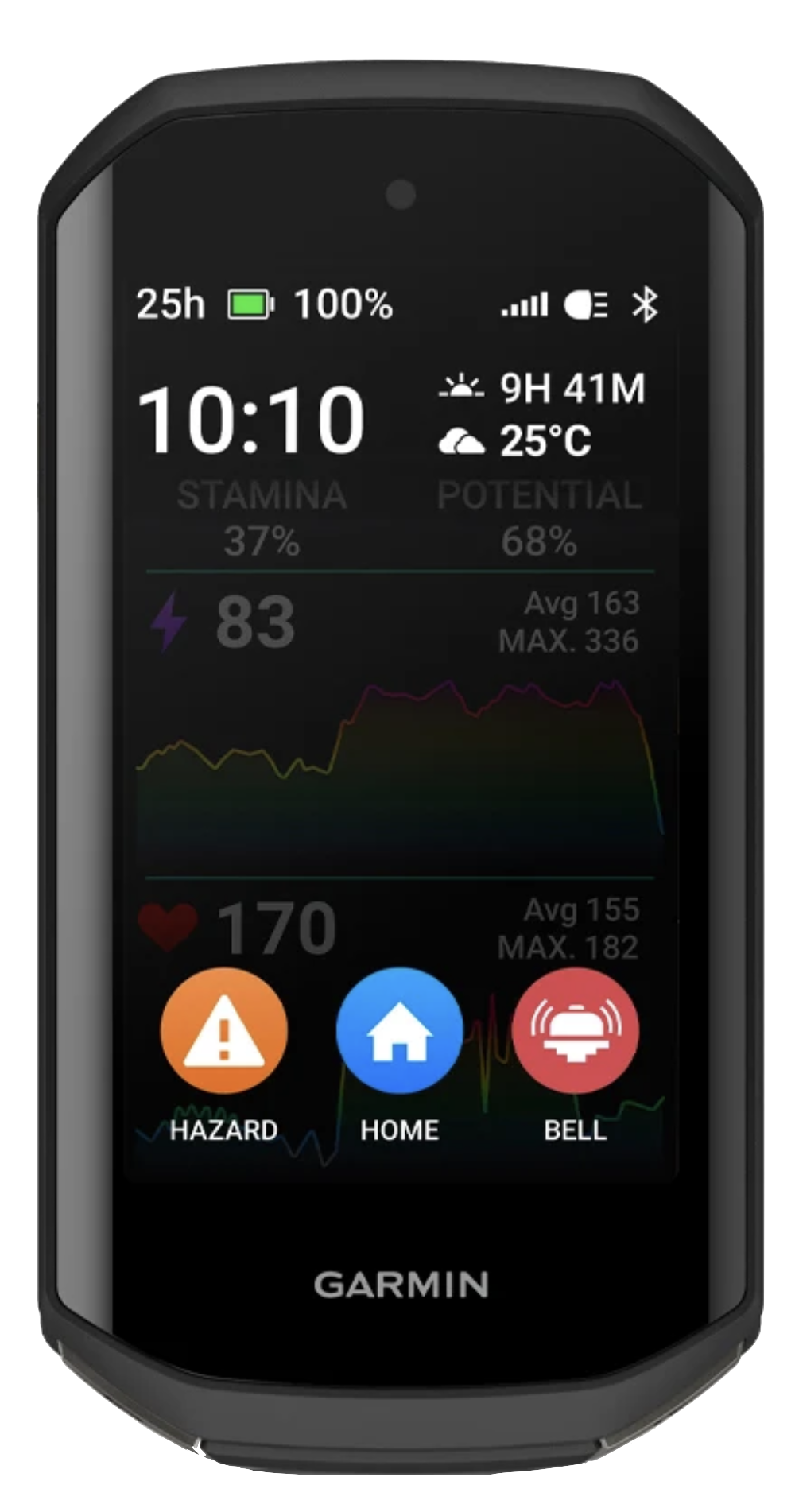
The thing everyone wants to read about in a cycling computer review is battery life. The Edge 1050 has a claimed 20-hour battery life when used with sensors connected, navigation running, etc. This stretches out to 30 hours with the screen brightness lowered to about 20-30%.

Enabling Battery Saver Mode, which lets you reduce backlighting, hide the map screen and allow the device to enter sleep mode during an activity, extends the claimed battery life to about 70 hours.

I highly recommend the Edge 1050. Some may quibble over the size and weight of this device. I want a large, bright and high-resolution screen on my cycling computer. The Edge 1050 gives me that display in a package that weighs less than a McDonald’s Big Mac.

In closing, one feature of the Edge 1050 that I hope to never use is the replaceable quarter-turn mount interface. I would rather not hit another wild boar.

AI-generated image courtesy of gemini.google.com

Chasing Aerodynamic Gains

Posted on
Image courtesy of youtube.com

Slicing through the air like a speeding bullet. If only it were that easy for cyclists. Bullets are streamlined and aerodynamic, minimising their frontal area to reduce air resistance. A cyclist in a typical riding position has a much larger frontal area due to their body’s shape and size.

The power required to overcome aerodynamic drag on a bicycle increases with the cube of the speed. Doubling your speed requires eight times more power to overcome drag. This doesn’t account for other factors like friction and rolling resistance.

It is no wonder that reducing aerodynamic drag is such a big selling point for bicycle equipment designers and manufacturers. Many advertisements for bicycles and related gear claim wind tunnel testing shows power savings, measured in watts.

Photograph courtesy of ww2.aip.org

These advertisements sometimes do not tell you that the speeds commonly used in wind tunnel testing range between 40 and 48 kph (25 and 30 mph). The average reported ride speed on Strava for non-experienced cyclists is around 19.2 kph (11.9 mph). Experienced cyclists average 24.5 kph (15.2 mph). Recreational cyclists must temper their expectations of the number of watts they can save in real life.

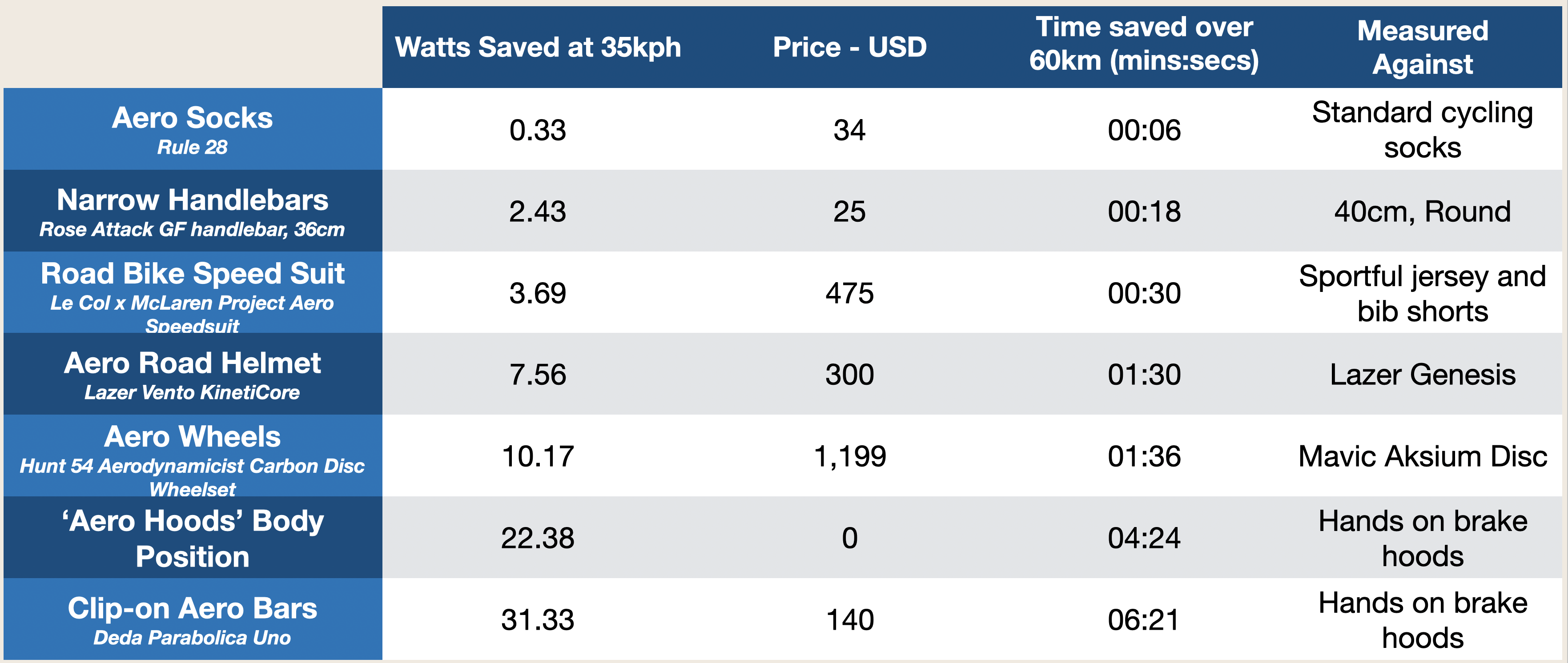
What gains can you expect from various aero upgrades? Absolute numbers vary from one source to another. The figures in the table below from BikeRadar are generally in line with others I have seen. The products in the table were tested in the wind tunnel at the Silverstone Sports Engineering Hub, a leading test facility for cycling in the UK. Testing was done at a range of yaw angles (0, +5 and +10 degrees) to get a more realistic picture of how these upgrades perform in the real world.

The bike used in the tests was a Specialized S-Works Aethos on 28c Continental GP5000 TL tires. The aero upgrades tested are identified below the product category.

The power savings at 35kph are minimal for most items. I would save even fewer watts on my rides, which rarely touch 35kph.

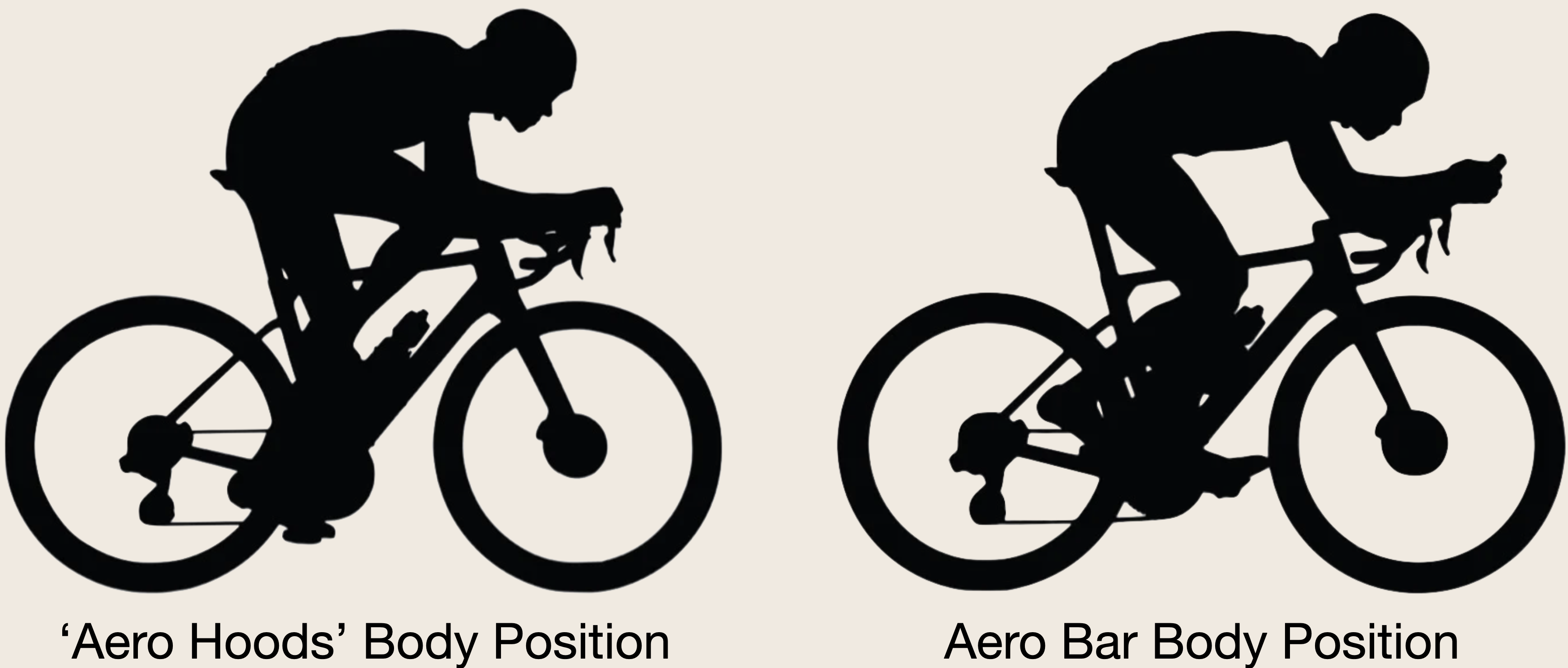
The rider contributes a large portion of the total aerodynamic drag on a bicycle, typically around 75-80%. So it is no surprise that the biggest aero gains come from changing body position. Moving the hands from the hoods to an ‘aero hoods’ position or using clip-on aero bars saves the most watts.

Illustrations courtesy of silca.cc

Many recreational cyclists struggle to hold either of these positions for long. Nevertheless, optimising body position is the most cost-effective aero upgrade.

The easier but more expensive route is to buy a set of aero wheels or even an aero bike. Just remember that the marketing around aero wheels and aero bikes is often a little over the top. By all means, spend money on a fancy new aero bike. But for many recreational cyclists to ride faster, losing weight and becoming more flexible to improve their body position will be more beneficial.

Illustration courtesy of twospoke.com

Be Wary of the Integrated Cockpit

Posted on
Graphic courtesy of dynamicpuzzle.ro

In my previous post, I discussed why professional-level road bikes may not be the best bicycles for recreational cyclists.

High-end road bikes are designed for maximum aerodynamic efficiency. Thus, their low frame stack and long frame reach.

The pursuit of aerodynamic benefits has seen the increasing popularity of integrated cockpits. These systems combine the handlebars and stem into a single piece and are designed to reduce drag by minimising frontal area. These are the integrated cockpits used on the bikes above.

In this post I wrote about one of the downsides of integrated cockpits.  They use internal cable routing, which improves aerodynamics but complicates cable replacement.

Another downside is the high cost of replacing an integrated cockpit if the bike fit (such as the handlebar width or stem length) isn’t right for you. You may well get the right stem length and bar width when you buy a bike with an integrated cockpit. Manufacturers like Specialized and Pinarello have several stem length and bar width combinations to choose from.

If you later decide you want a differently shaped bar, your flexibility lessens, or you want a shorter stem, you must replace the entire integrated cockpit.

You can avoid the pain of installing a new integrated cockpit by paying your bike mechanic to do it. You will also have to foot the more considerable cost to buy a new integrated cockpit. This will be especially painful if you need a new Talon Ultra fast cockpit from Pinarello.

While integrated cockpits may look clean and modern, they come with trade-offs in adjustability and customisation. Not to mention the associated cost. If you’re considering a bike with this feature, understand the limitations and explore whether alternative setups are available.

The Bike You Can Buy and the Bike You Should Buy

Illustration courtesy of WordPress AI

Participants in almost any sport can buy the equipment that the professionals use.

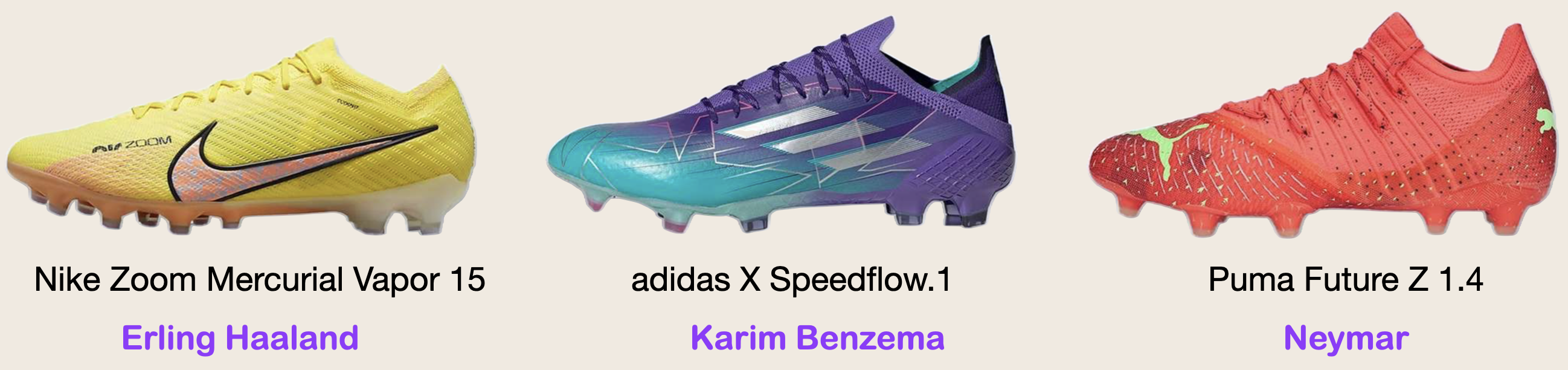
A Sunday league player can wear the same football boots as his or her top goal-scoring idol.

Photographs courtesy of goal.com

A duffer can tee off with the same club a PGA Major tournament winner uses to drive a golf ball 300 yards.

Photographs courtesy of PGAClubTracker.com

A recreational tennis player can serve double faults with the same tennis racquet an ATP Grand Slam winner uses to serve aces.

Photographs courtesy stadiumtalk.com

Apart from sizing considerations, there is little to stop amateurs from using the same equipment that the professionals in most sports use. No physical adaptation is needed to use such sports equipment.

This is not true of road bicycles. People often buy bicycles that they need to fit their bodies to, rather than bikes that fit their bodies.

There are lots of reasons why cyclists buy pro-level bicycles. Owning a high-end road bike can be a way to express personal identity or status, particularly within cycling communities, or to signal passion for cycling and commitment to performance. Some individuals may be drawn to the technical aspects of pro-level road bikes, including the components and frame materials. Others are attracted to these bikes because they are often beautifully designed and crafted.

Unfortunately, riding a professional-level road bike is generally not recommended for amateurs. These bikes are designed for speed and efficiency, with a frame geometry that encourages an aggressive riding position. The handlebar and stem measurements of professional-level racing bicycles let the professional cyclist adopt an aggressive position that few recreational cyclists could endure for long.

Illustration courtesy of silca.cc

The average male professional cyclist is 27.4 years old and weighs between 66 and 68 kilos. He has a high level of flexibility. He prioritises flexibility in hamstrings, hip flexors, and lower back, alongside areas like shoulders and chest, to counteract the typical low and long cycling posture essential to bike racing success.

The average recreational cyclist is older, has a belly which gets in the way of achieving an aggressive riding position, and is not very flexible. The result is that many amateur cyclists on high-end road bikes end their rides with one or more of these complaints: upper back pain, lower back pain, neck pain, aching shoulders and sore hands.

Illustration courtesy of WordPress AI

The main difference between the bicycles the professionals ride and the bicycles most of us mere mortals should be riding is in two frame measurements. These measurements are frame stack and frame reach.

Frame stack refers to the vertical distance between the centre of the bottom bracket and the top of the head tube, while frame reach refers to the horizontal distance between the same points.

A taller frame stack equals a higher handlebar. Bar height can be increased using headset spacers and a positive-angle stem, but it is always better to get a frame that fits you rather than adding headset spacers to a too-low frame.
The longer the frame reach, the further forward the handlebars will be. You can swap the 110 mm or 100 mm stem that road bikes typically ship with for a shorter stem to bring the handlebars closer to you, but this will compromise how the bike handles. Again, it is better to start with a frame that fits you.

The table below shows the frame stack and frame reach for professional-level race bikes and frames with more relaxed geometry from the same manufacturers. The more relaxed geometry frames are usually marketed as Endurance bikes.

The measurements are millimetres for frames that fit a 180 cm tall rider.

Frame Reach and Stack measurements courtesy of the manufacturers’ websites

All the professional-level bicycles have a lower frame stack and/or a longer frame reach than the endurance bikes from the same manufacturer. The biggest differences are in the frame stack.

Despite the appeals of pro-level bicycles, the recreational rider would be wise to prioritise comfort over speed. That means foregoing the admittedly sexy pro-level race bikes in favour of a more forgiving endurance geometry.

Most recreational cyclists need a bicycle that allows them to adopt a more upright back angle than professional cyclists exhibit. In many cases, at least double the back angle. A taller frame stack and a shorter frame reach allow for a more upright position.

Illustrations courtesy of silca.cc

The main benefit for most recreational cyclists of owning a bicycle with a relaxed geometry instead of a race bicycle is greatly increased comfort. A secondary benefit is that an endurance bike is likely cheaper than a high-end race bike.

For happier cycling: Make your bicycle fit your body; don’t make your body fit your bicycle.

Image courtesy of WordPress AI

I Wouldn’t Want to Service a Modern Road Bike

Photograph courtesy of Getty Images on unsplash.com

I took a Bike Maintenance course in 2012 to learn how to service my bikes myself. On the final day of the course, we had to completely strip a bike down, including removing the fork, disassembling the chain rings etc., cleaning and lubricating all the parts, replacing cables as required, reassembling the bike and adjusting the shifting and brakes.

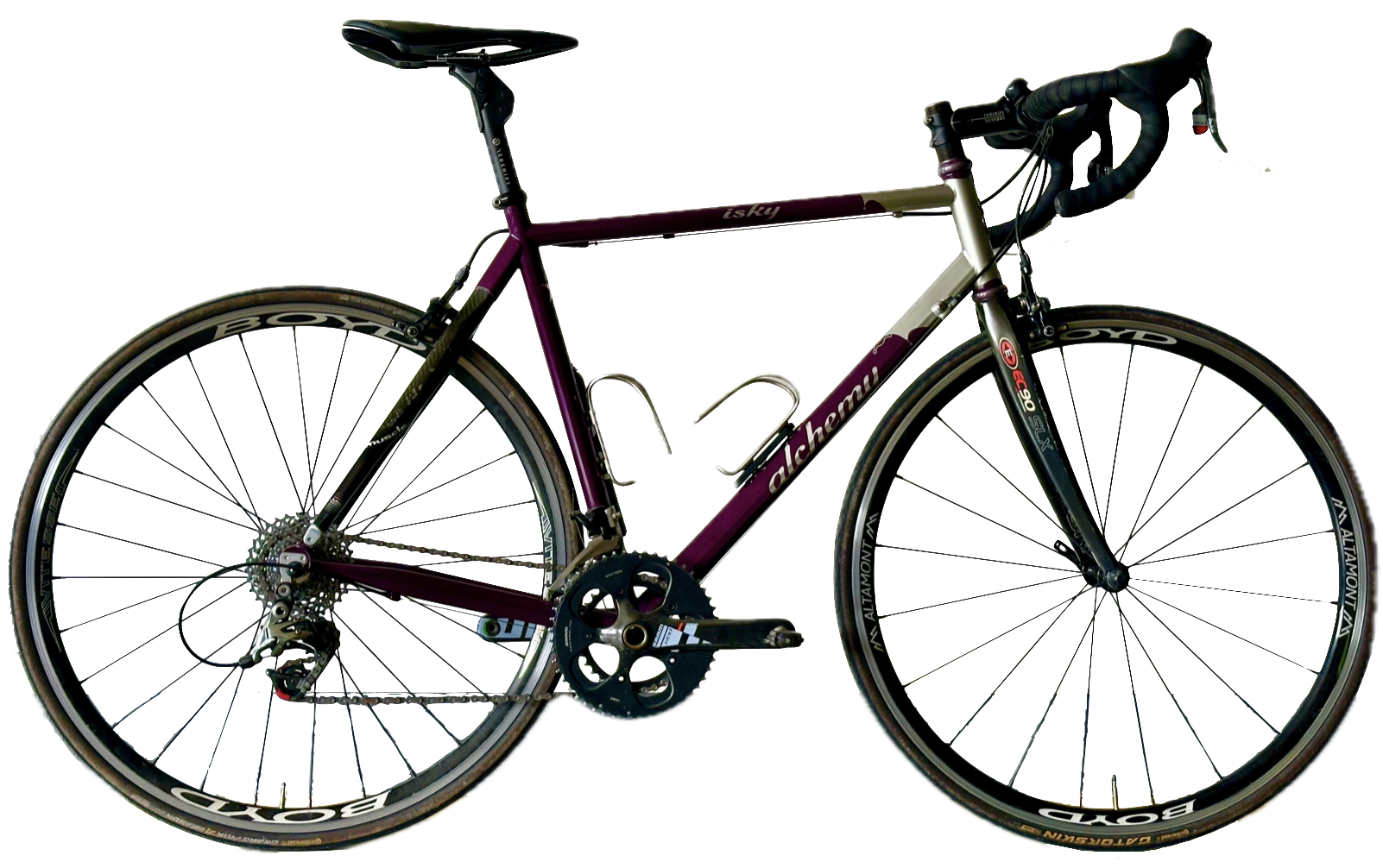
I still own a bicycle from that time, a 2010 Alchemy with mechanical shifting and brakes. I can still service that bike if I had to, although I gladly depend on my local bike shop to service my bikes for me now.

Bikes today are increasingly more difficult to service. I do not have the expertise or the tools to service a modern bicycle.

Advancements in modern road bikes make them more complex. Let us start from the top to compare my fifteen year-old bicycle with a modern one.

My bike uses externally routed cables to operate the brakes and gears.

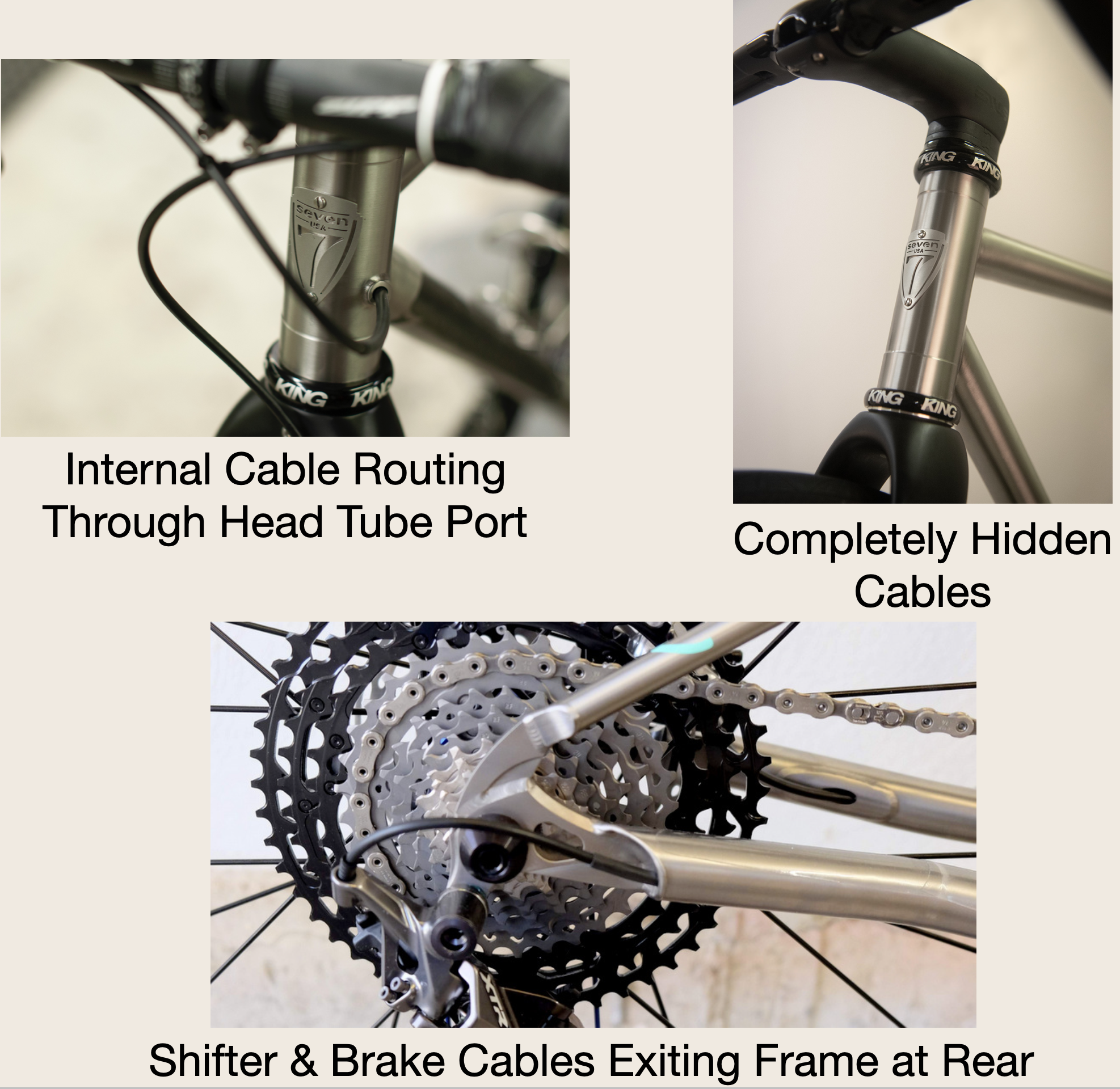
Modern bikes use either partially or completely internally routed cables.

Photographs courtesy of sevencycles.com

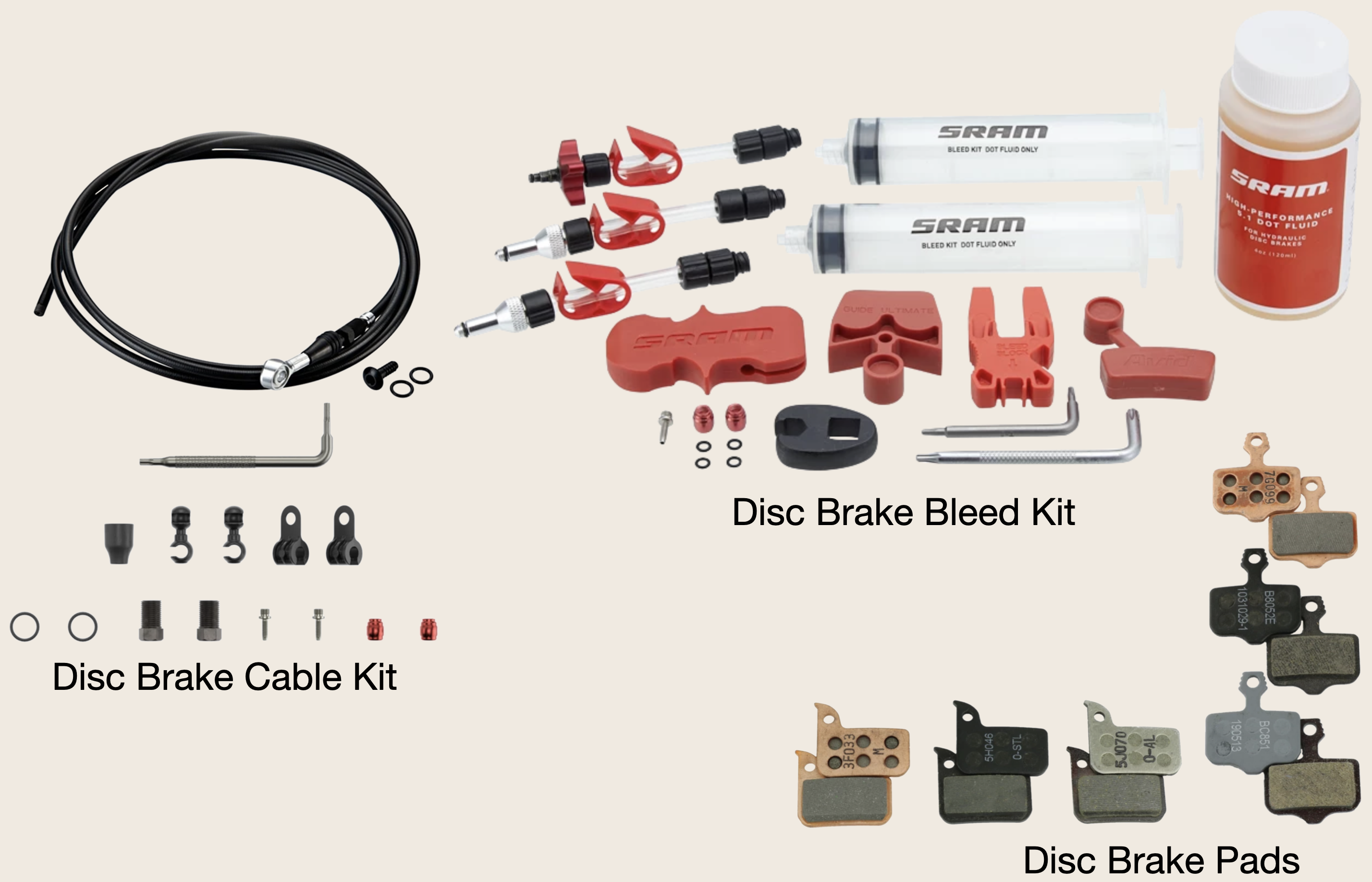
Moving down the head tube to the brakes. My bike has rim brakes. Brakes on new bikes are exclusively disc. Often hydraulically operated.

Photographs courtesy of sram.com

Let’s now look at how these two advances make servicing more complicated.

When it comes to replacing cables on my bike, everything is visible so you can see what you are doing. The challenge with internal cables is that you have to thread them inside the frame blind, so to speak. Threading cables internally can be hindered by a tight curve around the bottom bracket.

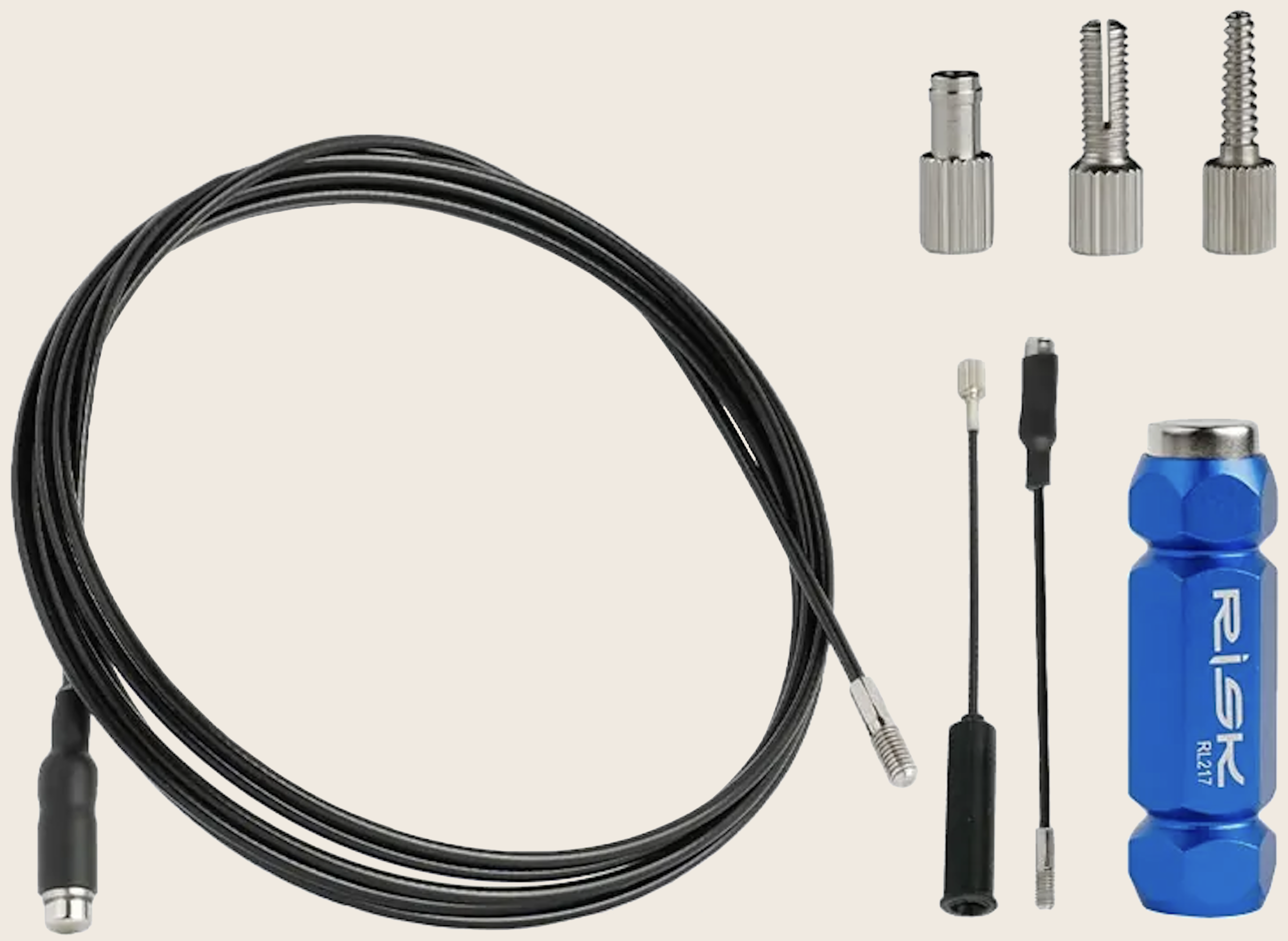
A magnetic internal cable router is often needed.

Photograph courtesy of freewheel.co.uk

Replacing internally routed cables is more complicated when they are fully hidden. The headset often needs to be disassembled because the headset components can obstruct access to the cable path. 

Photograph courtesy of freewheel.co.uk

Then there are the brakes. Apart from infrequent cable replacement, all I need to do to service my rim brakes is to replace worn brake pads. Rim brake pads for road bikes are a standard shape. To replace them, undo the screw that holds each pad in its holder, slide the old pad out and slide a new pad into the holder and tighten the screw.

Photographs courtesy of sram.com

How difficult it is to replace mechanically operated disc brake cables depends on whether they are externally or internally routed.

Replacing disc brake pads is a more involved process. First, you must choose the type of brake pad: sintered, organic and semi-metal. Your choice depends on the type of riding you do. You also need the right shape pads for the disc brake caliper you have on your bike.

Then you to use a tool to push and hold the brake caliper pistons apart. Woe betide you if the pistons close without brake pads in place. You must also ensure that you do not touch the pad surfaces or the disc rotor. Getting oils on the pads or rotor will adversely affect braking performance.

Lastly, you need to bed in the new pads. The bedding in process heats up the pads and rotor, transferring an even layer of material from the disc pad onto the disc rotor. Failing to bed in your disc brakes will almost guarantee to result in vibration, noise, poor modulation, and loss of power.

The brake servicing process is much more complicated if you need to replace your hydraulic brake hoses or bleed your hydraulic brakes. Bleeding requires the correct type of fluid for the disc brakes on your bicycle: mineral oil or DOT fluid. The bleeding process is too long to describe here, but you get a sense of the steps involved from the number of parts in the Disc Brake Bleed kit pictured below.

Photographs courtesy of sram.com

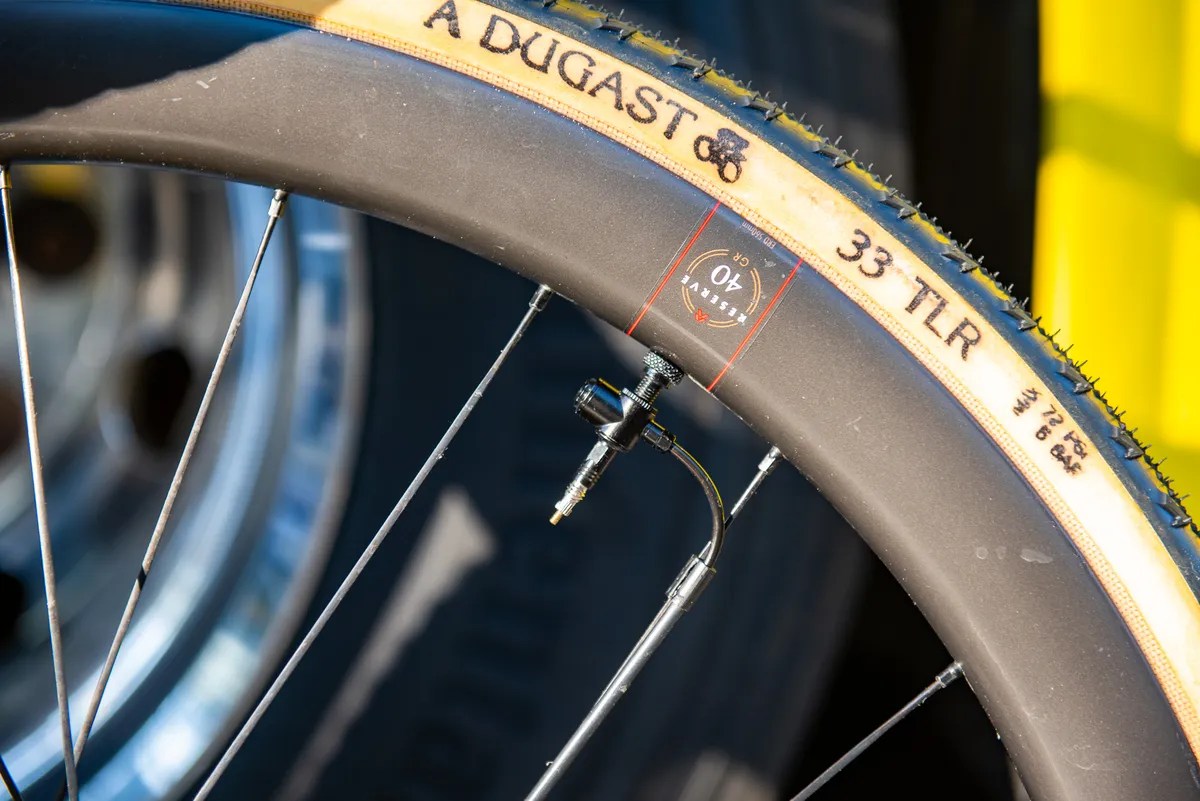
Further down the bicycle are tyres. My bike has clincher tyres and inner tubes. Many new road bicycles, particularly higher-end models, ship with tubeless-ready tyres and wheelsets. Some bikes may ship with tubes in the tyres to simplify showroom setup, but the wheels and tyres are often tubeless-ready.

You can argue that tyres do not need service. However, a tubeless setup requires semi-regular maintenance to keep it performing at its best, as brakes do.

Tubeless tyre sealant gradually dries out. Manufacturer recommendations for sealant top-off intervals range between three and six months. It is also suggested that you take your tyre completely off the rim every twelve to eighteen months to scrape out the dried sealant.

The need to regularly top off the sealant, scrape out dried sealant and the fact some tubeless tyres are tricky to mount and/or need a dedicated tubeless inflator or air compressor to seat makes tubeless setup and maintenance inherently more onerous than using clincher tyres and inner tubes.

Photographs courtesy of bike radar.com & bicycling.com.

Last year, I wrote a post titled Tubed or Tubeless Tyres? The photographs below from that post illustrate how much more stuff you need to run tubeless tyres versus clincher tyres.

I’ll stick with my fifteen-year-old bicycle. My bike mechanic and I prefer the simplicity.

Photograph courtesy of WordPress AI

What Size Jersey Do I Buy?

Illustration courtesy of WordPress AI

An article titled We need to talk about why jersey sizes are getting smaller by Wade Wallace appeared on the Escape Collective website on 1 April 2025. It is a Member Exclusive article, so you need to sign up to Escape Collective to read it. Articles like this one, Member Podcasts and a Member Purchase Program that offers 25% off products from Cane Creek, and 20% off products from Ritchey, Silca, Mavic, Velocio and others make the annual USD99 subscription well worth it.

Back to Wade’s article. Despite the publication date, this is not an April Fool’s gag. Wade asks why fifteen-year-old size M cycling jerseys fit him the same as new size XL jerseys? Wade uses these photographs to prove his point.

Photograph courtesy of escape collective.com

He discusses several reasons for this size inflation. Modern fabric technology and fashion are two culprits.

The article generated 175 comments. Some of these touched on how jersey sizes are inconsistent from one manufacturer to another. I was intrigued and did some research.

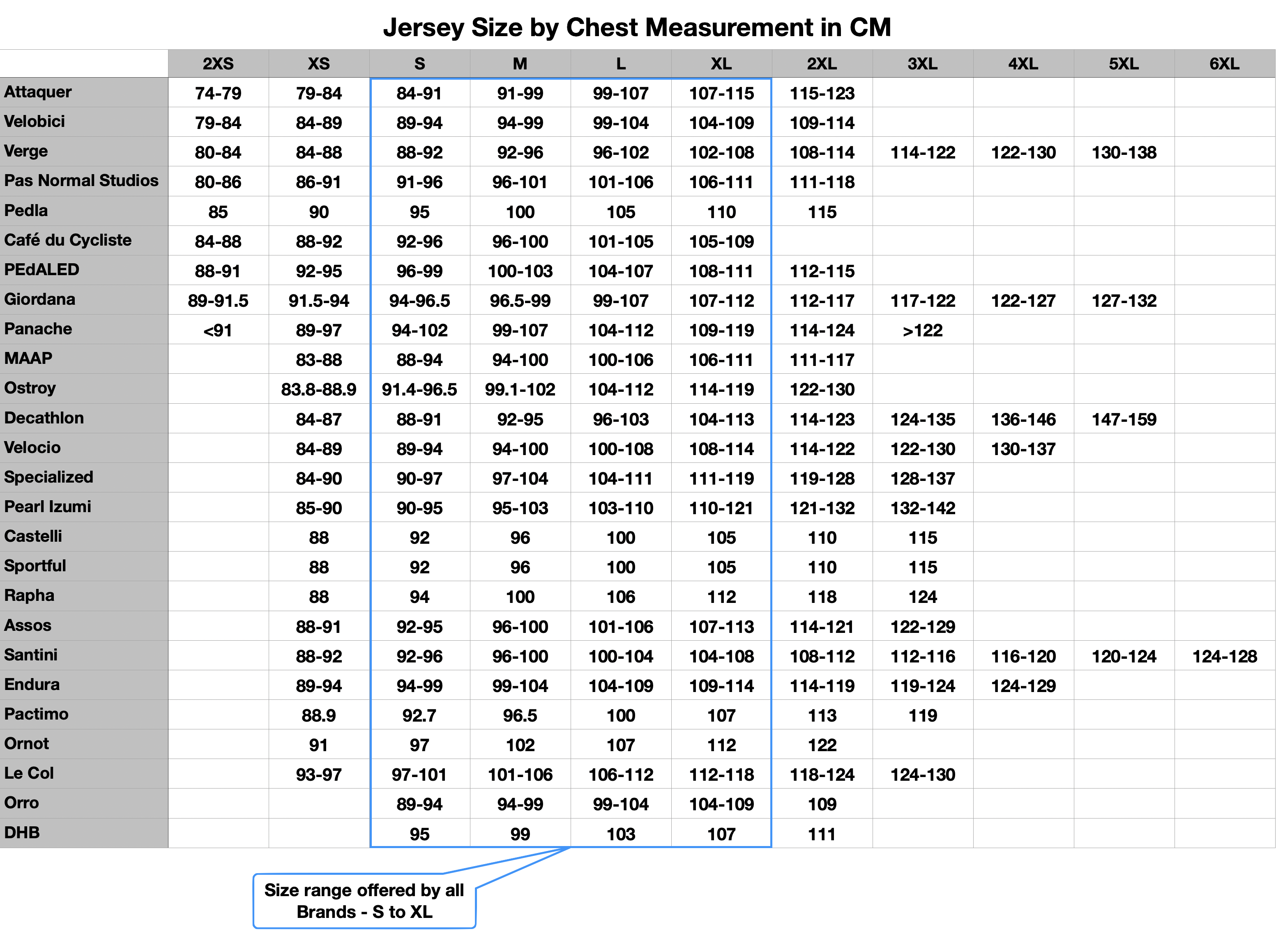
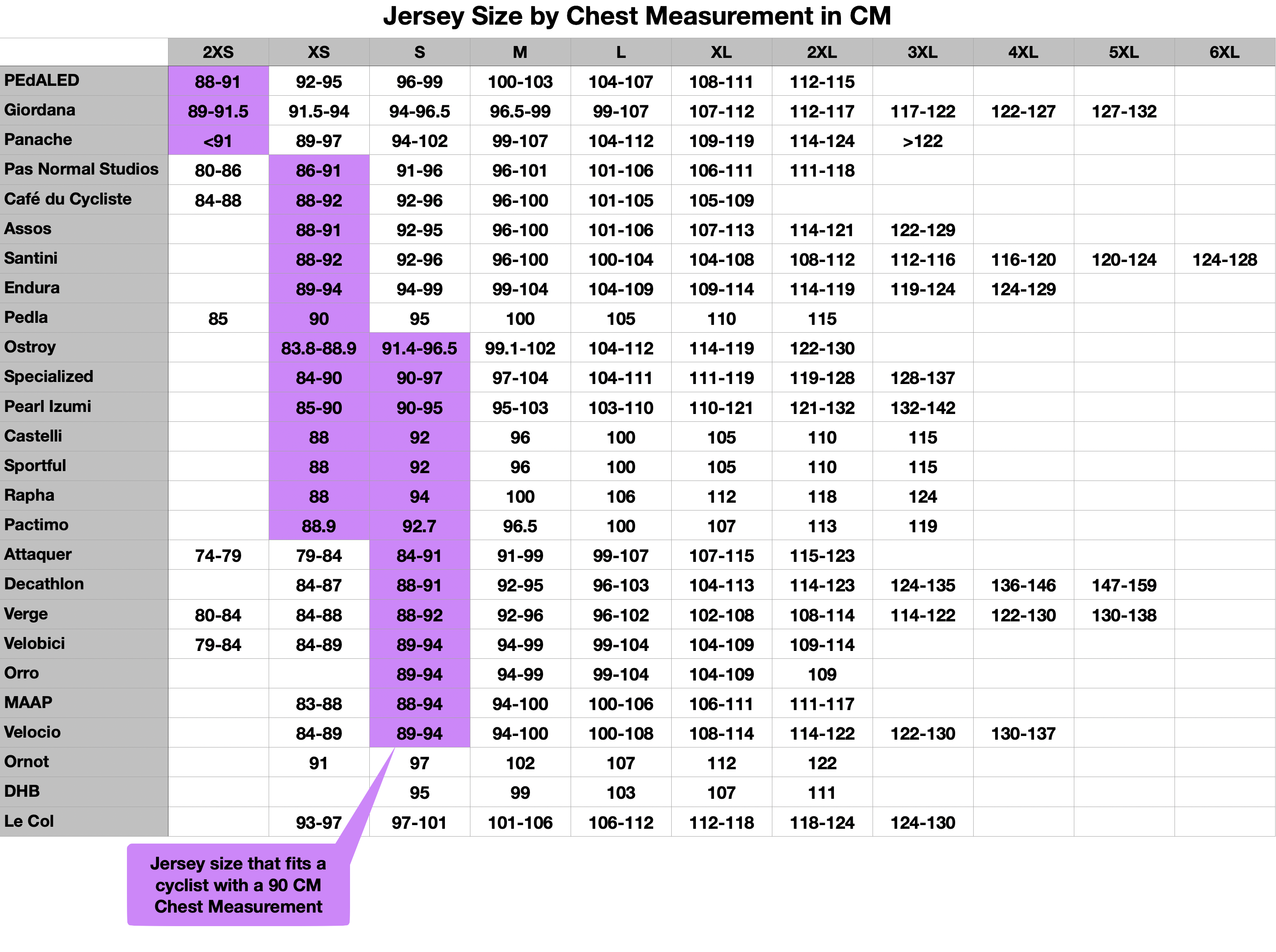
I looked at the online size guides for men’s cycling jerseys from twenty-six brands. Some brands have different size guides for the various types of jerseys in their catalogues: short-sleeved, long-sleeved etc. Some brands even have size guides for each of the fits they offer for a particular jersey type: relaxed, enthusiast, pro and so on. 

I tried to compare like with like. The figures below are for men’s tight-fitting short-sleeved jerseys. There are indeed inconsistencies between manufacturers.

To start with not all brands offer sizes 2XS, XS, 2XL, 3XL, 4XL, 5XL and 6XL. All twenty-six offer sizes S to XL.

Attaquer offers the jersey in the smallest chest size of 74-79 cm. Decathlon offers the largest of 147-159 cm. Santini is the only brand with a size 6XL. Interestingly, Santini’s size 6XL is roughly equivalent to Decathlon’s size 3XL. You are starting to see the sizing inconsistencies between brands.

Data courtesy of the Brand’s respective websites

The chest measurements that each brand uses to differentiate the sizes they offer are definitely not standardised.

A cyclist with a chest measurement of 90 cm will need a size 2XS from PEdALED, Giordana or Panache. The same cyclist will need a size S from seven brands including Attaquer, Verge and Velobici. A 90 cm chest falls between sizes XS and S for seven other brands.

Data courtesy of the Brand’s respective websites

A cyclist with a chest measurement of 98 cm faces the same “What size am I in this brand’s jersey” conundrum. Depending on the brand, anything from size S to size L. In six cases a 98 cm chest falls between two sizes.

Data courtesy of the Brand’s respective websites

I thought the brand’s country of origin may have something to do with how their jerseys are sized. This is not the case.

Giordana, Santini, Castelli and Sportful are Italian brands designed and manufactured in Italy. Castelli and Sportful use identical sizing, perhaps because both brands belong to Manifattura Valcismon (MVC Group). Giordana and Santini use independent sizing schemes.

Data courtesy of the Brand’s respective websites

The same is true of the American brands Panache, Ostroy, Specialized, Pactino, Velocio and Ornot. Each American brand has its methodology for fitting chest measurements to their jersey sizes. I do note that Panache, Ostroy and Specialized use virtually identical chest measurements for their size L.

Data courtesy of the Brand’s respective websites

This inconsistency is also evident in the United Kingdom brands, although Velobici and Orro use common chest measurements in their size S, M, L and XL.

Data courtesy of the Brand’s respective websites

Another consideration is whether a cycling jersey accurately reflects its listed chest measurement, i.e. is it true-to-size? Online comments suggest that this is not always the case.

This means that the consumer cannot buy the same size cycling jersey from several brands and expect them to all fit the same.

What to do? Stay true to one brand. Or visit a physical store to try on a brand you are unfamiliar with. Or do your research before ordering a brand online for the first time. And expect to return a cycling jersey bought online because it doesn’t fit as expected.

Illustration courtesy of WordPress AI

Bicycle Tyre Upgrades: A Thing Since 1817

Clockwise from top left, photographs courtesy of bikeradar.com, lebelbicycles.com, cyclingnews.com and cyclingweekly.com

A web search for “Best Bicycle Upgrades” will produce suggestions with tyres at or close to the top of the list. It shouldn’t be surprising that tyre upgrades have been a “must have” since the bicycle was invented.

Illustration courtesy of bicyclehistory.net

Karl Drais invented his Laufmaschine (running machine) in 1817. Later known as a “draisine,” this vehicle had wooden wheels. Despite unpaved roads and solid wheels, Drais propelled his machine, Fred Flintstone fashion, nearly 16 kilometres in just over an hour.

Photograph courtesy of coimages.sciencemuseumgroup.org.uk

By 1866 Pierre Lallement received a US patent for a bicycle propelled by pedals attached to a slightly larger front wheel. These bicycles were called bone shakers because of the exceedingly uncomfortable ride caused by the stiff wrought-iron frame and wooden wheels surrounded by iron tyres.

Photograph courtesy of cars.bonhams.com

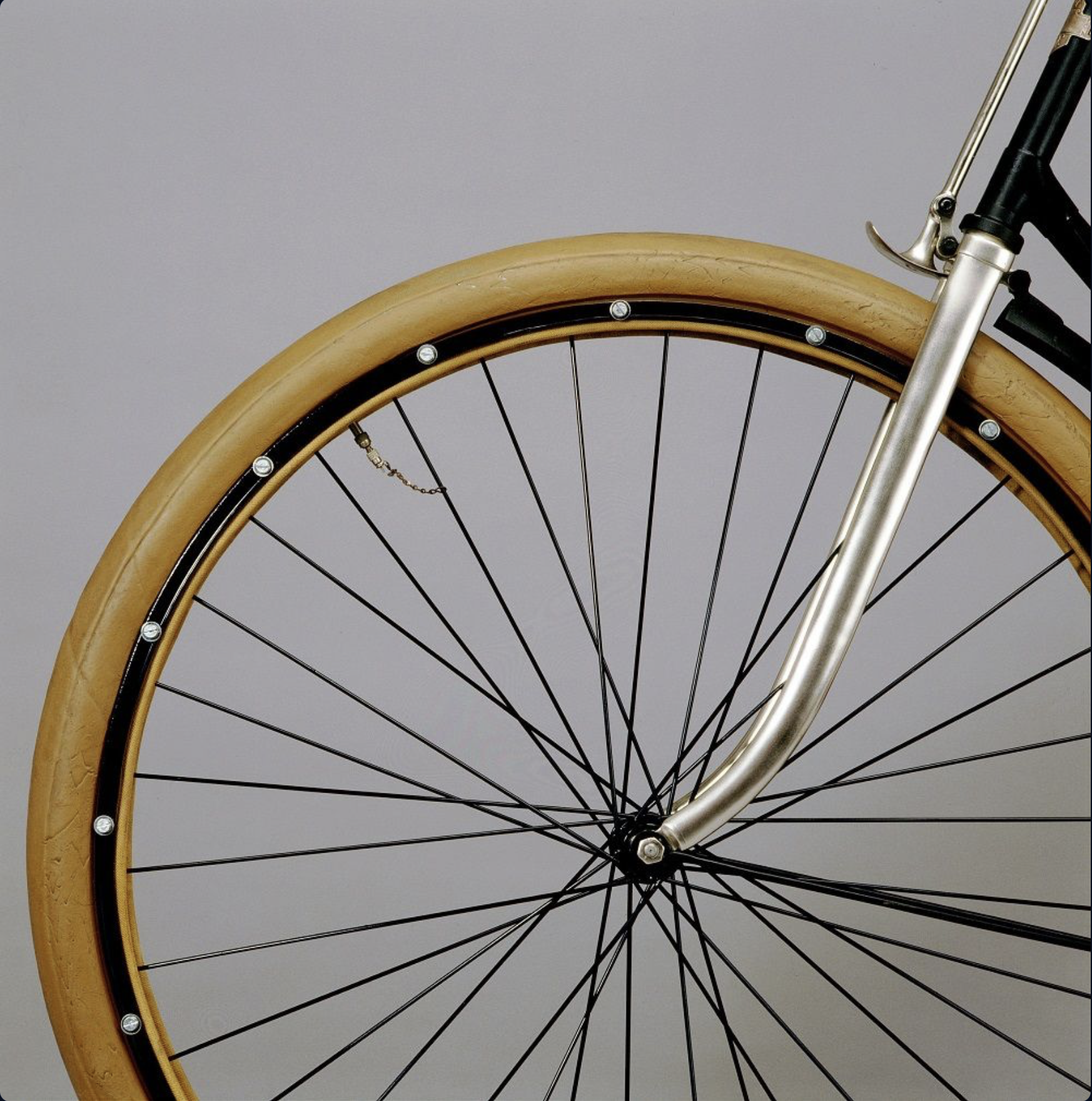
An upgrade, available since Charles Goodyear patented his vulcanisation process in 1844, was solid rubber tyres. Such tyres improved on solid wooden wheels or spoked wheels with iron rims, but they still gave a jarring ride.

Photograph courtesy of coimages.sciencemuseumgroup.org.uk

In 1885 John Kemp Starley and William Sutton introduced the Rover safety bicycle with a chain and sprocket drive and equally sized wheels. The Rover came with solid rubber tyres.

Photograph courtesy of heritage-print.com

Arguably the last major innovation in tyres came in 1887 when John Boyd Dunlop, in an attempt to smooth the bumpy ride of his son’s tricycle, nailed linen-wrapped inflated tubes to the solid wooden tricycle wheels. These were the first pneumatic, or air-filled, tyres.

The photograph above shows Johnny Dunlop riding his newly improved tricycle.

Photograph courtesy of progress-is-fine.blogspot.com

An improved version found immediate use among the growing number of enthusiastic bicycle riders. The first pneumatic tyre factory was started in 1889 to make tyres under Dunlop’s patent of 7th December 1888.

The photograph above shows Dunlop holding a bicycle fitted with pneumatic tyres.

Photograph courtesy of michelin.com

In 1891 André and Édouard Michelin introduced detachable pneumatic tyres for bicycles, and August Schrader invented his namesake Schrader valve. At the end of the 19th century, Etienne Sclaverand registered his patent for the Presta valve.

One can argue that the next step-change in bicycle tyres didn’t come until 1999 when Mavic introduced the first tubeless wheel and tyre system for mountain bikes. It was 2006 before Shimano and Hutchinson introduced a road tubeless standard. 

Photograph courtesy of cdn.mos.cms.futurecdn.net

The next bit of bicycle tyre innovation came when Marianne Vos showcased self-inflating tyre technology while winning the 2024 UCI Gravel World Championships. The Gravaa system uses tiny compressors within the wheel hubs to increase or decrease tyre pressure.

Despite these innovations bicycle tyres are what they were 135 years ago. They are air-filled tubes inflated via a valve. Admittedly bicycle tyres are better designed and constructed today.

Photograph courtesy of smarttirecompany.com

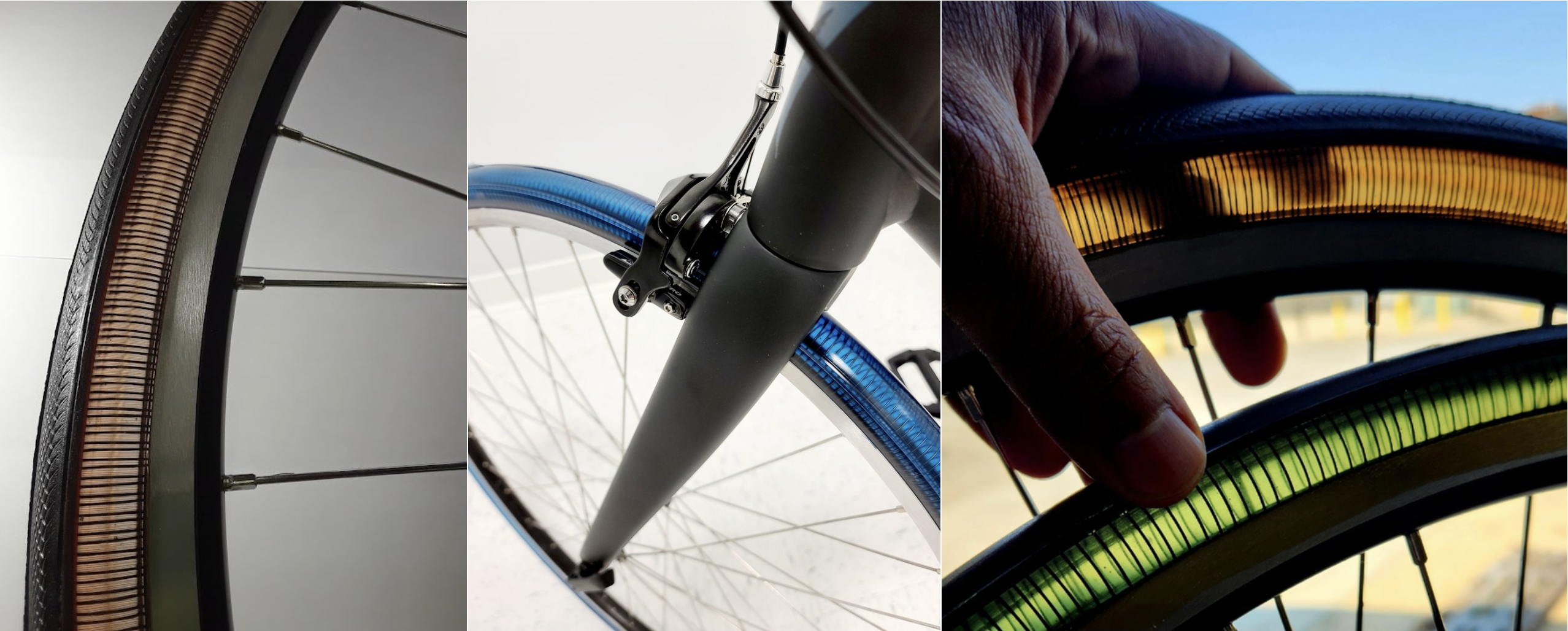
That may be about to change. The SMART Tire Company aims to commercialise an airless alloy tyre called METL (Martensite Elasticized Tubular Loading). METL was invented for space exploration. SMART is an acronym for Shape Memory Alloy Radial Technology.

METL promises to revolutionise bicycle tyres. Airless, never flat, elastic like rubber yet strong like titanium. At launch, these tyres are expected to cost USD150 each. The tread is rated for 13,000 km and retreads will be available for about USD10 per tyre.

The key phrase is “at launch.” The initial launch was expected to be in Q2 2022. That slipped to June and ,then Q4 2024. Today you can visit the SMART Tire Company’s website and add your name to a 2025 Wait List.

Photographs courtesy of smarttirecompany.com

I hope the SMART Tire Company does launch METL at an affordable price. That would be a proper tyre upgrade. Perhaps there will be an option for sidewalls that match your bike.

From 1968 to 2009: The Bicycles I Rode

AI images courtesy of WordPress

A bike is never just a bike – it’s a reflection of where you are, where you’ve been, and, sometimes, where you want to go.

Iain Treloar
Bikes of the (Staff) Bunch: Iain’s Moots Vamoots CR
Velo, Updated Oct 9, 2023

Iain wrote about how you can trace the changes in his life by what and where he has been riding. This made me think about all the bikes I have owned.

I started road cycling at the end of 2008, relatively late in my life. That is when I bought a Trek 7.5 FX and started exploring the streets of downtown Houston.

Photograph courtesy of viaciclante.com

Many posts in this blog trace my cycling journey from that hybrid bike through a succession of road bikes.

There were earlier times in my life when I owned a bicycle. My first bike was a Raleigh Chopper.

Photograph courtesy of wheredidtheygo.co.uk

I was eleven or twelve years old. That Chopper, with its stick shift and easy rider handlebars, was certainly cool. It also wasn’t very safe. The rearward centre of gravity made it easy to pop unintended wheelies. I still carry a scar on one knee from a fall after I stamped on the pedals and the front wheel went skyward.

I don’t remember what happened to that bike. There wasn’t anywhere to cycle to, and I don’t recall any other children in the neighborhood having bikes. I must have stopped riding it, and my parents got rid of it.

I was fifteen when I was given another bicycle. This time, it was a Raleigh Grand Prix road bike.

Photograph courtesy of sheldonbrown.com

It came with toe clips and straps on the pedals. If you flipped the pedals, the clips scraped on the ground on the downstroke. Speaking of scrapes, the cottered cranks regularly took skin off my ankle bones. I rode that bicycle a lot. I rode it to school. I rode it to evening football games. I rode it to visit friends in places like Petaling Jaya, a 25 km round trip.

I didn’t ride for fun as a teenager. I didn’t explore the city on my bicycle. I didn’t have any friends who cycled. My bicycle was purely a mode of transport to get to and from places. Again, I didn’t have friends who cycled, so there was no social aspect to enjoy.

I still had that bike when I went overseas to university. When I came home after graduating, I found that my father had given it away. At that stage of my life, getting settled and starting my first job took centre stage. Riding a bicycle never crossed my mind. I didn’t think much of it then, but I wish I still had that bike.

My career and family occupied most of my time through my thirties and into my forties. My main forms of exercise then were playing football, basketball and jogging. It wasn’t until work took me to England that I owned another bicycle. We lived in a cul de sac, and my neighbours had bicycles. They rode as a group on summer evenings. I bought a Carrera mountain bike to join them on those social rides. Mostly to a local pub! I rode it to work a few times, but it largely served a social purpose.

The only photograph I could find of what looks like that bike is in this mid-1990s advertisement.

Photograph courtesy of eBay.co.uk

That Carrera came to Kuala Lumpur with me at the end of my overseas posting. I occasionally rode it around the neighbourhood but depended upon football and squash for exercise. I recall a death-defying experience when I followed a mountain-biker friend at speed down a jungle trail to find an open ditch at the bottom of the hill. To this day, I do not know how I bunny-hopped that ditch and stayed upright. That was the last time I rode off-road.

A few years later, I accepted a job in Paris, and the Carrera came with me. I used it more to ride around the neighbourhood with my sons than anything else. My life was in turmoil at the end of that posting, and the bike got lost in the shuffle.

It was seven years before a bicycle entered my life again. The year was 2008. I was fifty-two, with a recent ACL replacement. You can read about it here.

Cycling has played a major role in my life since then. I ride for the physical challenge, to explore, and to enjoy the sights and sounds of nature. I also ride with friends for the shared experiences and camaraderie.

I still ride three of the four road bikes that came into my life after the Trek, starting in January 2010. My second road bike is accumulating miles with a friend in Canada.

There will come a time when an e-bike is a sensible option. I hope not for a while longer, though. I like where I am and where I want to go.

AI image courtesy of WordPress

Discoveries Along the Way While Bike-Packing with Brian

Photograph courtesy of Simon Long at photos.com

Last weekend Brian and I made an overnight trip to Sekinchan. I had a new Expedition Saddle Pack, courtesy of a generous discount coupon from Apidura. This time, I had a Rapha Explore Bar Bag rather than the Route Werks Handlebar Bag I used on my last multi-day ride with Brian. This unused piece of kit was gifted to me a long time ago. I can fit it on my bar without moving my Garmin mount. The Explore Bar Bag worked well on this ride.

Photographs courtesy of rapha.cc

Brian rode to meet me at Syed Bistro, across from where I live, for breakfast. We clipped in and were on our way at 7:25 am.

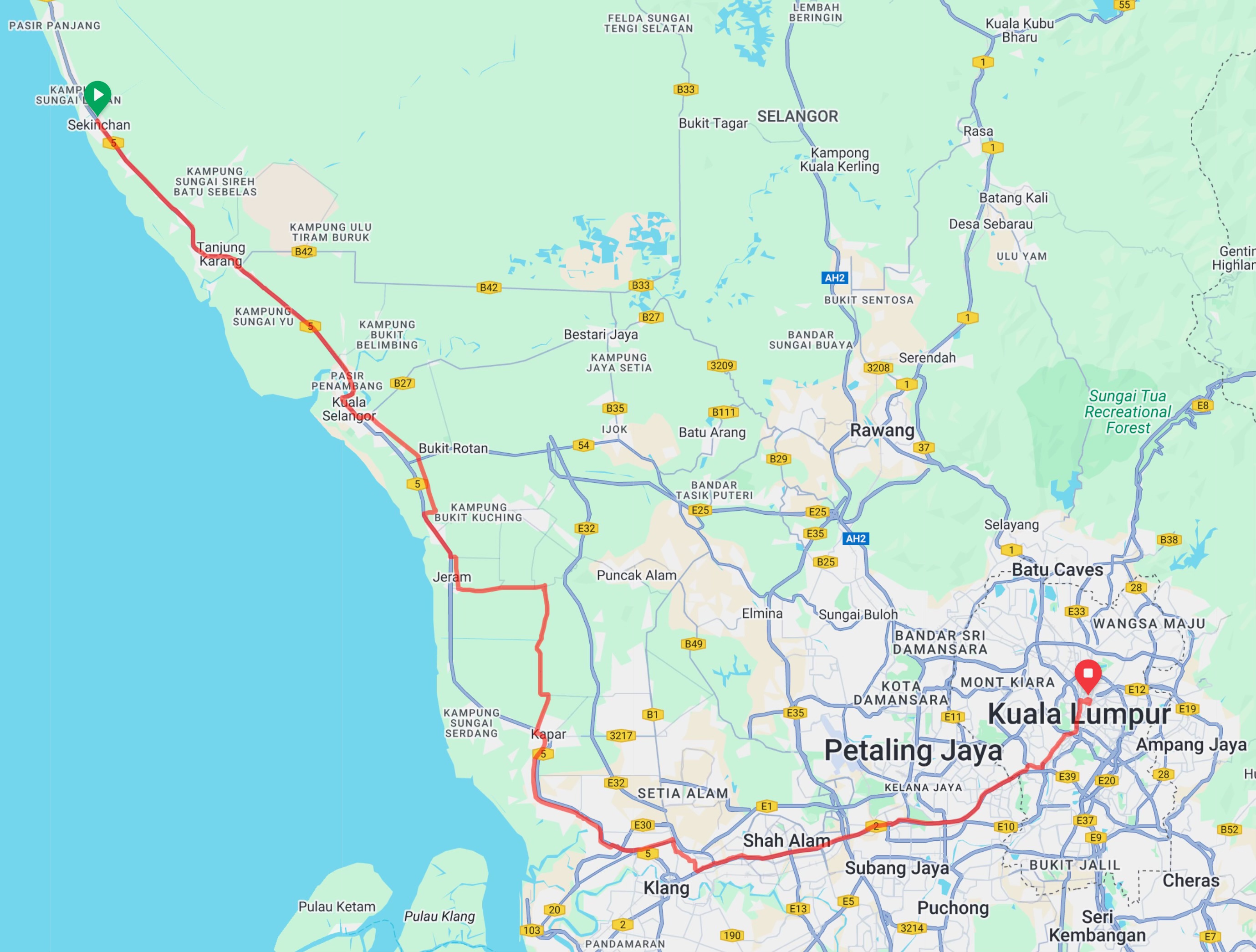
Map courtesy of Ride With GPS

We rode about 8 km to the Federal Highway and then 22 km to Klang along the motorcycle lane beside the highway. I had plotted a route from the end of the Federal Highway motorcycle lane to Kapar that avoided going through Klang. What I hadn’t realised is Klang is circled by highways.

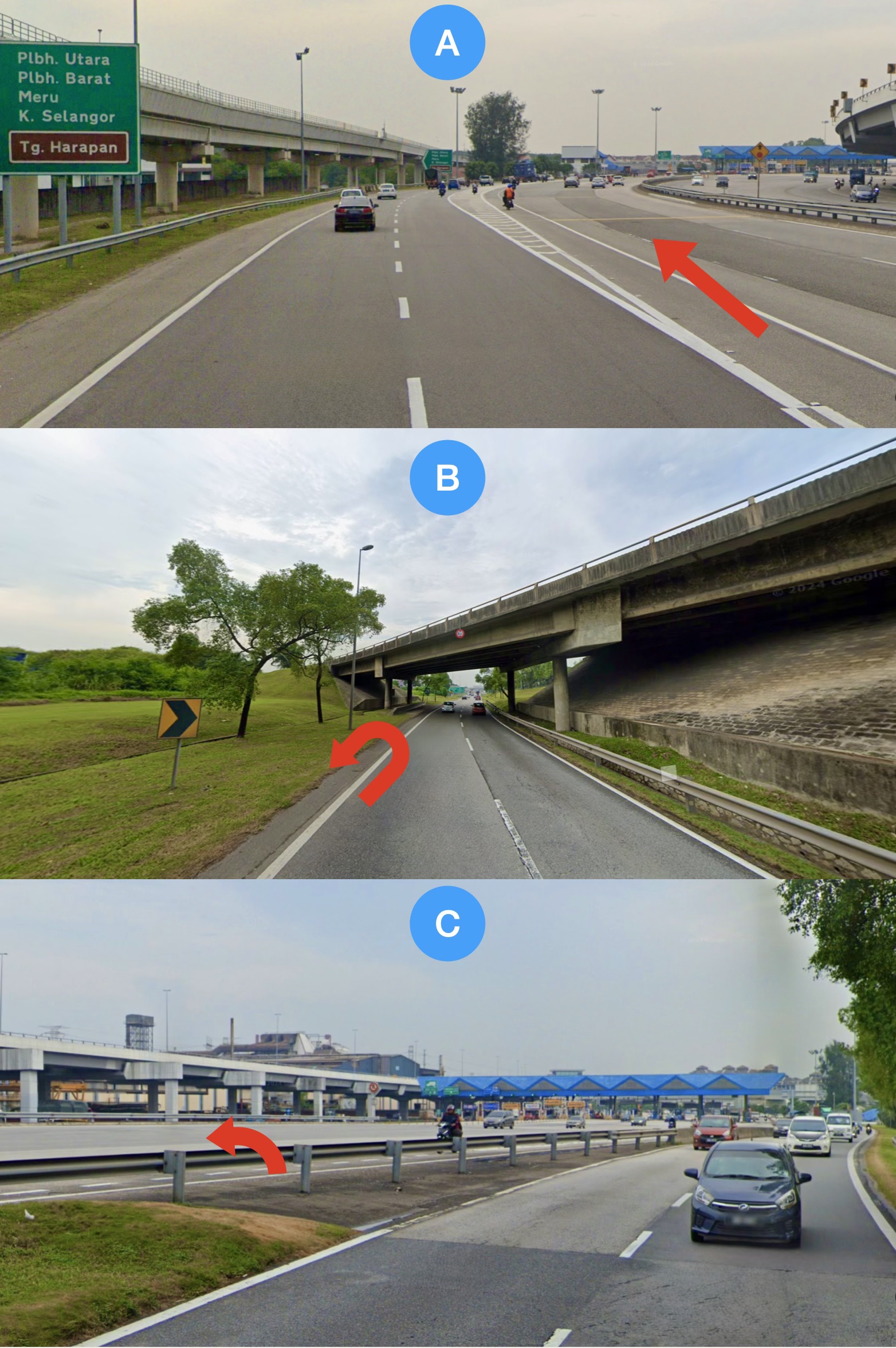
We turned off the Federal Highway onto the Selat Klang Highway. That road was busy but manageable on our bicycles. 3 km later the route map on my Garmin Edge pointed us toward a toll plaza (Photo A below). The Selat Klang Highway changes into the Shapadu Highway, also known as the New North Klang Straits Bypass at that toll plaza. Bicycles are not allowed on toll roads so we stuck to the left. Which was the direction we needed to go anyway.

500 metres later we came to an overpass that we were supposed to be on. I realised we had to get onto the Shapadu Highway to head left as planned. So we turned around (Photo B below).

We were able to cross the road and hop over the guardrail onto the Shapadu Highway without going through the toll plaza (Photo C below). 300 metres later we exited the highway and were back on course.

Photographs courtesy of Google Street View

That is a confusing web of highways. The road we took by mistake is also part of the Shapadu Highway that bypasses the toll plaza. It looks like the toll plaza is meant to ‘catch’ motorists who want to continue on the Selat Klang Highway as it heads west.

I know not to route that way next time.

Map courtesy of Ride With GPS

That highway mess was 35 km into our ride. By 50 km I was feeling a mess. My triceps and neck ached. I couldn’t get comfortable on my saddle. I thought “I must really be unfit.”

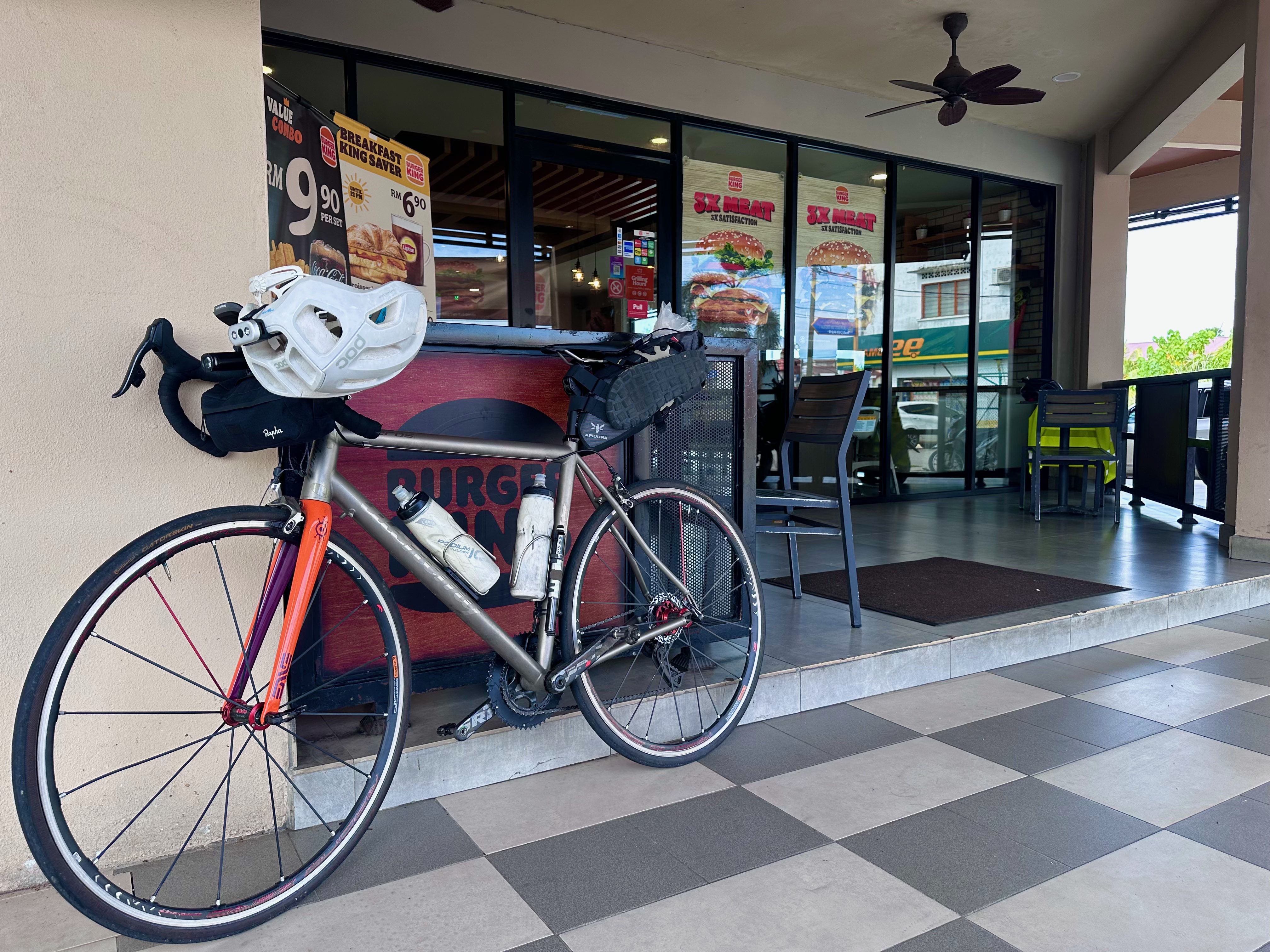
That was the start of frequent stops for me to rest and stretch to try and alleviate the aches. Eight minutes at 57 km. Forty minutes in the Burger King in Jeram at 67 km. Our discovery there was not to stop at that Burger King again.

The manager told us curtly that we could not lean our bikes against our table. “What is the difference between having the bikes against our table and two feet away on the walkway?” I asked.

“Nothing” she replied before turning on her heels and disappearing into the empty restaurant. We got the feeling that we were not welcome there. We won’t be going back.

A Mushroom Swiss burger and some iced lemon tea got me 18 km further down the road before I had to stop again. I rested once more at 93 km because my right knee had started hurting too. I sat down for thirty minutes 3 km later at the Petronas station at Tanjung Karang.

I took a couple of paracetamol tablets during that stop at the petrol station. As I waited for the painkillers to kick in I remembered that I took my prescription blood pressure medication before starting the ride. I check my blood pressure every morning. It is usually in the Normal to High-Normal range. When either my systolic or diastolic pressure creeps into the Grade 1 blood pressure (mild) range I take a telmisartan tablet. That happens about once every ten days.

I have never had a bad reaction to telmisartan. Sitting in the Petronas station I looked up the commonly occurring side effects, which are:

  • Fatigue
  • Flu-like symptoms like body aches
  • Muscle pains
  • Back pain

I think I discovered why I felt so awful. The extended physical activity must have triggered the side effects.

The paracetamol helped get me to the 109 km point. That was only 3 km from the hotel but I had to stop for a while.

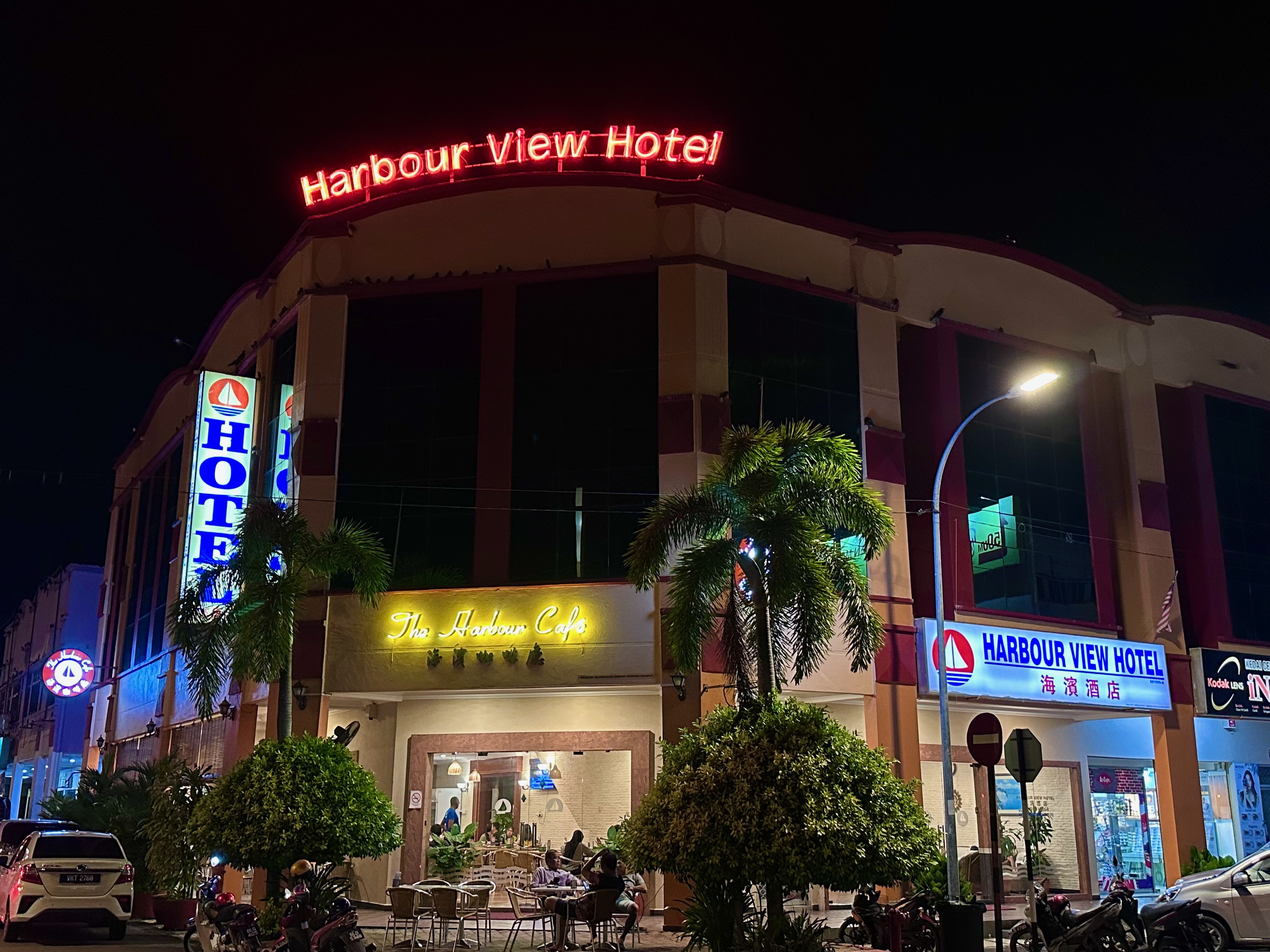
I chose the Harbour View Hotel because it has a café. Good ratings on booking.com and a reasonable room rate also helped. The hotel is excellent. There is a room behind the 24-hour reception desk where we parked our bicycles. Our room was clean and had comfortable beds. The air-conditioning and television worked. There was hot water and good water pressure in the shower. The windows are double-glazed. There is a hot and cold water dispenser in the hallway.

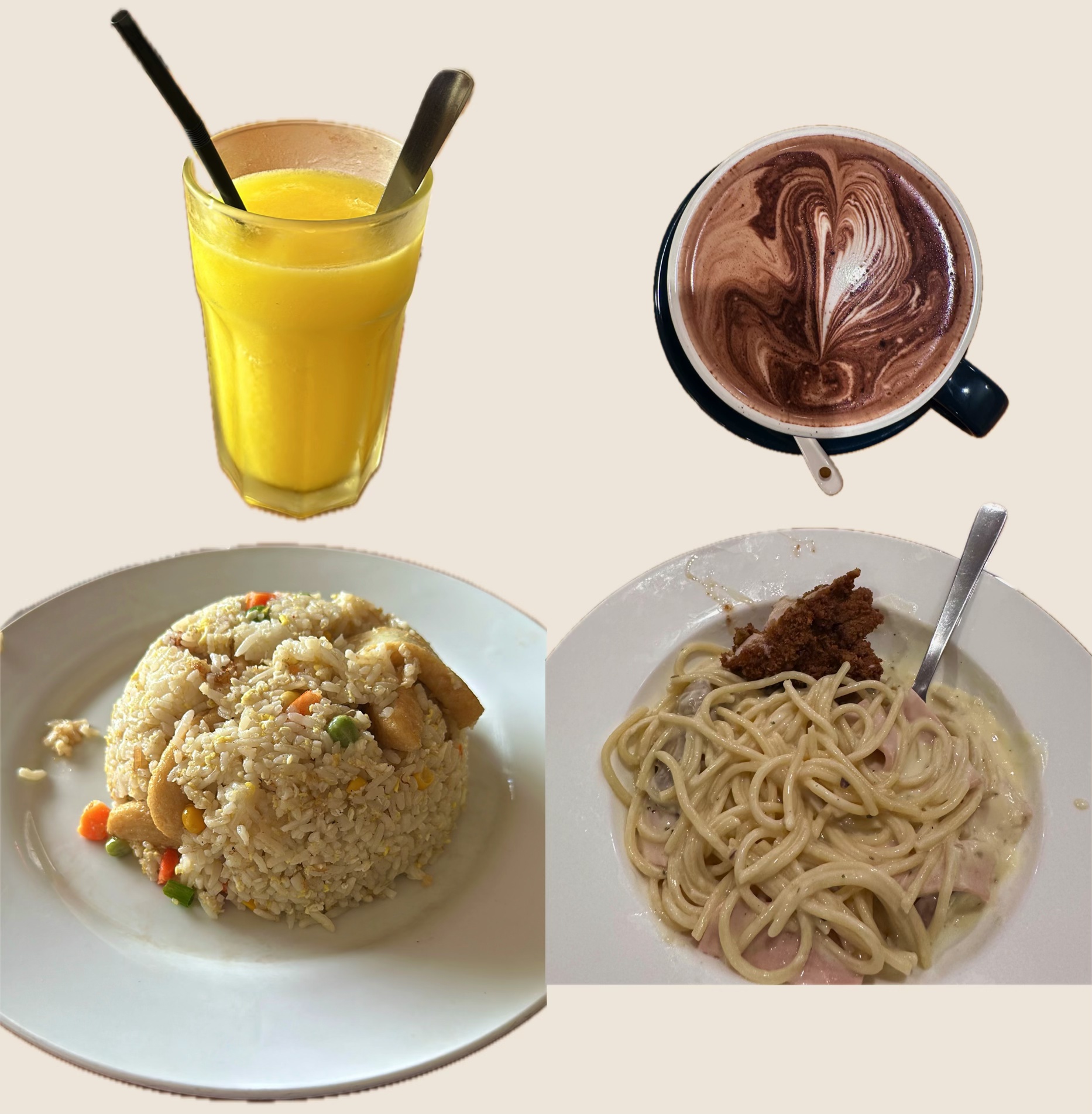
The café is excellent too. We were in the café right after dropping our stuff off in our room. The menu is extensive. I had two ice-blended mango drinks and seafood fried rice. Brian had black pepper fried rice.

We walked around the block after a shower and a long nap. We didn’t see any interesting restaurants so we returned to the Harbour Café for dinner. I had another ice-blended mango drink and spaghetti carbonara. Brian had a fried chicken chop. That is a bit of his chicken chop on my plate of spaghetti. We had complimentary bowls of mushroom soup and a couple of hot chocolates each to finish our meal.

The double-glazing in our room meant we had a quiet night, despite the proximity to Federal Route 5. We planned to head out at 5:30 am. It was pouring at 5:00 am so we went back to bed. The next thing we knew it was 7:50 am and drizzling.

The hotel café opens at 10:30 am so we wandered outside for breakfast. We both had masala thosai at Restoran Salsabeel.

We pedalled away from the hotel clad in waterproof gear. I had planned to ride through the padi fields that Sekinchan is famous for. The fields are divided into rectangles by narrow roads. As you can see from the photograph at the top of this post and the one below, some are gravel.

Photograph courtesy of Google Street View

We skipped the wet muddy roads through the padi fields and stuck to Federal Route 5 out of Sekinchan. The drizzle lightened and we were getting hot. We were out of our rain gear after fifteen minutes.

Map courtesy of Ride With GPS

I felt much better than the day before. We made our first stop at the FIVE petrol station in Tanjung Karang. I was drinking more than usual, thanks to Brian reminding me to stay hydrated. I had finished one 750 ml bottle in less than 50 minutes. I needed a refill and a restroom.

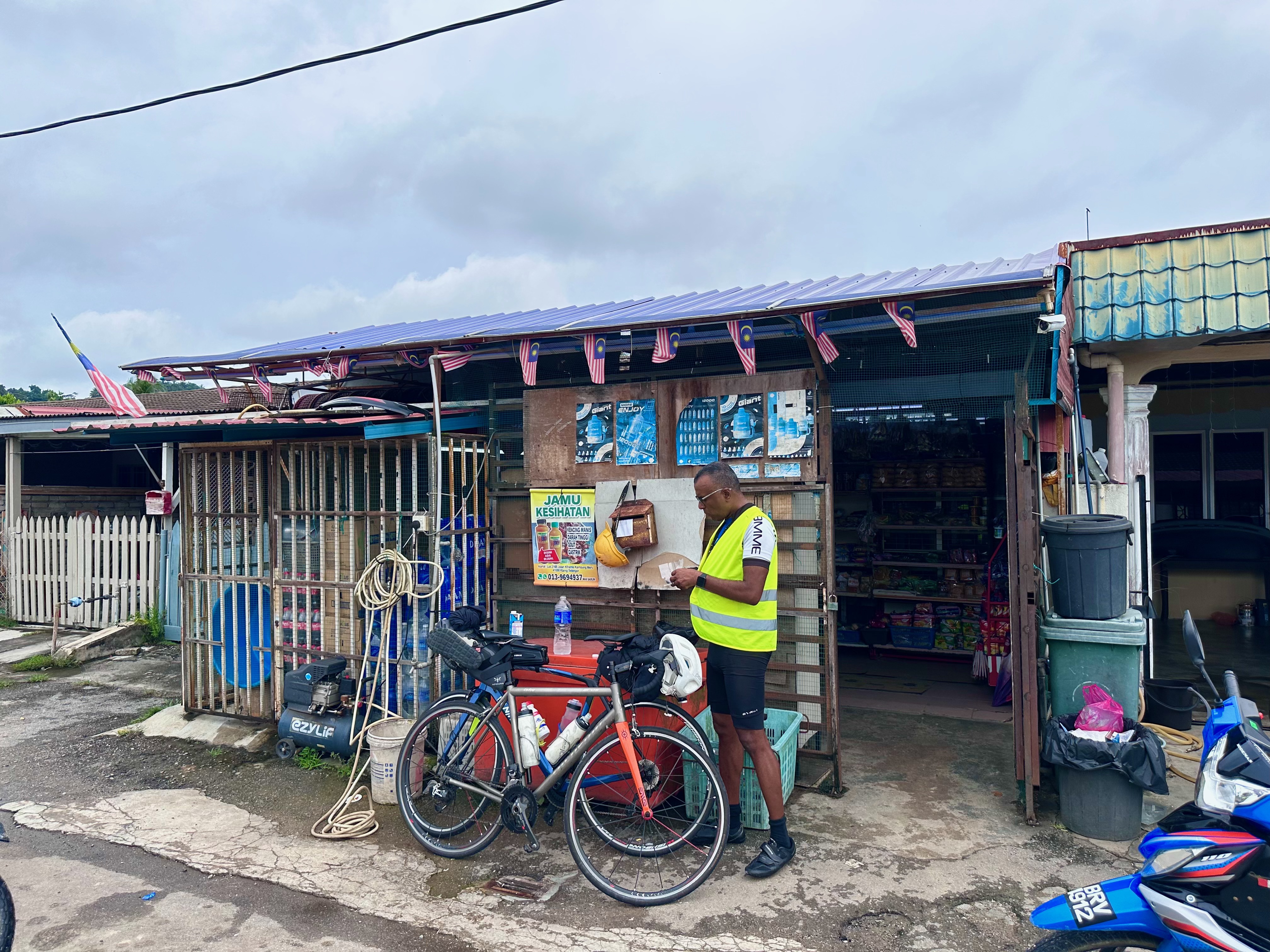
Our next stop was at a sundry shop in a converted house in Taman Permai. We were 50 km into the ride and had stopped to stretch our legs. There were no mini-markets or small restaurants that we could see. We asked a woman who was walking past and she pointed across the road. We didn’t see the shop until a young girl directed us down a side street.

The shop was like Aladdin’s cave. Hidden away and full of all sorts. We bought water, chocolate milk and three types of nuts.

We left Taman Permai and turned right onto Jalan Bukit Kerayong. There was very little traffic and the road surface was smooth, albeit wet in places. That changed 4 km later after we passed the Worldwide Landfills Jeram site. Worldwide Landfills is a waste management company. The road ahead was a steady stream of dump trucks heading towards and leaving the site.

We turned a corner and the road changed abruptly from tarmac to mud. The road was being upgraded from two to four lanes. A 3 km stretch had been dug up and was being relaid. We were lucky there was a 1 km length of fresh tarmac that had not been opened to traffic yet. Although that just meant 2 km of muddy road instead of 3 km of muddy road. This photo is of the less sloppy last 500 metres we traversed. The worst was around the corner ahead of the trucks in the distance.

There was a lot of sand and mud on our bikes, legs and saddle packs.

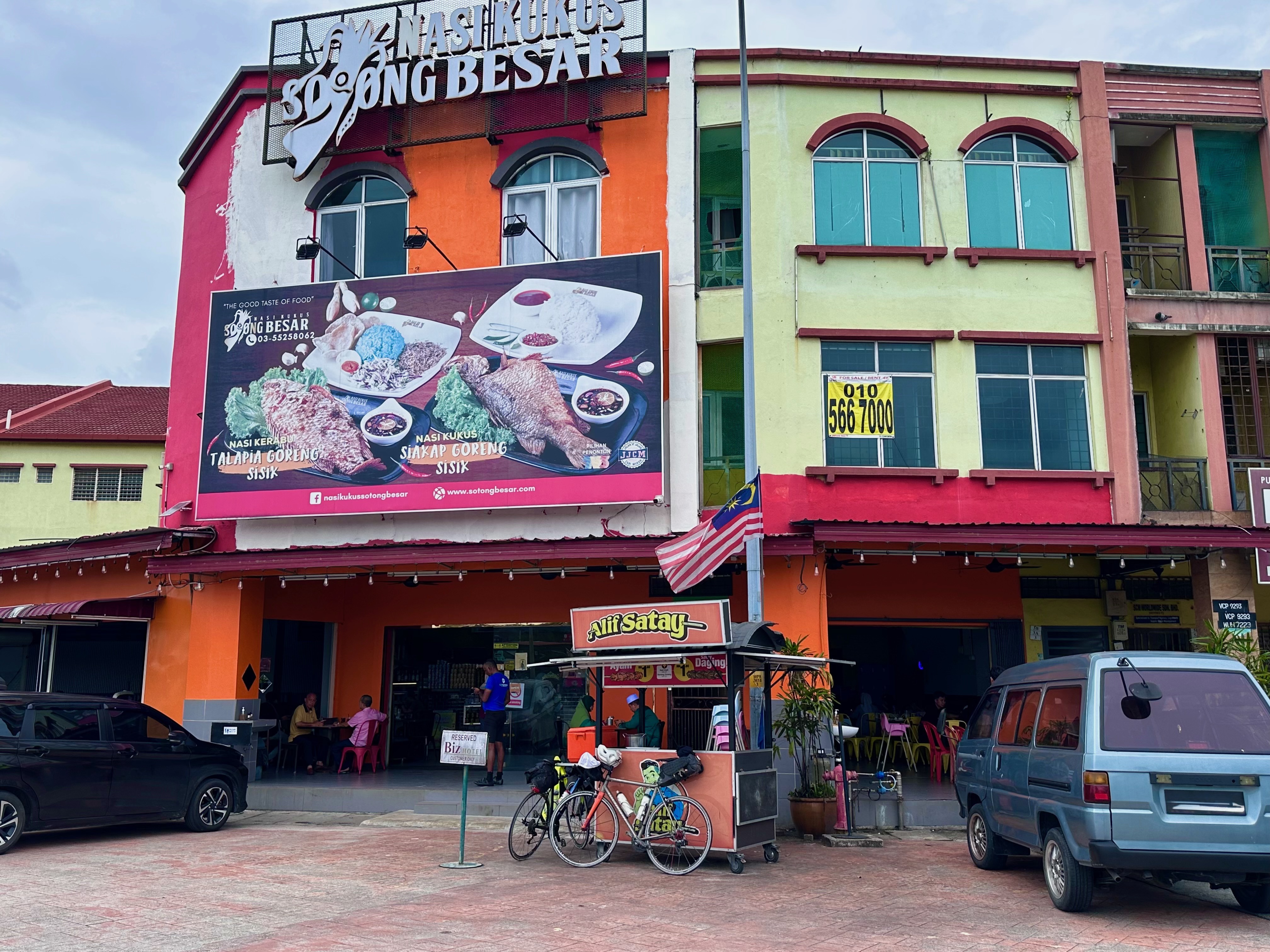
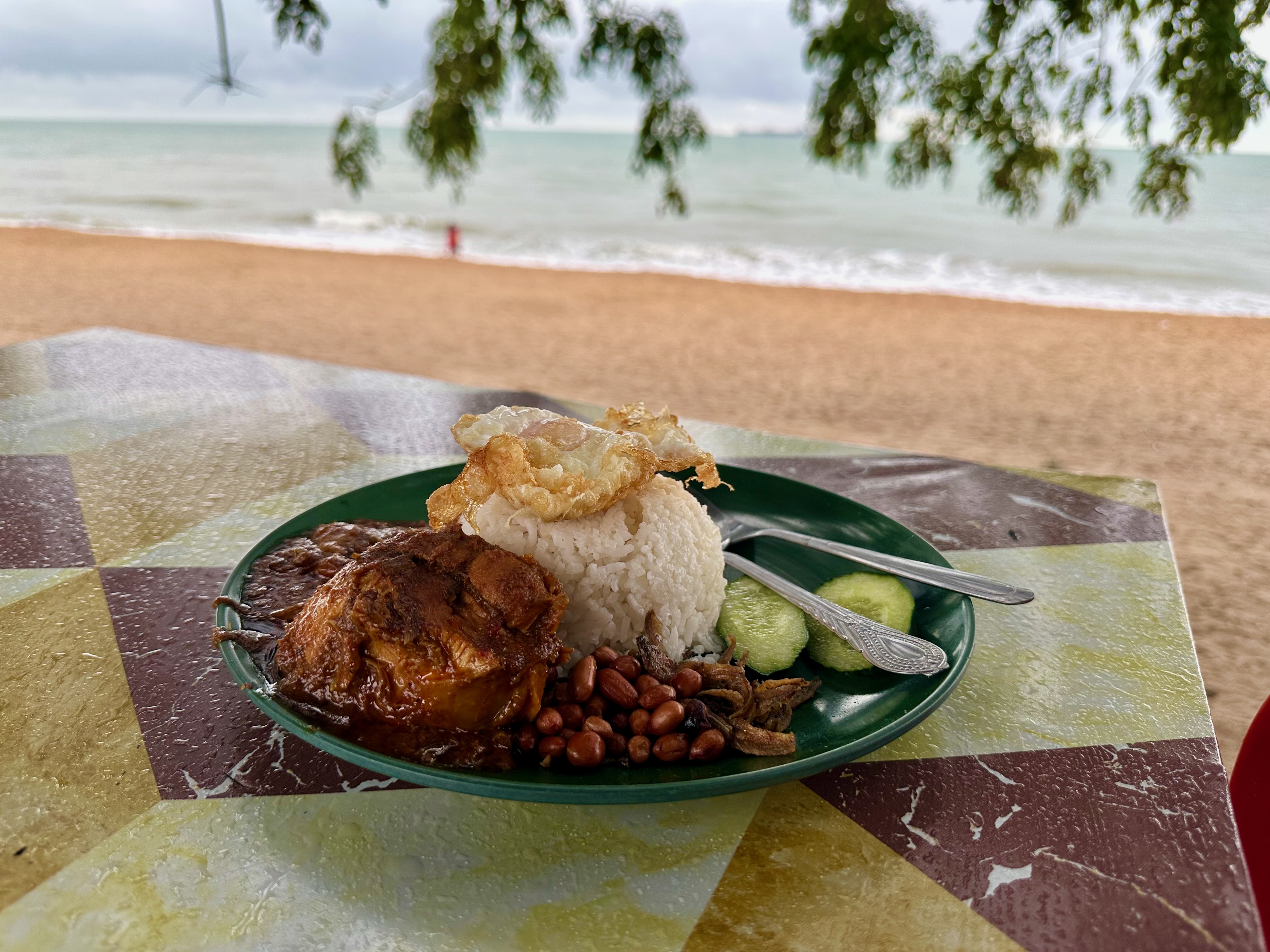
We stopped for lunch at Nasi Kukus Sotong Besar on the north side of Klang because there were a lot of people there. We could have done better. The food was so-so. Brian fed most of his fried chicken to a stray dog. I didn’t finish my nasi lemak.

Our ride from our lunch stop to the Federal Highway was much less fraught than the ride in the opposite direction the day before. I plotted a slightly different return route through Klang. There was no toll plaza to avoid this time. We were on the Selat Klang Highway for about 2 km but that section was benign compared to what we rode the day before.

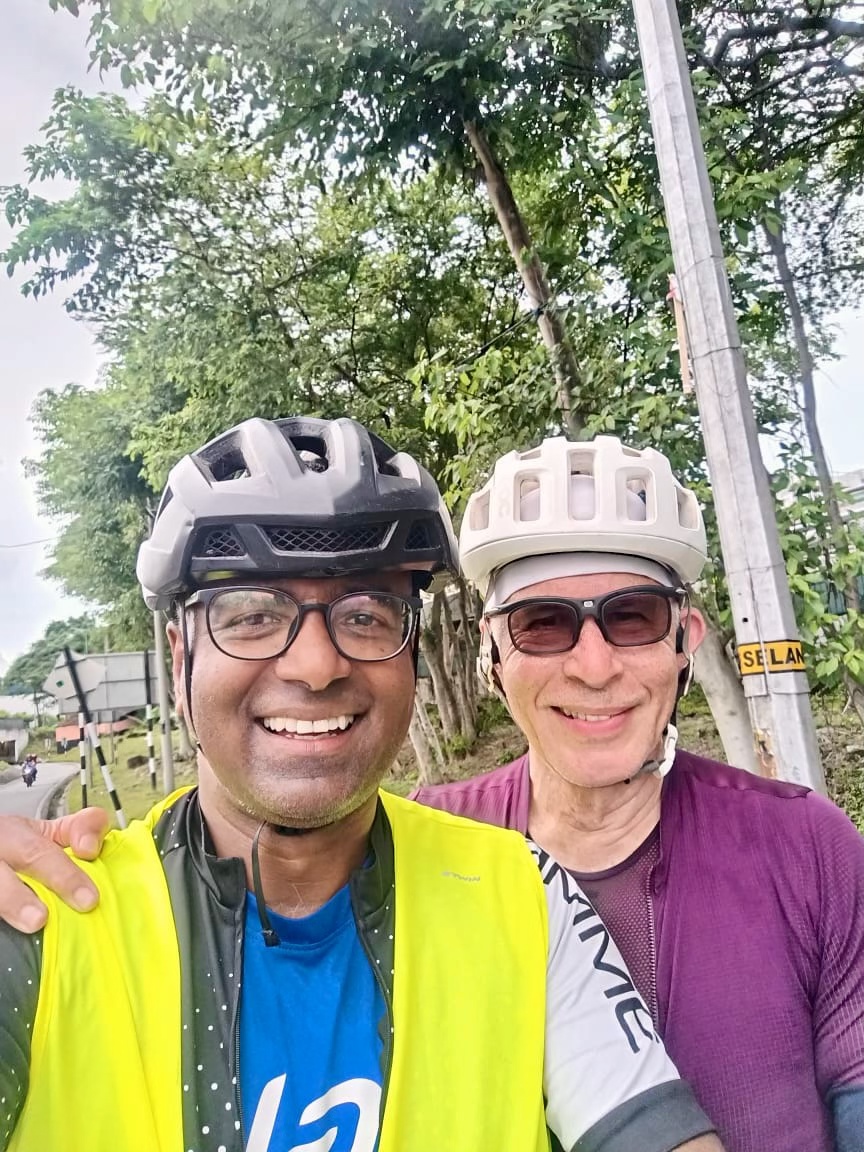
Our lunch was at 75 km. We had to stop at 87.5 km to hop over the guardrail back onto the motorcycle lane after riding 1.5 km on the Federal Highway. The motorcycle lane is closed where the UiTM Shah Alam LRT 3 station is being built. We stopped for a selfie after 97.5 km.

Photograph courtesy of Brian F

Brian exited the motorcycle lane 1 km later to head home. I had 14 km to go. I had to walk my bicycle at Dataran Merdeka. The 300-metre stretch in front of the Sultan Abdul Samad building was closed for the Malaysia Auto Fest 2024.

Photograph courtesy of hub media.my

3 km later I was home and feeling good. I had to make six rest stops in the last 50 km to Sekinchan. I needed just one stop for lunch and to rest my feet in 63 km on the return ride. There were no hints of, let alone actual cramps in my upper thigh adductor muscles. Unlike during and after long rides in the past. No doubt better hydration helped. Thank you Brian for reminding me to drink regularly.

The big discoveries of the trip for me are:

  1. Not to take telmisartan before a long ride, and
  2. The Harbour View Hotel

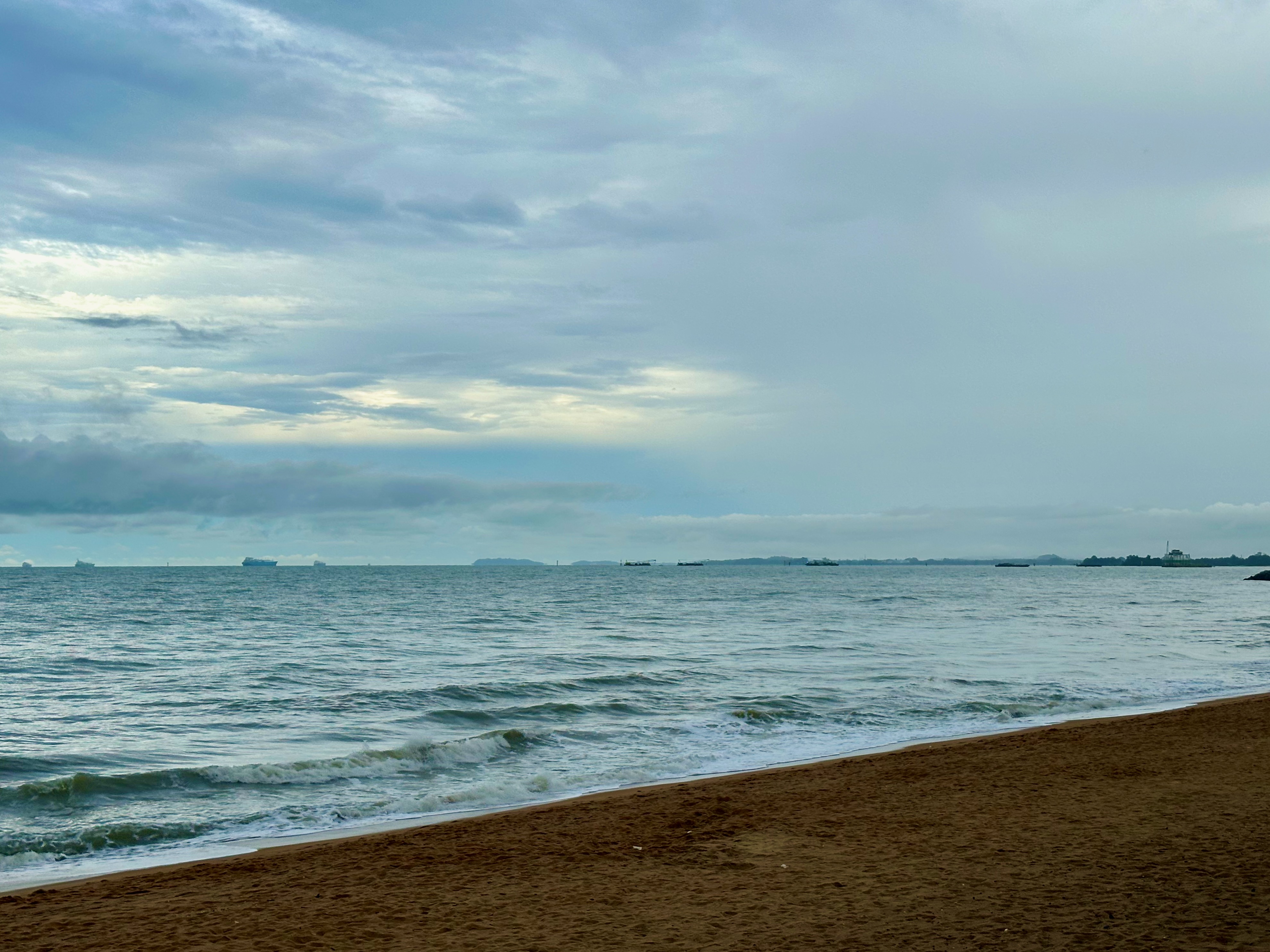
A long late afternoon nap and a rainy morning meant we didn’t ride to Sekinchan beach or through the padi fields. If we do return to Sekinchan we will probably stay at the Harbour View Hotel again. There are things on the café menu I want to try!

P.S. If you want to stay at the Harbour View Hotel, call and book directly with the hotel. You will get a better room rate than is offered online.

Bike-packing with Brian – Part 3

It started raining in the early hours and was still drizzling when I awoke. That validated our decision the night before not to ride in the morning.

Leena and Brian were up and out early to church for morning service. I went for a walk in the drizzle to look for breakfast. 

Business was very slow at this stall.

I stopped at a much busier stall for nasi lemak with chicken rendang.

An hour later Brian was back from church and hungry. We returned to the same stall for his breakfast. The sun was out. It promised to be another hot and humid day.

I spent the day lazing in my room. I needed a respite from being out in hot weather. 

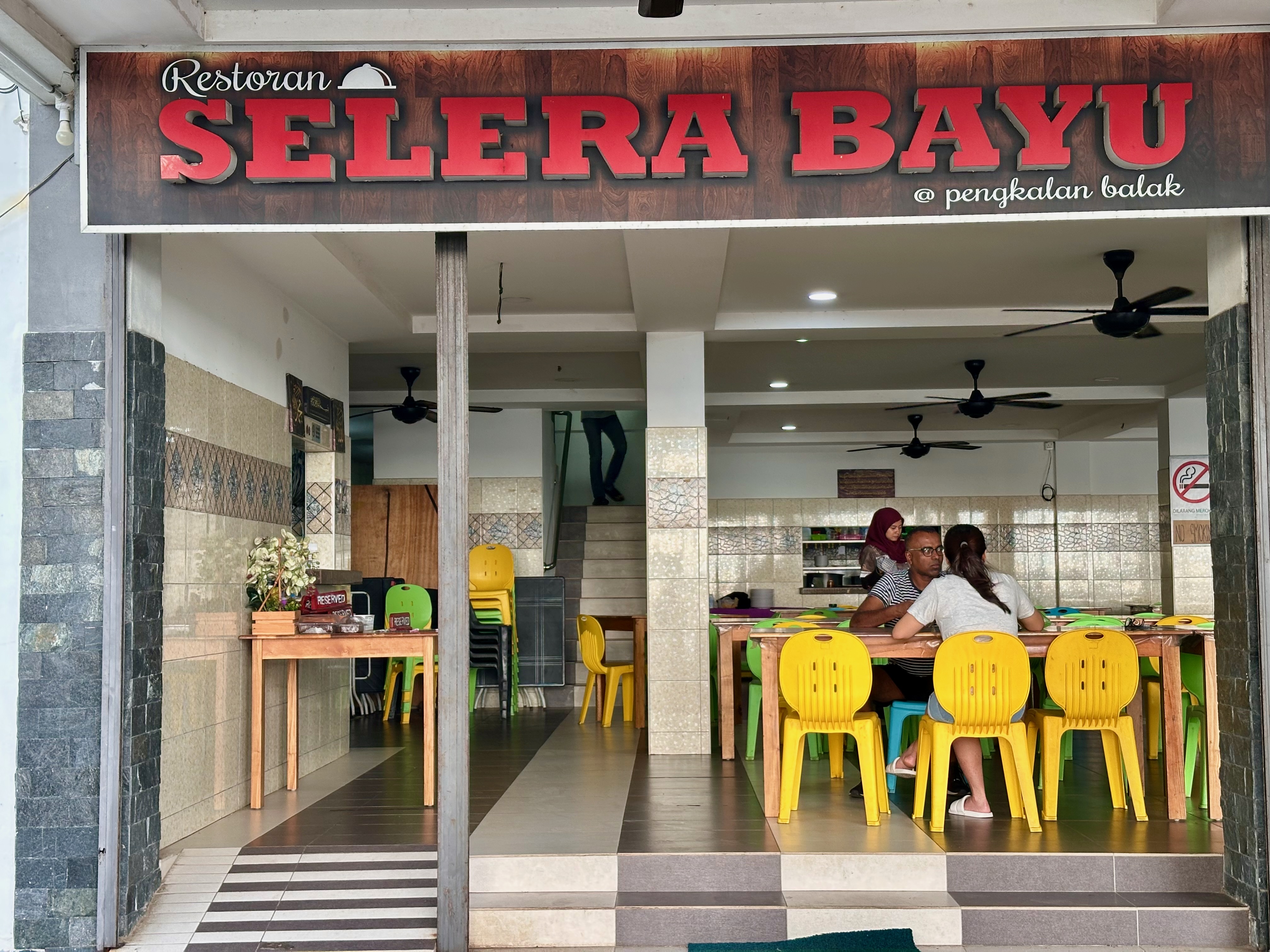
It was cooling down at 5:00 pm. It looked like it might rain again. We headed out for an early dinner. Selera Bayu served us yummy food the night before. We went there again and ordered the same things, plus some batter-fried squid.

After dinner, we went across the road to Nyxel Coffee. Daniel didn’t have his canopy up because of the strong wind.

It was windy enough for kite-flying.

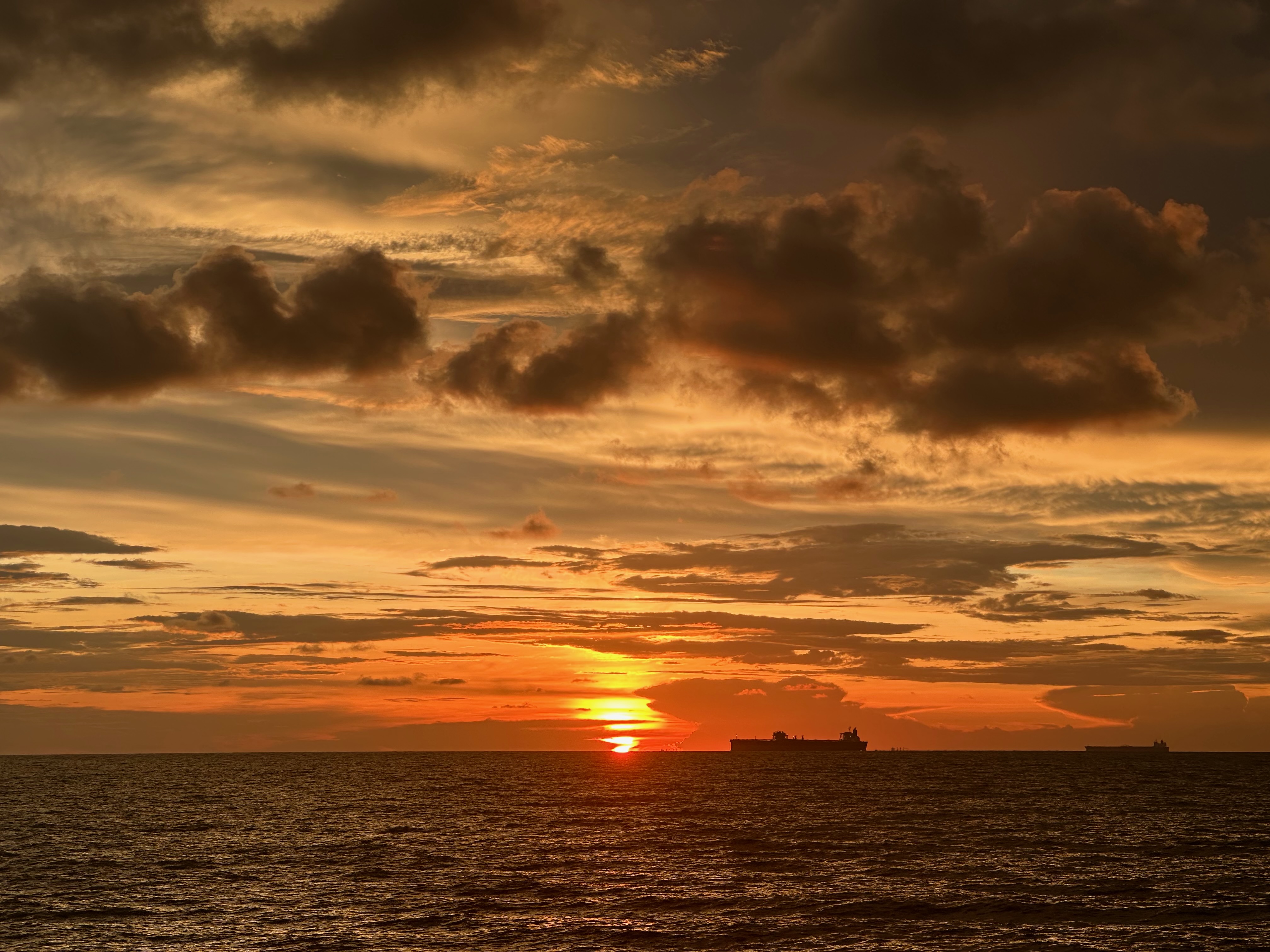
We spent another pleasant evening over coffee, watching the setting sun.

The threat of more rain in the morning convinced us to load our bikes into Leena’s car and have her drive us back to KL instead of cycling to Sungai Gadut KTM station to catch a train as originally planned.

We set off at 5:15 am to beat the commuter rush into Kuala Lumpur that starts from Seremban at about 6:15 am. Unlike my train plan on Day One, this plan worked. At 8:00 am we had driven 127 km, unloaded my bike and gear and ordered breakfast at Crema near where I live. An excellent ending to our adventure.

Postscript

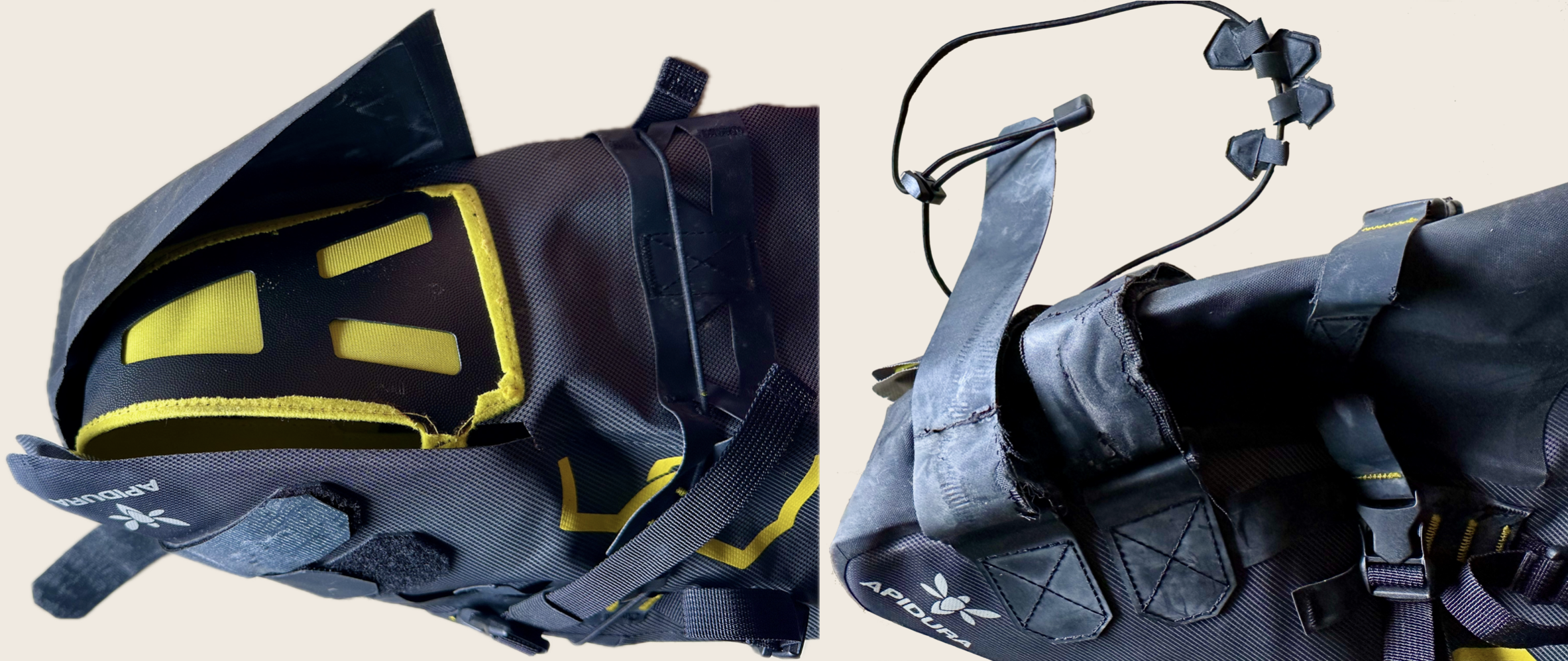
My Route Werks Handlebar Bag QUOC x Restrap Sandals performed as expected. My Apidura Saddle Pack did not. During the ride on Day One, the seams at the tail end of the Pack gave way and a strap delaminated. Nothing fell out, but I put my clothes in a plastic bag before stuffing them into the pack on Day Two. By the end of Day Two, a seam further up the pack had failed and the tabs holding the bungee cord to the top of the pack had come unglued. The rubberised coating on the straps was also peeling.

The saddle pack had been in a cupboard since I used it five years ago. The adhesives and rubbers must have chemically deteriorated. Like most synthetics do in our tropical climate. I reported this to customer support at Apidura because I thought it would be useful for their Product team to know. To Apidura’s credit, I got a “thank you” for letting them know, and a discount code for a replacement saddle pack that is on its way to me now.

I’ll soon be ready for another bike-packing trip. Hopefully, the weather will be cooler.